
Cats have long fascinated humans with their mysterious behaviors—aloof one moment, affectionate the next, and always seeming to make choices that defy logic. One of the most endearing and puzzling habits is their preference for sleeping in cardboard boxes, even when spacious cat beds, heated pads, or plush furniture are readily available. From tiny shoeboxes to delivery packaging barely large enough to fit them, cats consistently choose confined spaces over open comfort. But why?
This behavior isn’t random or whimsical—it’s deeply rooted in biology, psychology, and evolutionary survival mechanisms. Understanding why cats favor boxes offers valuable insight into their emotional needs, stress responses, and natural instincts. Whether you’re a curious cat owner or a behavioral enthusiast, uncovering the reasons behind this phenomenon can improve how we care for our feline companions.
The Science of Security: Why Enclosed Spaces Calm Cats
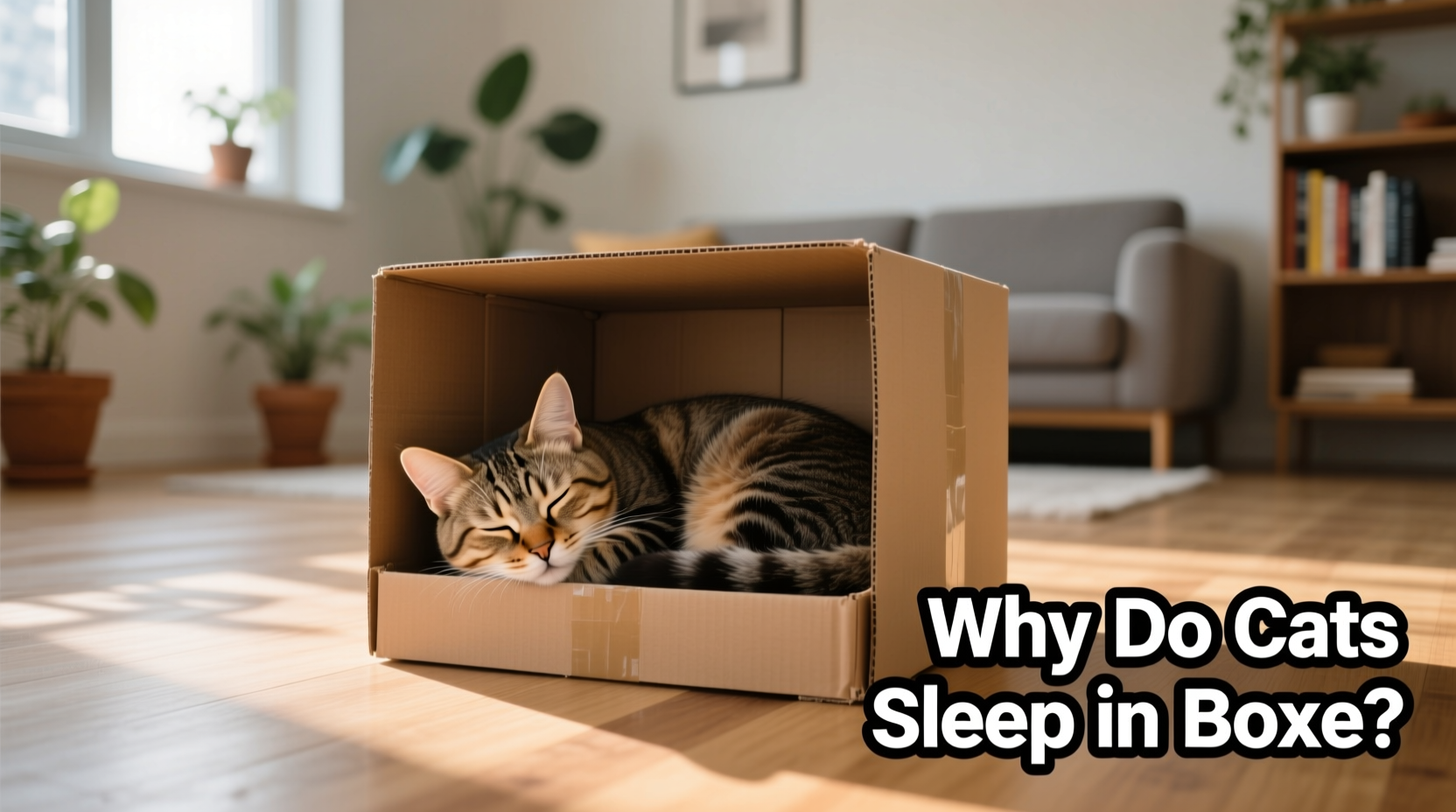
Cats are ambush predators by nature, evolved from solitary hunters who relied on stealth and concealment. In the wild, exposure means vulnerability. Small, enclosed spaces mimic the dens and burrows where wild ancestors would rest, hidden from predators and insulated from environmental threats. Even domesticated cats retain these instincts.
A 2014 study conducted at Utrecht University in the Netherlands observed shelter cats introduced to standard housing versus housing supplemented with cardboard boxes. The researchers found that cats with access to boxes showed significantly lower stress levels within just three days. They adapted faster to their new environment, interacted more with caregivers, and exhibited fewer signs of anxiety such as hiding, vocalizing, or refusing food.
“Providing hiding places is essential for promoting welfare in cats. Boxes serve as coping mechanisms during times of change or uncertainty.” — Dr. Claudia Vinke, Veterinary Ethologist, Utrecht University
This demonstrates that a box isn’t just a quirky plaything—it’s a psychological refuge. The walls offer a sense of enclosure, limiting visual stimuli and creating a barrier against perceived threats. For a species hyper-aware of its surroundings, this control over space reduces cognitive load and promotes relaxation.
Thermoregulation: The Warmth Factor
Cats have a higher thermoneutral zone than humans—typically between 86°F and 97°F (30°C–36°C)—meaning they feel cold at temperatures most people find comfortable. Their bodies are designed to conserve heat efficiently, and small spaces help them do exactly that.
Cardboard is a poor conductor of heat, making it an excellent insulator. When a cat curls up inside a box, its body heat becomes trapped within the confined space, creating a warm microclimate. This is especially important for kittens, older cats, or those with health conditions that affect circulation.
Even in homes with central heating, floor surfaces like tile or hardwood draw heat away from a cat’s body. A box elevates the cat slightly off the ground and reduces air movement around them, minimizing heat loss. Compared to an open cat bed, which exposes the animal on all sides, a box functions like a natural nest—retaining warmth and enhancing thermal comfort.
Do’s and Don’ts: Supporting Your Cat’s Thermal Needs
| Action | Recommendation |
|---|---|
| Provide insulated resting spots | ✅ Use soft blankets in boxes or covered beds |
| Leave cats on cold floors | ❌ Avoid placing beds directly on tile or concrete |
| Use heating pads | ⚠️ Only use pet-safe models with automatic shut-off |
| Seal boxes completely | ❌ Never tape or close all sides—ensure ventilation |
Control Over Environment: Territory and Sensory Management
Cats are territorial animals that thrive on predictability. A box gives them a defined boundary—a personal zone they can monitor and defend. Unlike sprawling sofas or open shelves, a box has clear edges, allowing the cat to face the entrance and observe without being seen.
This vantage point supports their prey-driven alertness. Even while resting, cats remain partially vigilant. A confined space allows them to minimize blind spots and react quickly to movement. It also limits sensory input—reducing noise, drafts, and unexpected touch from children or other pets.
In multi-cat households, boxes can function as neutral safe zones. A subordinate cat may avoid direct confrontation by retreating to a box rather than engaging in conflict. These spaces become temporary sanctuaries where social pressures are reduced.
Real Example: Luna and the New Kitten
Sarah adopted a second kitten, Milo, to keep her adult cat Luna company. Initially, Luna withdrew, spending hours under the bed. Concerned, Sarah placed several open-top boxes around the living area, each lined with a shirt she had worn. Within two days, Luna began using a box near the couch as a daytime retreat. She could watch Milo play without feeling pressured to interact. Over time, their relationship improved—not because they played together, but because Luna felt secure enough to coexist. The box didn’t isolate her; it enabled gradual social adjustment.
Behavioral Enrichment and Cognitive Satisfaction
Boxes aren’t just for sleeping—they’re tools for mental stimulation. The act of squeezing into tight spaces engages a cat’s problem-solving skills and physical coordination. Exploring, pawing, scratching, and repositioning themselves inside a box provides low-intensity activity that satisfies natural curiosity.
Unlike static toys or automated feeders, a cardboard box is infinitely adaptable. It can be a fortress, a hunting blind, or a launchpad for surprise pounces. Tearing at the edges, kneading the bottom, or flipping it over transforms the object through interaction, giving the cat a sense of agency.
This aligns with the concept of \"environmental enrichment\"—providing opportunities for species-appropriate behaviors. In zoos and shelters, boxes are routinely used to reduce boredom and prevent stereotypic behaviors like over-grooming or pacing. At home, they serve the same purpose on a smaller scale.
Step-by-Step: Creating the Ideal Feline Retreat
If you want to support your cat’s instinctual need for enclosed spaces while maintaining household aesthetics, follow this practical guide:
- Select the right size: The box should allow your cat to turn around and lie curled, but not so large that it loses its den-like feel.
- Modify for safety: Remove tape, staples, or plastic liners. Cut ventilation holes if the box has high sides.
- Add comfort: Line the base with a soft towel or fleece blanket. Avoid thick padding that could cause overheating.
- Place strategically: Position the box in a quiet area with moderate foot traffic—close enough to family activity to avoid isolation, but far enough to limit disturbances.
- Encourage use: Sprinkle catnip, place treats inside, or transfer a familiar-smelling item like a recently worn sweater.
- Monitor and refresh: Replace flattened or soiled boxes weekly. Introduce variations in shape or orientation to maintain novelty.
Frequently Asked Questions
Is it normal for my cat to prefer boxes over expensive cat beds?
Absolutely. Most commercial cat beds fail to replicate the enclosed, elevated, and insulated qualities of a box. While aesthetically pleasing, many are too open or soft, lacking structural boundaries that provide security. Your cat isn’t rejecting luxury—it’s choosing functionality over form.
Should I be concerned if my cat hides in boxes frequently?
Occasional box use is healthy and normal. However, sudden or excessive hiding—especially accompanied by changes in appetite, grooming, or litter box use—can indicate illness or chronic stress. Monitor behavior patterns and consult a veterinarian if withdrawal persists beyond a few days.
Can I use plastic containers instead of cardboard?
Only if they are specifically designed for pets. Most plastic bins lack breathability and can trap moisture or odors. Cardboard is preferable due to its insulating properties, ease of modification, and biodegradability. If using plastic, ensure ample ventilation and clean regularly.
Expert Insight: What Veterinarians and Ethologists Say
Dr. Mikel Delgado, a cat behavior expert and former researcher at the School of Veterinary Medicine, UC Davis, emphasizes that “a cat’s choice of resting spot is a window into their emotional state.” She notes that while boxes are inexpensive, their impact on well-being is profound.
“The box isn’t the attraction—it’s what the box represents: safety, warmth, and control. When cats choose confinement, they’re not being strange. They’re being smart.” — Dr. Mikel Delgado, Certified Cat Behavior Consultant
This perspective shifts the narrative from amusement to empathy. Rather than laughing at a cat squeezed into a package meant for headphones, we should recognize the behavior as a legitimate coping strategy. Respecting these choices fosters trust and strengthens the human-cat bond.
Conclusion: Embracing the Box Habit for Better Cat Care
The tendency of cats to sleep in boxes—even when larger, more luxurious options exist—is not a quirk to be corrected, but a behavior to be understood and supported. Rooted in evolutionary biology, thermoregulation, and emotional regulation, this habit reveals how deeply instinct shapes feline experience.
By providing accessible, safe enclosures, cat owners can significantly reduce stress, enhance comfort, and promote mental well-being. You don’t need to fill your home with boxes—just one or two thoughtfully placed ones can make a meaningful difference.
Next time you see your cat nestled in a shipping container or perched atop a cereal box, resist the urge to remove it. Instead, appreciate the complexity behind such a simple act. In that modest square of cardboard lies a sanctuary shaped by millennia of survival—and perfected by your cat’s innate wisdom.




 浙公网安备
33010002000092号
浙公网安备
33010002000092号 浙B2-20120091-4
Comments
No comments yet. Why don't you start the discussion?