
Cats curling up in cardboard boxes is one of the most universally recognized quirks of feline behavior. Whether it’s a shipping container, a gift box, or a repurposed shoebox, if it has walls and a floor, there's a good chance your cat will claim it as their own. While this habit may seem whimsical or even inexplicable, it’s deeply rooted in biology, psychology, and evolutionary adaptation. The preference for enclosed spaces isn’t just about comfort—it serves real physiological and emotional needs. Understanding why cats are drawn to boxes reveals insights into their instincts, stress responses, and sensory world.
The Evolutionary Instinct: Safety Through Concealment
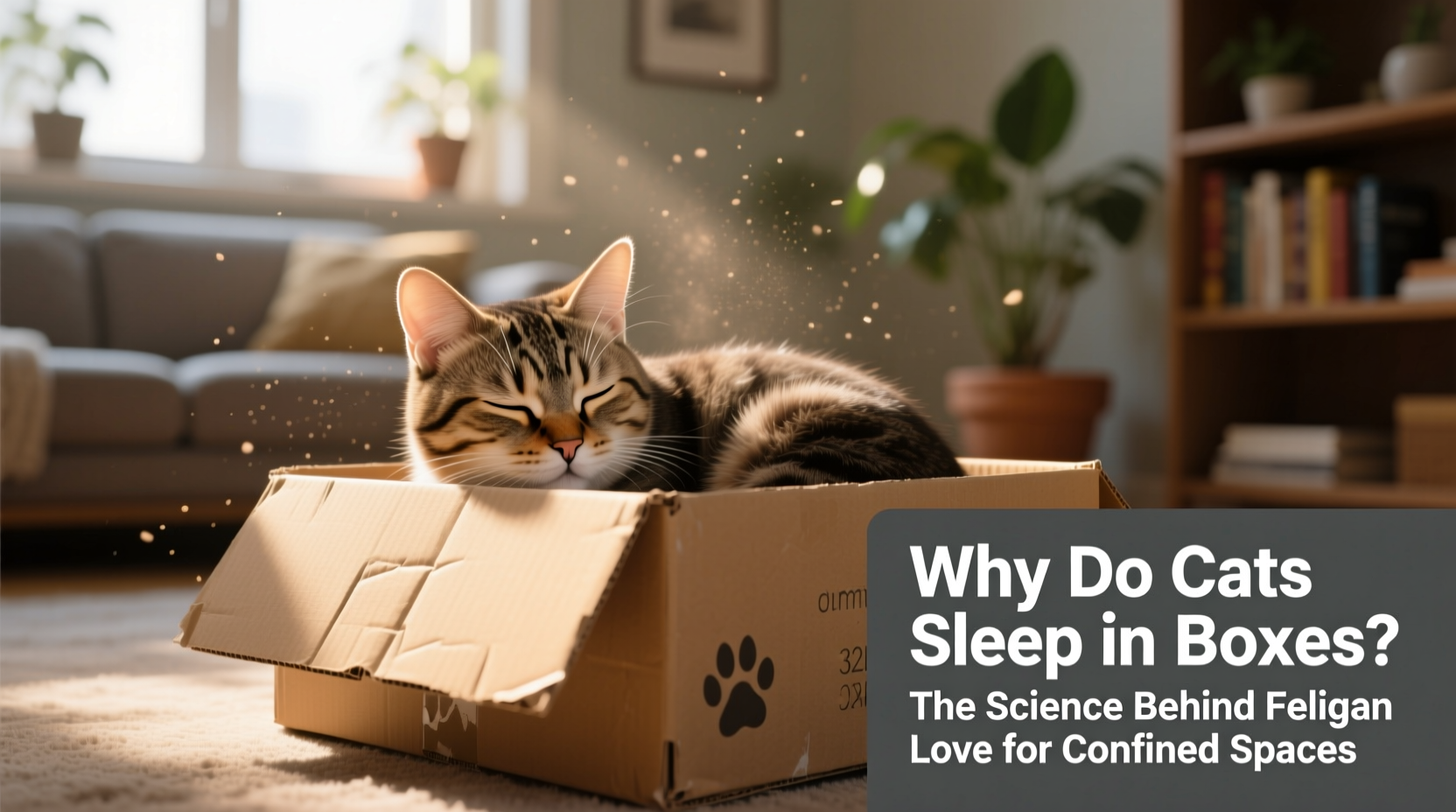
Domestic cats (*Felis catus*) evolved from solitary desert hunters who relied on stealth and concealment to survive. In the wild, small predators must avoid larger animals while also remaining hidden from prey. Enclosed spaces like rock crevices, hollow logs, or dense brush provided shelter from both weather and threats. This instinct hasn't disappeared with domestication. Even in safe indoor environments, cats retain the drive to seek out confined areas where they feel protected.
A box offers a three-dimensional boundary—walls on all sides and often a partial cover overhead—that mimics natural hiding spots. From such a vantage point, a cat can observe its surroundings without being fully exposed. This sense of control reduces anxiety and increases confidence. Studies have shown that shelter cats given access to hiding boxes acclimate faster and display fewer signs of stress than those without them.
“Hiding is a primary coping mechanism for cats. When faced with unfamiliar environments or perceived threats, confinement helps them regain a sense of security.” — Dr. Sophia Yin, Veterinarian and Animal Behaviorist
Thermoregulation: Warmth in Tight Quarters
Cats prefer warmer ambient temperatures than humans—ideally between 86°F and 97°F (30°C–36°C). Their bodies are adapted to conserve heat efficiently, but they still benefit from external sources when resting. Cardboard is an excellent insulator, trapping body heat and creating a microclimate within the box. When a cat tucks itself into a snug space, minimal surface area is exposed, reducing heat loss.
This need for warmth is especially pronounced in kittens and older cats, whose thermoregulatory systems are less efficient. A study published in *Applied Animal Behaviour Science* found that cats spent significantly more time in heated boxes than unheated ones, underscoring the thermal motivation behind box use. Even in homes maintained at typical human comfort levels (around 70°F), a box provides a crucial temperature boost during rest periods.
Stress Reduction and Environmental Control
Modern homes are full of unpredictable stimuli—noises, visitors, other pets, vacuum cleaners—that can overwhelm a cat’s sensitive nervous system. Unlike dogs, which often respond socially to stress, cats typically withdraw. Confinement allows them to regulate sensory input by limiting what they see, hear, and smell.
Research conducted at Utrecht University demonstrated that newly arrived shelter cats given boxes showed lower cortisol levels—a key stress hormone—within just a few days compared to non-box groups. The presence of a hiding space didn’t eliminate stress entirely, but it gave cats a tool to manage it actively. This principle applies equally to home environments: moving, renovations, or introducing new family members can trigger similar withdrawal behaviors.
Enclosed spaces also support a cat’s need for environmental predictability. A box becomes a known quantity—a personal territory that doesn’t change. Within it, the cat controls entry and exit, sightlines, and proximity to others. This autonomy reinforces feelings of safety and mastery over their surroundings.
How Boxes Help Reduce Feline Stress: A Mini Case Study
Sophia adopted a two-year-old tabby named Milo from a local rescue. Though friendly, Milo was hesitant in his new home, spending most days under the bed. After placing a medium-sized cardboard box lined with a fleece blanket near his food bowl, she noticed a shift within 48 hours. First, he sniffed the box. Then, he entered briefly. By day three, he slept in it overnight. Over the next week, Milo began exploring more of the house and even greeted guests from the edge of his box. The structure didn’t solve everything—but it served as a secure base from which he could gradually engage with his environment.
Sensory Security: Field of Vision and Acoustic Buffering
Cats rely heavily on vision and hearing to monitor their environment. However, too much stimulation can be exhausting. A box modifies both visual and auditory inputs in beneficial ways.
The raised edges of a box create a physical frame around the cat’s field of view. This partial enclosure allows them to scan for movement while remaining shielded. It’s akin to sitting in a theater balcony—visibility without exposure. Additionally, cardboard absorbs sound waves, dampening echoes and muffling sudden noises like door slams or loud voices. This acoustic buffering makes boxes particularly appealing in busy households.
Beyond noise reduction, the texture and scent of cardboard itself may play a role. Untreated cardboard carries a neutral, earthy odor that doesn’t compete with a cat’s own pheromones. Some experts suggest that scratching or kneading the material allows cats to mark the space subtly with scent glands in their paws, reinforcing ownership.
| Feature | Benefit to Cats | Scientific Basis |
|---|---|---|
| Enclosed Walls | Physical barrier against perceived threats | Mimics natural denning behavior; reduces predation risk |
| Cardboard Insulation | Retains body heat; raises local temperature | Supports thermoneutral zone preferences |
| Controlled Entry/Exit | Allows monitoring of surroundings | Enhances situational awareness and escape readiness |
| Sound Absorption | Reduces auditory stress | Cardboard fibers diffuse high-frequency noise |
| Neutral Scent | Does not interfere with territorial marking | Allows overlay of facial and paw pheromones |
Behavioral Enrichment: Why Novelty Matters
Even well-adjusted cats are drawn to new boxes—not because they lack sleeping spots, but because novelty stimulates curiosity. Cats are neophilic to a degree; they investigate changes in their environment as part of information-gathering behavior. A fresh box represents a new object to explore, sniff, scratch, and eventually inhabit.
This exploratory phase often includes head-first entries, cautious circling, and repeated exits before full commitment. Once satisfied the space is safe, the cat transitions from exploration to occupation. Interestingly, many cats will continue using the same box long after its novelty wears off, indicating that utility outweighs initial interest.
Providing rotating confined spaces—different boxes, baskets, or commercially available cat caves—can serve as low-cost enrichment. Rotating them weekly prevents habituation and keeps the environment mentally stimulating.
Step-by-Step Guide: Creating the Ideal Cat-Friendly Box Space
- Select the right size: The box should allow your cat to turn around comfortably but feel snug when curled up. A general rule: slightly larger than the cat when seated.
- Choose untreated cardboard: Avoid tape-heavy, glossy, or chemically treated materials. Remove all plastic liners, staples, or adhesive residues.
- Add soft lining: Place a removable fleece blanket or towel inside for comfort and easier cleaning.
- Position strategically: Place the box in a quiet corner near a heat source (like a radiator or sunlit floor) but away from foot traffic.
- Introduce gradually: Let your cat approach on their own. You can sprinkle catnip or place treats nearby to encourage investigation.
- Rotate periodically: Replace or rotate boxes every 2–3 weeks to maintain interest and hygiene.
Common Misconceptions About Box Sleeping
Some owners worry that a cat’s preference for boxes indicates loneliness, fear, or inadequate care. This isn’t necessarily true. While chronic hiding can signal underlying issues like illness or prolonged stress, occasional or regular use of confined spaces is normal and healthy.
Another myth is that only anxious cats like boxes. In reality, confident, outgoing cats also enjoy them—sometimes using them as observation posts rather than retreats. The behavior spans breeds, ages, and temperaments, suggesting it’s a species-wide trait rather than an individual pathology.
Finally, some believe that providing boxes replaces the need for vertical space or toys. On the contrary, boxes complement other enrichment elements. A balanced environment includes climbing structures, scratching surfaces, play opportunities, and multiple types of shelters.
Frequently Asked Questions
Is it safe for cats to eat cardboard?
While occasional chewing is common and usually harmless, ingesting large amounts can cause gastrointestinal blockages. If your cat consistently eats cardboard, consult a veterinarian to rule out pica (a condition involving cravings for non-food items), nutritional deficiencies, or compulsive disorders.
Can I use plastic containers instead of cardboard?
Plastic bins can work if properly modified—ensure ventilation holes are present and edges are smooth. However, cardboard is generally preferred due to its insulating properties, absorbency, and ease of scratching. Avoid airtight containers entirely.
My cat has plenty of beds—why does she still choose boxes?
Commercial cat beds often fail to replicate the enclosed, elevated-walled design that triggers a cat’s instinctual preference for security. Softness alone doesn’t override the need for boundaries. Consider choosing cave-style beds with covered tops or modifying existing ones with side panels.
Checklist: Is Your Cat’s Box Environment Optimal?
- ✅ Boxes are free of toxic adhesives, ink, or plastic coatings
- ✅ Entry points are easy to access and allow quick escape
- ✅ Located in low-traffic, quiet zones of the home
- ✅ Lined with washable, warm fabric
- ✅ Replaced or rotated regularly for hygiene and novelty
- ✅ Multiple options available if you have more than one cat
- ✅ Not placed near loud appliances or drafty windows
Conclusion: Embracing the Box as Part of Feline Well-Being
The humble cardboard box is far more than a temporary amusement—it’s a functional tool that supports a cat’s biological and psychological health. From regulating body temperature to managing stress and satisfying innate instincts, confined spaces fulfill essential roles in a cat’s daily life. Rather than discouraging this behavior, caregivers should embrace it as a sign of adaptive, healthy coping.
By understanding the science behind why cats sleep in boxes, we gain deeper insight into their unique perception of safety, comfort, and control. Simple additions like well-placed boxes can dramatically improve quality of life, especially in multi-pet homes or high-stress transitions. You don’t need expensive furniture or gadgets—just a clean, safe container and respect for your cat’s natural inclinations.




 浙公网安备
33010002000092号
浙公网安备
33010002000092号 浙B2-20120091-4
Comments
No comments yet. Why don't you start the discussion?