
Cats are enigmatic creatures whose behaviors often leave their human companions puzzled—and charmed. One of the most universally observed quirks is a cat squeezing itself into a box far too small to accommodate its frame. Whether it's a shipping container barely larger than their head or a gift box with curled-up paws spilling over the edges, cats consistently choose confined spaces that defy logic. But this behavior isn’t random or merely cute—it’s deeply rooted in biology, psychology, and evolutionary survival instincts. Understanding why cats do this reveals not only insight into their minds but also how we can better support their emotional and physical well-being.
The Instinct to Seek Enclosed Spaces
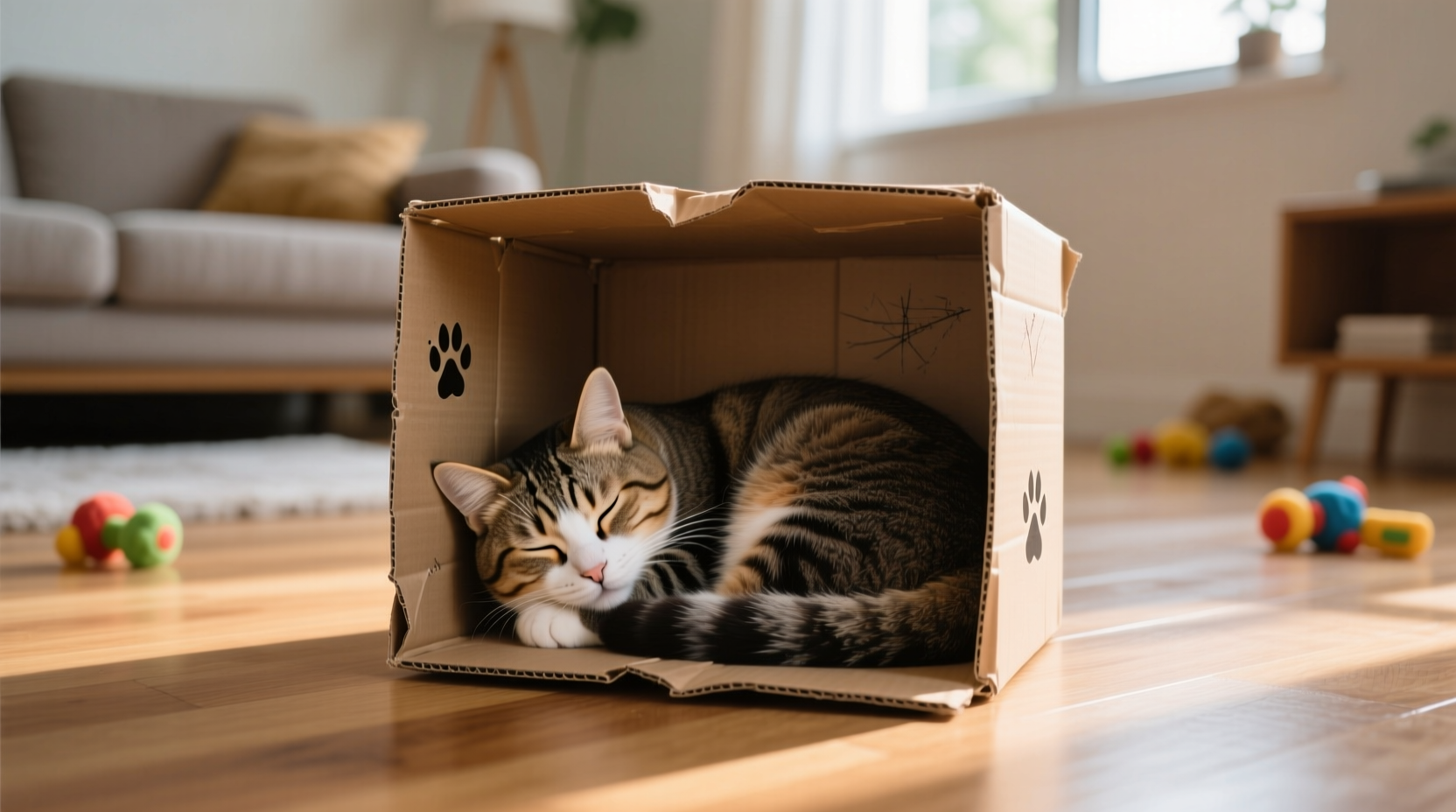
In the wild, cats are both predators and prey. Despite their hunting prowess, smaller felines—especially kittens and domesticated breeds—are vulnerable to larger animals. This duality has shaped their natural preference for sheltered environments. A tight, enclosed space like a box mimics the safety of a den, offering protection from perceived threats. Even indoor cats, generations removed from outdoor dangers, retain these ancestral instincts.
Enclosed spaces provide psychological security. When a cat is surrounded on multiple sides, its field of vision narrows, reducing sensory overload. This allows them to relax more fully, knowing they can detect approaching movement from the front while their back and sides remain shielded. The walls of a box serve as a buffer against drafts, sudden noises, and unfamiliar activity—factors that can trigger low-level stress in even the most confident cats.
Thermoregulation and Warmth Retention
Cats have a higher baseline body temperature than humans—ranging between 100.5°F and 102.5°F (38°C–39.2°C). To maintain this heat efficiently, they seek out warm, insulated spots. Cardboard, despite its flimsy appearance, is an excellent thermal insulator. Its layered structure traps air, creating a microclimate that helps retain body heat.
A snug box effectively reduces the surface area exposed to cooler ambient air. By curling up tightly—even if part of their body hangs over the edge—they minimize heat loss through radiation and convection. This is especially important for kittens, older cats, or those with thin coats, who are more susceptible to cold. In fact, studies conducted at the Netherlands’ Utrecht University found that shelter cats given access to cardboard boxes exhibited lower stress levels, partly due to improved thermoregulation.
The act of compression also plays a role. Gentle pressure against the body can be soothing—similar to swaddling in infants or weighted blankets in humans. This tactile feedback activates the parasympathetic nervous system, promoting relaxation and faster onset of sleep.
Stress Reduction and Environmental Control
Modern homes, while safe, are full of stimuli: loud appliances, visitors, other pets, and unpredictable routines. For a species that values control over its environment, this constant input can be taxing. Boxes offer a form of environmental buffering—a personal retreat where the cat dictates access.
Research published in *Applied Animal Behaviour Science* demonstrated that newly arrived shelter cats with access to hiding places, including boxes, adapted to their surroundings significantly faster than those without. Their cortisol levels—the hormone associated with stress—dropped within days when they had secure enclosures. While household cats aren’t in shelters, they still benefit from similar outlets, particularly during changes such as moving, introducing new pets, or home renovations.
“Cats don’t just like boxes—they need them. A simple cardboard enclosure can be a critical tool for emotional regulation.” — Dr. Sarah Ellis, Co-Author of *The Trainable Cat* and Feline Behavior Specialist
Curiosity and Novelty Seeking
Cats are inherently curious. Any new object introduced into their territory becomes an object of investigation. A box, especially one that arrives with scent residues from packaging materials or human handling, presents a novel sensory experience. Once explored, it transitions from “new item” to “claimed territory.”
This territorial marking goes beyond physical presence. Cats have scent glands on their cheeks, lips, and flanks. When they rub against the interior surfaces of a box, they deposit pheromones that signal ownership and familiarity. Over time, the box becomes imbued with their scent profile, transforming it into a personalized sanctuary.
Interestingly, the size of the box doesn’t negate its appeal. Even if a cat cannot fully fit, the effort to compress themselves into the space reinforces its exclusivity. It becomes a challenge mastered—a space conquered. This behavioral loop rewards the cat with a sense of accomplishment and safety, reinforcing repeat use.
Practical Implications for Cat Owners
Recognizing the significance of small spaces allows caregivers to enhance feline welfare proactively. Rather than discouraging box-sleeping, it should be encouraged—provided the materials are safe. Cardboard boxes free of staples, tape residue, or toxic inks are ideal. They’re inexpensive, replaceable, and easily customized.
Some owners attempt to substitute boxes with expensive cat beds or designer hideaways. While these can be useful, they often fail to replicate the structural integrity and psychological containment of a simple box. Open-top beds lack the enclosing walls that provide security; plush surfaces may retain odors or become overheated. A modest cardboard container frequently outperforms high-end alternatives simply because it meets core behavioral needs.
| Feature | Cardboard Box | Premium Cat Bed |
|---|---|---|
| Enclosure Level | High (walls on 4 sides) | Low to moderate |
| Thermal Insulation | Moderate to high | Variable (depends on material) |
| Scent Retention & Marking | Excellent (porous surface) | Limited (smooth or synthetic) |
| Cost | Free or low-cost | $20–$100+ |
| Cat Preference (Anecdotal Evidence) | Overwhelmingly preferred | Mixed acceptance |
When Box-Behavior Might Signal Concern
While occasional box-sleeping is normal, a sudden increase in reclusive behavior—especially if accompanied by reduced appetite, grooming, or litter box use—may indicate illness or distress. Cats instinctively hide discomfort. If your cat begins spending excessive time in dark, enclosed spaces without emerging for meals or interaction, consult a veterinarian promptly.
Real-Life Example: The Office Cat Phenomenon
In a tech startup in Portland, Oregon, management noticed that employee morale rose after adopting a resident office cat named Miso. What stood out wasn’t just her presence—but her routine. Every afternoon, without fail, Miso would climb into a recycled Amazon shipping box measuring just 14x12 inches, despite being a full-grown tuxedo cat weighing nine pounds. Her tail and hind legs hung over the edge, yet she remained undisturbed for hours.
Curious, the office manager placed larger, cushioned cat beds nearby. Miso sniffed them once and returned to the box. After consulting a feline behaviorist, the team learned that the box was located near a heating vent, offered visual privacy from foot traffic, and had been there for three months—making it a familiar, scent-marked zone. They stopped trying to upgrade her setup and instead began rotating clean boxes weekly. Employee satisfaction surveys later cited Miso’s predictable habits as a calming influence during high-pressure work periods.
Actionable Tips for Supporting Your Cat’s Natural Habits
- Keep a supply of clean, unadorned cardboard boxes in various sizes.
- Place boxes in quiet areas, near heat sources (but not direct sunlight or radiators).
- Avoid removing a box abruptly; allow gradual transition if replacement is needed.
- Enhance comfort by lining the base with an old sweater or soft towel (wash regularly).
- Use double-sided tape on outer edges if you want to discourage scratching.
Step-by-Step: Creating the Ideal Feline Hideaway
- Select the right box: Choose one just slightly larger than your cat’s resting size. Corrugated cardboard works best.
- Prepare the interior: Remove all tape, labels, and staples. Lightly wipe the inside with water if dusty.
- Position strategically: Place in a low-traffic area with ambient warmth—near a radiator (not touching) or sunny floor patch.
- Add familiar scent: Rub a cloth on your cat’s cheek and dab it inside the box, or place a worn T-shirt with your scent.
- Monitor usage: Observe whether your cat enters confidently or hesitates. Adjust location if needed.
- Maintain hygiene: Replace or clean the box every 1–2 weeks, depending on use.
Frequently Asked Questions
Is it harmful for cats to sleep in boxes that are too small?
No, it’s generally not harmful. Cats are flexible and will adjust their posture instinctively. As long as they can breathe comfortably and exit freely, temporary compression is safe. However, avoid sealing the box or restricting airflow.
Why does my cat only use new boxes and ignore old ones?
Cats are sensitive to scent degradation and texture changes. Over time, a box may absorb odors, become soiled, or lose structural rigidity. Rotating fresh boxes maintains novelty and hygiene, aligning with their preference for clean, defined territories.
Can I make a permanent version of a cardboard box hideout?
Yes. Wooden or plastic enclosures with soft interiors and two exits can mimic a box’s benefits. Ensure the material doesn’t trap moisture and allows easy cleaning. Some commercial products now replicate the \"cardboard box experience\" with washable, eco-friendly materials.
Final Thoughts: Respecting Feline Nature
The sight of a cat wedged into a box too small to hold them is endearing, but it’s also a window into their inner world. What appears whimsical is, in fact, a calculated choice driven by survival, comfort, and emotional regulation. Rather than redirecting this behavior, we should honor it. In doing so, we affirm our cats’ autonomy and deepen our understanding of their needs.
You don’t need to spend hundreds on cat furniture to support your pet’s well-being. Sometimes, the simplest solutions—like a humble cardboard box—are the most effective. By observing, learning, and adapting to their natural tendencies, we create homes where cats don’t just survive, but thrive.




 浙公网安备
33010002000092号
浙公网安备
33010002000092号 浙B2-20120091-4
Comments
No comments yet. Why don't you start the discussion?