
When your cat gazes at you and slowly closes its eyes—then reopens them with a soft, deliberate blink—you might wonder: is it sleepy? Sick? Or is there something deeper happening? This seemingly small gesture, known as the \"slow blink,\" is one of the most telling signs of trust and affection in cat communication. Unlike dogs, who often express emotion through tail wags and vocalizations, cats rely heavily on subtle body cues. The slow blink is a quiet but powerful signal that your cat feels safe, content, and connected to you.
Understanding this behavior opens a window into your cat’s emotional world. It’s not just a reflex or a sign of drowsiness—it’s intentional. In fact, research and animal behaviorists confirm that slow blinking is a form of nonverbal bonding between cats and humans. By learning to recognize and reciprocate this gesture, you can deepen your relationship with your feline companion and improve mutual understanding.
The Science Behind the Slow Blink
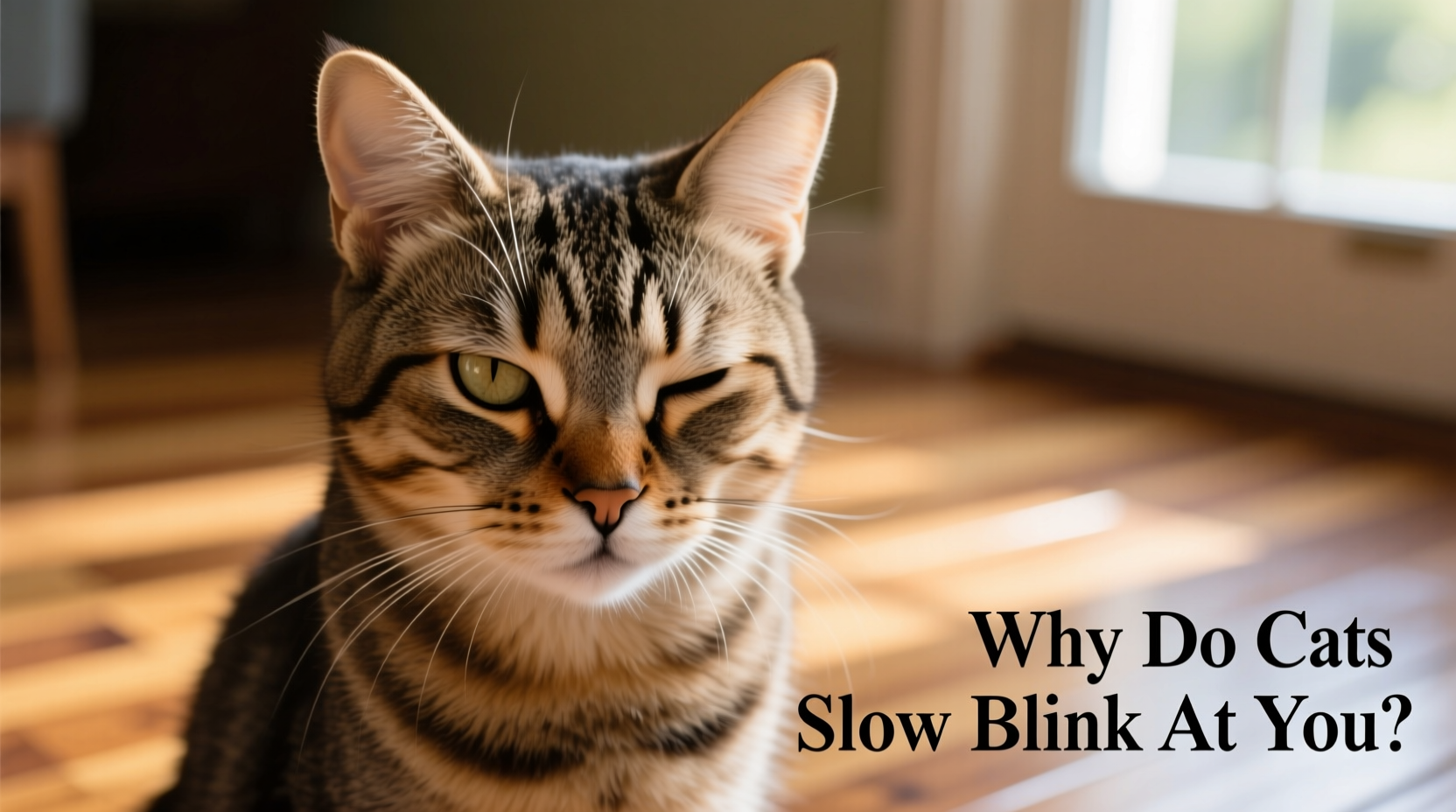
In 2020, a study published in the journal *Scientific Reports* confirmed what many cat owners have long suspected: cats are more likely to slow blink at humans who do the same back. Researchers found that when people initiated slow blinks—gazing softly at their cats and closing their eyes slowly—the cats responded in kind significantly more often than when no blinking occurred.
This behavior mimics the way cats communicate with each other in relaxed, non-threatening situations. In the wild, direct eye contact is often perceived as a challenge or threat. A prolonged stare can escalate tension between animals. But a slow blink serves as a visual “peace offering”—a way of saying, “I see you, I’m not afraid, and I mean no harm.” When a cat chooses to perform this gesture toward you, it’s lowering its guard in a profound way.
“Cats use slow blinking as a social signal of affiliation. It’s one of the clearest indicators we have that a cat feels emotionally secure around a person.” — Dr. Karen McComb, Professor of Animal Behavior, University of Sussex
The physiological mechanism behind the slow blink involves the cat’s autonomic nervous system. When a cat is calm, its breathing slows, muscles relax, and eye movements become softer. The slow blink emerges naturally from this state. It’s not something cats typically do under stress or when feeling defensive. That’s why seeing it is such a meaningful moment.
What a Slow Blink Really Means
Decoding the slow blink requires context, but in most cases, it signals one or more of the following:
- Trust: Your cat feels safe enough to momentarily close its eyes in your presence—a vulnerable act for a prey animal.
- Affection: It’s a feline version of a smile or a loving glance.
- Relaxation: The environment is calm, and your cat is at ease.
- Communication: Cats may use it to initiate interaction or reinforce social bonds.
It’s important to distinguish a slow blink from other types of blinking or squinting. Rapid blinking may indicate irritation, allergies, or discomfort. Half-closed eyes due to illness or pain lack the rhythmic, gentle motion characteristic of a true slow blink. True slow blinks are deliberate, smooth, and often accompanied by other positive body language cues like a relaxed posture, upright tail, or soft purring.
How to Respond to a Cat’s Slow Blink
One of the most beautiful aspects of the slow blink is that you can participate in the exchange. Reciprocating builds trust and strengthens your bond. Here’s how to respond effectively:
- Make soft eye contact: Don’t stare. Look at your cat gently, avoiding intense focus.
- Blink slowly: Close your eyes halfway or fully, then open them again in a smooth, exaggerated motion.
- Smile slightly: Though cats don’t interpret human smiles the same way we do, the facial relaxation complements the gesture.
- Wait for a response: Your cat may return the blink, turn its head affectionately, or even approach you.
This simple interaction can be especially helpful with shy or anxious cats. Used consistently, it becomes a calming ritual—like a private handshake between you and your pet.
Step-by-Step Guide to Building Trust Through Slow Blinks
If your cat is reserved or new to your home, use this timeline to foster connection:
| Day | Action | Expected Outcome |
|---|---|---|
| 1–3 | Observe your cat’s natural behavior. Initiate brief, soft eye contact without blinking. | Build familiarity without pressure. |
| 4–7 | Add a single slow blink during calm moments (e.g., while sitting nearby). | Signal safety; watch for reciprocal gestures. |
| 8–14 | Repeat slow blinks daily, increasing duration slightly. | Encourage increased comfort and engagement. |
| 15+ | Use slow blinks as a greeting or calming tool during interactions. | Establish a shared language of trust. |
Consistency matters more than frequency. Even one mindful slow blink per day can make a difference over time.
Feline Body Language: Reading Beyond the Blink
The slow blink doesn’t exist in isolation. To fully understand your cat’s emotions, consider it alongside other physical cues. Here’s a breakdown of common signals and what they mean when paired with a slow blink:
| Body Signal | Alone Meaning | With Slow Blink Meaning |
|---|---|---|
| Upright tail | Greeting or curiosity | Confident affection |
| Purring | Contentment or self-soothing | Deep relaxation and trust |
| Ears forward | Alertness | Engaged and comfortable |
| Rolling onto back | Vulnerability or invitation to play | High level of trust |
| Whiskers forward | Interest in surroundings | Positive engagement |
Conversely, if your cat slow blinks but also has twitching skin, a lashing tail, or flattened ears, it may be conflicted—perhaps enjoying attention but nearing overstimulation. Always assess the full picture before interpreting intent.
Common Misinterpretations of Cat Behavior
Cats are often misunderstood because their social signals differ so much from dogs or humans. Here are some myths to avoid:
- Myth: Cats ignore you because they don’t care.
Truth: Cats show affection subtly. A slow blink from across the room may be their way of saying “I see you” without needing physical closeness. - Myth: All blinking is friendly.
Truth: Rapid blinking or squinting could indicate eye irritation or stress. Context is key. - Myth: Cats don’t form attachments.
Truth: Studies show cats develop attachment styles similar to human infants—secure, avoidant, or ambivalent—based on caregiver interactions.
Real-Life Example: Building Trust with a Rescue Cat
Sophia adopted Luna, a two-year-old domestic shorthair rescued from a hoarding situation. At first, Luna hid under the bed, flinched at sudden movements, and avoided eye contact. Determined to build trust, Sophia began using slow blinks during quiet moments near Luna’s safe space.
She started by sitting quietly in the same room, avoiding direct stares. After a few days, she introduced a slow blink while reading a book, looking up occasionally with soft eyes. Within two weeks, Luna began pausing at the edge of the bed, returning the blink. By week four, she approached for pets after the blink exchange.
“It felt like a breakthrough,” Sophia said. “She wasn’t suddenly cuddly, but that blink was her way of saying, ‘You’re okay.’” Today, Luna greets her with slow blinks every morning—a ritual that symbolizes their growing bond.
“The slow blink is accessible to everyone, regardless of experience level. It’s a low-pressure way to connect with a cat on its own terms.” — Jackson Galaxy, Cat Behaviorist and Host of *My Cat From Hell*
Checklist: How to Improve Communication with Your Cat
Use this checklist to enhance your understanding of feline body language and strengthen your relationship:
- ✅ Observe your cat’s eyes daily for signs of slow blinking or tension.
- ✅ Practice slow blinking in calm environments, especially during relaxed interactions.
- ✅ Avoid staring, which can be perceived as threatening.
- ✅ Pair slow blinks with gentle tones and predictable routines.
- ✅ Respect boundaries—if your cat looks away, don’t force engagement.
- ✅ Combine slow blinks with other positive signals like chin scratches or treat offerings.
- ✅ Monitor changes in blinking patterns that could indicate health issues.
Frequently Asked Questions
Do all cats slow blink?
No, not all cats do it regularly. Some are more expressive than others based on personality, upbringing, and level of trust. Shy or traumatized cats may take months—or never—develop this behavior. However, most cats can learn to respond to slow blinks with patience and consistency.
Can slow blinking help reduce my cat’s anxiety?
Yes. Regular slow blink exchanges can create a sense of safety, especially in multi-cat households or during transitions like moving or introducing new people. It acts as a calming signal, helping regulate your cat’s emotional state over time.
Is slow blinking the same as “cat kissing”?
Yes, the term “cat kissing” is often used to describe mutual slow blinking. It’s an affectionate nickname for the behavior, emphasizing its role as a loving gesture between cats and humans.
Conclusion: Speak the Language of Trust
The slow blink is more than a quirky feline habit—it’s a bridge between species. In a world where cats are often labeled as aloof or indifferent, this gentle gesture reveals their capacity for deep emotional connection. By recognizing and responding to it, you honor your cat’s unique way of communicating.
You don’t need treats, toys, or training to begin. Just sit quietly, meet your cat’s gaze with soft eyes, and blink slowly. You might be surprised by the response. Over time, these silent exchanges accumulate into a richer, more trusting relationship—one blink at a time.




 浙公网安备
33010002000092号
浙公网安备
33010002000092号 浙B2-20120091-4
Comments
No comments yet. Why don't you start the discussion?