
When your cat gazes at you and slowly closes its eyes—halfway, then opens them again—it’s not drowsiness or a trick of the light. That deliberate, unhurried blink is one of the most meaningful gestures in the feline world: a sign of trust, comfort, and even love. Unlike dogs, who wear their emotions on their sleeves through wagging tails and eager licks, cats communicate subtly. The slow blink is one of their quietest yet most powerful signals. Understanding it can transform your relationship with your cat, deepening mutual respect and emotional connection.
This behavior, often dubbed the “cat kiss,” isn’t just anecdotal. Scientific studies and animal behaviorists confirm that slow blinking is a form of nonverbal communication between cats and humans—a bridge across species built on calmness and safety. But what exactly triggers it? How should you respond? And what does it reveal about your cat’s emotional state?
The Science Behind the Slow Blink
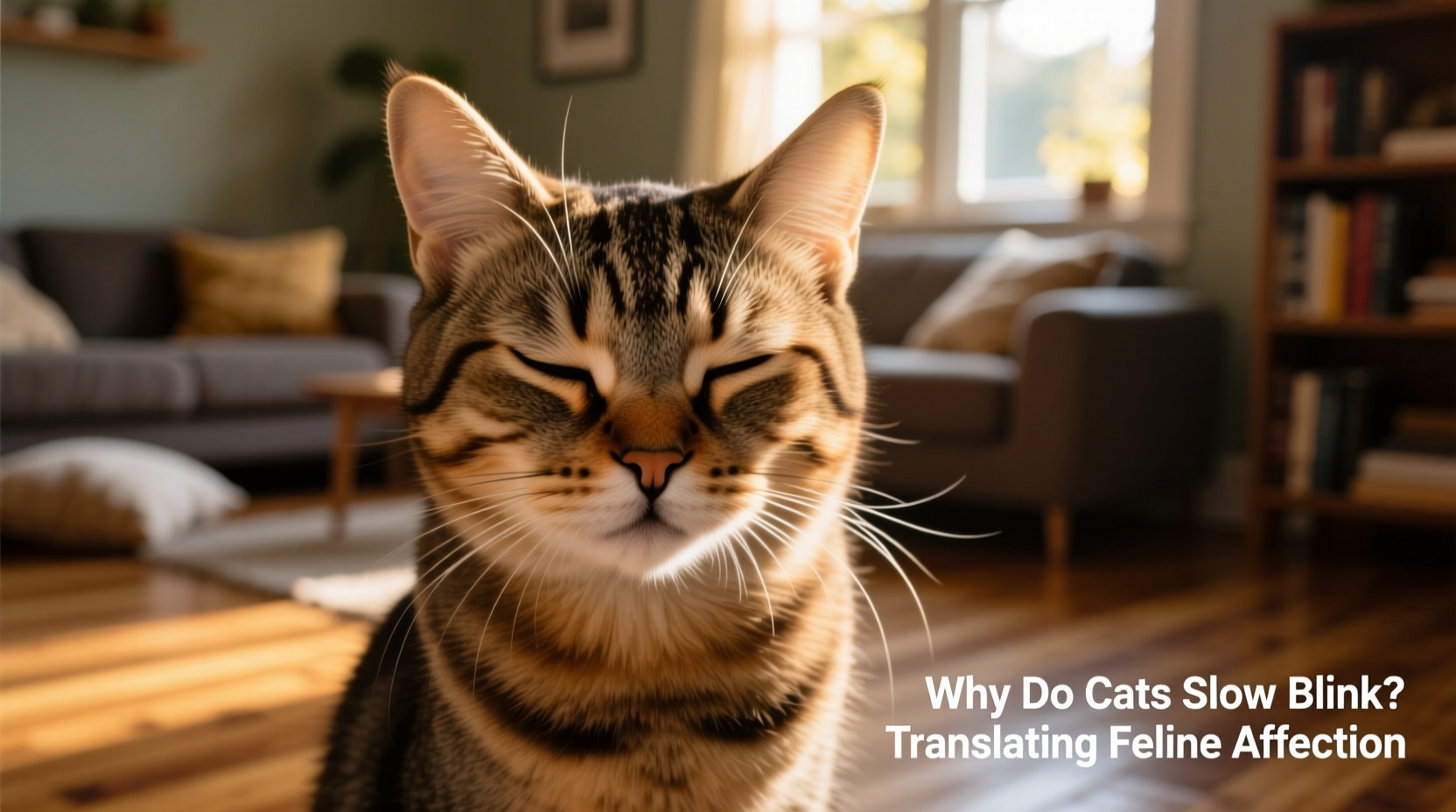
In 2020, a study published in *Scientific Reports* confirmed what many cat owners have long suspected: cats are more likely to slow blink at humans who slow blink back. Researchers found that cats responded more positively to people who engaged in slow blinking compared to those who maintained a neutral expression. This wasn't just passive observation—the cats actively reciprocated, suggesting intentional communication.
From an evolutionary standpoint, direct eye contact in the animal kingdom often signals threat or challenge. Predators stare before attacking; prey animals avoid gaze to survive. For cats—both predator and potential prey—eye contact is loaded with meaning. A sustained, unblinking stare from another creature can trigger defensiveness. The slow blink, therefore, functions as a de-escalation tool. By breaking eye contact gently, the cat communicates, “I am not a threat,” and simultaneously checks whether the other party feels the same.
Dr. Karen McComb, a behavioral ecologist at the University of Sussex and lead author of the study, explains:
“Cats use the slow blink as a form of affective communication. It’s a way of creating positive social bonds, especially with individuals they perceive as safe.” — Dr. Karen McComb, University of Sussex
The act reduces physiological stress and increases affiliative behaviors. In homes where owners regularly engage in slow blinking, cats tend to be more relaxed, approach more frequently, and display fewer signs of anxiety.
What Your Cat Is Saying When They Slow Blink
Decoding feline body language requires attention to context, but the slow blink consistently conveys one core message: contentment. However, nuances exist based on posture, environment, and timing.
- While lounging nearby: A slow blink during rest indicates deep relaxation. Your cat feels secure enough to lower its guard physically and visually.
- After eye contact: If your cat looks at you, blinks slowly, and turns away, it’s a gesture of peace. They acknowledge you without provoking tension.
- During petting: Paired with purring or head-butting, the slow blink reinforces positive feelings. It’s a silent “I like this” signal.
- Across the room: Even distant blinks matter. If your cat is perched high or observing from afar, a deliberate blink says, “You’re part of my safe circle.”
It's important to distinguish the slow blink from other eye behaviors. Rapid blinking may indicate irritation or discomfort, especially if accompanied by flattened ears or tail flicking. Squinting due to medical issues (e.g., conjunctivitis) usually affects both eyes asymmetrically and involves discharge or redness. True slow blinking is rhythmic, symmetrical, and voluntary.
How to Respond: Building Trust Through Blinking
Responding appropriately strengthens your bond. But timing and technique matter. Here’s how to mirror your cat’s language effectively:
- Stay still. Don’t lean forward or reach out. Let the exchange happen visually first.
- Blink slowly. Close your eyes halfway over 1–2 seconds, pause, then open them gradually.
- Wait for reciprocity. Give your cat time to process. Some respond immediately; others take minutes or days.
- Repeat gently. One or two cycles are sufficient. Overdoing it may confuse or overwhelm.
This mimics natural cat-to-cat interactions. You’re not speaking English—you’re adopting *Felis catus* diplomacy. Over time, consistent use of slow blinking can help socialize shy cats, ease introductions with new people, and calm anxious environments.
Mini Case Study: Helping a Rescued Cat Adjust
Maria adopted Luna, a semi-feral rescue cat, who initially hid under the bed for weeks. Traditional bonding methods failed—Luna flinched at touch and fled when approached. On the advice of a behaviorist, Maria began sitting near the hiding spot daily, reading aloud while offering slow blinks.
At first, Luna didn’t respond. But after five days, she began watching Maria silently. By day ten, she returned a single slow blink. Within three weeks, Luna emerged to eat nearby. Today, she greets Maria with head bumps and reciprocal blinks each morning.
“It wasn’t treats or toys that reached her,” Maria says. “It was learning to speak her language.”
Common Misinterpretations and Mistakes
Even well-meaning owners misread or mishandle the slow blink. Avoid these pitfalls:
| Misconception | Reality |
|---|---|
| “My cat is sleepy or tired.” | While relaxed, the blink is intentional—not a sign of fatigue. Context matters: if they’re alert otherwise, it’s communication. |
| “All blinking means affection.” | Rapid blinking or squinting may signal pain or stress. Observe accompanying cues like ear position and tail movement. |
| “I should stare back until they blink.” | Staring is threatening. Use soft focus instead—look near their eyes, not directly into them. |
| “They’ll always respond immediately.” | Shy or traumatized cats may take weeks. Patience is essential. |
| “Only certain breeds do this.” | Slow blinking occurs across all breeds and backgrounds. Socialization influences frequency, not capability. |
Step-by-Step Guide to Bonding Through Slow Blinks
Use this structured approach to build trust using slow blinking, especially with nervous or newly adopted cats:
- Choose a calm moment. Pick a time when your cat is awake but relaxed—after eating, during sunbathing, or mid-evening lounging.
- Sit or stand at a respectful distance. Avoid looming. Sit sideways to appear less confrontational.
- Make soft eye contact. Focus gently on your cat’s face, avoiding intense staring.
- Initiate the blink. Close your eyes slowly over 1–2 seconds, hold briefly, then open them just as gradually.
- Pause and observe. Wait up to 30 seconds. Look away naturally if no response comes.
- Repeat 2–3 times. Limit sessions to under two minutes to prevent overstimulation.
- Track responses over time. Note whether blinking becomes more frequent or is followed by approach behaviors.
- Expand gradually. Once trust builds, pair blinking with gentle hand extensions or soft speech.
Consistency over weeks yields results. This isn’t instant magic—it’s emotional investment paid in quiet moments.
Frequently Asked Questions
Do all cats slow blink?
Most cats are capable of slow blinking, but not all do so regularly. Shy, fearful, or poorly socialized cats may rarely exhibit the behavior. With patience and positive reinforcement, however, many learn to adopt it as trust grows.
Can I teach my cat to slow blink?
You don’t “teach” the behavior so much as invite it. Cats naturally use slow blinks in low-stress contexts. By modeling it yourself and creating a safe environment, you encourage its emergence. Never force or rush the process.
Is slow blinking the same as purring?
No, though both signal comfort. Purring can occur in stress or pain (e.g., during illness), while slow blinking is almost exclusively linked to visual trust and social bonding. Together, they form a strong indicator of well-being.
Checklist: Signs Your Cat Trusts You
If your cat exhibits several of these behaviors, they likely see you as a trusted companion:
- ✅ Slow blinks in your presence
- ✅ Exposes belly (even if not for petting)
- ✅ Head-butts or bunts your face or hands
- ✅ Kneads with paws (“making biscuits”)
- ✅ Sleeps near or on you
- ✅ Brings toys or “gifts”
- ✅ Grooms themselves while near you
- ✅ Approaches when called by name
The slow blink often appears early in this progression—sometimes before physical contact resumes. Recognizing it gives you insight into your cat’s emotional timeline.
Conclusion: Speaking the Language of Quiet Love
Cats don’t need grand declarations. Their affection unfolds in whispers: a tail held high, a nudge of the nose, a slow, deliberate blink across the room. In a world that rewards loudness, the cat reminds us that some of the deepest connections are made in silence.
Understanding the slow blink isn’t just about decoding behavior—it’s about honoring your cat’s nature. It asks you to slow down, soften your gaze, and meet them on their terms. When you return that blink, you’re not just mimicking a gesture. You’re saying, “I see you. I trust you too.”




 浙公网安备
33010002000092号
浙公网安备
33010002000092号 浙B2-20120091-4
Comments
No comments yet. Why don't you start the discussion?