
Cats don’t speak our language, but they communicate constantly—just not with words. One of the most expressive parts of a cat’s body is its tail. From subtle flicks to dramatic wags, every movement carries meaning. Understanding why cats wiggle their tails isn’t just fascinating—it’s essential for building trust, preventing stress, and strengthening your bond with your feline companion.
Tail movements are part of a broader communication system that includes ear position, vocalizations, posture, and eye contact. But the tail often takes center stage. Unlike dogs, who wag their tails primarily when happy, cats use their tails in nuanced ways. A twitch might mean curiosity, while a rapid swish could signal irritation. Misreading these signals can lead to scratches, fear, or missed opportunities to comfort your cat.
The Science Behind Tail Movements
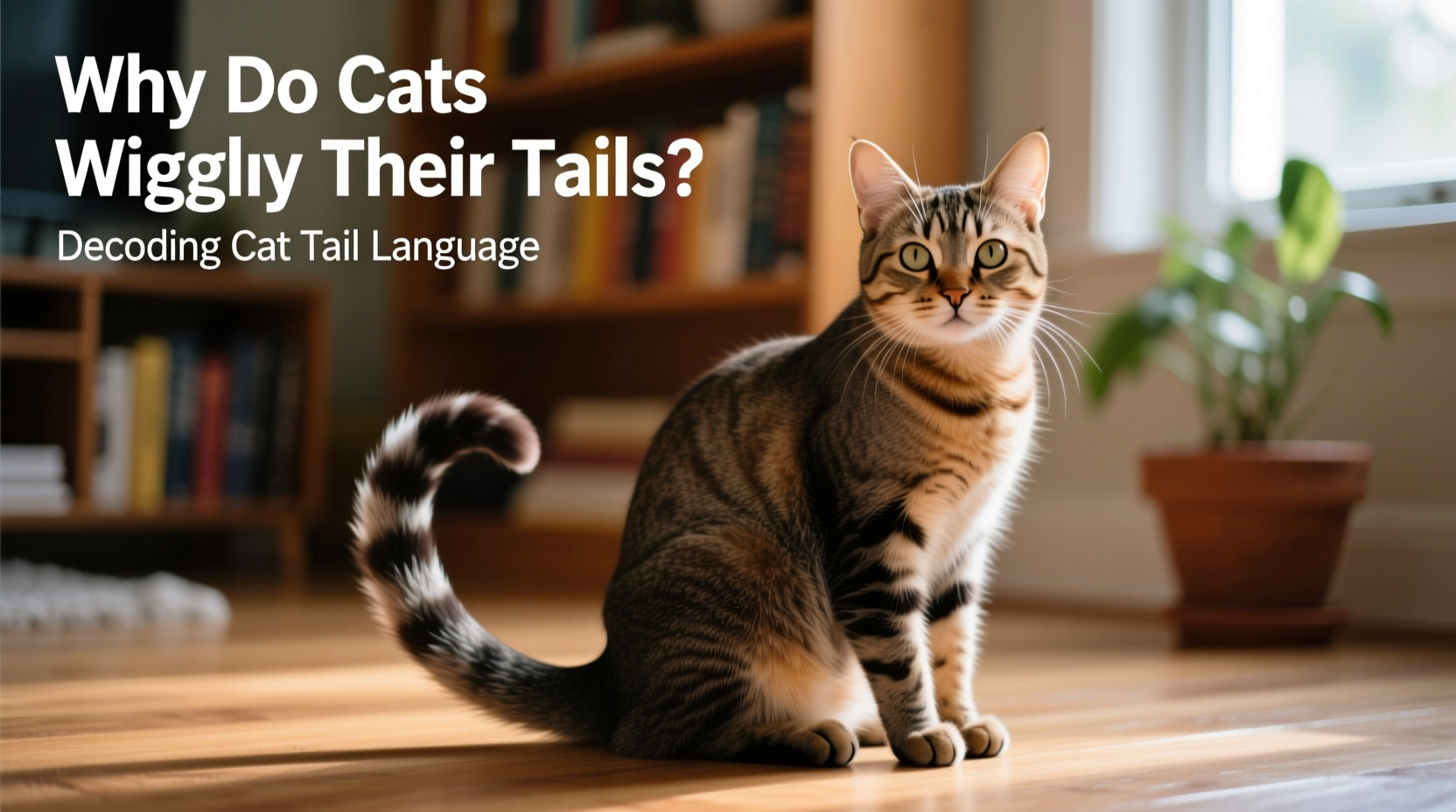
A cat’s tail is an extension of its spine, containing between 19 and 23 vertebrae controlled by a complex network of muscles and nerves. This allows for precise, intentional motion. These movements are driven by emotional states rather than reflexes alone. Research in animal behavior shows that cats use their tails to express internal feelings—both to other animals and to humans.
Dr. Sarah Ellis, a feline behavior expert at the University of Lincoln, explains:
“Cats’ tail movements are highly context-dependent. The same flick can mean excitement during play or frustration when watching birds through a window. It’s crucial to observe the whole body, not just the tail.”
This means tail language must be interpreted alongside other cues. A puffed-up tail with arched back? Fear. A gently quivering tail held high? Affection. Learning this visual vocabulary transforms everyday interactions.
Common Tail Movements and What They Mean
Not all tail wiggles are equal. Here’s a breakdown of the most frequent tail behaviors and their likely meanings:
| Tail Position/Movement | Meaning | Body Language Context |
|---|---|---|
| Slow, gentle side-to-side sway | Focused attention, mild interest | Eyes fixed on prey or toy; ears forward |
| Rapid back-and-forth whipping | Irritation or overstimulation | Dilated pupils, flattened ears, tense body |
| Tail straight up with slight curl at tip | Greeting, friendliness | Relaxed posture, may approach slowly |
| Puffed-up tail (bottlebrush) | Fear or defensive aggression | Arched back, hissing, hiding |
| Tail quivering vertically | Excitement or affection | Often seen when greeting owners |
| Tail wrapped around body or another cat | Contentment or bonding | Sitting calmly, possibly grooming |
For example, if your cat is lying down and slowly swishes the tip of its tail while watching a bird outside, it’s likely engaged and alert—not angry. But if that swish turns into a hard whip, it may be time to redirect their attention before frustration escalates.
Decoding the Wiggle: Subtle vs. Obvious Signals
The term “wiggle” covers a range of motions. Some are barely noticeable; others are impossible to miss. Understanding the intensity helps gauge emotional intensity.
- Tip Twitch: A small, quick flick at the end of the tail often signals mild interest or anticipation. Common before pouncing during play.
- Low-Level Sway: A slow, rhythmic movement usually indicates concentration. Your cat may be tracking movement or deciding whether to approach something.
- Hard Flicks or Swishes: Forceful movements suggest annoyance. This often happens during petting sessions when a cat has had enough.
- Full-Body Wag: When the base of the tail moves and the entire tail swings, it typically means high arousal—either excited or agitated.
Context is everything. A cat chasing a toy with a wagging tail is expressing joy. The same motion while being held too long may mean “Put me down.” Observing patterns over time helps distinguish between positive and negative wiggling.
Mini Case Study: The Over-Petted Cat
Lena adopted a shy tabby named Milo. She loved petting him behind the ears, but he would suddenly bite her after a few minutes. Confused and hurt, she consulted a behaviorist. Video analysis revealed a clear pattern: Milo’s tail started with a soft sway, then progressed to sharp flicks five seconds before biting. Lena hadn’t noticed the escalation.
After learning to watch for tail cues, she stopped petting Milo as soon as the first flick appeared. Within weeks, the biting stopped. Milo now initiates contact more often, showing trust. This case illustrates how tail language prevents conflict and builds mutual understanding.
How to Respond to Tail Signals: A Step-by-Step Guide
Recognizing tail movements is only half the battle. Responding appropriately ensures your cat feels safe and respected. Follow this timeline to improve your responsiveness:
- Observe consistently: Spend 5–10 minutes daily watching your cat without interacting. Note tail positions during feeding, play, rest, and social moments.
- Identify triggers: Link tail movements to events. Does the tail flick when the vacuum runs? When another pet approaches?
- Respect boundaries: If your cat’s tail starts whipping during petting, stop immediately. Wait for calming signals like blinking or licking before resuming.
- Redirect energy: For overstimulated cats, offer a toy or treat to shift focus away from stress.
- Reinforce calm behavior: Reward relaxed tail positions with quiet praise or treats to encourage emotional regulation.
Common Misinterpretations and How to Avoid Them
Misreading tail language is common, especially for new cat owners. Here are three frequent errors:
- Mistaking agitation for playfulness: A lashing tail during handling doesn’t mean your cat wants to play—it’s a warning sign.
- Ignoring subtle cues: Small twitches are early warnings. Waiting for hissing or biting means you’ve missed key signals.
- Assuming all upright tails mean happiness: While usually positive, a stiff, vibrating tail can also indicate overexcitement or even anxiety in certain contexts.
To avoid missteps, adopt a holistic approach. Combine tail observation with attention to ear direction (forward = engaged, pinned back = scared), pupil size (dilated = aroused), and body tension.
Checklist: Mastering Cat Tail Language
- ✅ Learn the difference between a slow sway and a forceful swish
- ✅ Watch for tail position during interactions with people and pets
- ✅ Stop petting at the first sign of tail flicking
- ✅ Note environmental triggers for tail movements (e.g., loud noises, visitors)
- ✅ Use positive reinforcement when your cat displays calm tail behavior
- ✅ Consult a vet or behaviorist if tail movements are sudden, extreme, or paired with pain signs
Frequently Asked Questions
Why does my cat wag its tail while lying down?
A resting cat that wags its tail is likely focused on something—like a bird outside or a moving shadow. It’s a sign of mental engagement, not necessarily discomfort. However, if the wag becomes intense or is accompanied by growling, your cat may be frustrated.
Is a quivering tail a good sign?
Generally, yes. A vertical quiver, especially when the tail is held high, is a friendly gesture. Cats often do this when greeting trusted humans or other cats. It may even release scent from glands near the tail base as a bonding signal.
Can medical issues affect tail movement?
Absolutely. Neurological problems, injuries, arthritis, or pain in the lower spine can alter tail posture or mobility. If your cat suddenly stops moving its tail, holds it unnaturally low, or seems to avoid being touched near the base, consult a veterinarian promptly.
Become a Fluent Speaker of Cat
Understanding why cats wiggle their tails opens a deeper level of connection. You’re no longer guessing what your cat needs—you’re responding with empathy and precision. Every flick, twitch, and quiver is a sentence in a silent language, one that rewards patience and observation.
Cats rely on us to interpret their world. By learning their tail signals, you create a safer, more trusting environment. Start today: sit quietly, watch closely, and let your cat tell you how they feel—without saying a word.




 浙公网安备
33010002000092号
浙公网安备
33010002000092号 浙B2-20120091-4
Comments
No comments yet. Why don't you start the discussion?