
As the holiday season unfolds, homes and public spaces transform into dazzling displays of synchronized lights and music. One of the most captivating aspects of modern Christmas décor is the way lights seem to dance in perfect harmony with classic carols and festive tunes. But it’s not random: certain Christmas songs naturally align with specific light patterns due to a combination of musical structure, emotional tone, and human perception. Understanding this synergy reveals how sound and light work together to create memorable sensory experiences.
The pairing of music and lighting isn’t just about technical synchronization—it’s rooted in psychology, acoustics, and design principles. When done well, the result feels intuitive, even magical. A slow, reverent hymn like “O Holy Night” calls for gentle fades and soft glows, while an upbeat track like “Jingle Bell Rock” demands rapid flashes and sweeping color changes. The best light shows don’t merely follow the beat—they interpret the song’s emotional arc.
The Science of Sensory Synchronization
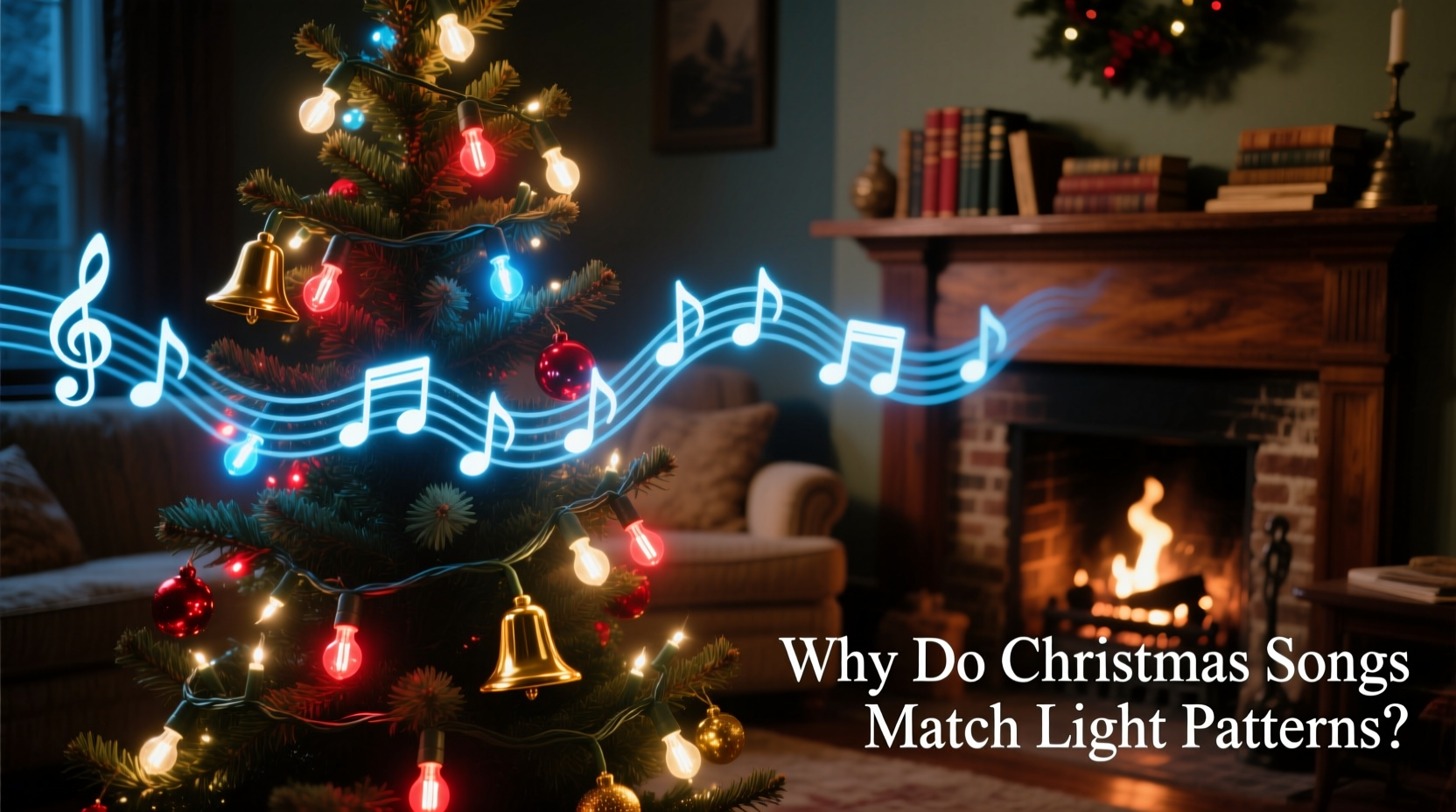
Human brains are wired to seek patterns across senses. This phenomenon, known as cross-modal perception, explains why we instinctively associate high-pitched sounds with bright colors and fast movements, or low tones with deep hues and slow transitions. In the context of Christmas light displays, this means that effective pairings rely on matching auditory cues—such as tempo, dynamics, and melody—with corresponding visual rhythms.
For example, research in cognitive psychology has shown that people consistently match loud, staccato notes with sudden bursts of light, while legato (smooth) passages are linked with gradual color shifts. This alignment reduces cognitive dissonance and enhances emotional impact. When viewers hear a swelling chorus in “Hark! The Herald Angels Sing” and simultaneously see lights rise in brightness and spread outward, the experience feels cohesive and uplifting.
“Music and light are both waves—sound waves and electromagnetic waves. When they move in sync, they amplify each other’s emotional resonance.” — Dr. Lena Torres, Cognitive Scientist at Berklee Institute of Music Perception
Musical Elements That Influence Light Design
To understand why some songs suit particular light patterns, it helps to break down key components of music:
- Tempo: Measured in beats per minute (BPM), tempo determines how fast the lights should cycle. Fast songs (e.g., “Rockin’ Around the Christmas Tree,” ~160 BPM) support quick strobes and chases, while slower ballads (e.g., “Silent Night,” ~60 BPM) require long fades and minimal motion.
- Dynamics: The variation between loud and soft sections dictates intensity. Crescendos call for expanding light coverage; diminuendos suggest dimming or retreating effects.
- Rhythm: Syncopated rhythms may inspire staggered blinking sequences, while steady quarter-note pulses allow for uniform flashing.
- Mood: Joyful songs often use warm colors (red, gold, white), whereas reflective pieces lean toward cool tones (blue, silver, purple).
How Melody Shapes Visual Flow
The contour of a melody—the way it rises and falls—can directly inform the movement of lights. Rising scales can be mirrored by upward-traveling light sequences on a house outline, while descending phrases might trigger downward cascades. Take “Joy to the World,” which opens with the iconic descending line “Joy to the world, the Lord is come.” Many professional displays animate this lyric with lights flowing from roof to ground, visually echoing the melodic descent.
This kind of literal interpretation strengthens audience connection. Viewers who know the song subconsciously expect a resolution when the melody completes a phrase. Delivering a synchronized light event at that moment creates satisfaction—a kind of audiovisual payoff.
Light Pattern Types and Their Musical Matches
Not all light patterns are interchangeable. Each serves a different expressive purpose and works best with compatible songs. Below is a comparison of common lighting techniques and ideal musical pairings.
| Light Pattern | Best For | Example Songs |
|---|---|---|
| Steady Glow | Reverent, slow-tempo carols | “O Come, O Come Emmanuel,” “It Came Upon the Midnight Clear” |
| Pulsing / Beat Sync | Songs with strong, regular rhythm | “Jingle Bells,” “Santa Claus Is Coming to Town” |
| Color Waves | Smooth, flowing melodies | “Winter Wonderland,” “Sleigh Ride” |
| Chase Sequences | Upbeat, rhythmic tracks | “Rockin’ Around the Christmas Tree,” “All I Want for Christmas Is You” |
| Full-House Flash | Climactic moments or choruses | “Hallelujah Chorus” (from Messiah), “Do You Hear What I Hear?” |
Advanced controllers now allow pixel-level precision, enabling designers to choreograph individual strands to specific instruments or vocal lines. A violin solo might illuminate only the eaves, while a drum hit triggers a strobe across the entire façade.
Case Study: The Johnson Family Display & Mariah Carey’s “All I Want for Christmas Is You”
The Johnsons in Naperville, Illinois, run one of the most popular neighborhood light shows, attracting hundreds each December. Their signature routine features Mariah Carey’s 1994 hit. Despite its pop origins, the song presents rich opportunities for dynamic lighting due to its layered production.
Here’s how they structured the show:
- Intro (soft synth pad): Warm white twinkles begin slowly across roofline, mimicking starlight.
- Vocal entrance (“I don’t want a lot…”): Gentle pulses on beat, increasing slightly in density as vocals build.
- Pre-chorus (“When I see those little children…”): Lights shift to red and green, with rising wave effect moving left to right.
- Chorus explosion (“All I want for Christmas…”): Full-house flash, rapid color cycling, and chase sequences on every beat.
- Bridge (“I just want you for my own…”): Dimmed blue and silver with slow pulsing, creating intimacy.
- Final chorus and ad-libs: Maximum intensity—every element active, synchronized to vocal runs and background shouts.
The result? A display that mirrors the song’s emotional journey from quiet longing to exuberant joy. Neighbors report feeling “lifted” during the finale, demonstrating how well-matched light and music can elevate mood.
Step-by-Step Guide to Matching Songs and Lights
Whether you're programming a smart home system or building a community display, follow these steps to ensure your music and lights complement each other:
- Analyze the song structure: Break the track into intro, verses, choruses, bridge, and outro. Note where energy rises and falls.
- Map tempo and beat: Use software (like Audacity or xLights) to detect BPM and mark strong beats.
- Assign light zones: Divide your display into sections (roof, trees, porch, etc.) and decide which parts activate during different segments.
- Choose pattern types: Assign steady glow, pulses, chases, or waves based on section mood and rhythm.
- Highlight climaxes: Identify the song’s peak moment (often the final chorus) and design a multi-element climax (flash, color burst, motion).
- Test and refine: Play the sequence multiple times, adjusting timing by milliseconds if needed. Small delays can break immersion.
- Add subtle details: Sync minor effects (like flickering candles) to softer lyrics for depth.
Common Mistakes in Audiovisual Pairing
Even experienced decorators can misalign music and lights. Avoid these pitfalls:
- Overloading early: Starting with full intensity leaves nowhere to go. Save your biggest effects for the climax.
- Ignoring rests: Silence matters. Let lights dim or pause during instrumental breaks to emphasize the return of sound.
- Mismatching mood: Using chaotic flashes during a solemn carol disrupts the atmosphere.
- Latency issues: Poor Wi-Fi or slow controllers can cause lights to lag behind music, breaking synchronization.
Frequently Asked Questions
Can I pair classical carols with modern RGB lights?
Absolutely—but with restraint. Traditional carols benefit from elegant transitions rather than flashy effects. Use smooth fades, limited color palettes (white, gold, soft blue), and architectural highlighting to honor their reverence while still using modern tech.
How do I choose colors for non-traditional songs?
Focus on emotion over tradition. A melancholic song like “Blue Christmas” suits cool blues and purples, even if they’re not “festive” colors. Authenticity enhances connection more than convention.
Do all songs need complex choreography?
No. Simplicity can be powerful. Some songs, especially acoustic versions or solo vocals, shine with minimal lighting—perhaps just a single strand pulsing softly. Sometimes less truly is more.
Checklist: Building a Cohesive Holiday Light Show
- Identified the song’s tempo and time signature
- Broke the song into structural sections (verse, chorus, etc.)
- Assigned appropriate light patterns to each section
- Reserved peak visual effects for the musical climax
- Tested synchronization from viewer’s perspective
- Ensured color choices reflect the song’s mood
- Verified technical reliability (power, signal strength)
Conclusion: Harmony Beyond the Holidays
The magic of a well-paired Christmas song and light display lies not in technology, but in harmony. When rhythm meets radiance and emotion finds expression through illumination, something deeper is achieved—an experience that resonates beyond decoration. These pairings work because they tap into universal patterns of human perception, where sound and sight converge to tell a story.
Understanding why certain songs suit specific light patterns empowers anyone—from hobbyists to professionals—to create more meaningful, memorable displays. It’s not just about impressing neighbors; it’s about sharing joy, wonder, and the spirit of the season in its most vivid form.




 浙公网安备
33010002000092号
浙公网安备
33010002000092号 浙B2-20120091-4
Comments
No comments yet. Why don't you start the discussion?