
It happens without warning: a cherished vintage glass bell, a delicate crystal suncatcher, or an antique brass figurine suddenly develops a hazy film—sometimes with tiny water droplets clinging to its surface. This isn’t dust or grime. It’s condensation: invisible moisture in the air transforming into visible liquid where temperature drops. Unlike windows or mirrors, ornaments aren’t designed to handle repeated cycles of dew formation—and each episode can initiate irreversible harm. Over time, fogging erodes clarity, promotes micro-scratches, accelerates tarnish on metals, and even encourages mold growth inside sealed decorative globes. Understanding *why* this occurs—and acting on precise, physics-informed interventions—is the difference between preserving heirloom integrity and watching sentimental value quietly evaporate.
The Science Behind Indoor Ornament Fogging
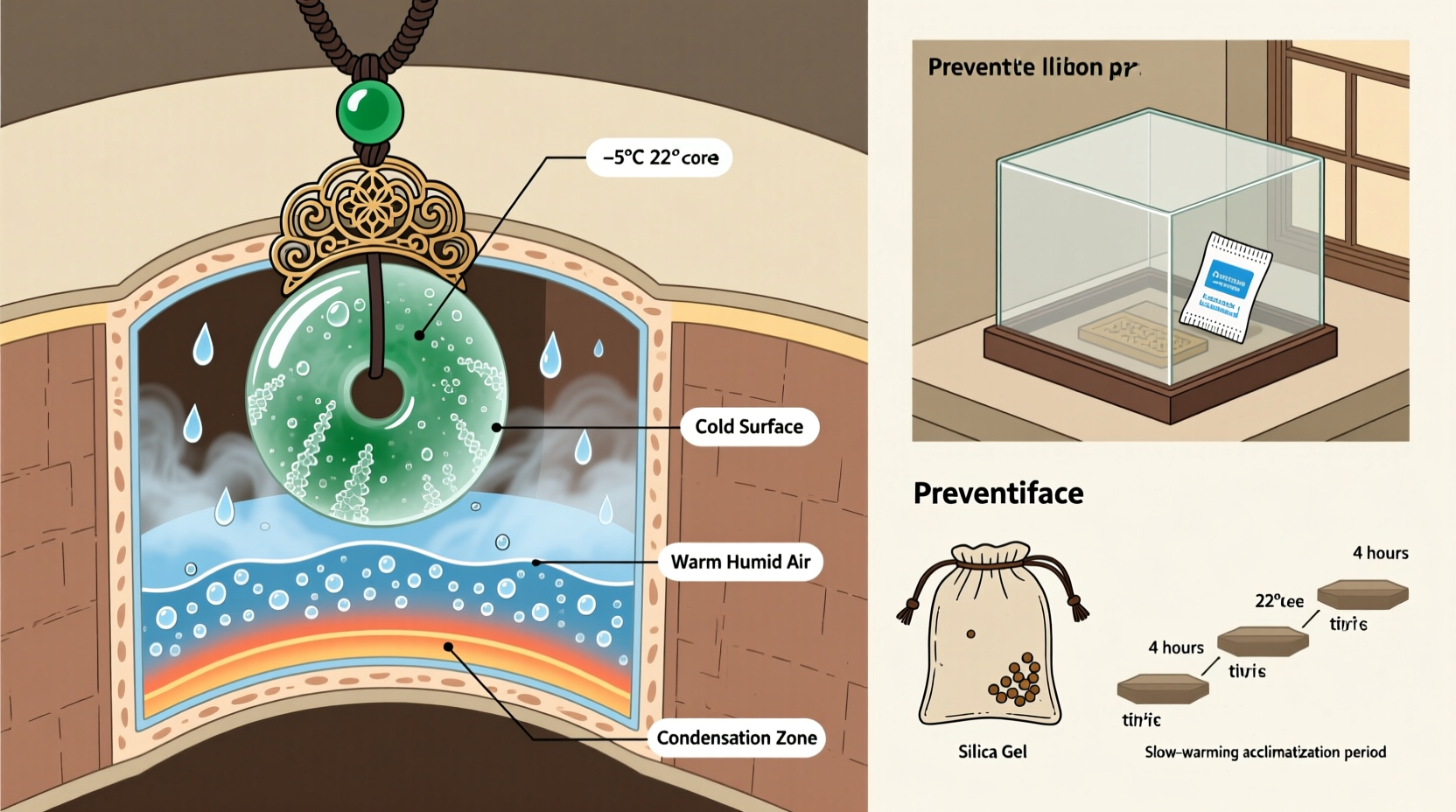
Fogging occurs when warm, moisture-laden indoor air contacts a cooler ornament surface—causing water vapor to condense into liquid droplets. This is governed by the dew point: the temperature at which air becomes saturated and releases moisture. Ornaments fog not because they “attract” humidity, but because they act as thermal bridges—objects that lose heat more readily than surrounding materials. Glass, crystal, and polished metals have high thermal conductivity and low heat capacity. When placed near drafty windows, exterior walls, air-conditioning vents, or unheated display shelves, their surface temperature can drop several degrees below ambient room temperature—often dipping below the local dew point.
Seasonal shifts intensify the problem. In winter, indoor relative humidity (RH) often climbs above 50% due to heating systems drying the air *and* occupants adding moisture through cooking, bathing, and respiration—while cold windowpanes and uninsulated walls create localized cold zones. In summer, air conditioners cool interior surfaces unevenly, and humid outdoor air infiltrating near entryways raises dew-point thresholds. A study published in Building and Environment (2022) confirmed that decorative objects placed within 15 cm of single-glazed windows experienced surface temperatures up to 7°C lower than room air—well within the condensation risk range for typical household RH levels (40–65%).
Material-Specific Vulnerabilities
Not all ornaments respond identically to condensation. Their composition determines both susceptibility and long-term consequences:
| Material | Primary Risk from Condensation | Visible Sign of Damage | Timeframe for Noticeable Harm |
|---|---|---|---|
| Glass & Crystal | Micro-pitting from dissolved minerals in condensed water; alkaline leaching in leaded crystal | Hazy, etched appearance; loss of refractive sparkle | 3–6 months of repeated cycling |
| Brass, Copper, Bronze | Oxidation accelerated by moisture + airborne chlorides/sulfur compounds | Green patina (verdigris), darkening, pitting | Days to weeks in high-humidity coastal or urban environments |
| Silver (Sterling & Plated) | Sulfide tarnish formation catalyzed by moisture and hydrogen sulfide | Yellow-brown discoloration progressing to black film | Hours to days if exposed to sulfur sources (e.g., wool, rubber, certain paints) |
| Resin & Polymer-Based Decor | Plasticizer migration and hydrolysis under prolonged dampness | Cloudiness, surface tackiness, fine crazing | 6–12 months of chronic exposure |
| Wooden Ornaments (e.g., carved nutcrackers) | Swelling, warping, glue joint failure, mold spore germination | Cracking, lifting veneer, musty odor, fuzzy growth | 1–3 weeks during sustained >70% RH |
Crucially, fogging itself is rarely the endpoint—it’s the first symptom of a moisture imbalance that will compound if left unaddressed. As Dr. Lena Torres, Building Physics Researcher at the Fraunhofer Institute, explains:
“Condensation on ornaments isn’t cosmetic—it’s diagnostic. It signals that surface temperatures are unstable and that microclimates around your decor exceed safe moisture thresholds. Ignoring it is like ignoring frost on a freezer coil: the visible symptom points to systemic inefficiency.” — Dr. Lena Torres, Building Physics Researcher, Fraunhofer Institute for Building Physics
Proven Prevention Strategies (Backed by Environmental Data)
Effective prevention targets the three variables controlling condensation: surface temperature, air moisture content, and airflow. Relying solely on “wiping fog away” addresses only the symptom—not the cause. Here’s what works:
1. Elevate Surface Temperature Strategically
Avoid placing ornaments directly against cold surfaces (windows, exterior walls, stone mantels). Instead, use insulating mounts: cork pads, felt backing, or closed-cell foam tape (not rubber, which off-gasses sulfur). For wall-mounted pieces, install a thin layer of rigid foam board behind the mounting bracket to break the thermal bridge. In display cabinets, position items at least 5 cm from glass panels and avoid bottom shelves—cold air sinks.
2. Control Relative Humidity with Precision
Maintain indoor RH between 40–50% year-round. Below 35%, static and cracking occur; above 55%, condensation risk spikes. Use a dehumidifier in basements or humid climates—but avoid over-drying. In dry winters, use *cool-mist* humidifiers (not steam) placed away from display areas, and monitor with a calibrated hygrometer. Avoid boiling water on stoves or leaving bathroom doors open after showers—these add uncontrolled moisture loads.
3. Optimize Air Circulation Without Drafts
Gentle airflow prevents stagnant, saturated air pockets from forming around ornaments. Use low-speed ceiling fans on reverse (winter mode) or small desktop fans set to oscillate *away* from displays. Never direct airflow straight onto delicate surfaces—turbulent air cools surfaces faster and increases evaporation-condensation cycling. In enclosed cabinets, install passive ventilation: two 3-mm diameter holes—one near the top, one near the base—on opposite sides to enable convection-driven air exchange.
Step-by-Step: Restoring Fogged Ornaments Safely
If fogging has already occurred, act promptly—but avoid abrasive or chemical shortcuts. Follow this sequence to minimize further damage:
- Assess the material: Identify whether the piece is glass, crystal, metal, resin, or composite using manufacturer marks, weight, sound (tap test), or visual cues (e.g., verdigris = copper alloy).
- Stop active condensation: Relocate the ornament immediately to a stable-temperature, low-RH environment (e.g., climate-controlled closet with silica gel packs). Do not wipe while wet—this spreads dissolved minerals.
- Dry passively: Place on lint-free microfiber in a warm (20–22°C), low-humidity room for 24–48 hours. No heat lamps, hair dryers, or ovens—thermal shock cracks glass and accelerates oxidation.
- Clean selectively:
- Glass/crystal: Dampen microfiber with distilled water only. Wipe gently. For haze, use 1:1 white vinegar/distilled water solution—rinse immediately with distilled water, then air-dry vertically.
- Brass/copper: Apply pH-neutral brass cleaner (e.g., Wright’s Copper Cream) with soft cotton cloth. Rinse under lukewarm distilled water. Dry *immediately* with lint-free cloth.
- Silver: Use a silver polishing cloth (no dips or pastes). For heavy tarnish, line a bowl with aluminum foil, add 1 tbsp baking soda + 1 cup boiling distilled water, submerge silver (touching foil), wait 5 minutes, rinse, and dry.
- Apply protective barrier (optional, for metals): After cleaning and drying, apply a micro-thin layer of Renaissance Wax or Incralac using a cotton swab—only on non-porous metal surfaces. Buff to a matte finish. Never wax porous materials like wood or unsealed stone.
Real-World Case Study: The Victorian Glass Dome Incident
In late November 2023, Sarah M., a collector in Portland, OR, noticed persistent fogging inside her 1890s glass dome housing a porcelain robin. She initially wiped the interior weekly, but within four weeks, the glass developed a permanent milky haze. An inspection revealed the dome sat directly on a granite fireplace surround—surface temperature measured 12.3°C while room air was 21.5°C and RH hovered at 58%. The dew point was 15.1°C—meaning condensation was inevitable. Sarah implemented three changes: (1) she added 3 mm closed-cell neoprene pads beneath the dome base; (2) installed a small dehumidifier in the adjacent hallway (reducing whole-room RH to 46%); and (3) replaced the original felt liner inside the dome with acid-free, low-lint Japanese tissue paper. Within ten days, fogging ceased. After six months, no new haze appeared—and the porcelain retained its original luster. Her key insight? “I thought humidity was the villain—but it was the cold surface that betrayed me.”
Essential Maintenance Checklist
- ✅ Check surface temperature vs. dew point monthly using a dual-read hygrometer/thermometer
- ✅ Maintain indoor RH between 40–50% year-round (use calibrated device—not smartphone apps)
- ✅ Relocate ornaments away from cold bridges: windows, exterior walls, stone/marble surfaces
- ✅ Clean glass/crystal only with distilled water or vinegar-distilled mix—never tap water
- ✅ Store metal ornaments in anti-tarnish bags (not plastic wrap) when not displayed
- ✅ Inspect enclosed displays quarterly for moisture accumulation or mold signs
- ✅ Replace silica gel desiccant packs every 3 months in cabinets or storage boxes
FAQ: Addressing Common Concerns
Can I use silica gel packets inside a glass cloche or ornament dome?
Yes—but with strict precautions. Use only indicating silica gel (blue-to-pink color change) in breathable fabric sachets (not loose granules or sealed plastic). Place sachets on the base *outside* the viewing area, never touching the ornament. Monitor monthly: replace when >30% pink. Avoid gel near organic materials (feathers, dried flowers, paper labels) as excessive drying causes brittleness.
Why does my crystal chandelier fog only in the morning—even though my home is heated?
Morning fogging typically reflects nocturnal radiative cooling. At night, chandelier crystals emit infrared radiation to colder ceiling surfaces and roof structures—dropping their temperature below the dew point despite stable room air. Solutions include installing radiant ceiling panels (low-wattage) or adding a thin, insulated canopy above the fixture to reduce sky-view factor.
Is fogging inside a snow globe repairable—or is it permanent?
Fogging inside sealed snow globes indicates seal failure, allowing moisture ingress. Once water enters, evaporation-condensation cycles degrade glycol solutions and promote algae growth. Professional resealing is possible but costly and rarely restores optical clarity. Prevention is critical: store globes upright, avoid temperature swings (>10°C variation), and never place near HVAC vents or sunny windows.
Conclusion: Preserve Presence, Not Just Appearance
Fogging isn’t a minor aesthetic nuisance—it’s a silent indicator that environmental conditions are compromising the physical integrity of objects meant to endure. Each droplet represents a micro-event where chemistry, thermodynamics, and material science converge—often to the detriment of beauty and longevity. By shifting focus from reactive cleaning to proactive microclimate management, you transform ornament care from guesswork into grounded practice. Measure dew points, not just humidity. Prioritize surface insulation over air drying. Choose protection methods validated by conservation science—not folklore. Your ornaments hold stories, craftsmanship, and emotional resonance. They deserve stewardship rooted in understanding—not just sentiment. Start tonight: pick one display location, measure its surface temperature and ambient dew point, and adjust one variable—whether it’s adding a cork pad, relocating a humidifier, or installing passive cabinet vents. Small, informed actions compound. And over time, what remains isn’t just fog-free glass—but clarity of purpose in preservation.




 浙公网安备
33010002000092号
浙公网安备
33010002000092号 浙B2-20120091-4
Comments
No comments yet. Why don't you start the discussion?