
Light interacts with objects in subtle yet profound ways, especially when it passes through transparent or semi-transparent materials. Ornaments made of glass, crystal, resin, or gemstone don’t just reflect light—they refract it. This means they bend and redirect light rays as they pass through, often creating dazzling effects like rainbows, focused beams, or distorted shapes. But not all ornaments handle light the same way. Some scatter it broadly; others intensify it sharply in one direction. The reason lies in a fundamental optical property: the refractive index.
Understanding how refractive index influences light behavior allows you to curate decorative arrangements that are not only beautiful but harmonious. When arranged thoughtfully, ornaments can amplify ambient light without causing glare, visual clutter, or dissonance. This article explores the science behind uneven light magnification in ornaments and provides practical guidance on organizing them based on their optical properties for balanced, elegant interiors.
The Science Behind Uneven Light Magnification
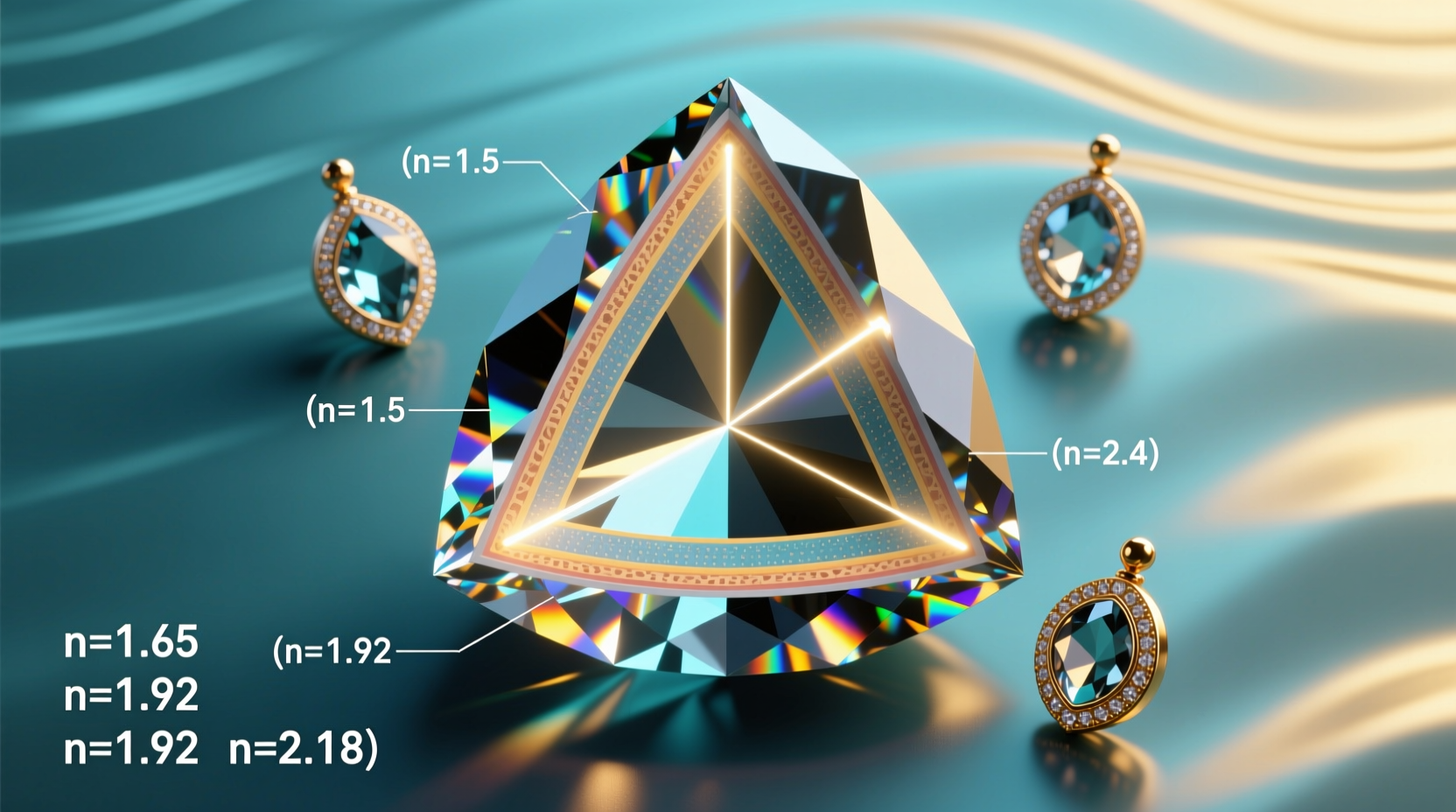
When light travels from air into a denser medium—like glass or crystal—it slows down and changes direction. This bending of light is called refraction. The degree to which a material bends light is measured by its refractive index (RI). Materials with higher RI values bend light more dramatically than those with lower values.
For example:
- Air has an RI of about 1.00
- Water: 1.33
- Standard glass: 1.5–1.6
- Lead crystal: up to 1.7–1.9
- Diamond: 2.42
The higher the refractive index, the more the ornament will split and focus incoming light. This is why a lead crystal pendant can cast vivid rainbows across a wall while a simple glass bead may only shimmer faintly. The uneven magnification occurs because different parts of an ornament have varying thicknesses and curvatures, causing light to be refracted at multiple angles. A facet-cut crystal, for instance, acts like a series of tiny prisms, each bending light differently depending on its orientation.
This effect becomes especially noticeable under direct lighting—such as sunlight streaming through a window or a spotlight in a display cabinet. In such conditions, high-RI ornaments can create intense hotspots or scattered glimmers, while low-RI pieces produce softer diffusion.
How Refractive Index Influences Visual Harmony
Visual harmony in interior decor isn't just about color coordination or spatial balance—it also involves managing light dynamics. Ornaments that refract light too aggressively can disrupt a room’s calmness, creating visual noise. Conversely, under-refractive pieces might go unnoticed, failing to contribute to the ambiance.
Harmony arises when light is distributed intentionally—not randomly amplified or suppressed. By grouping ornaments according to their refractive index, you can control how light moves through a space. This approach transforms decoration from passive display into active environmental design.
Consider a dining room centerpiece composed of mixed glassware. If high-RI crystal goblets sit beside low-RI soda-lime glass sculptures, the resulting light play will be chaotic—one object casting bright streaks, another merely glowing. But if grouped by similar RI values, the light distribution becomes cohesive, producing a unified luminous effect.
“Light is the silent choreographer of space. When ornaments are aligned by optical behavior, they dance together instead of competing.” — Dr. Lena Moreau, Architectural Lighting Researcher, ETH Zurich
Step-by-Step Guide: Arranging Ornaments by Refractive Index
Creating optical harmony requires both awareness and intention. Follow this five-step process to organize your ornaments effectively:
- Identify Material Types: Begin by sorting your ornaments by material—crystal, glass, acrylic, quartz, etc. Each has a typical RI range. Use manufacturer data or online databases if uncertain.
- Group by Refractive Index Range: Create categories:
- Low RI (1.3–1.5): Resin, acrylic, some glasses
- Medium RI (1.5–1.7): Soda-lime and borosilicate glass
- High RI (1.7+): Lead crystal, flint glass, gemstones
- Assess Light Sources: Note where natural and artificial light enters the room. South-facing windows provide strong directional light ideal for high-RI pieces. North-facing areas offer diffused light better suited for low-to-medium RI ornaments.
- Arrange in Zones: Place high-RI items near direct light sources where their refraction can be fully appreciated. Position low-RI ornaments in shaded or indirect zones to avoid underperformance. Medium-RI pieces work well as transitional elements between zones.
- Test and Adjust: Observe the arrangement at different times of day. Morning sun may highlight one cluster, evening lamps another. Fine-tune positions until light flows smoothly across the groupings.
Do’s and Don’ts: Managing Refractive Effects
| Action | Do | Don’t |
|---|---|---|
| Placement near windows | Use high-RI crystals to capture and scatter sunlight gently into the room | Place large, faceted pieces directly opposite beds or desks where glare may cause discomfort |
| Display cabinets | Layer medium and high-RI items with spacing to allow light penetration from within | Crowd too many refractive objects together—this causes overlapping distortions and visual fatigue |
| Night lighting | Pair LED spotlights with high-RI ornaments to create ambient sparkle | Use warm, diffuse bulbs with highly refractive pieces expecting sharp rainbow effects—they won’t perform well |
| Mixed-material displays | Separate by RI but use color or form to visually link groups | Mix high and low RI ornaments haphazardly in the same small area |
Real Example: Transforming a Living Room Nook
Sophie, an interior designer in Portland, was tasked with revitalizing a dim corner of a client’s living room. The space had a narrow east-facing window and previously held a mismatched collection of glass vases, a plastic sculpture, and a small quartz geode. During morning hours, the area flickered unpredictably—bright flashes from the glass, dull reflections from the plastic, and occasional glints from the quartz.
Sophie reorganized the display using refractive principles. She removed the acrylic piece (RI ~1.49) and replaced it with a hand-blown borosilicate orb (RI ~1.47), closely matching the other glass items. She placed the quartz (RI ~1.54–1.55) slightly behind the glass pieces to act as a secondary refractor. Finally, she added a small cut crystal prism (RI ~1.7) at the front edge, angled to catch the first rays of sunrise and project soft rainbows onto the adjacent wall.
The result was transformative. Instead of erratic flashes, the nook now emitted a cascading glow each morning, with light flowing cohesively from one object to the next. The client reported feeling more energized upon entering the room, attributing it to the “gentle awakening” of light.
Checklist: Achieving Optical Harmony with Ornaments
Use this checklist before arranging or rearranging decorative objects:
- ✅ Identify the primary material of each ornament
- ✅ Look up or estimate its refractive index
- ✅ Group items into low, medium, and high RI clusters
- ✅ Map natural and artificial light paths in the room
- ✅ Assign clusters to appropriate lighting zones
- ✅ Allow space between pieces to prevent overlapping glare
- ✅ Test arrangements at multiple times of day
- ✅ Adjust angles or positions to guide light where desired
- ✅ Use non-refractive elements (wood, fabric, metal) as visual buffers between clusters
- ✅ Reassess seasonally, as sun angles change
Frequently Asked Questions
Can I mix different types of glass ornaments in the same display?
Yes, but with care. Mixing different glass types (e.g., soda-lime and lead crystal) is acceptable if they are close in refractive index or strategically spaced. For example, place a high-RI crystal paperweight at the center of a tray surrounded by lower-RI glass beads. This creates a focal point without overwhelming the eye.
How do I reduce glare from high-refractive ornaments?
Glare occurs when light is concentrated too intensely. To mitigate it:
- Reposition the ornament so it doesn’t reflect directly toward seating areas
- Use frosted or matte finishes on surrounding surfaces to diffuse reflected light
- Add sheer curtains to soften incoming sunlight
- Choose less faceted designs if sparkle is desired without intensity
Are there tools to measure an ornament’s refractive index at home?
While precise measurement requires a refractometer (used in gemology), you can estimate RI through observation. Hold the ornament over printed text: higher RI materials will distort the text more significantly due to greater light bending. Also, compare how much dispersion (rainbow effect) it produces under a flashlight—greater dispersion indicates higher RI.
Conclusion: Design with Light in Mind
Ornaments are more than static decorations—they are dynamic participants in how light shapes our experience of space. Recognizing that different materials refract light unequally empowers you to move beyond random placement and into intentional design. By grouping ornaments according to refractive index and aligning them with natural and artificial light flows, you create environments that feel balanced, alive, and thoughtfully illuminated.
The goal isn’t uniformity, but harmony—a room where light dances purposefully, where each ornament contributes to a greater luminous narrative. Whether you're styling a bookshelf, a mantelpiece, or a gallery wall, take a moment to consider not just how an object looks, but how it interacts with light. That shift in perspective can transform ordinary decor into an orchestrated play of brilliance and shadow.




 浙公网安备
33010002000092号
浙公网安备
33010002000092号 浙B2-20120091-4
Comments
No comments yet. Why don't you start the discussion?