
Sudden rage at someone chewing gum. A surge of anxiety when you hear pen clicking. The urge to flee a room because of rhythmic foot tapping. If these reactions sound familiar, you're not alone—and you're not overreacting. These experiences may be signs of misophonia, a condition where specific sounds provoke intense emotional or physiological responses. While it’s not widely understood, growing research is shedding light on why seemingly harmless noises can feel unbearable for some people.
Misophonia, which literally means \"hatred of sound,\" isn’t about volume or pitch. It’s about meaning. Certain repetitive or pattern-based sounds—often produced by others—can trigger fight-or-flight reactions in individuals with misophonia. This article explores the science behind misophonia, identifies common triggers, and offers practical strategies for managing daily life with greater ease.
What Is Misophonia?
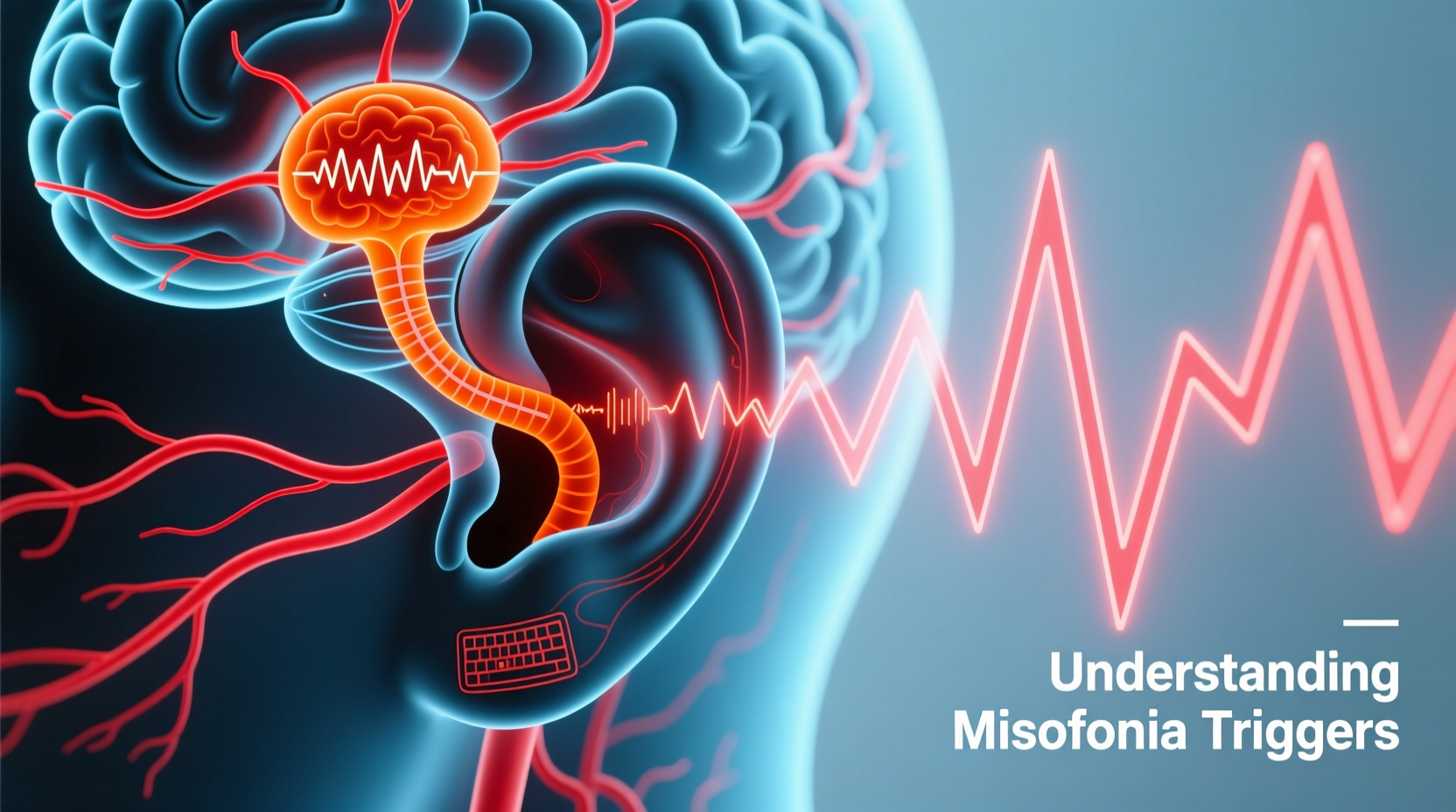
Misophonia is a neurophysiological disorder characterized by extreme sensitivity to specific sounds, typically those associated with human behavior. Unlike hyperacusis (a general oversensitivity to sound) or phonophobia (fear of sound), misophonia involves a strong emotional reaction—such as anger, disgust, or panic—to particular auditory stimuli.
The condition usually develops in late childhood or early adolescence. Triggers are often mundane: eating sounds, breathing, typing, sniffing, or throat clearing. What sets misophonia apart is the disproportionate response. Hearing someone chew might cause mild annoyance in most people—but for someone with misophonia, it can spark full-body tension, rage, or an overwhelming need to escape.
Though not yet formally recognized in the DSM-5 (the diagnostic manual used by mental health professionals), misophonia is increasingly studied by neurologists, audiologists, and psychologists. Researchers believe it involves abnormal connectivity between the auditory cortex and limbic system—the brain regions responsible for processing sound and emotion.
“Misophonia isn’t just being ‘annoyed’ by noise. It’s a neurological mismatch where the brain interprets neutral sounds as threats.” — Dr. Jennifer Jo Brout, Sensory Processing and Emotion Regulation Expert
Common Misophonia Triggers and Their Impact
Triggers vary from person to person, but many fall into predictable categories. Below is a breakdown of frequent culprits and the typical reactions they provoke.
| Trigger Category | Examples | Common Reactions |
|---|---|---|
| Eating & Drinking | Chewing, crunching, slurping, lip smacking | Anger, disgust, nausea, desire to yell or leave |
| Breathing & Nasal Sounds | Sniffling, heavy breathing, nose whistling | Anxiety, tension, obsessive focus on the sound |
| Repetitive Movements | Pen clicking, foot tapping, leg shaking | Frustration, agitation, physical restlessness |
| Vocalizations | Throat clearing, humming, whispering | Startle response, irritation, emotional withdrawal |
| Daily Activities | Type clacking, rustling paper, brushing teeth | Hyper-vigilance, fatigue, social avoidance |
What makes these sounds so powerful? It's not their loudness—it's their predictability. Repetitive, rhythmic patterns activate the brain’s salience network, which determines what deserves attention. In misophonia, this network becomes hypersensitive, flagging benign sounds as urgent threats.
How the Brain Responds in Misophonia
Recent fMRI studies have shown that individuals with misophonia exhibit heightened activity in the anterior insular cortex—a region involved in self-awareness, emotion, and autonomic control—when exposed to trigger sounds. This area connects more intensely with the amygdala (fear center) and the hippocampus (memory hub), creating a feedback loop of distress.
In one landmark study published in *Current Biology*, researchers found that people with misophonia showed unique brain activity when hearing trigger sounds like eating or breathing. Their heart rates increased, skin conductance rose (indicating stress), and functional scans revealed overactivity in emotion-regulation networks—even when the same sounds were played backward and no longer recognizable.
This suggests that the brain doesn’t just react to the sound itself, but to its association with past negative experiences. A single unpleasant meal with a loud chewer could imprint the sound emotionally, turning it into a lifelong trigger.
The condition appears to be independent of hearing ability. People with misophonia don’t hear sounds louder than others—they interpret them differently. The brain assigns emotional weight to specific auditory patterns, bypassing rational thought and triggering instinctive survival responses.
Why Do Some Sounds Bother Me But Not Others?
The specificity of triggers is one of misophonia’s defining traits. You might tolerate loud music but crumble under the sound of someone peeling an orange. This selectivity stems from learned associations and personal context.
- Familiarity: Sounds made by family members or close coworkers are often more triggering due to repeated exposure.
- Intent: Involuntary sounds (like sniffing) may be less offensive than deliberate ones (like pen clicking), which can feel disrespectful.
- Context: A chewing sound during a quiet meeting feels more intrusive than the same sound at a noisy restaurant.
- Emotional State: Stress, fatigue, or anxiety can lower your threshold for sound tolerance.
Coping Strategies and Management Techniques
While there is no cure for misophonia, several evidence-based approaches can reduce symptom severity and improve quality of life. The goal is not to eliminate all triggers—which is impossible—but to build resilience and regain control.
Step-by-Step Guide to Managing Misophonia
- Identify Your Triggers: Use a journal to log reactions. Note the sound, setting, who produced it, and your emotional/physical response.
- Assess Impact: Rate each trigger on a scale of 1–10 based on how disruptive it is to your daily life. <3> Create Avoidance Plans: For high-impact triggers, develop practical workarounds—e.g., eating lunch at your desk instead of the break room.
- Use Sound Masking: Employ white noise machines, fans, or low-volume background music to dilute triggering sounds.
- Practice Cognitive Reframing: Work with a therapist to reframe thoughts like “This sound is unbearable” to “This sound is annoying, but I can handle it.”
- Build Tolerance Gradually: Under professional guidance, consider sound desensitization exercises using recorded triggers at low volume.
- Communicate Boundaries: Calmly explain your needs to trusted friends or coworkers without blaming them.
Do’s and Don’ts of Daily Living with Misophonia
| Do | Don’t |
|---|---|
| Wear earplugs in high-risk environments (e.g., cafeterias) | Isolate yourself completely to avoid sounds |
| Use visual cues (like hand signals) to request quiet | Confront others angrily during a trigger episode |
| Practice mindfulness or grounding techniques | Suppress emotions until you explode |
| Seek therapy specializing in sensory disorders | Assume everyone will understand immediately |
| Take breaks in quiet spaces during work hours | Blame yourself for your reactions |
Real-Life Example: Living with Misophonia at Work
Sarah, a 32-year-old graphic designer, began experiencing intense irritation toward her coworker’s constant gum chewing. At first, she tried to ignore it. But over time, the sound made her chest tighten, her jaw clench, and her productivity plummet. She avoided team lunches and dreaded meetings in shared spaces.
After researching her symptoms, Sarah realized she might have misophonia. She started wearing discreet earbuds with soft piano music during work hours. She also spoke with HR and arranged to switch desks to a quieter corner. Most importantly, she began cognitive behavioral therapy (CBT) focused on sensory regulation.
“It wasn’t about fixing my coworker,” Sarah said. “It was about giving myself tools to stay calm. Now I use a noise-canceling app during deep work, and I take mindful breathing breaks when I feel overwhelmed. I still dislike the sound, but it doesn’t hijack my day anymore.”
Expert Insight and Treatment Options
Currently, no medication specifically treats misophonia. However, multidisciplinary approaches show promise. Audiologists, psychologists, and occupational therapists often collaborate to create personalized care plans.
Cognitive Behavioral Therapy (CBT) helps patients reframe automatic negative thoughts and develop healthier responses. Tinnitus Retraining Therapy (TRT), originally designed for ringing in the ears, has been adapted to include sound tolerance training for misophonia. Mindfulness-Based Stress Reduction (MBSR) teaches present-moment awareness to reduce reactivity.
“We treat misophonia not by eliminating sound, but by changing the relationship between the person and the sound.” — Dr. Ali Danesh, Director of Audiology at the University of Miami Health System
Emerging therapies include Neuromodulation-Assisted Sound Therapy, which combines transcranial stimulation with controlled sound exposure. While still experimental, early trials suggest potential for long-term habituation.
FAQ About Misophonia
Is misophonia a mental illness?
No, misophonia is not classified as a mental illness. It is considered a neurobehavioral condition involving atypical brain processing of sound. While it can co-occur with anxiety or OCD, it exists independently and is rooted in sensory neuroscience.
Can children outgrow misophonia?
Some children experience reduced sensitivity over time, especially with early intervention. However, without support, misophonia often persists into adulthood. Early identification and coping skill development are key to minimizing long-term impact.
Are there tests to diagnose misophonia?
There is no definitive medical test, but clinicians use structured interviews and questionnaires like the Amsterdam Misophonia Scale (AMIS) to assess symptom severity. Diagnosis is based on reported triggers, emotional responses, and functional impairment.
Conclusion: Taking Control One Sound at a Time
Understanding why certain sounds provoke such intense reactions is the first step toward reclaiming peace of mind. Misophonia is not a flaw in character or a sign of being “too sensitive.” It is a real, biologically grounded condition that deserves recognition and compassion.
By identifying triggers, applying practical coping tools, and seeking informed support, it’s possible to reduce the daily burden of misophonia. Whether through therapy, environmental adjustments, or simple acts of self-kindness, progress is achievable.




 浙公网安备
33010002000092号
浙公网安备
33010002000092号 浙B2-20120091-4
Comments
No comments yet. Why don't you start the discussion?