
Every holiday season, millions of homes light up with festive displays, many powered by strings of Christmas lights bought on a budget. But while the initial savings feel good, the frustration sets in fast when entire strands flicker out after just one or two uses. Why do cheap Christmas lights burn out so quickly? More importantly, what can you do to avoid this seasonal letdown and enjoy longer-lasting, more reliable lighting without breaking the bank?
The answer lies not just in price tags but in materials, design, electrical engineering, and usage habits. Understanding these factors empowers you to make smarter purchases and maintain your lights properly—so they brighten your holidays for years to come.
Why Cheap Lights Fail So Quickly
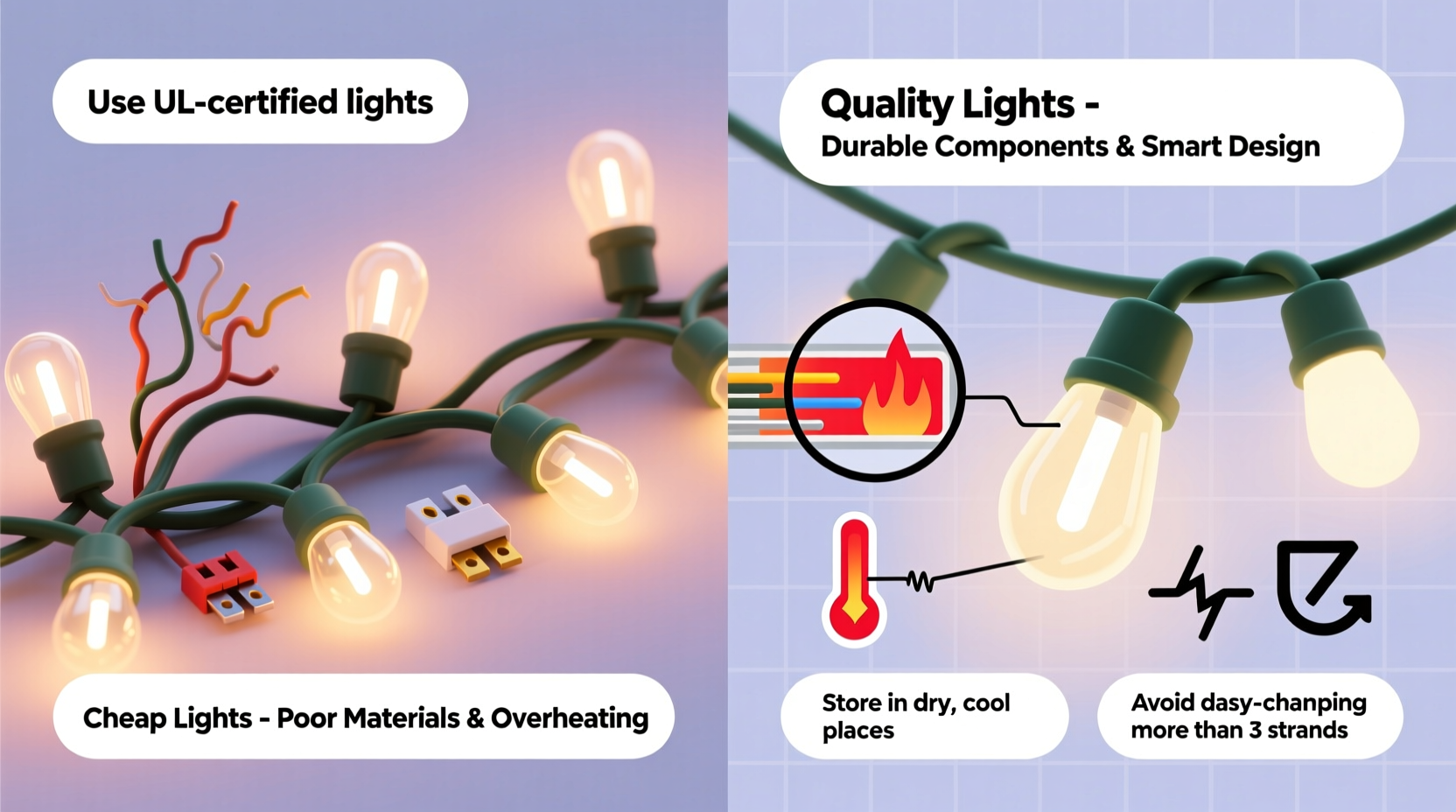
Cheap Christmas lights are designed for low upfront cost, not long-term durability. Manufacturers cut corners in several key areas that directly impact performance and longevity.
Poor Quality Bulbs and Filaments
In incandescent mini-lights—the most common type found in budget packs—the bulbs use thin tungsten filaments housed in fragile glass envelopes. In cheaper models, these filaments are often undersized or inconsistently wound, making them highly susceptible to vibration, heat stress, and voltage fluctuations. Even minor jostling during installation or wind exposure outdoors can cause early breakage.
Additionally, the glass used is thinner and less resistant to thermal expansion. When the bulb heats up rapidly upon being turned on, weak glass may crack or shatter, exposing the filament to air and causing immediate burnout.
Substandard Wiring and Insulation
The wires in inexpensive light strings are typically made from lower-gauge copper or even copper-clad aluminum (CCA), which has higher resistance and heats up more under load. This increased resistance reduces efficiency and accelerates wear on both the wiring and the bulbs.
Insulation is another weak point. Thin PVC coatings degrade quickly when exposed to sunlight, extreme temperatures, or moisture. Once insulation cracks, wires can short-circuit, leading to partial or total strand failure.
Series Circuit Design Flaws
Most budget Christmas lights are wired in series, meaning electricity flows through each bulb in sequence. If one bulb burns out or becomes loose, the circuit breaks and the entire string goes dark. While some newer sets include shunt wires to bypass dead bulbs, cheap versions often have poorly implemented or missing shunts, rendering the feature useless.
This design magnifies the impact of a single failure. Instead of losing one light, you lose dozens—or an entire display.
How to Choose Longer-Lasting Christmas Lights
Not all affordable lights are doomed to fail. With careful selection, you can find durable options that balance cost and quality. Here’s what to look for:
Opt for LED Over Incandescent
LED (light-emitting diode) Christmas lights consume up to 90% less energy than incandescent bulbs and generate minimal heat, reducing stress on components. LEDs also have no filament to burn out and can last 25,000 to 50,000 hours—potentially decades of seasonal use.
While the upfront cost is higher, LEDs pay for themselves over time through energy savings and reduced replacement needs. Many budget LED sets now rival the warm glow of traditional bulbs thanks to improved color temperature technology (look for 2700K–3000K).
Check for Shunted Sockets and Parallel Wiring
Even in series-wired strings, shunted sockets help maintain the circuit when a bulb fails. A shunt is a small conductive bridge inside the socket that activates when a filament breaks, allowing current to continue flowing.
Parallel-wired strings go a step further—each bulb has its own independent path to power. These are more expensive but dramatically increase reliability. They’re ideal for large displays where downtime isn’t an option.
Inspect Build Quality Before Buying
Examine the following before purchasing:
- Wire thickness: Thicker, flexible cords resist cracking and kinking.
- Bulb attachment: LEDs should be securely molded into the socket, not loosely inserted.
- Weatherproof rating: For outdoor use, ensure lights are rated for outdoor conditions (UL listed for outdoor use).
- Plug construction: Sturdy plugs with strain relief reduce the risk of internal wire damage.
“Many consumers don’t realize that a $15 set of lights replaced every year costs more over five years than a $40 set that lasts a decade.” — Mark Reynolds, Electrical Safety Consultant at Holiday Lighting Institute
Step-by-Step Guide to Extending Light Lifespan
Even high-quality lights won’t last without proper handling. Follow this timeline-based care routine to protect your investment year after year.
- Before Installation – Test Every Strand
Plug in each string before hanging. Replace any faulty bulbs immediately. Use a bulb tester or walk along the strand to identify dark sections. This prevents surprises later and reduces strain on working bulbs caused by undetected failures. - Dry Hands and Dry Surfaces Only
Never handle lights with wet hands or install them in damp conditions. Moisture increases conductivity across damaged insulation, raising the risk of short circuits and corrosion. - Use Proper Hanging Methods
Avoid puncturing wires with staples or nails. Instead, use plastic clip holders designed for Christmas lights. These distribute weight evenly and prevent abrasion against gutters, siding, or branches. - Don’t Overload Circuits
Follow manufacturer guidelines for maximum connectable strings. Most incandescent sets allow only 3–5 linked strands; LEDs often allow 40+ due to lower wattage. Overloading causes overheating and premature transformer or fuse failure. - Turn Off When Unattended or During Storms
Power down lights overnight or when leaving the house for extended periods. Lightning surges and high winds pose real risks to outdoor displays. - After Season – Clean and Store Carefully
Gently wipe down cords and bulbs with a dry cloth to remove dust and salt residue (especially in coastal areas). Coil lights loosely around a cardboard spool or use a storage reel to prevent tangles and wire stress.
Comparison Table: Cheap vs. Quality Christmas Lights
| Feature | Cheap Lights | Quality Lights |
|---|---|---|
| Bulb Type | Thin-filament incandescent | LED or robust incandescent |
| Wiring | Thin gauge, CCA wire | Copper, thicker insulation |
| Circuit Type | Series (one bulb kills all) | Shunted or parallel |
| Lifespan | 1–3 seasons | 5–15+ seasons |
| Energy Use | High (40–100W per string) | Low (2–8W per string) |
| Outdoor Suitability | Marginal; degrades fast | UL-rated, weather-sealed |
Real Example: The Neighborhood Display That Lasted 12 Years
In suburban Denver, homeowner Linda Tran built her family’s holiday light display gradually, starting with a few cheap strands in 2010. By the third year, she was replacing nearly half her inventory annually—spending over $120 each November just to keep things lit.
After consulting a local electrician, she switched strategy: she invested in commercial-grade LED net lights for bushes, invested in modular icicle lights with replaceable sections, and began using timers and surge protectors religiously. She also upgraded her storage system from trash bags to ventilated plastic bins with reels.
Today, much of her original 2013 setup still works flawlessly. Her annual spending dropped to under $30 for occasional additions or backups. “I thought I was saving money buying the cheapest lights,” she says. “But I was actually wasting hundreds.”
Essential Checklist: Buy Smarter, Last Longer
Use this checklist before purchasing or storing your Christmas lights:
- ✅ Choose LED whenever possible for efficiency and longevity
- ✅ Verify UL certification for indoor/outdoor safety
- ✅ Check for shunted sockets or parallel wiring
- ✅ Avoid tangled packaging—sign of poor manufacturing
- ✅ Buy spare bulbs and fuses specific to your model
- ✅ Use surge protectors for outdoor outlets
- ✅ Store coiled loosely in climate-stable area (not attic or garage)
- ✅ Test all strands before and after each season
Frequently Asked Questions
Can I repair a dead section of Christmas lights?
Yes, especially with LED strings. Use a multimeter to locate open circuits or visibly damaged wires. Some brands offer splice kits. For incandescent sets, replacing the entire section may be more efficient than troubleshooting individual bulbs.
Why do my lights work one year and fail the next, even in storage?
Temperature swings, humidity, and rodent activity can damage stored lights. Plastic becomes brittle in cold garages, and mice sometimes chew through insulation. Always store lights in sealed containers away from pests and extreme conditions.
Are smart Christmas lights more reliable?
Smart lights (Wi-Fi or Bluetooth enabled) tend to be higher quality due to added electronics, but they introduce new failure points like app compatibility or hub malfunctions. However, because they're built to premium standards, their base durability often exceeds basic strings—even if features become obsolete.
Conclusion: Invest Once, Illuminate for Years
The allure of bargain Christmas lights is understandable, but their rapid burnout comes at a hidden cost—in money, time, and holiday frustration. By understanding the engineering behind early failures and adopting smarter buying and maintenance habits, you can create a stunning, sustainable display that grows brighter with each passing season.
Start small: replace one old strand with a quality LED alternative this year. Test it, care for it, and watch it outlast three cheap sets. Let reliability become part of your tradition. After all, the true spirit of the holidays isn’t found in how many lights you hang—but in how long they continue to shine.




 浙公网安备
33010002000092号
浙公网安备
33010002000092号 浙B2-20120091-4
Comments
No comments yet. Why don't you start the discussion?