
Every holiday season, millions of households across the world string up Christmas lights to create a festive atmosphere. Yet, for many, the joy is short-lived—flickering bulbs, darkened strands, or complete failure often occur within weeks. While it may seem like bad luck, the real culprit lies in the internal components of cheap Christmas lights. Unlike their premium counterparts, budget-friendly strings are built with cost-cutting materials and compromised engineering, making them far more susceptible to early failure. Understanding the science behind these failures isn’t just about technical curiosity—it’s essential for making smarter purchasing decisions and getting better value from your seasonal decorations.
The Anatomy of a Miniature Christmas Light Bulb
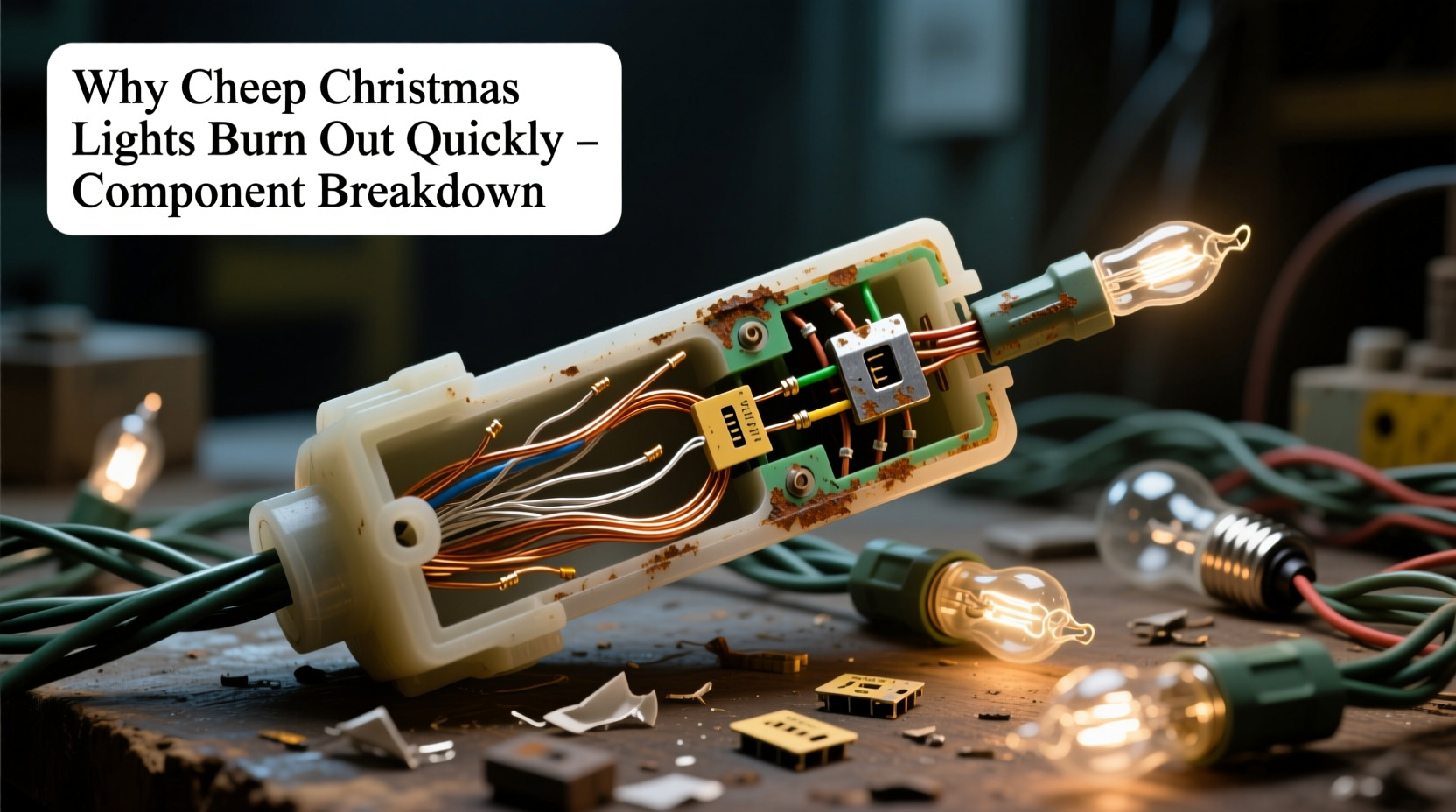
A standard incandescent mini Christmas light consists of several key parts: a glass bulb, tungsten filament, support wires, a solder bead, insulating base, and a plastic socket. When electricity flows through the filament, it heats up and emits light. However, this process also subjects the components to thermal stress, oxidation, and electrical fluctuations.
In high-quality lights, each element is engineered for durability. The filament is precisely coiled and supported to minimize vibration damage. The solder bead connecting the wire to the base is made from a high-tin alloy that resists cracking. In contrast, cheaper models use thinner filaments, lower-grade solder, and poorly insulated bases. These compromises lead directly to premature burnout.
One of the most critical weaknesses in low-cost lights is the solder bead. During operation, the bulb heats up and cools down repeatedly. This thermal cycling causes expansion and contraction. Cheap solder—often containing more lead or impurities—becomes brittle over time and eventually cracks, breaking the circuit. Once one bulb fails this way, the entire strand can go dark if it's wired in series.
Circuit Design: Series vs. Parallel Wiring
The way bulbs are connected has a major impact on reliability. Most inexpensive Christmas light strands use series wiring, where electricity passes through each bulb in sequence. If one bulb fails—especially by open-circuiting—the entire strand goes dark. This is common with cheap lights because there's no redundancy in the system.
Higher-end lights often use parallel circuits or incorporate shunts—tiny conductive pathways inside the bulb base that activate when the filament breaks. When the filament burns out, the shunt closes the circuit, allowing current to bypass the dead bulb and keep the rest lit. This feature significantly improves user experience and reduces troubleshooting time.
Unfortunately, many budget manufacturers skip shunt technology to save fractions of a cent per bulb. Multiply that by 50 or 100 bulbs per strand, and the savings add up—but so does customer frustration.
“Over 70% of returns for Christmas lights are due to single-bulb failures causing full-string outages. That points directly to poor circuit design.” — Mark Reynolds, Lighting Engineer at HolidayTech Labs
Material Quality and Environmental Stress
Beyond circuitry, the physical materials used determine how well lights withstand real-world conditions. Outdoor-rated lights must resist moisture, UV exposure, temperature swings, and physical wear. Cheap lights often fail here too.
The insulation on wires in low-cost sets is typically made from thin PVC that becomes brittle in cold weather. Once cracked, water can seep in, leading to short circuits or corrosion at connection points. Similarly, the plastic sockets holding bulbs are prone to warping or splitting, especially when plugged in repeatedly or exposed to heat from adjacent bulbs.
Another overlooked factor is the gauge (thickness) of the copper wire. Premium lights use thicker 22–20 AWG wire, which handles current more efficiently and generates less heat. Budget versions often use 24–26 AWG wire, increasing resistance and contributing to voltage drop—especially in longer strands. This means bulbs at the end receive less power, causing uneven brightness and additional strain on internal components.
| Component | Premium Lights | Cheap Lights |
|---|---|---|
| Wire Gauge | 20–22 AWG | 24–26 AWG |
| Insulation Material | UV-resistant, thick PVC | Thin, non-UV-stabilized PVC |
| Filament Support | Double-supported coils | Minimal or no support |
| Solder Type | High-tin, durable alloy | Lead-heavy, brittle solder |
| Circuit Type | Shunted / parallel hybrid | Series, no shunts |
Manufacturing Shortcuts and Supply Chain Pressures
The root cause of these component flaws often traces back to manufacturing decisions driven by price competition. Retailers demand ever-lower prices, forcing suppliers to cut corners. A difference of $0.50 per strand can mean choosing between reliable components and marginal ones.
For example, automated assembly lines in mass production may not properly seat bulbs in sockets, leading to loose connections that arc and overheat. Testing procedures are often minimal or nonexistent—many strands are never powered on before packaging. As a result, defective units reach consumers undetected.
Additionally, counterfeit or substandard electronic components sometimes enter the supply chain. Resistors, fuses, and even the AC adapters for LED versions may be mislabeled or under-spec’d. These hidden flaws don’t show up immediately but accelerate degradation over time.
One telling sign of poor manufacturing is inconsistent bulb alignment or wobbling sockets. If a bulb doesn’t make firm contact, resistance increases at the junction, creating hot spots that degrade the metal contacts and eventually break the circuit.
Real-World Example: The Case of the Failing Front Porch Lights
Diane M., a homeowner in Ohio, purchased two identical 100-light strands from different retailers—one from a discount store for $3.99, the other online for $12.99. Both were advertised as \"indoor/outdoor\" and \"extra bright.\" She installed them side-by-side on her porch railing in early December.
Within three weeks, the cheaper strand began flickering. By Christmas Eve, only half the bulbs worked. The more expensive set remained fully lit throughout the season and was reused the following year without issue.
Upon inspection, she found that the failed strand had multiple cracked solder joints and corroded wire ends. The pricier version used sealed connectors and thicker insulation. Though both looked similar at first glance, the internal differences determined their lifespan. Diane now keeps the packaging and checks for UL certification and wire gauge before buying new lights.
How to Choose Longer-Lasting Christmas Lights
Not all affordable lights are doomed to fail—but knowing what to look for makes a big difference. Here’s a practical checklist to help you avoid the pitfalls of cheap construction:
- Check for UL Certification: Ensures the product meets basic safety and durability standards.
- Look for Shunted Sockets: Prevents total strand failure when one bulb burns out.
- Verify Wire Gauge: Opt for 20–22 AWG for better current handling, especially for outdoor or long runs.
- Inspect Insulation Thickness: Thicker, flexible coating resists cracking in cold weather.
- Choose LEDs Over Incandescents: LEDs consume less power, generate less heat, and last significantly longer—often 25,000+ hours.
- Read Reviews Carefully: Look for mentions of “burned out quickly,” “half the strand died,” or “bulbs fell out.”
- Buy From Reputable Brands: Names like GE, Philips, or Lightkeeper Pro invest in quality control and better materials.
Step-by-Step: Extending the Life of Your Christmas Lights
- Before First Use: Plug in the strand and test it fully. Replace any dim or non-working bulbs immediately.
- During Installation: Avoid sharp bends, pinching, or stretching. Don’t hang by the cord—use clips designed for lights.
- While Operating: Don’t daisy-chain more than three strands unless rated for it. Overloading causes overheating.
- At Season’s End: Let lights cool completely before unplugging. Gently coil them around a spool.
- Storage: Keep in a dry, temperature-stable place. Use original boxes or labeled containers to avoid confusion.
- Annual Check: Before reuse, inspect for cracked sockets, frayed wires, or discoloration near plugs.
Frequently Asked Questions
Why do only some bulbs in a strand burn out?
This usually happens in shunt-wired strings where the backup pathway activates after filament failure. In non-shunted series circuits, one burnout kills the whole strand. Partial failures suggest either mixed bulb ages or localized heat buildup.
Can I replace incandescent bulbs with LED ones?
Only if they’re the same voltage and base type. Mixing types in a series circuit can cause uneven current distribution and damage. It’s safer to buy a full LED strand designed for compatibility.
Do surge protectors help extend Christmas light life?
Yes. Voltage spikes from storms or grid fluctuations can degrade filaments and electronics. Using a surge-protected outlet or timer adds a layer of protection, especially for outdoor displays.
Expert Insight: The Hidden Cost of Cheap Lights
“The cheapest lights might save you $8 today, but you’ll replace them three times over five years. A $15 strand that lasts a decade costs less per season and creates less waste.” — Dr. Lena Torres, Sustainable Product Design Researcher, University of Colorado Boulder
This perspective shifts the conversation from upfront cost to long-term value. While budget shoppers focus on sticker price, durability, energy efficiency, and replacement frequency matter more over time. LEDs, though initially pricier, use up to 90% less electricity and are far less prone to thermal stress.
Conclusion: Make Smarter Choices This Holiday Season
The rapid burnout of cheap Christmas lights isn’t random—it’s the predictable outcome of compromised materials, flawed circuitry, and rushed manufacturing. Thermal fatigue, poor soldering, thin insulation, and series-only wiring all contribute to early failure. But armed with knowledge, consumers can avoid these traps.
By prioritizing features like shunted bulbs, proper wire gauge, and reputable brands, you invest in reliability and reduce seasonal frustration. Simple habits—like careful storage, annual testing, and using surge protection—further extend lifespan.
This holiday season, think beyond the price tag. Choose lights that are built to last, not just to sell. Your future self—and your porch—will thank you.




 浙公网安备
33010002000092号
浙公网安备
33010002000092号 浙B2-20120091-4
Comments
No comments yet. Why don't you start the discussion?