
Every holiday season, millions of households across the world set up artificial Christmas trees, seeking the perfect balance between festive charm and long-term convenience. Yet for many, the joy of decorating is quickly marred by a frustrating reality: their tree is shedding plastic needles. While real trees naturally lose foliage, artificial ones shouldn’t—especially not after just one or two uses. This issue is most common with budget-friendly models, leaving families puzzled and frustrated. The truth is, needle shedding in cheaper Christmas trees isn’t random—it’s the result of material choices, manufacturing shortcuts, and improper care. Understanding the root causes and knowing how to counteract them can dramatically extend your tree’s life and keep your living room free of synthetic pine confetti.
The Hidden Flaws Behind Budget Tree Construction
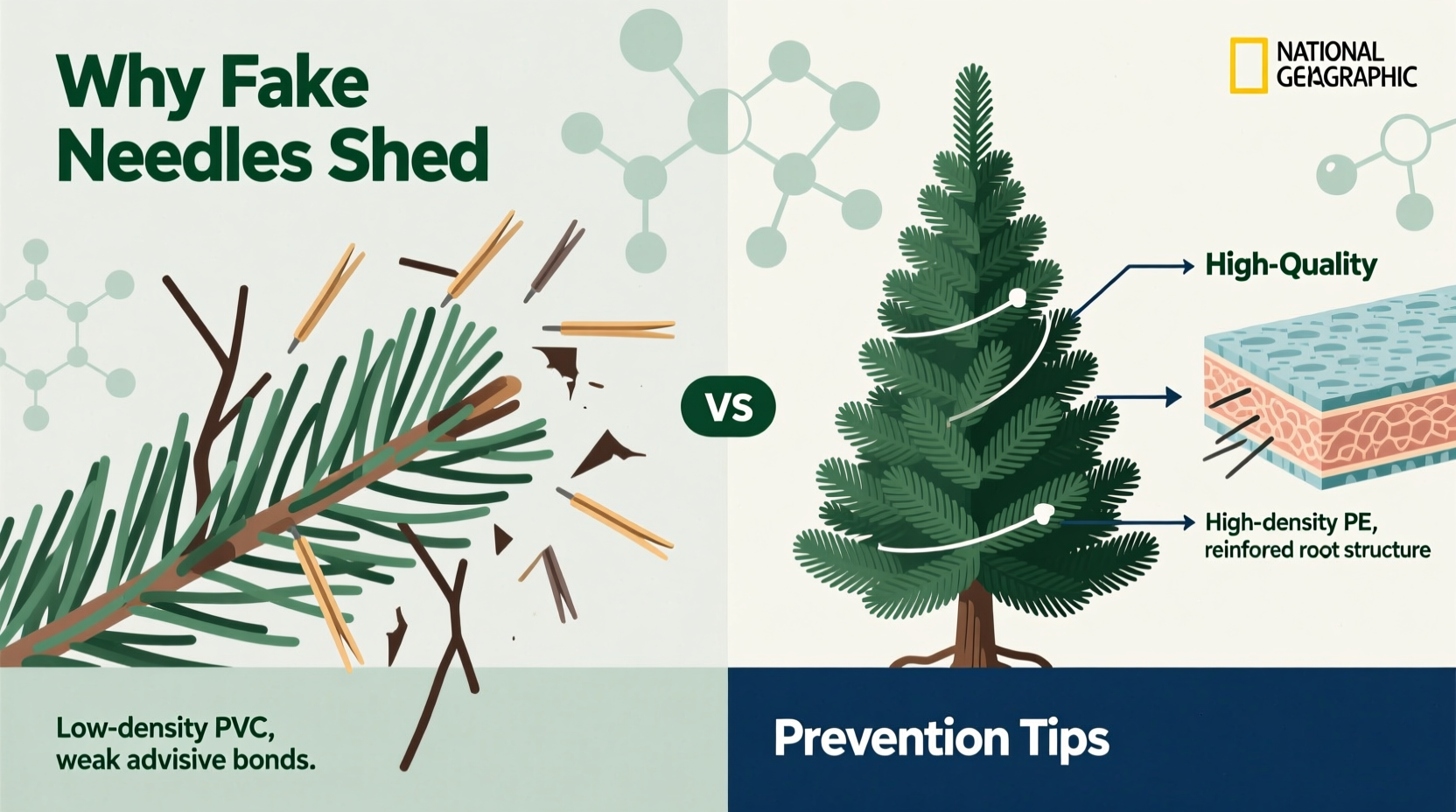
Cheap Christmas trees are designed to meet demand during a short seasonal window. Manufacturers cut costs wherever possible to offer attractive price points, often at the expense of durability. One of the most noticeable compromises is in the materials used for the “needles.” Most low-cost trees use PVC (polyvinyl chloride) that is thinner, more brittle, and less flexible than higher-grade alternatives. Over time, especially when exposed to temperature changes and dry indoor air, this PVC becomes increasingly fragile.
Beyond the material itself, the method of attaching needles to branches plays a crucial role. In premium trees, needles are typically injection-molded directly onto wire cores or heat-welded securely. In contrast, cheaper models often rely on mechanical crimping or basic adhesive bonding. These methods weaken over time, particularly if the tree is compressed during storage or handled roughly during setup. As the connection degrades, needles detach easily—even from light brushing or airflow from a nearby heater.
“Many budget trees use outdated attachment techniques that simply can’t withstand repeated assembly and disassembly. It’s not just about the plastic quality—it’s how it’s anchored.” — Marcus Reed, Holiday Decor Materials Engineer
Why Temperature and Environment Accelerate Shedding
Indoor conditions significantly influence how well an artificial tree holds up. Most homes during winter are warm and dry due to heating systems. Low humidity causes plastics to lose flexibility, increasing brittleness. A study by the National Institute of Standards and Technology found that PVC exposed to 20% relative humidity (common in heated homes) loses up to 40% of its tensile strength within three months.
Additionally, proximity to heat sources like radiators, fireplaces, or HVAC vents worsens the problem. Thermal expansion and contraction stress the weak joints between needles and stems. Even sunlight through windows can degrade PVC over time, causing discoloration and embrittlement—a process known as UV degradation. Trees stored in garages or attics between seasons are especially vulnerable, where extreme temperature swings further compromise structural integrity.
How to Prevent Needle Shedding: A Step-by-Step Guide
While you can’t change what a cheap tree was made of, you can take proactive steps to reduce shedding and extend its usable life. Follow this sequence each season to get the most out of your investment.
- Unpack Carefully: When removing the tree from storage, handle sections gently. Avoid yanking branches that may be tangled. Lay out components on a clean surface to inspect for damage before assembly.
- Shake Out Loose Debris: Before assembling, lightly shake each branch over a trash can. This removes any loose fragments from previous seasons and reduces initial shedding once indoors.
- Fluff Branches Gradually: Work from the bottom up, bending each branch outward and downward. This mimics natural growth and helps redistribute stress evenly. Avoid aggressive pulling, which can snap weak stems.
- Apply a Light Plastic Conditioner (Optional): Some users report success with anti-static sprays or diluted fabric softener solutions (1 part softener to 10 parts water), lightly misted on a cloth and wiped along thicker branches. Do not spray directly—excess moisture can corrode metal frames.
- Monitor Placement: Once assembled, ensure the tree isn’t near vents, radiators, or direct sunlight. Maintain indoor humidity above 30% using a humidifier if necessary.
- Inspect After Use: Before storing, check for excessive shedding or broken tips. Note which sections are deteriorating fastest—they may need replacement or extra protection next year.
Smart Storage: The Key to Longevity
Poor storage is the leading cause of premature wear in artificial trees. Squeezing a tree into an undersized box or tossing it loosely into a garage leads to bent branches, crushed tips, and increased shedding the following year. Proper storage protects both shape and structure.
Use a dedicated tree storage bag with rigid support rings or a cylindrical container that matches your tree’s height. These prevent compression and allow sections to stand upright. If using a bag, avoid zipping it too tightly—over-compression stresses branch connections. Store the container in a climate-controlled area, ideally between 50°F and 70°F (10°C–21°C), away from pests and moisture.
| Storage Method | Effect on Needle Retention | Recommendation |
|---|---|---|
| Dedicated tree box with dividers | High – minimizes compression and friction | Best choice for long-term use |
| Fabric storage bag (no supports) | Moderate – risk of crushing if overstuffed | Avoid folding; store vertically |
| Cardboard box (improvised) | Low – prone to collapse and moisture damage | Only for short-term; add padding |
| Loose in attic or garage | Poor – exposure to dust, pests, and temperature swings | Strongly discouraged |
Checklist: Maximize Your Tree’s Lifespan
- ✅ Inspect all branches for loose needles before and after setup
- ✅ Assemble slowly, fluffing each layer thoroughly
- ✅ Place tree away from heat sources and direct sunlight
- ✅ Use a tree skirt to catch early shedding and simplify cleanup
- ✅ Store in a rigid, labeled container with ventilation
- ✅ Keep storage area cool, dry, and pest-free
- ✅ Replace severely damaged sections instead of risking total failure
Real Example: The Martinez Family’s Three-Year Struggle
The Martinez family bought a 7-foot pre-lit tree from a discount retailer for $89 in 2021. By the second holiday season, they noticed small clumps of needles collecting around the base. By the third year, every time someone walked past, a fine green dust seemed to rain down. Frustrated, they considered replacing it—but then discovered the source: they had been storing the tree in a compressed duffel bag in their unheated garage, where winter temperatures dropped below freezing and summer highs exceeded 100°F.
Following advice from a local hardware store, they invested in a vertical storage tube and began using a small dehumidifier in their storage closet. They also started fluffing branches more carefully and keeping the tree away from their fireplace. Though the older sections still shed slightly, the rate dropped by over 70%. They now expect the tree to last at least two more seasons—effectively cutting their annual cost in half.
When to Upgrade: Knowing the Limits of Budget Trees
No amount of care can make a poorly constructed tree perform like a premium model. If your tree sheds excessively even after proper handling and storage, it may be time to consider upgrading. Higher-end trees use PE (polyethylene) needles, which are molded to look and feel more realistic and are far more durable. Brands like Balsam Hill and Fraser Hill Farm use dual-component construction, combining PE and PVC for realism and resilience.
While these trees cost more upfront—often $200 to $500—they’re engineered for 10+ years of use with minimal maintenance. For households that value consistency and aesthetics, the long-term value outweighs the initial price. Consider treating a quality tree as a household investment, much like furniture.
FAQ: Common Questions About Artificial Tree Shedding
Can I fix a shedding tree permanently?
No permanent fix exists once the needle attachments have degraded. However, you can slow further shedding by improving storage, reducing environmental stress, and avoiding physical strain during setup. Some people try clear nail polish or fabric glue on loose clusters, but results are temporary and messy.
Do all artificial trees shed eventually?
All trees experience some level of shedding over time, but high-quality models show minimal loss even after a decade. Cheaper trees often begin shedding in year two or three due to inferior materials and construction. Proper care delays but doesn’t eliminate the decline in budget options.
Is shedding covered under warranty?
Sometimes. Many manufacturers offer 1–5 year limited warranties covering workmanship defects, including excessive shedding. However, claims require proof of purchase and proper care. Always register your tree and keep documentation. Warranties typically exclude damage from improper storage or environmental exposure.
Conclusion: Protect Your Investment and Your Floors
Cheaper Christmas trees shed not because they’re inherently flawed, but because they’re built to survive a single season—not a lifetime of holidays. The good news is that understanding the mechanics behind shedding puts you in control. With better handling, smarter placement, and disciplined storage, you can significantly delay deterioration and enjoy a cleaner, more attractive display year after year.
Even if you’re not ready to invest in a premium tree, simple changes can double or triple the functional life of your current one. Think of it as seasonal home maintenance—one that pays off in fewer messes, lower replacement costs, and more joyful Decembers ahead.




 浙公网安备
33010002000092号
浙公网安备
33010002000092号 浙B2-20120091-4
Comments
No comments yet. Why don't you start the discussion?