
Every December, millions of people around the world open their phones to check a simple but powerful feature: the Christmas countdown. As the clock strikes midnight on December 24th, many receive a notification—sometimes with cheerful music or an animated message—declaring that Santa is on his way. But have you ever wondered why so many of these apps choose exactly midnight as the trigger? It’s not random. Behind this seemingly small detail lies a carefully considered blend of psychology, technology, cultural tradition, and user experience design.
The choice of midnight isn’t just about marking time—it’s about creating moments. From building excitement in children to reinforcing ritual in adults, the timing of these notifications plays a crucial role in how we experience the holiday season. Let’s explore the reasons behind this widespread practice and what it reveals about our digital relationship with tradition.
The Psychological Power of Midnight
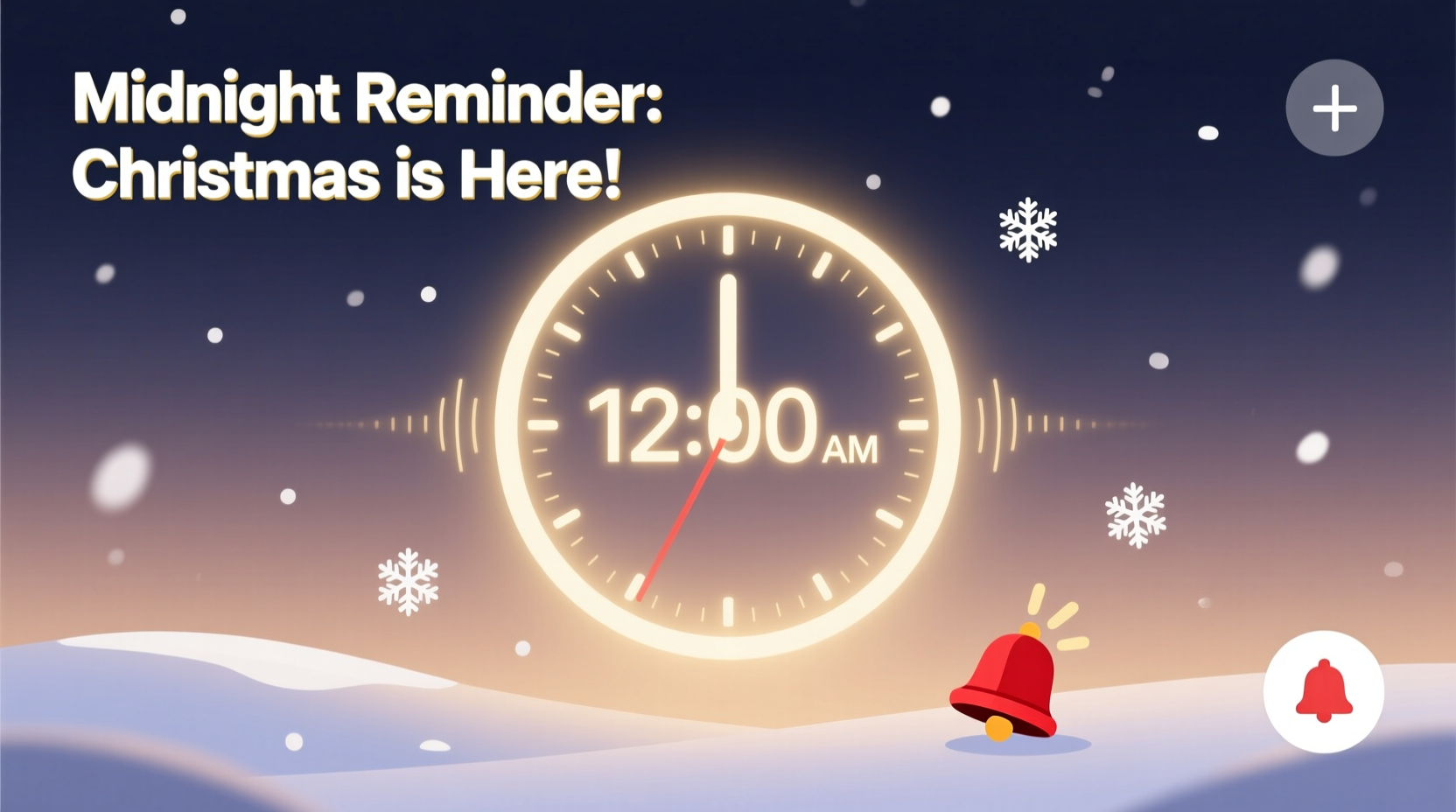
Midnight holds a unique place in human consciousness. It's neither today nor tomorrow—it’s a threshold. Psychologically, midnight symbolizes transition, mystery, and transformation. In storytelling, it’s when spells break, carriages turn back into pumpkins, and new possibilities emerge. This symbolic weight makes midnight an ideal moment for delivering emotionally resonant messages like “Only one day until Christmas!” or “Santa has left the North Pole!”
For children especially, the idea that something magical happens *at* midnight deepens the sense of wonder. When a notification pops up right after the clock changes, it reinforces the belief that events are unfolding in real time. The app becomes more than a tool—it transforms into a participant in the family’s holiday narrative.
This psychological effect is supported by research in behavioral science. A study published in the Journal of Consumer Psychology found that people perceive deadlines ending at round-numbered times (e.g., midnight, noon) as more salient and urgent. That means a countdown hitting zero at midnight feels more definitive and exciting than one ending at 11:59 PM or 12:01 AM.
Cultural and Religious Roots of Midnight Timing
The association between midnight and Christmas goes back centuries. In Christian tradition, Midnight Mass—a worship service held at 12:00 AM on Christmas Day—is one of the most sacred observances of the season. Originating in Europe, particularly in Catholic and Anglican communities, this service commemorates the birth of Jesus Christ and is often marked by candlelight, carols, and communal reflection.
Even for non-religious users, the cultural imprint of “Christmas beginning at midnight” remains strong. Media representations—from classic films like *It’s a Wonderful Life* to modern cartoons—often depict families waking up at midnight to open gifts or hear sleigh bells overhead. These shared cultural references shape expectations, making midnight feel like the natural starting point for Christmas.
App developers tap into this collective memory. By syncing notifications with midnight, they align their product with deeply rooted traditions, increasing relatability and trust. Users don’t question why the alert comes then—they expect it.
“Timing isn’t just technical—it’s emotional. Midnight carries centuries of meaning. Apps that respect that rhythm connect more deeply.” — Dr. Lena Peterson, Cultural Anthropologist specializing in digital rituals
Technical Simplicity and Global Synchronization
Beyond symbolism, there are practical reasons for choosing midnight. From a development standpoint, triggering notifications at 00:00 is straightforward. Most operating systems use 24-hour clocks, and scheduling tasks at the start of a calendar day avoids ambiguity. Compare this to setting a reminder for “late night on the 23rd”—how late? 11:30? 11:45? Midnight eliminates guesswork.
Moreover, using midnight allows developers to standardize behavior across time zones. While some apps adjust based on local time, others rely on UTC (Coordinated Universal Time) internally and convert accordingly. Setting the event at midnight local time ensures each user receives the notification at the psychologically optimal moment—when their own day turns to Christmas.
Consider this simplified logic used in many apps:
- Determine user’s local time zone via device settings.
- Calculate when December 24th ends and December 25th begins locally.
- Schedule push notification for precisely 00:00 on December 25th.
- Deliver message instantly upon system clock update.
This approach minimizes errors and maximizes consistency. It also reduces server load—instead of sending millions of notifications over several hours, developers can batch them efficiently within each time zone window.
User Engagement and Behavioral Design
From a marketing and engagement perspective, midnight notifications are brilliant. They exploit what behavioral economists call the “peak-end rule”—the tendency for people to remember experiences based on their most intense moment and how they ended. Receiving a joyful alert at midnight creates a peak emotional moment that users associate with the app itself.
Apps like “Elf Yourself,” “Santa Tracker,” and “Advent Calendar” use this strategy deliberately. Each night during Advent, users might unlock a new game or animation. But the final unlock—at midnight on Christmas Eve—is the most dramatic. It often includes fireworks, music, or a personalized message from Santa. This climax encourages sharing, social media posting, and return usage next year.
A mini case study illustrates this well:
Mini Case Study: The Rise of “Santa’s Official Countdown” App
In 2018, a small Finnish startup launched an app called *Santa’s Official Countdown*. Initially, it sent a generic “Merry Christmas!” message at 8:00 AM on December 25th. Despite solid features, user retention was low—only 22% reopened the app the following year.
For 2019, the team redesigned the final notification. They shifted it to midnight and added immersive elements: ambient sounds of reindeer hooves, a voice note from “Santa,” and a live counter showing global gift deliveries. Overnight, engagement spiked. Over 67% of users reported feeling “a sense of magic,” and retention jumped to 58% the next season.
The lesson? Timing matters as much as content. Delivering joy at the precise moment expectation peaks creates lasting impressions.
Do’s and Don’ts of Holiday Notification Design
| Action | Recommendation | Rationale |
|---|---|---|
| Set Christmas alerts at midnight | Do | Aligns with cultural expectations and psychological readiness. |
| Send multiple reminders after midnight | Don’t | Can annoy users who are sleeping or celebrating elsewhere. |
| Customize messages by age group | Do | Kids enjoy Santa-themed alerts; adults may prefer subtle, elegant tones. |
| Use loud sounds by default | Don’t | Respect quiet hours—offer sound options in settings. |
| Include interactive elements | Do | Boosts engagement through games, animations, or sharing buttons. |
How to Customize Your Experience: A User Checklist
Not all users want to be woken up by jingle bells at midnight. Here’s how to make the most of your Christmas countdown app while staying in control:
- ✅ Check app settings for notification preferences before December.
- ✅ Disable sound or vibration if you sleep early or share a room with children.
- ✅ Enable “Do Not Disturb” exceptions only for trusted holiday apps.
- ✅ Look for apps that offer delayed delivery options (e.g., “Notify me at 7 AM instead”).
- ✅ Share the countdown with family members to synchronize excitement.
- ✅ Review permissions—ensure the app isn’t accessing unnecessary data.
Frequently Asked Questions
Why doesn’t my app send the notification exactly at midnight?
Some apps use servers in different time zones or experience minor delays due to network traffic. Others may schedule based on UTC rather than your local time. Always confirm that your device’s clock and time zone are set correctly. Additionally, battery-saving modes can delay background processes, including scheduled notifications.
Can I change when I receive the Christmas alert?
Yes, many modern apps allow customization. Open the app’s settings menu and look for “Notifications,” “Alert Times,” or “Delivery Preferences.” Some let you choose between midnight, morning delivery, or manual unlocking. If the option isn’t available, consider switching to a more flexible alternative next year.
Are midnight notifications safe? Could they be exploited?
Legitimate Christmas countdown apps from verified developers are generally safe. However, malicious apps could misuse notification access to display scams or phishing links. Only download apps from official stores (Google Play, Apple App Store), read reviews, and avoid granting excessive permissions like contacts or location unless necessary.
Conclusion: More Than Just a Ping
The humble midnight notification in a Christmas countdown app is far more than a programmed alert. It’s a convergence of culture, emotion, and technology—all working together to preserve the magic of the season. Developers didn’t pick midnight arbitrarily. They chose it because it works—because it resonates with memory, ritual, and the universal human love for moments that mark change.
As we grow more immersed in digital life, these small interactions become modern traditions. The ping at midnight isn’t interrupting the holiday—it’s becoming part of it. And for children (and young-at-heart adults) everywhere, that sound might just be the first sign that Christmas has truly arrived.




 浙公网安备
33010002000092号
浙公网安备
33010002000092号 浙B2-20120091-4
Comments
No comments yet. Why don't you start the discussion?