
Every holiday season, millions of homes light up with festive cheer thanks to strings of glowing Christmas lights. Yet for all their charm, these decorations often come with a frustrating puzzle: mismatched plugs, incompatible connectors, and confusing limitations on how many strands can be linked together. Why can’t all Christmas light strands simply plug into one another? The answer lies in a mix of electrical engineering, safety regulations, manufacturing practices, and evolving technology.
Understanding the reasons behind plug incompatibility isn’t just about convenience—it’s about safety, efficiency, and getting the most out of your holiday display without risking overheating, circuit overload, or fire hazards.
The Evolution of Christmas Light Design
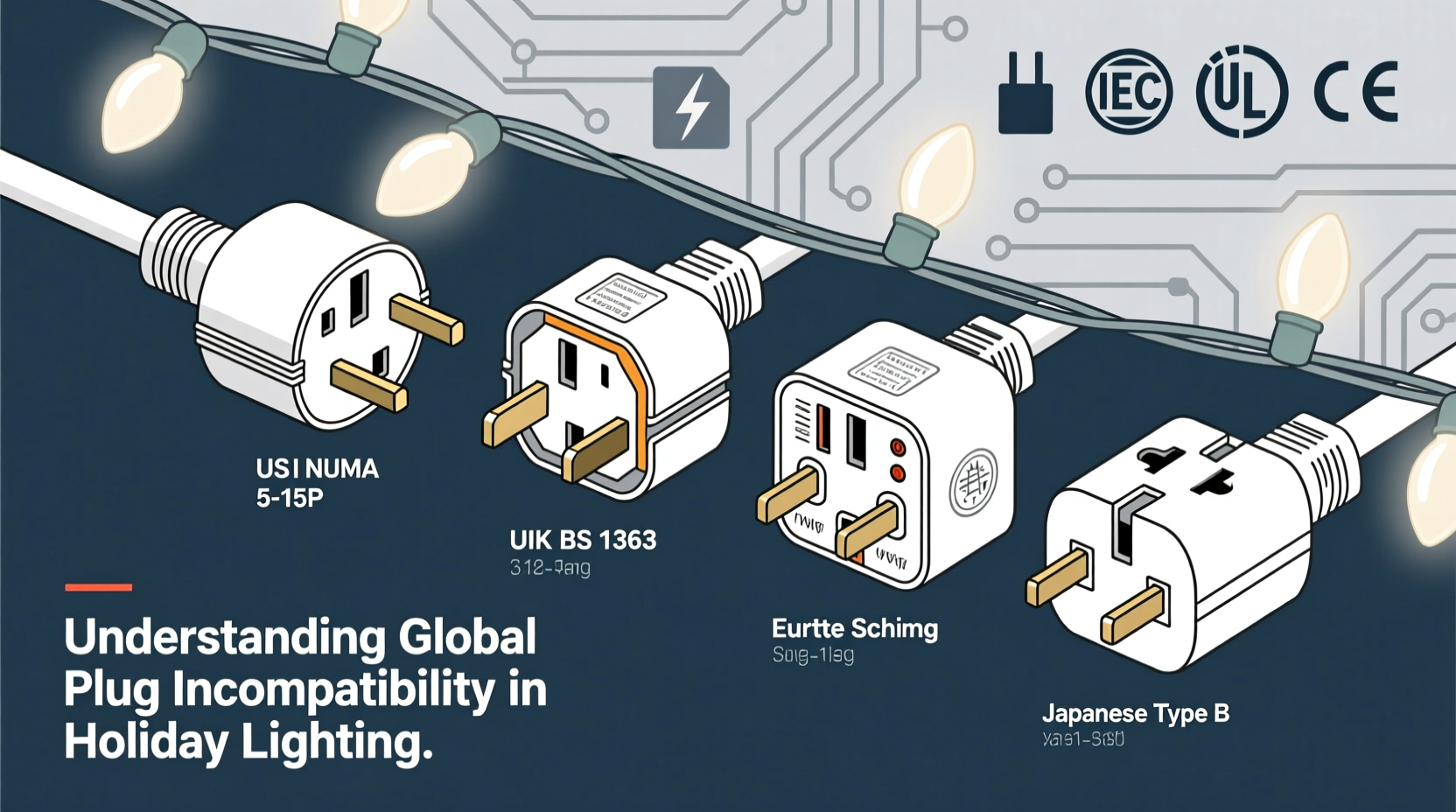
Early Christmas lights were simple incandescent bulbs wired in series, powered by household current. Each bulb received a fraction of the total voltage, and if one bulb failed, the entire strand would go dark. These early designs used basic two-prong plugs with no polarity and minimal safety features. As demand grew for longer runs and brighter displays, manufacturers began linking multiple strands together. But without standardized safety protocols, this led to dangerous overloads.
In response, Underwriters Laboratories (UL) and other regulatory bodies introduced guidelines limiting the number of strands that could be safely connected end-to-end. This gave rise to differentiated plug types—some designed specifically to prevent users from daisy-chaining too many lights on a single circuit.
Today’s market includes LED and incandescent options, battery-powered sets, smart lights, and solar variants, each with unique power needs and connection systems. The diversity in plug design reflects both innovation and an effort to enforce safe usage patterns.
Electrical Load and Circuit Safety
One of the primary reasons for different plug types is electrical load management. Household circuits are typically rated for 15 or 20 amps at 120 volts. Exceeding this capacity causes overheating, tripped breakers, or even fires. Manufacturers must ensure that consumers cannot accidentally connect more lights than a circuit can handle.
To address this, many light strands are labeled with a “maximum connectable” limit—often three, six, or nine sets depending on wattage. Plug design plays a role here: some male plugs won’t fit into certain female receptacles unless they’re from the same product line or meet specific current ratings.
For example, a standard incandescent mini-light strand might draw 40 watts. If your circuit allows 1,440 watts (12 amps × 120 volts), you could theoretically run 36 strands—but only if they're spread across multiple outlets. However, daisy-chaining even six such strands could exceed safe limits for a single outlet strip, which is why physical plug incompatibility acts as a built-in safeguard.
Types of Christmas Light Plugs and Their Functions
Modern Christmas lights use several plug configurations, each serving a distinct purpose. Below is a breakdown of common types and what they mean for compatibility.
| Plug Type | Description | Compatibility Notes |
|---|---|---|
| Standard Two-Prong (Polarized) | Basic plug with one blade wider than the other; ensures correct orientation. | Common on older and budget lights; may allow daisy-chaining but lacks current-limiting features. |
| Shunted vs. Non-Shunted Sockets | Refers to internal socket wiring; affects whether bulbs stay lit when one fails. | Not visible externally but impacts performance and replacement bulb compatibility. |
| End-to-End Connectors (Male/Female Ends) | Differentiated male and female ends designed to link multiple strands. | Some brands use proprietary shapes to prevent overloading; not universally interchangeable. |
| LED-Specific Locking Plugs | Often slightly smaller or keyed to fit only compatible low-wattage LED strands. | Prevents mixing high-draw incandescents with efficient LEDs on the same run. |
| Smart Light Connectors | Used for Wi-Fi or Bluetooth-enabled lights; may include data pins. | Require dedicated hubs or controllers; generally not compatible with traditional sets. |
This variation ensures that users don’t inadvertently combine incompatible systems. For instance, plugging ten incandescent strands into a transformer meant for five could overload it. Similarly, connecting smart lights to non-data-capable cords disrupts signal transmission.
Manufacturer Branding and Proprietary Systems
Beyond safety, business strategy influences plug design. Major brands like GE, Philips, and Home Accents Holiday often develop proprietary connector systems to encourage customer loyalty and accessory sales. Once you invest in a particular line of lights, replacing or expanding requires sticking with the same brand due to plug differences.
While frustrating for consumers, this model supports product ecosystems—similar to how phone chargers once varied widely before USB-C adoption. Some companies argue that controlling the full chain from plug to controller improves reliability and performance.
“Standardization would simplify holiday decorating, but until national codes mandate uniform connectors, manufacturers will continue using proprietary designs for competitive advantage.” — David Lin, Electrical Safety Consultant at NFPA
However, third-party adapters and universal extension cords have emerged to bridge gaps between systems. While convenient, these solutions should be used cautiously. Poor-quality adapters can introduce resistance, heat buildup, or poor contact, increasing fire risk.
How to Safely Mix and Match Christmas Lights
You don't need to stick to one brand or type to create a stunning display. With proper planning, you can combine different light strands safely—even if their plugs aren’t directly compatible.
Step-by-Step Guide to Connecting Different Light Types
- Assess Power Requirements: Note the voltage, amperage, and wattage of each strand. Most operate at 120V, but current draw varies significantly between LED and incandescent.
- Calculate Total Load: Add up the wattage of all intended strands. Ensure the sum stays below 80% of your circuit’s capacity (e.g., 1,440W max on a 15A circuit).
- Group by Type: Keep LED and incandescent lights on separate circuits or use individual plug-in points to avoid mismatched loads.
- Use Quality Extension Cords: Outdoor-rated, grounded (three-prong) cords with adequate gauge (16 AWG minimum, 14 AWG better for long runs).
- Leverage Power Strips with Surge Protection: Distribute strands across multiple outlets rather than daisy-chaining beyond manufacturer limits.
- Test Before Full Installation: Plug in your setup for at least 15 minutes to check for overheating, flickering, or dimming.
Mini Case Study: A Suburban Home’s Lighting Upgrade
Sarah from Columbus, Ohio, wanted to upgrade her home’s outdated incandescent Christmas lights to energy-efficient LEDs. She had four existing strands she wished to reuse but found the new LED set wouldn’t plug into her old ones. After researching, she realized the new lights used a lower-current connector to prevent overloading.
Instead of forcing a connection, Sarah purchased a UL-listed adapter that allowed her to plug the old and new strands into the same outdoor power strip—without daisy-chaining. She kept them on separate circuits and reduced her holiday electricity bill by 68% compared to the previous year. Her solution maintained safety while achieving the look she wanted.
Checklist: Ensuring Compatibility and Safety
- ☑ Check labels for maximum connectable strands
- ☑ Verify whether lights are indoor, outdoor, or indoor/outdoor rated
- ☑ Confirm voltage and wattage compatibility across all sets
- ☑ Use outdoor-rated extension cords for exterior installations
- ☑ Avoid covering plugs or cords with snow, mulch, or insulation
- ☑ Inspect wires annually for fraying, cracking, or corrosion
- ☑ Never splice or modify plugs to force a connection
- ☑ Unplug lights when not in use or during storms
Frequently Asked Questions
Can I connect LED and incandescent lights together?
Only if they share compatible connectors and are not daisy-chained beyond the rated limit. It's safer to power them separately due to differing electrical loads and heat output.
Why won’t my new light strand plug into my old one even though they look similar?
Manufacturers often alter plug dimensions slightly to prevent overloading. Even small changes in pin size or housing shape can block cross-compatibility, especially when upgrading from incandescent to LED systems.
Are there universal adapters for Christmas lights?
Yes, but choose carefully. Look for UL-certified adapters made by reputable brands. Avoid cheap, unbranded versions that may lack proper insulation or current handling.
Looking Ahead: Toward Standardization?
There is growing consumer demand for standardized Christmas light connectors. Advocacy groups and industry coalitions have proposed universal plug designs similar to USB standards in electronics. Such a shift could reduce waste, improve usability, and enhance safety through consistent testing and certification.
However, widespread adoption faces hurdles. Until regulatory bodies like the Consumer Product Safety Commission (CPSC) or National Electrical Code (NEC) establish mandatory connector standards, variation will persist. In the meantime, education remains key—knowing why plug differences exist empowers smarter, safer decorating choices.
Conclusion
The variety in Christmas light plug types isn’t arbitrary—it’s the result of decades of electrical innovation, safety regulation, and market forces. While compatibility issues can be annoying, they serve an essential role in preventing dangerous overloads and ensuring reliable performance.
By understanding the reasoning behind plug differences, reading manufacturer guidelines, and using smart connection strategies, you can build beautiful, safe holiday displays without frustration. Whether you’re revamping an old setup or designing a new spectacle, take control of your lighting plan with knowledge and care.




 浙公网安备
33010002000092号
浙公网安备
33010002000092号 浙B2-20120091-4
Comments
No comments yet. Why don't you start the discussion?