
Every holiday season, the ritual is the same: pull out last year’s Christmas lights, untangle a knot that looks like it was designed by a magician, and spend more time unspooling than decorating. It’s frustrating, predictable, and almost universal. But why do these strands of festive cheer inevitably turn into spaghetti-like messes? And more importantly, how can you prevent it from happening again?
The answer lies in physics, human behavior, and a little-known principle called “spontaneous knotting.” But with the right wrapping techniques and storage habits, you can preserve your lights in perfect working order—ready to shine brightly the moment you need them.
The Science Behind Tangled Lights
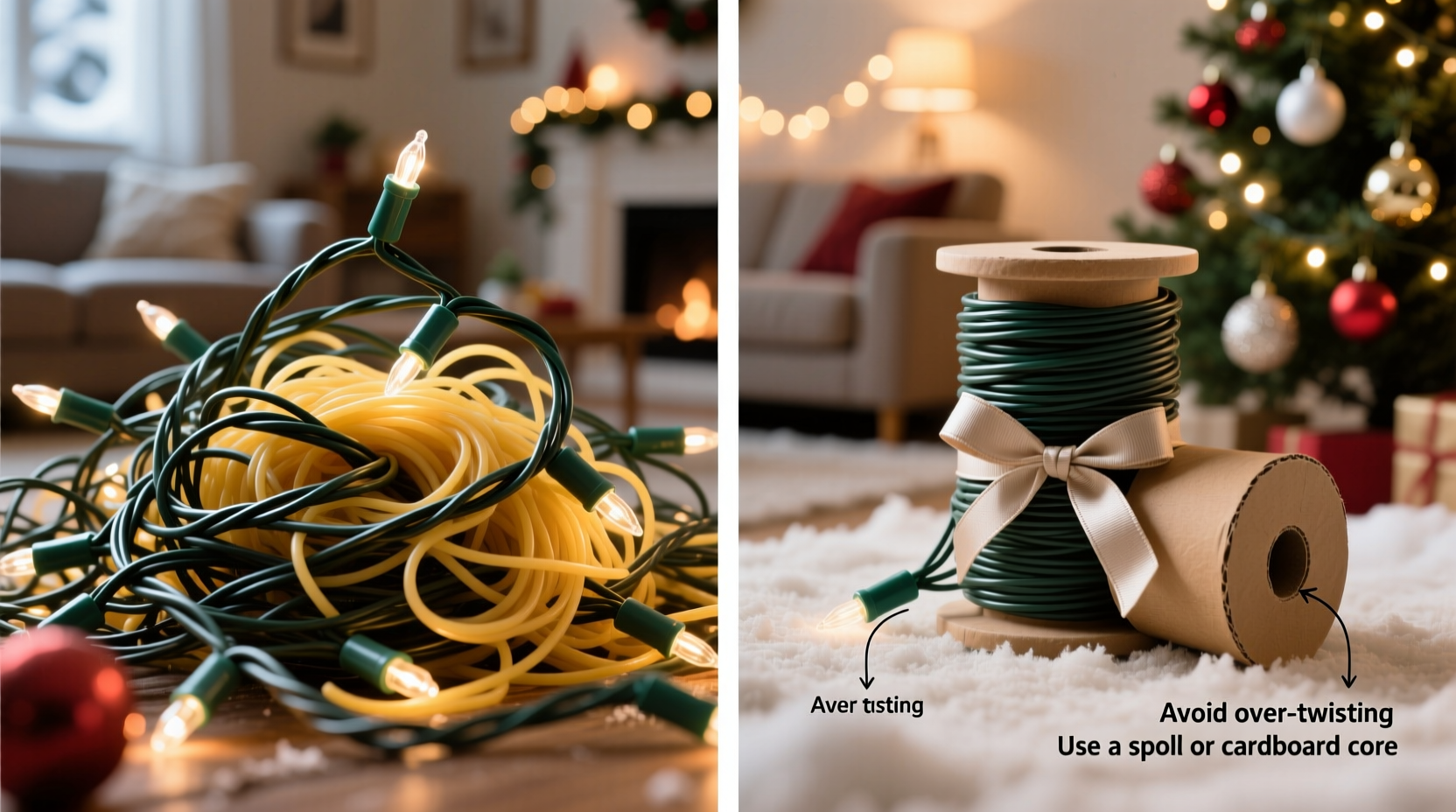
It’s not just bad luck. There’s real science behind why cords, especially long flexible ones like Christmas lights, tangle so easily. In 2007, physicists Dorian Raymer and Douglas Smith conducted a study at the University of California, San Diego, where they dropped strings into a box and tumbled them. They found that knots form rapidly—even within seconds—and the longer and more flexible the string, the higher the chance of tangling.
Christmas lights check all the boxes: they’re long, thin, flexible, and often stored loosely in bins or tossed into closets. When subjected to movement—whether during transport, storage shifts, or seasonal retrieval—the wires twist, loop, and snag on themselves. The result? A Gordian knot of LEDs or incandescents that seems impossible to undo.
“Any string longer than about 1.5 feet has a significant probability of forming a knot when agitated.” — Dorian Raymer, Physicist, UC San Diego
This phenomenon isn’t limited to holiday decor. Headphones, garden hoses, extension cords—they all suffer the same fate. But unlike headphones, which you might replace easily, Christmas lights are often sentimental, expensive, or part of a larger display. Preserving them matters.
Why Traditional Wrapping Fails
Most people wrap their lights around their hand or forearm, then secure them with a twist tie or rubber band. It’s quick and intuitive—but deeply flawed. This method introduces twists along the length of the cord, creating torsional stress. Over time, those twists evolve into loops, which catch on adjacent loops, leading to snarls.
Additionally, storing lights in this way often means cramming them into overstuffed boxes. Pressure from other decorations compresses the coils, increasing friction between wires. Even slight movement during storage can cause minor slippage that snowballs into major tangles.
How to Wrap Christmas Lights Properly: A Step-by-Step Guide
With a few adjustments to your post-holiday routine, you can dramatically reduce—or even eliminate—tangling. The key is controlled, twist-free coiling and secure storage. Follow this proven method:
- Unplug and inspect: Before wrapping, make sure the strand is unplugged. Check each bulb for damage or looseness. Replace faulty bulbs now to avoid issues next season.
- Choose a starting point: Hold the male plug (the one that goes into the outlet) in your non-dominant hand. This ensures consistency and makes plugging in easier later.
- Use the over-under method: Instead of looping continuously in one direction, alternate the direction of each loop:
- Make a loop over the top of your fingers.
- Next loop, go under and back over.
- Repeat this pattern down the length of the strand.
- Secure gently: Once coiled, use a soft fabric tie, Velcro strap, or reusable zip-tie to fasten the bundle. Avoid tight rubber bands, which can degrade insulation over time.
- Label if needed: If you have multiple types of lights (warm white, cool white, multicolor), label the coil with a tag or marker for easy identification.
This technique takes only a few minutes longer than hasty wrapping but pays dividends in saved time and frustration.
Best Storage Solutions for Long-Term Protection
Even perfectly wrapped lights can tangle if stored poorly. Environment and container choice matter just as much as coiling technique.
| Storage Method | Pros | Cons |
|---|---|---|
| Paper towel or toilet paper tubes | Cheap, accessible, prevents crushing | Limited durability; can warp in humid conditions |
| Plastic reels or light savers | Durable, designed for lights, easy to stack | Cost more upfront; take up more space |
| Original packaging (if sturdy) | Custom fit, often labeled | Frequently flimsy; collapses under pressure |
| DIY cardboard spools | Free, customizable size | Less durable; not ideal for long-term |
| Vented plastic bins with dividers | Protects from dust, moisture, and pests | Higher cost; requires organization |
Regardless of the container, follow these storage principles:
- Store in a cool, dry place—avoid attics or garages with temperature extremes.
- Keep away from rodents; mice chew through wires.
- Do not stack heavy items on top of light containers.
- Ensure airflow to prevent moisture buildup, which can corrode connections.
A Real Example: From Chaos to Control
Sarah Thompson, a homeowner in Portland, Oregon, used to spend nearly three hours every December untangling her outdoor light displays. She had six strands of 100-light LED nets, three C7 rope lights, and dozens of mini-lights—most inherited from her parents.
“I’d pull them out, start unraveling one, and by the time I got halfway, another strand would be caught in it,” she said. “It felt like a curse.”
In 2022, she adopted the over-under wrapping method and invested in a set of plastic reels. She also began storing each strand in individual labeled bins with silica packets. Last holiday season, she unwrapped her first strand in under 30 seconds—with zero tangles.
“It changed everything,” she said. “Now I actually look forward to decorating instead of dreading it.”
Checklist: Your Post-Holiday Light Care Routine
To ensure your lights stay tangle-free and functional year after year, follow this end-of-season checklist:
- ✅ Unplug all strands carefully and test functionality before storage.
- ✅ Inspect for broken bulbs, frayed wires, or damaged plugs.
- ✅ Clean gently with a dry cloth if dusty (never wash).
- ✅ Use the over-under coiling method for twist-free wrapping.
- ✅ Secure with soft ties—no rubber bands or wire.
- ✅ Store in rigid containers or on reels to prevent compression.
- ✅ Label each strand by color, location, or type.
- ✅ Keep in a climate-controlled, rodent-free area.
- ✅ Add desiccant packs to control humidity.
- ✅ Inventory your collection annually to plan replacements early.
Common Mistakes That Lead to Tangles
Even with good intentions, small errors can sabotage your efforts. Watch out for these pitfalls:
- Wrapping while the lights are still warm: Incandescent bulbs generate heat. Coiling hot wires can warp insulation and create weak points.
- Using the “around-the-arm” method: As mentioned, this introduces continuous twisting, making tangles inevitable.
- Tying too tightly: Excessive tension can pinch wires, leading to internal breaks that aren’t visible until you plug them in.
- Storing lights on metal hooks: Metal can scratch insulation and conduct electricity if there’s a fault.
- Mixing different lengths in one bundle: Longer strands can wrap around shorter ones during storage, causing inter-coil entanglement.
“The difference between a tangle-free holiday and a frustrating mess is five minutes of mindful wrapping.” — Mark Delaney, Home Organization Consultant
Frequently Asked Questions
Can I use twist ties to secure my Christmas lights?
You can, but not recommended. Standard plastic twist ties can degrade and become brittle over time. Worse, if pulled too tight, they can cut into the wire coating. Opt for fabric ties, Velcro straps, or reusable silicone wraps instead.
What should I do if my lights are already tangled?
Start at the plug end and work slowly. Lay the strand flat on the floor or a table. Look for the outermost loop and gently pull it free. Never yank—this can damage internal wiring. For severe knots, use two hands to isolate sections and reverse the tangle step by step.
Are LED lights less prone to tangling than incandescent?
Not inherently. While LED strands are often lighter and more flexible, they tangle just as easily if wrapped improperly. However, their lower heat output makes them safer to handle immediately after use and less likely to degrade during storage.
Final Thoughts: Make Next Year Easier Than This One
The annual battle with tangled Christmas lights doesn’t have to be inevitable. With an understanding of why tangles form—and a commitment to better habits—you can transform a chaotic chore into a seamless tradition.
It’s not about perfection. It’s about consistency. Spend a few extra minutes at the end of the season doing it right, and you’ll reclaim hours during the holidays. You’ll also extend the life of your lights, reduce waste, and preserve the joy of decoration without the stress.
Think of it as a gift to your future self—one that keeps on giving every December.




 浙公网安备
33010002000092号
浙公网安备
33010002000092号 浙B2-20120091-4
Comments
No comments yet. Why don't you start the discussion?