
As the holiday season approaches, homes across neighborhoods light up with festive Christmas displays. Twinkling strands of lights adorn trees, rooftops, and porches, creating a magical atmosphere. However, along with the cheer often comes an unwelcome side effect: swarms of insects drawn to the glow. If you’ve ever noticed moths circling your outdoor lights or gnats clustering near your entryway display, you’re not alone. The phenomenon is both common and scientifically explainable. Understanding why Christmas lights attract bugs—and how to minimize this attraction—can help preserve your enjoyment of seasonal decorations without turning your yard into an insect magnet.
The Science Behind Bug Attraction to Light
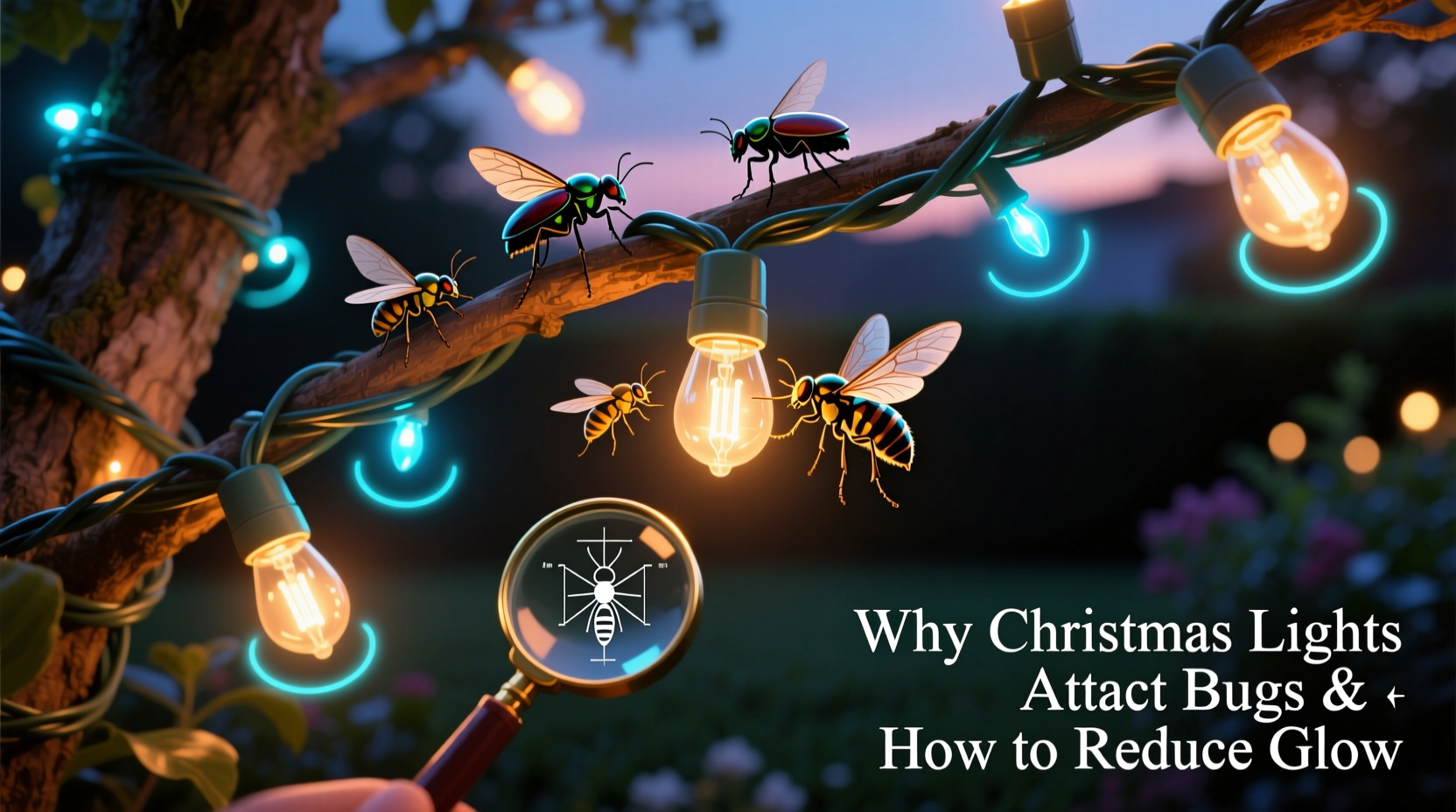
Insects are naturally drawn to light sources, especially at night, but their behavior isn’t driven by a love for brightness. Instead, it’s rooted in navigation. Many nocturnal insects, such as moths, beetles, and flies, use natural light sources like the moon and stars to orient themselves during flight—a process known as transverse orientation. These distant celestial bodies provide a consistent reference point, allowing insects to fly in straight lines over long distances.
Artificial lights disrupt this system. Unlike the moon, which remains fixed in position relative to the ground, nearby artificial lights appear to shift rapidly as an insect moves. This confuses their internal navigation, causing them to spiral toward the light source in an attempt to maintain a constant angle. The result? Bugs repeatedly circling lamps, porch lights, and yes—Christmas light displays.
This disorientation doesn’t just affect flight patterns. It can also interfere with feeding, mating, and predator avoidance. Over time, excessive exposure to artificial lighting contributes to declining insect populations, making responsible lighting choices not only a comfort issue but an ecological one.
How Christmas Lights Specifically Attract Bugs
Not all Christmas lights are equally attractive to insects. The type of bulb, color temperature, and emitted wavelengths play a major role in determining how many bugs your display will draw. Traditional incandescent mini-lights emit a broad spectrum of light, including significant amounts of ultraviolet (UV) and blue wavelengths—both highly visible to insects. Even though humans may perceive these lights as warm white, they still produce enough short-wavelength radiation to lure in curious bugs.
LED Christmas lights, while more energy-efficient, can be even more problematic if they lean toward cool white or daylight tones. Many budget-friendly LED strings have a peak emission around 450 nanometers—the exact range most attractive to flying insects. Additionally, the high intensity and flicker rate of some LEDs can further disorient insects, increasing their erratic movement near light sources.
Outdoor placement compounds the issue. Porch lights, tree wraps, and roofline installations often sit near vegetation, standing water, or other insect habitats. When combined with bright, cool-toned lighting, these setups become powerful attractants, especially during warm evenings when insect activity peaks.
“Insects don’t ‘like’ light—they’re misled by it. Their navigation systems evolved under starlight, not LEDs. Modern lighting creates sensory traps.” — Dr. Lena Torres, Entomologist and Urban Ecology Researcher, University of Colorado
Effective Strategies to Reduce the Glow Effect and Bug Attraction
You don’t need to abandon your holiday lights to avoid bugs. With informed choices and minor adjustments, you can maintain a festive ambiance while minimizing insect attraction. The key lies in selecting the right types of lights, positioning them strategically, and incorporating complementary deterrents.
1. Choose Warm-Colored, Low-UV Bulbs
The single most effective step is switching to warm-white or amber-tinted LED lights. These bulbs emit light primarily in the 2700K–3000K color temperature range, minimizing blue and UV output. Studies show that lights above 550 nanometers (yellow, orange, red) are significantly less visible to most nocturnal insects.
Look for labels like “bug-resistant,” “insect-friendly,” or “warm amber” when shopping. While these may cost slightly more, they offer long-term benefits in reduced pest activity and lower maintenance.
2. Limit Outdoor Lighting Duration
Use timers to restrict when your lights are on. Running displays from dusk until midnight is usually sufficient for seasonal enjoyment and cuts down on prolonged insect exposure. Timers also enhance energy efficiency and security.
3. Position Lights Away from Gathering Areas
Avoid placing light-heavy displays directly above patios, doorways, or seating zones. Elevate strands higher or focus illumination on trees and eaves rather than near human activity. This reduces direct interaction between bugs and people.
4. Combine with Physical Barriers
If you’re hosting outdoor gatherings, pair your lighting strategy with screened enclosures, ceiling fans (which disrupt insect flight), or non-toxic repellents like citronella candles placed at a safe distance from flammable decorations.
5. Use Shielded Fixtures and Directed Lighting
Opt for fixtures that direct light downward or inward rather than emitting it in all directions. This reduces skyglow and minimizes the illuminated area that insects can detect from afar.
Comparison Table: Light Types and Bug Attractiveness
| Light Type | Color Temperature | UV/Blue Emission | Bug Attraction Level | Recommendation |
|---|---|---|---|---|
| Cool White LED | 5000K–6500K | High | Very High | Avoid for outdoor use |
| Warm White LED | 2700K–3000K | Low | Moderate to Low | Recommended |
| Amber/Red LED | >2200K (amber) | Negligible | Very Low | Best choice for bug-sensitive areas |
| Incandescent Mini-Lights | 2500K–3000K | Moderate (due to broad spectrum) | High | Use indoors or shielded areas |
| Yellow \"Bug\" Bulbs | ~3000K with yellow coating | Reduced | Low to Moderate | Good compromise for aesthetics and function |
Step-by-Step Guide: Making Your Holiday Display Bug-Friendly
- Assess your current setup. Note where lights are installed and what types you’re using. Identify high-traffic insect zones (e.g., near doors, plants, or water features).
- Replace cool or daylight LEDs with warm-white (2700K) or amber alternatives. Prioritize outdoor strands first.
- Install a programmable timer to limit operation to 5–10 hours per night, ideally ending by midnight.
- Relocate or reposition lights away from seating areas and entryways. Focus on vertical surfaces like columns or tall trees.
- Add motion sensors or dimmers for functional lighting near doors, reducing constant glow.
- Test the results over several evenings. Observe insect activity before and after changes.
- Maintain cleanliness around light fixtures—remove dead bugs and debris weekly to prevent buildup and odors that attract scavengers.
Real-World Example: A Suburban Home Transformation
The Martinez family in Austin, Texas, loved decorating their front yard for Christmas but dreaded the nightly swarm of moths and beetles that gathered around their roofline lights. Their original setup used cool-white LED icicle lights, which created a bright, modern look—but also attracted so many bugs that outdoor evening activities became uncomfortable.
In the following season, they switched to warm-white string lights (3000K) and replaced their porch floodlight with a motion-sensor fixture using amber LEDs. They also added a timer to shut everything off by 11 PM. The difference was immediate. Within two weeks, neighbors commented on how “calm” their yard felt at night. Bug counts dropped by an estimated 70%, based on visual observation and fewer dead insects found in the morning.
“We didn’t sacrifice beauty for practicality,” said Maria Martinez. “The warm lights actually feel cozier, and we can finally enjoy our patio without swatting bugs.”
Checklist: Bug-Resistant Holiday Lighting Plan
- ☐ Audit existing Christmas lights—note color temperature and location
- ☐ Replace cool-white or daylight LEDs with warm-white (2700K–3000K) versions
- ☐ Consider amber or red LEDs for perimeter or tree lighting
- ☐ Install timers to limit lighting hours (e.g., 5 PM to 11 PM)
- ☐ Relocate lights away from doors, windows, and seating areas
- ☐ Use directional fixtures to minimize upward and scattered light
- ☐ Clean light strands and housings regularly during the season
- ☐ Pair with fans or natural repellents if hosting outdoor events
Frequently Asked Questions
Do “bug lights” really work for Christmas decorations?
Yes, but with caveats. Yellow “bug lights” reduce UV and blue emissions, making them less attractive than standard bulbs. However, they are not invisible to insects. For best results, combine them with warm color temperatures and strategic placement. Amber or red LEDs perform even better in minimizing attraction.
Can I use smart bulbs to reduce bug attraction?
Smart bulbs can help, especially if they allow color tuning. Set them to emit warm white (below 3000K) during display hours. Some models even integrate with sunrise/sunset schedules or motion detection, further limiting unnecessary glow. Just ensure the app settings lock in warm tones—many default to brighter whites.
Are there any eco-friendly benefits to reducing light-based bug attraction?
Absolutely. Artificial light at night (ALAN) disrupts ecosystems, affecting pollination, predation, and insect reproduction. By choosing insect-friendly lighting, you support local biodiversity. Reducing light pollution also conserves energy and improves night sky visibility—a win for both nature and stargazers.
Final Thoughts: Celebrate Responsibly
Holiday lighting brings joy, tradition, and community spirit. But understanding its unintended consequences allows us to celebrate more thoughtfully. By recognizing why Christmas lights attract bugs—and taking simple, evidence-based steps to reduce that draw—you can maintain a beautiful display without compromising comfort or environmental responsibility.
The goal isn’t to eliminate light, but to use it wisely. Warmer colors, smarter timing, and better placement go a long way in preserving the magic of the season—without the buzz.




 浙公网安备
33010002000092号
浙公网安备
33010002000092号 浙B2-20120091-4
Comments
No comments yet. Why don't you start the discussion?