
Every holiday season, millions of homes across the world light up with strings of festive bulbs, transforming rooftops, trees, and porches into winter wonderlands. Yet, by the time the next December rolls around, many find that half their strands are dark—some bulbs flickering, others completely dead. It’s frustrating, wasteful, and often expensive to replace entire sets just because a few lights failed. The real question isn’t whether your lights will fail, but when—and more importantly, what you can do about it.
The rapid burnout of Christmas lights is not random. It stems from predictable design limitations, environmental exposure, and user habits. Understanding these factors allows homeowners to make smarter choices in purchasing, installation, and storage. With the right approach, a single set of lights can last for years, reducing both cost and waste while keeping your holiday display consistently bright.
Understanding How Traditional Christmas Lights Work
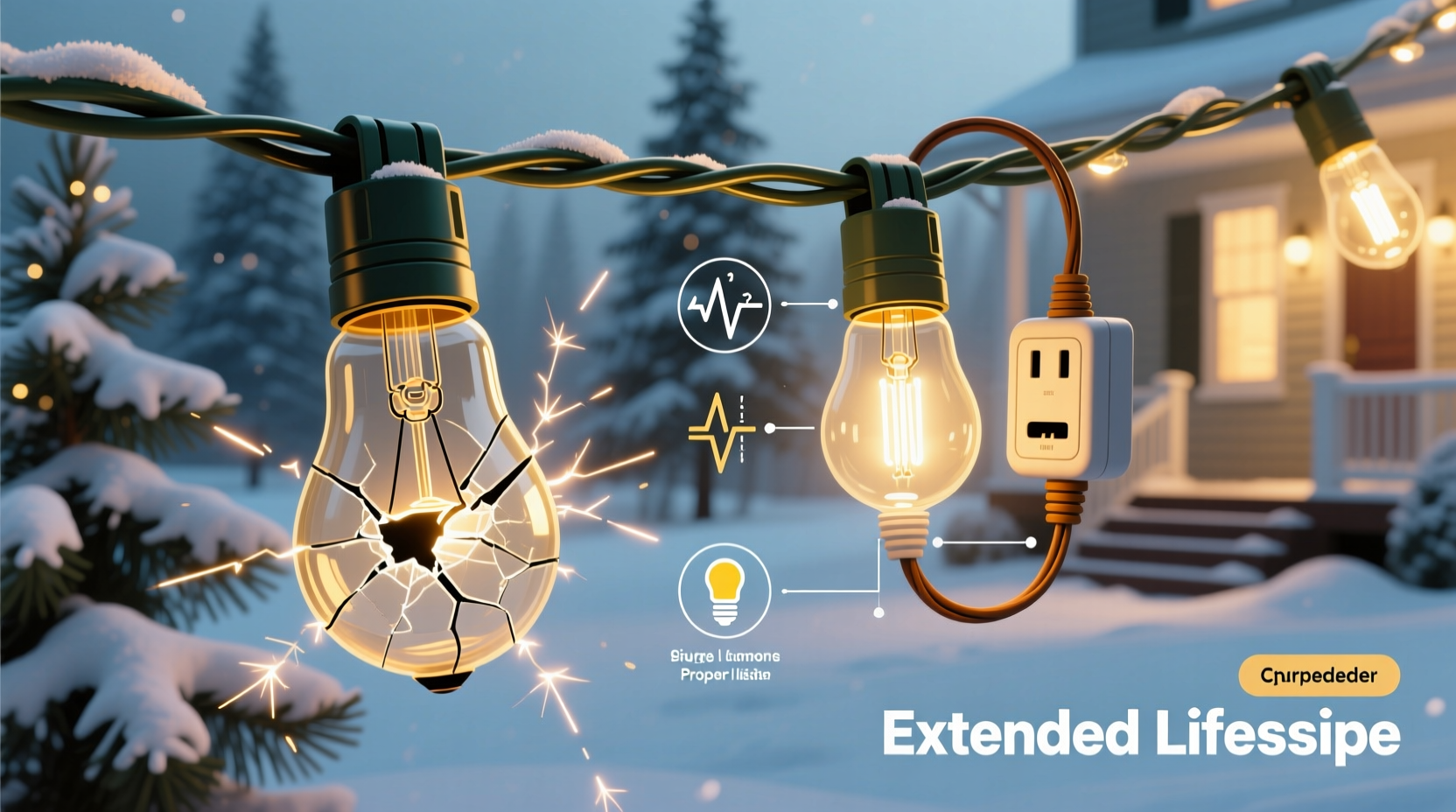
Most conventional incandescent Christmas lights operate on a series circuit. This means electricity flows through each bulb in sequence—like a relay race where one runner hands off a baton to the next. If one bulb burns out or becomes loose, the circuit breaks, and the entire strand goes dark. This design, while simple and inexpensive, is inherently fragile.
In a typical mini-light strand of 50 bulbs, all rated at 2.5 volts, they collectively draw about 120 volts—the standard household voltage in North America. Each bulb must carry the full current of the circuit. Over time, heat buildup, manufacturing inconsistencies, and vibration degrade individual filaments. Once one fails, the rest stop working—even if they’re still functional.
Modern LED Christmas lights operate differently. They use parallel wiring or advanced shunt technology that allows current to bypass a dead bulb, keeping the rest illuminated. LEDs also consume far less power, generate minimal heat, and have lifespans measured in tens of thousands of hours. However, even LEDs can fail prematurely under poor conditions.
Common Reasons Why Christmas Lights Burn Out Quickly
Burnout isn't inevitable—it's often preventable. Several key factors contribute to shortened lifespans:
- Overheating due to poor ventilation: Incandescent bulbs generate significant heat. When wrapped tightly around dense foliage or placed near insulation materials, heat accumulates, accelerating filament degradation.
- Voltage spikes during power surges: Holiday lighting circuits are often shared with other high-draw appliances. Sudden surges from storms or faulty wiring can instantly blow multiple bulbs.
- Poor weather resistance: Outdoor lights exposed to rain, snow, or extreme temperature swings without proper sealing suffer corrosion and internal damage.
- Physical stress during installation: Yanking, over-bending, or stapling wires damages internal connections and weakens solder joints.
- Using indoor lights outdoors (or vice versa): Indoor-rated strands lack moisture protection and UV resistance, leading to faster deterioration.
- Daisy-chaining too many strands: Exceeding manufacturer limits overloads circuits, increasing heat and failure risk.
“Up to 70% of early Christmas light failures stem from improper usage rather than component defects.” — Dr. Alan Reeves, Electrical Systems Engineer at the National Lighting Research Institute
How to Extend the Lifespan of Your Christmas Lights
Extending the life of your lights doesn’t require technical expertise—just consistency and attention to detail. Implementing a few smart practices can double or even triple the usable life of your holiday lighting.
1. Choose Quality Over Quantity
Invest in UL-listed lights designed for outdoor use if needed. Look for features like:
- Weather-resistant sockets and jackets
- Shunted bases in incandescent sets
- LEDs with ETL or CE certification
- Strands labeled “500-hour test passed” or similar durability claims
2. Use Surge Protectors and Timers
Plug your lights into a surge-protected outlet or power strip. Even small fluctuations degrade sensitive electronics over time. Pair this with a programmable timer to limit daily operation to 6–10 hours. Less runtime equals less wear.
3. Handle with Care During Installation
Avoid twisting or kinking wires. Use plastic clips instead of metal staples, which puncture insulation and create short-circuit risks. Never yank a tangled strand apart—untangle gently from one end.
4. Store Properly After the Holidays
One of the most overlooked aspects of light maintenance is post-season storage. Tossing lights into a box leads to tangles, broken sockets, and cracked bulbs. Instead:
- Test each strand before storing.
- Wrap loosely around a cardboard rectangle or use a reel.
- Keep in a sealed, labeled container away from rodents and moisture.
- Store in a climate-controlled space—avoid attics or damp basements.
Step-by-Step Guide to Testing and Maintaining Your Lights
Before packing away—or setting up—your lights, follow this annual maintenance routine:
- Unpack carefully: Inspect for visible damage like frayed wires, cracked sockets, or missing bulbs.
- Plug in and test: Use an outdoor GFCI outlet. Observe for flickering, dim sections, or complete failure.
- Isolate problems: For incandescent strands, use a light tester or walk along the string replacing bulbs one by one until the circuit restores.
- Clean gently: Wipe down plugs and connectors with a dry cloth. Remove dirt or salt residue from outdoor use.
- Repair or retire: Discard any strand with exposed wiring, melted sockets, or persistent shorts. Repair kits exist for minor issues, but safety should come first.
- Re-wrap methodically: Use a spool or cardboard guide to avoid tension and kinks.
- Label and store: Note functionality and length on the container.
| Issue | Likely Cause | Solution |
|---|---|---|
| Entire strand dark | Blown fuse, loose bulb, or cut wire | Check fuses in plug; inspect for gaps |
| Half the strand out | Mid-string break or failed shunt | Replace middle bulbs; test continuity |
| Flickering | Loose connection or voltage fluctuation | Reseat bulbs; use surge protector |
| Green corrosion on plug | Moisture exposure | Retire strand—risk of short circuit |
| Only one bulb out (LED) | Individual diode failure | Often safe to ignore; replace if socket damaged |
Real-World Example: A Homeowner’s Light Longevity Success
Mark Thompson, a homeowner in Vermont, grew tired of replacing his roofline lights every two years. After researching electrical basics, he implemented a new system. He upgraded to commercial-grade LED strands rated for -40°F, installed them using non-puncturing gutter clips, and connected them through a weatherproof junction box with a surge-protected timer.
He began testing and cleaning his lights in January, storing them on custom wooden reels marked by circuit. Five years later, all original strands still function at 98% brightness. “I spent $180 upfront,” Mark said, “but I’ve saved over $300 in replacements and labor. Plus, setup takes half the time.”
His success wasn’t luck—it was planning. By addressing environmental stressors and handling risks proactively, he turned a recurring expense into a long-term investment.
Do’s and Don’ts of Christmas Light Maintenance
| Do | Don’t |
|---|---|
| Use lights rated for their environment (indoor/outdoor) | Use indoor-only lights outside |
| Limit daisy-chaining to 3–4 strands (check manual) | Connect more than 100 lights on one circuit |
| Inspect cords annually for cracks or brittleness | Ignore frayed or stiff wires |
| Store on reels or in organized containers | Toss lights loosely into boxes |
| Use timers to reduce operating hours | Leave lights on 24/7 for weeks |
| Clean plugs and sockets before storage | Store wet or dirty strands |
FAQ: Common Questions About Christmas Light Longevity
Can I mix LED and incandescent lights on the same strand?
No. Mixing bulb types alters voltage distribution and can cause overheating or premature failure. Always keep lighting types separate and on dedicated circuits.
Why do my new lights burn out within weeks?
This often points to a power surge, incompatible voltage, or defective batch. Ensure you’re using a surge protector and verify the product has safety certifications. Cheap, unbranded lights frequently skip quality control steps.
How long should Christmas lights last?
Incandescent mini-lights typically last 1,000–3,000 hours. LEDs can last 25,000–50,000 hours. With 6 hours of daily use over 30 days per year, a good LED strand could last 14–23 years. Real-world lifespan depends heavily on care and conditions.
Final Checklist for Longer-Lasting Christmas Lights
- ✅ Purchase UL-certified, weather-rated lights
- ✅ Use surge protectors and timers
- ✅ Avoid daisy-chaining beyond manufacturer limits
- ✅ Install with non-damaging clips (not staples)
- ✅ Test all strands before and after storage
- ✅ Clean and inspect connectors annually
- ✅ Store on reels in labeled, sealed containers
- ✅ Keep in a cool, dry, rodent-free area
- ✅ Retire any strand with damaged wiring or corrosion
- ✅ Consider upgrading to commercial-grade LEDs for permanent installations
Conclusion: Make Your Lights Last Beyond the Season
Christmas lights don’t have to be disposable. With thoughtful selection, careful installation, and disciplined maintenance, your holiday illumination can shine brightly year after year. The initial effort pays off in reliability, savings, and reduced environmental impact. Instead of viewing lights as seasonal decor, treat them as long-term fixtures worthy of proper care.




 浙公网安备
33010002000092号
浙公网安备
33010002000092号 浙B2-20120091-4
Comments
No comments yet. Why don't you start the discussion?