
Flickering Christmas lights are more than a seasonal annoyance — they’re a signal. Whether it’s a single bulb blinking erratically on your mantle or an entire outdoor display pulsing like a strobe light, inconsistent illumination often points to underlying issues ranging from benign to hazardous. Unlike modern LED fixtures designed for stability, traditional incandescent and even some budget LED light strings operate on narrow tolerances. Voltage sensitivity, aging components, environmental stress, and manufacturing inconsistencies all contribute to flicker — but not all flicker is created equal. Understanding *why* it happens — and distinguishing harmless quirks from red flags — empowers you to troubleshoot efficiently, avoid fire risks, and extend the usable life of your decorations without compromising safety or ambiance.
How Christmas Lights Work (and Where Things Go Wrong)
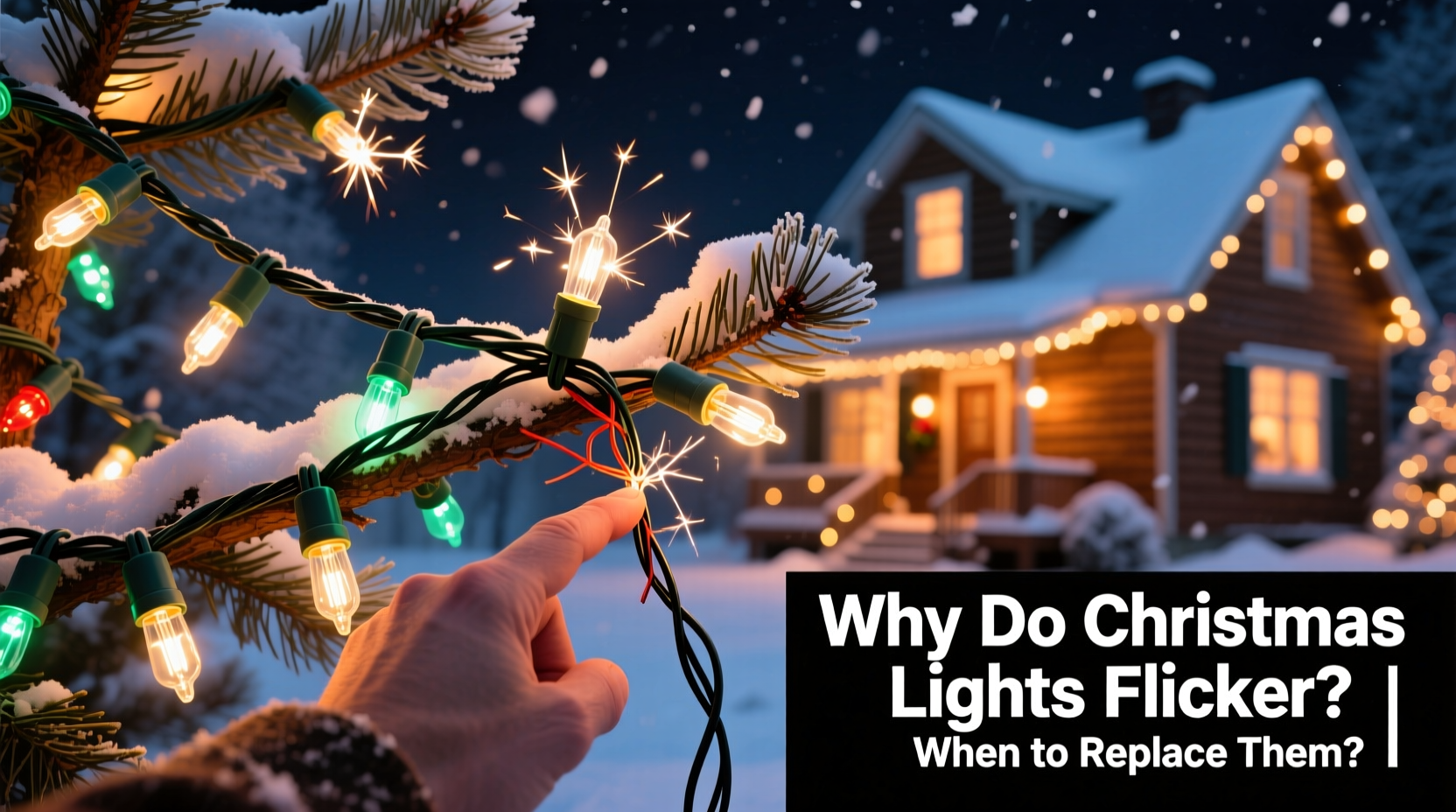
Most plug-in light strings use a series-wired circuit: current flows through each bulb in sequence before returning to the outlet. In incandescent sets, each bulb acts as both a light source and a resistor. If one bulb burns out or becomes loose, the circuit breaks — unless the set includes shunt wires (tiny bypass conductors inside the bulb base) that activate upon filament failure. Modern LED strings often use parallel or hybrid wiring, but many still rely on integrated controllers, rectifiers, and current-limiting resistors. Flicker occurs when this steady flow is disrupted — not just by failed bulbs, but by intermittent connections, thermal expansion/contraction, power supply instability, or controller malfunctions.
Crucially, flicker isn’t always a sign of imminent failure. Some LED strings intentionally pulse at low frequencies to simulate candlelight or create animated effects. Others flicker only when first plugged in — a brief stabilization period as capacitors charge and microcontrollers initialize. But persistent, random, or escalating flicker demands attention. As electrical engineer Dr. Lena Torres explains:
“Flicker in holiday lighting is rarely ‘just a bulb.’ It’s often the first observable symptom of thermal degradation in solder joints, oxidation on contacts, or capacitor fatigue in the driver circuit. Ignoring it doesn’t make it safer — it delays intervention until risk multiplies.” — Dr. Lena Torres, Senior Electrical Safety Consultant, UL Solutions
5 Common Causes of Flickering — and What They Really Mean
Not every flicker warrants immediate replacement. Diagnosing the root cause helps determine whether a quick fix will restore reliability — or whether the set has reached its functional limit.
- Loose or corroded bulb connections: The most frequent culprit, especially in older sets. Vibration during storage, temperature swings, or repeated plugging/unplugging loosens bulb bases. Oxidation on brass contacts increases resistance, causing intermittent current flow and visible flicker.
- Failing or mismatched bulbs: In incandescent strings, a bulb with a weakened filament may arc intermittently. In LED sets, mixing bulbs from different manufacturers or generations can overload drivers due to varying forward voltage requirements.
- Overloaded circuits or voltage drops: Plugging multiple light strings into one outlet — especially via extension cords or power strips — reduces available voltage. As demand fluctuates (e.g., when a refrigerator compressor kicks on), lights dim and flicker. This is particularly common in older homes with 15-amp circuits.
- Degraded internal wiring or damaged insulation: Cracked or brittle wire jackets (from UV exposure, freezing temperatures, or repeated coiling) expose conductors. Moisture ingress or physical abrasion leads to micro-shorts, arcing, and erratic behavior — often accompanied by buzzing, warm spots, or a faint ozone smell.
- Failing controller or rectifier board (LED-specific): Many LED strings contain small printed circuit boards that convert AC to DC and regulate current. Electrolytic capacitors dry out over time, especially in hot attics or humid garages. When they fail, output becomes unstable — causing rhythmic flicker, color shifts, or sections going dark entirely.
When to Repair vs. When to Replace: A Practical Decision Framework
Repairing a light string is only advisable when the issue is isolated, accessible, and low-risk. Most consumers lack the tools and training to safely re-solder cracked PCB traces, replace electrolytic capacitors, or test insulation integrity. Below is a decision matrix to guide action:
| Symptom | Safe to Repair? | Recommended Action |
|---|---|---|
| One bulb flickers intermittently; others stable | Yes | Reseat bulb, clean contacts with isopropyl alcohol and soft brush, replace with identical-spec bulb. |
| Flicker affects entire string, worsens after 10–15 minutes of operation | No | Indicates thermal failure in driver or wiring. Replace immediately — heat buildup raises fire risk. |
| Flicker coincides with other appliances cycling on/off (fridge, furnace) | Yes (circuit-level) | Redistribute load across circuits. Avoid daisy-chaining more than three 25-ft LED strings per outlet. |
| Visible damage: cracked wire jacket, melted socket, exposed copper | No | Discard. Do not tape or wrap. Damaged insulation cannot be reliably restored. |
| String works indoors but flickers outdoors (or vice versa) | Conditionally | Check rating label: Only UL-listed “for outdoor use” sets have weather-resistant components. Indoor-only sets degrade rapidly outside — replace with rated product. |
Step-by-Step: Safe Diagnostic Workflow (Under 5 Minutes)
Follow this sequence before reaching for replacements. It prioritizes safety and eliminates guesswork:
- Unplug the string completely. Never troubleshoot live circuits.
- Inspect visually: Look for cracked sockets, bent pins, frayed wires near plugs or connectors, discoloration (brown/black marks indicate overheating), or moisture residue.
- Check the plug and cord: Gently flex the cord near the plug end. If flicker occurred only when moving this area, internal wire breakage is likely — discard.
- Test with a known-good outlet: Plug into a different circuit — preferably one not shared with large appliances. Rule out household voltage issues.
- Isolate sections: For multi-string setups, unplug all but one. If flicker persists, focus there. If it stops, the issue is cumulative load or a faulty connector between strings.
- Swap the first bulb: In incandescent sets, the first bulb bears highest voltage stress. Replace it with a new, same-voltage bulb — even if it appears intact.
- Observe thermal behavior: Plug in and monitor for 2 minutes. If flicker begins only after warming, internal component degradation is probable — replace.
Real-World Example: The Garage Storage Mistake
Mark, a homeowner in Minneapolis, noticed his favorite 12-year-old LED icicle lights flickering violently only during sub-zero outdoor use. Indoors, they worked perfectly. He assumed cold temperatures were “slowing down the LEDs.” After replacing bulbs and checking outlets, he finally inspected the storage bin: the lights had been coiled tightly around a metal hanger and left in an uninsulated garage where temperatures swung from -25°F to 85°F seasonally. Over years, the PVC insulation became brittle and cracked at stress points. When cold, the cracks widened, allowing moisture to condense and bridge conductors — causing micro-arcs and aggressive flicker. Once identified, Mark replaced the set with a newer UL-listed “all-weather” version and now stores lights loosely in ventilated plastic bins — not metal containers — in a temperature-stable basement. His experience underscores a critical truth: flicker isn’t always about the lights themselves — it’s about how they’ve been treated.
Signs Your Set Is Past Its Prime (Non-Negotiable Replacement Triggers)
Some warning signs leave no room for repair. These indicate material fatigue, irreversible degradation, or compromised safety margins. If any apply, retire the set — regardless of cost or sentimental value:
- Warm or hot spots along the cord or near sockets — indicates high-resistance faults generating dangerous heat.
- Buzzing, sizzling, or popping sounds — audible evidence of arcing, which degrades insulation further and can ignite nearby materials.
- Smoke, melting plastic, or acrid odor — immediate fire hazard. Unplug and discard away from flammable surfaces.
- Flicker accompanied by tripped breakers or GFCI outlets — signals ground faults or short circuits beyond user-level correction.
- Manufactured before 2010 (incandescent) or 2014 (LED) without UL/ETL certification — lacks modern safety standards for flame retardancy, current limiting, and insulation.
FAQ: Quick Answers to Pressing Questions
Can I mix old and new light strings on the same circuit?
No. Older incandescent strings draw significantly more current (up to 10x more per foot than LEDs). Mixing them overloads controllers, causes voltage drops, and stresses wiring. Even “LED-compatible” extension cords may not handle mixed loads safely. Use separate circuits or upgrade all strings to the same generation and wattage rating.
Why do my new LED lights flicker only when dimmed?
Most plug-in LED strings aren’t designed for standard wall dimmers, which chop AC waveforms. This confuses their internal drivers. Use only dimmers explicitly rated for LED loads — or better yet, choose strings with built-in remote dimming or app control, which regulate brightness at the driver level.
Is flickering dangerous if the lights still “work”?
Intermittent flicker *can* be safe — like a loose bulb — but it’s also the most common early indicator of developing hazards: failing capacitors, degraded solder joints, or insulation breakdown. Since these issues accelerate under heat and load, waiting until failure occurs risks fire, shock, or damage to other electronics. Treat consistent flicker as a maintenance deadline, not a minor quirk.
Conclusion: Light Up Safely, Not Just Brightly
Christmas lights exist to bring warmth, joy, and tradition — not anxiety or risk. Flicker is never something to ignore, but neither is it always a reason to toss a perfectly good set. With methodical diagnosis, awareness of material limits, and respect for electrical safety, you can confidently extend the life of reliable strings while decisively retiring those that have crossed into unsafe territory. Remember: no decoration is worth a home fire, an electric shock, or the stress of unpredictable performance. Take five minutes this season to inspect, test, and act — not react. Replace what must be replaced, repair what can be trusted, and store the rest properly for next year. Your future self — and your family’s safety — will thank you.




 浙公网安备
33010002000092号
浙公网安备
33010002000092号 浙B2-20120091-4
Comments
No comments yet. Why don't you start the discussion?