
Christmas lights bring warmth, charm, and festive spirit to homes every holiday season. But when they start flickering unpredictably—or worse, fail entirely—it can be more than just an annoyance. Flickering lights may signal underlying electrical issues, wear and tear, or even potential fire hazards. Understanding the causes behind flickering and knowing when to retire a string of lights is essential for both safety and enjoyment. This guide dives deep into the science of light behavior, common failure points, and practical steps to maintain your holiday lighting with confidence.
The Science Behind Flickering Christmas Lights
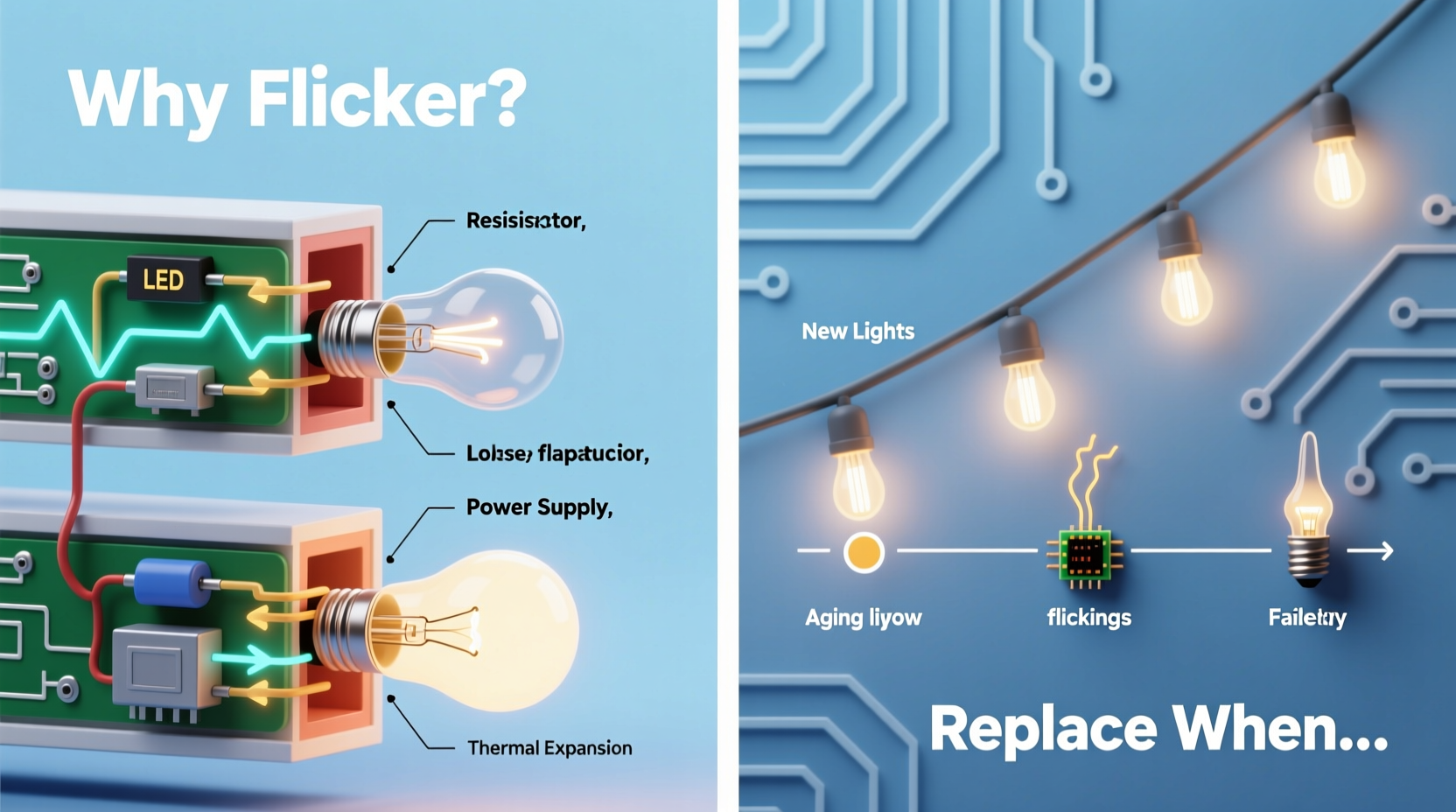
Flickering in Christmas lights isn't always a sign of failure. In fact, some flickering is intentional—especially in vintage-style bulbs designed to mimic candlelight. However, erratic or sudden flickering often indicates a mechanical or electrical problem. Most traditional incandescent mini-lights are wired in series, meaning electricity flows through each bulb in sequence. If one bulb fails or becomes loose, the entire circuit can be disrupted, causing intermittent blinking or dimming across the strand.
Modern LED lights, while more energy-efficient and durable, can also flicker due to different reasons. Unlike incandescent bulbs, LEDs require consistent low-voltage direct current (DC). Many LED strings use internal rectifiers to convert household alternating current (AC) to DC. When these components degrade or encounter voltage fluctuations, flickering occurs. Additionally, incompatible dimmer switches or controllers can cause pulsing or strobing effects, especially in smart light systems.
Common Causes of Flickering Lights
Not all flickering stems from the same root cause. Identifying the specific reason helps determine whether repair or replacement is necessary.
- Loose Bulbs: In incandescent sets, a single bulb that isn’t screwed in tightly can break the circuit, leading to flickering or complete outage.
- Burned-Out Bulbs: Traditional series-wired lights go dark if one bulb burns out. Some sets include shunt wires to bypass dead bulbs, but these can fail over time.
- Damaged Wiring: Cracked insulation, frayed cords, or pinched wires interrupt current flow and increase resistance, resulting in inconsistent lighting.
- Power Supply Issues: Overloaded outlets, extension cord limitations, or fluctuating household voltage can affect performance.
- Incompatible Controllers: Using non-certified timers, dimmers, or smart hubs with older or budget-friendly light sets may lead to erratic behavior.
- Environmental Exposure: Outdoor lights exposed to moisture, temperature swings, or physical stress are more prone to intermittent faults.
“Flickering isn’t just cosmetic—it’s often the first warning sign of electrical instability. Address it early to avoid risks.” — Dr. Alan Reeves, Electrical Safety Engineer at the National Fire Protection Association
When to Repair vs. When to Replace
Some flickering issues can be resolved with simple fixes. Others indicate it’s time to let go of a beloved but aging string of lights.
Repairable Scenarios
If your lights are relatively new or well-maintained, consider troubleshooting before discarding them:
- Unplug the strand and inspect each bulb. Look for darkened filaments or loose connections.
- Use a bulb tester or multimeter to identify faulty bulbs. Replace them with matching wattage and size.
- Check fuses in the plug. Many strands have two small fuses; use a continuity tester to verify function.
- Ensure outdoor lights are rated for exterior use and protected from water ingress.
Situations Requiring Replacement
Certain conditions make continued use unsafe or impractical:
- Visible damage to the wire sheathing (exposed copper, brittleness, kinks)
- Frequent tripping of circuit breakers when lights are connected
- Multiple failed bulbs within a short timeframe
- Smoke smell, hot plugs, or discoloration on sockets
- Lights older than 5–7 years, especially if used seasonally outdoors
Step-by-Step Guide to Diagnosing Flickering Lights
Follow this systematic approach to identify and resolve flickering issues safely.
- Unplug the lights. Never work on live circuits.
- Inspect the entire strand. Run your fingers along the wire, checking for cuts, swelling, or stiffness.
- Examine the plug and fuse compartment. Open the fuse door (if present) and test both fuses with a multimeter.
- Check each bulb. Remove and visually inspect. Replace any that appear blackened or broken.
- Test with a known-good outlet. Avoid using multi-plug adapters or daisy-chained extensions during testing.
- Plug in and observe. If flickering persists, isolate sections by plugging in half the length at a time.
- Replace if unresolved. If troubleshooting fails, retire the strand responsibly.
This method works best for incandescent sets. For LED strings, focus on controller compatibility and power supply stability.
Comparison: Incandescent vs. LED Lights – Flicker & Longevity
| Feature | Incandescent Lights | LED Lights |
|---|---|---|
| Typical Lifespan | 1,000–3,000 hours | 25,000–50,000 hours |
| Energy Use | High (4–7 watts per bulb) | Low (0.05–1 watt per bulb) |
| Common Flicker Causes | Loose bulbs, blown fuses, series circuit breaks | Voltage ripple, poor drivers, incompatible controllers |
| Heat Output | High (fire risk near flammable materials) | Low (safe for indoor trees and fabrics) |
| Repairability | Moderate (replace bulbs/fuses) | Low (often sealed units) |
| Replacement Frequency | Every 3–5 years with heavy use | Every 7–10+ years |
While LEDs are superior in efficiency and lifespan, they are less forgiving when internal components fail. Their compact design often makes individual repairs impractical.
Real Example: A Homeowner’s Close Call
Jamie Thompson, a homeowner in Vermont, noticed her porch lights flickering wildly one December evening. Assuming it was a loose bulb, she planned to fix it after the holidays. But within days, the strand began emitting a faint burning odor. She unplugged it immediately and called an electrician. Upon inspection, the wiring insulation had degraded due to years of winter exposure, and one socket was partially melted. The electrician confirmed that continued use could have led to a short circuit or fire.
After replacing the old incandescent set with commercial-grade LED lights rated for outdoor use, Jamie now inspects all holiday lighting before installation. “I thought I was being thrifty by reusing old strings,” she said. “But saving $20 wasn’t worth risking my home.”
Expert Recommendations for Safe Holiday Lighting
Professionals emphasize proactive maintenance and timely replacement.
“The average consumer underestimates how much seasonal stress affects light durability. UV rays, moisture, and repeated coiling weaken materials fast.” — Maria Lopez, Senior Technician at Holiday Bright Systems
Experts suggest the following best practices:
- Store lights on reels or in compartmentalized containers to prevent tangling and wire stress.
- Use only UL-listed products, especially for outdoor installations.
- Limit daisy-chaining to three strands maximum unless specified otherwise by the manufacturer.
- Install outdoor lights on GFCI (Ground Fault Circuit Interrupter) outlets to reduce shock and fire risk.
- Consider upgrading to smart LED systems with surge protection and automatic shut-off features.
Frequently Asked Questions
Why do my Christmas lights flicker even when all bulbs are intact?
Flickering can occur due to voltage fluctuations, incompatible dimmers, or failing internal components like rectifiers in LED sets. It may also stem from a weak connection in the plug or socket not visible to the naked eye.
Can I mix LED and incandescent lights on the same circuit?
It’s technically possible but not recommended. They draw different amounts of current and may cause uneven load distribution, overheating, or controller malfunctions. Always follow manufacturer guidelines when combining types.
How often should I replace my Christmas lights?
Replace incandescent strings every 3–5 years with regular seasonal use. LEDs can last 7–10 years or longer if stored properly and not exposed to extreme elements. Replace sooner if you notice flickering, browning wires, or damaged sockets.
Final Checklist: Is It Time to Retire Your Lights?
Before hanging your lights this season, run through this quick evaluation:
- ✅ Are wires flexible and free of cracks or exposed copper?
- ✅ Do plugs and sockets show no signs of melting or discoloration?
- ✅ Are all bulbs functioning without flickering after replacement?
- ✅ Are fuses intact and correct for the model?
- ✅ Have the lights been exposed to water, rodents, or extreme temperatures?
- ✅ Are they past their expected service life based on type and usage?
If you answered “no” to any of the first five or “yes” to the last, replacement is the safest choice.
Conclusion
Flickering Christmas lights are more than a holiday nuisance—they’re signals. Whether caused by a loose bulb or deteriorating wiring, ignoring them risks safety and diminishes the joy of the season. By understanding the mechanics behind flickering, recognizing when repair is viable, and knowing when to upgrade, you protect your home and ensure your decorations shine brightly for years to come. Don’t wait for a malfunction to become a hazard. Inspect your lights now, replace what’s worn, and embrace the peace of mind that comes with safe, reliable holiday lighting.




 浙公网安备
33010002000092号
浙公网安备
33010002000092号 浙B2-20120091-4
Comments
No comments yet. Why don't you start the discussion?