
As the holiday season approaches, twinkling Christmas lights bring warmth and cheer to homes around the world. But when those festive strands start flickering unpredictably—without a pattern or controller in sight—it can be more frustrating than festive. Random flickering isn’t just an aesthetic nuisance; it can signal underlying electrical problems ranging from loose bulbs to dangerous voltage fluctuations. Understanding the root causes and knowing how to troubleshoot them ensures your display stays bright, safe, and reliable throughout the season.
Understanding How Christmas Lights Work
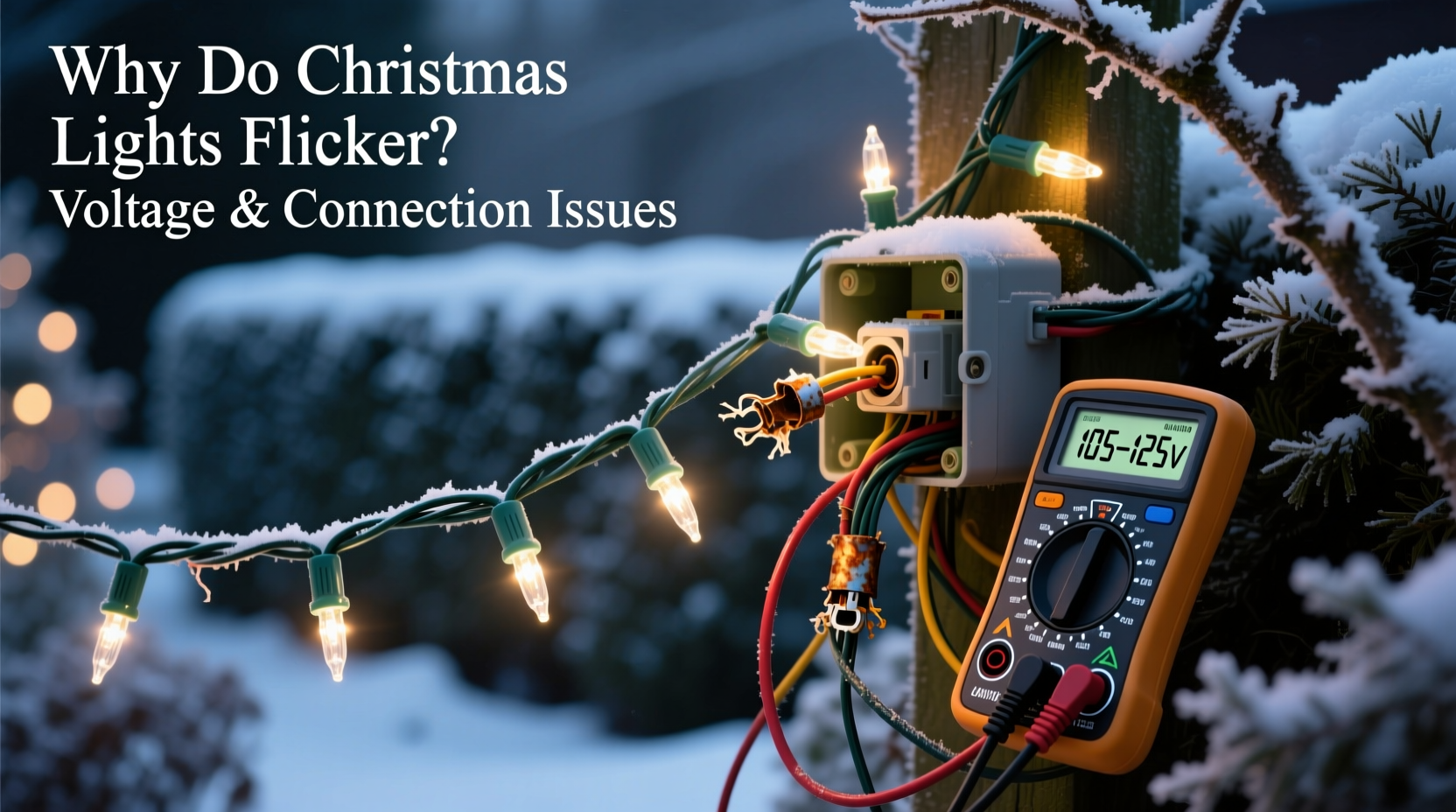
Most traditional Christmas light strings are wired in series, meaning electricity flows through each bulb in sequence. If one bulb fails or becomes loose, it breaks the circuit, potentially causing sections—or entire strands—to go dark or flicker intermittently. Newer LED models often use shunted sockets or parallel wiring to reduce this vulnerability, but even they aren’t immune to flickering under certain conditions.
Voltage plays a critical role. Standard incandescent mini-lights typically operate at 2.5 to 3.5 volts per bulb. A 100-light string on a 120V circuit divides the voltage evenly across each bulb. Any disruption—like a corroded contact or fluctuating input voltage—can cause uneven distribution, leading to erratic behavior.
LED strings, while more energy-efficient, are sensitive to small changes in current. They often include rectifiers and current-limiting resistors, but low-quality drivers or incompatible dimmers can introduce instability that manifests as flickering.
Common Causes of Random Flickering
Flickering doesn’t happen without reason. While some causes are harmless, others pose fire risks or indicate deteriorating components. Here are the most frequent culprits:
1. Loose or Improperly Seated Bulbs
In older incandescent sets, a single bulb that’s not fully screwed in can interrupt the circuit. As vibrations from wind or handling shift the bulb slightly, the connection may make and break repeatedly—causing visible flickering. This is especially common in pre-lit trees where bulbs are frequently removed and reinserted.
2. Corroded or Dirty Sockets
Outdoor lights exposed to moisture, salt air, or temperature swings can develop oxidation inside the socket. Corrosion increases resistance, creating hot spots and inconsistent current flow. Even indoor sets stored in damp basements can suffer from mild corrosion over time.
3. Overloaded Circuits
Plugging too many light strings into a single outlet or power strip can exceed the circuit’s capacity. When demand spikes—such as when a refrigerator compressor kicks in—the voltage sags momentarily, causing all connected lights to dim or flicker. This is particularly noticeable in older homes with limited electrical infrastructure.
4. Voltage Fluctuations from the Grid
Utility-supplied voltage isn’t always stable. Power surges, brownouts, or nearby high-draw appliances (like HVAC systems) can cause brief drops or spikes in household voltage. Incandescent bulbs respond directly to these changes with brightness shifts, while LEDs may blink entirely if their driver circuits reset.
5. Faulty or Incompatible Dimmer Switches
If your Christmas lights are controlled by a wall dimmer, ensure it's compatible with the load type. Traditional triac-based dimmers designed for incandescent bulbs often don't work well with LED strings, causing flickering or buzzing. Modern trailing-edge dimmers are better suited for low-wattage LED applications.
6. Damaged Wires or Insulation
Physical damage—crushed cords, rodent chewing, or UV degradation in outdoor lights—can expose conductors or create intermittent shorts. These faults may only appear when the wire moves or heats up, making diagnosis tricky.
“Intermittent flickering is one of the most telling signs of a compromised electrical connection. It should never be ignored, especially in seasonal decorations that remain energized for days at a time.” — James L. Reynolds, Certified Electrician & NFPA Safety Advisor
Step-by-Step Diagnosis Guide
Follow this systematic approach to identify and resolve the source of random flickering in your Christmas lights.
- Unplug the light string immediately. Safety first—never inspect live wiring.
- Inspect each bulb visually. Look for darkened filaments (in incandescents), cracked lenses, or signs of overheating like melted bases.
- Re-seat every bulb. Remove and firmly reinsert each one, ensuring metal bases make full contact with socket terminals.
- Check for damaged sockets or wires. Run your fingers gently along the cord. Feel for kinks, abrasions, or soft spots indicating insulation breakdown.
- Test with a known-good outlet. Plug the strand into a different circuit—preferably one not shared with large appliances.
- Use a multimeter to test voltage. Set it to AC voltage and measure the outlet supplying the lights. It should read between 110V and 125V. Fluctuations beyond ±5% suggest grid or internal circuit issues.
- Isolate the problem. If using multiple connected strands, disconnect them one by one to see if flickering stops after removing a specific section.
- Try a surge protector or line conditioner. These devices stabilize incoming voltage and filter electrical noise that can affect sensitive LED drivers.
Do’s and Don’ts: Holiday Lighting Safety Table
| Do | Don’t |
|---|---|
| Use lights rated for indoor or outdoor use appropriately | Use indoor-only lights outside |
| Replace frayed or damaged cords immediately | Tape over cracked insulation |
| Follow manufacturer’s max connection limits | Daisy-chain more than three incandescent strings |
| Install GFCI protection for outdoor outlets | Plug high-load displays into ungrounded two-prong outlets |
| Turn off lights when leaving home or sleeping | Leave malfunctioning lights energized overnight |
Real-World Example: The Case of the Flickering Front Porch
Homeowner Maria R. in Portland, Oregon, noticed her outdoor icicle lights would flicker every evening around 6 PM. The pattern wasn’t consistent—sometimes steady, sometimes chaotic—and only affected one side of the house. After ruling out bulb issues and confirming proper plug-in, she used a multimeter to monitor voltage at the outlet. She discovered a regular dip from 120V to 108V precisely when her neighbor’s heat pump cycled on.
Maria consulted an electrician who confirmed both homes shared a transformer nearing capacity. The solution? Her utility company upgraded the local feed, and Maria switched to a lower-wattage LED string with built-in surge protection. The flickering stopped completely, and her display now runs smoothly—even during peak winter loads.
Preventive Maintenance Checklist
- ✅ Inspect all light strings annually before installation
- ✅ Clean dust and debris from sockets using a dry cloth or compressed air
- ✅ Label and store lights in original packaging or segmented containers
- ✅ Test each strand individually before connecting multiple units
- ✅ Use weatherproof covers for outdoor outlets and connections
- ✅ Replace any set older than 5 years, especially if brittle or discolored
- ✅ Install smart plugs or timers to limit daily runtime
Frequently Asked Questions
Can LED Christmas lights flicker due to cold temperatures?
Yes. While LEDs perform well in cold environments, extremely low temperatures can affect driver circuitry, especially in budget models. Some cheaper LED strings lack thermal compensation and may flicker briefly when first powered in freezing conditions. High-quality, UL-listed outdoor LEDs are engineered to handle sub-zero operation without issue.
Why do my lights flicker only at night?
This often points to increased household electrical load during evening hours. Devices like ovens, washers, and space heaters come online, drawing more power and reducing available voltage. It could also indicate external grid strain. Try running the lights during the day—if flickering stops, you likely have a loading or supply issue.
Is it safe to keep flickering lights plugged in?
No. Persistent flickering indicates an unstable connection, which generates heat and increases fire risk. Even minor arcing inside a socket can ignite surrounding materials over time. Unplug the lights until the cause is identified and resolved.
Conclusion: Keep Your Holidays Bright and Safe
Random flickering in Christmas lights is more than a seasonal annoyance—it’s a warning sign that demands attention. Whether caused by a loose bulb, overloaded circuit, or deeper electrical instability, addressing the issue promptly protects your home and preserves the magic of your holiday display. By applying systematic troubleshooting, adhering to safety best practices, and investing in quality lighting products, you can enjoy a steady, shimmering glow from the first snowfall to New Year’s Day.




 浙公网安备
33010002000092号
浙公网安备
33010002000092号 浙B2-20120091-4
Comments
No comments yet. Why don't you start the discussion?