
Every holiday season begins the same way: you pull out last year’s Christmas lights, only to find them twisted into a stubborn nest of kinks and knots. No matter how carefully you thought you packed them away, they emerge looking like a tangled experiment gone wrong. This recurring frustration isn’t just bad luck—it’s physics, material fatigue, and storage habits converging. Understanding why kinks form and how to reverse or prevent them can save time, reduce stress, and extend the life of your festive strings.
Christmas lights are more than decorative—they’re often sentimental, passed down through generations or chosen with care for a specific aesthetic. Damaging them by yanking apart kinks or replacing strands every year is both costly and unnecessary. With the right knowledge and techniques, you can maintain their integrity and enjoy smooth, kink-free setup each December.
The Science Behind Kinking in Stored Christmas Lights
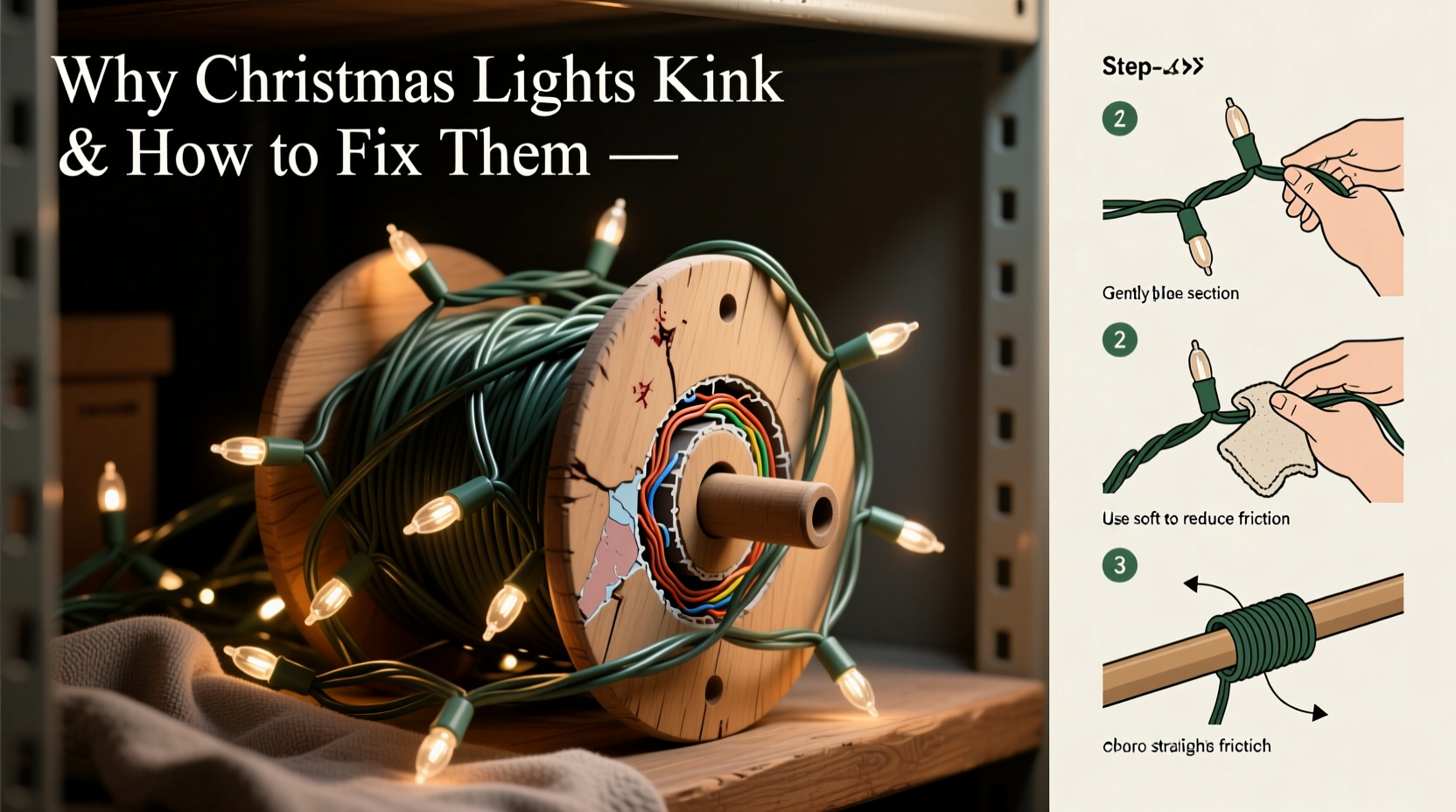
Kinks in Christmas lights aren't random; they result from physical properties of the wire and how it responds to stress over time. Most holiday light cords are made from copper or copper-clad aluminum, coated in flexible PVC insulation. While this combination allows bending during installation, repeated coiling and uncoiling—especially under tension—leads to plastic deformation.
When a wire is bent beyond its elastic limit, it doesn’t fully return to its original shape. Over months in storage, residual stress causes the material to “remember” the coiled form. This phenomenon, known as set or memory, is particularly strong in thin-gauge wires that lack structural rigidity. The tighter the coil during storage, the more pronounced the kinks become.
Temperature fluctuations worsen the issue. Cold garages or damp basements cause materials to contract and expand, increasing internal stress. PVC becomes brittle in cold conditions, making it prone to micro-cracks and permanent bends. Even UV exposure—if lights are stored near windows—can degrade insulation, reducing flexibility and resilience.
“Wires develop memory after repeated deformation. The key to preventing kinks is minimizing sharp bends and storing under low tension.” — Dr. Alan Reyes, Materials Engineer at the Institute for Flexible Electronics
How to Straighten Kinked Christmas Lights Effectively
Once kinks have formed, hope isn’t lost. You can restore most light strands to near-original condition using gentle, controlled methods. Aggressive pulling risks breaking internal wires or damaging sockets, so patience is essential.
Step-by-Step Guide: Reversing Wire Memory
- Unpack gently: Lay the strand on a clean, flat surface like a table or floor. Avoid hanging or suspending the cord, which adds gravitational stress.
- Inspect for damage: Check bulbs, sockets, and insulation before attempting repairs. Replace broken bulbs now to avoid rework later.
- Apply mild heat: Use a hairdryer on low heat, moving it slowly along kinked sections from end to center. Heat softens PVC insulation, allowing the wire to relax. Do not hold the dryer in one spot for more than 10 seconds.
- Manually reshape: As the cord warms, gently straighten kinks with your fingers. Apply even pressure—do not force sharp bends. Let the wire guide itself toward straightness.
- Weight and stretch: Attach small weights (like binder clips) to both ends and drape the cord over a doorframe or between two chairs. Leave overnight to allow gravity to assist realignment.
- Test functionality: Plug in the lights after treatment to ensure no electrical issues arose during straightening.
Best Storage Practices to Prevent Future Kinks
Prevention is far more efficient than repair. How you store your lights at the end of the season determines their condition the next year. The goal is to minimize bending stress, protect against environmental factors, and maintain organization.
Do’s and Don’ts of Christmas Light Storage
| Practice | Do | Don’t |
|---|---|---|
| Coiling Method | Use the \"over-under\" technique to alternate loop direction and reduce twist | Wrap tightly around your hand or cardboard—creates uniform curvature and memory |
| Storage Container | Use wide, rigid containers with ventilation | Crush lights into narrow boxes or zip bags—increases pressure points |
| Environment | Store in climate-controlled indoor areas (e.g., closet, shelf) | Leave in attic, garage, or basement with temperature swings |
| Handling | Label each strand by location or color for quick identification | Toss all lights into one bin without separation |
The \"over-under\" method deserves special attention. Instead of wrapping the cord in one consistent circular motion, alternate each loop: one over your index finger, the next under it. This cancels out torsional stress, significantly reducing twist buildup. It’s a technique borrowed from stage electricians who manage hundreds of feet of cable annually.
Alternative Storage Tools
- Light reels: Commercially available spools designed for even winding without tight bends.
- Cardboard frames: DIY solutions using cut cardboard with notches to secure loops loosely.
- Paper towel tubes: Slide strands through and seal ends with tape—ideal for short runs.
- Zippered fabric sleeves: Provide cushioning and keep multiple strands separated.
A Real Example: From Frustration to Flawless Setup
Sarah Thompson, a homeowner in Portland, Oregon, used to spend nearly three hours untangling her outdoor light display each November. Her icicle lights were especially problematic—bent into zigzags after being wound tightly around a garden stake the previous January.
In 2022, she decided to overhaul her system. She invested in two light reels and adopted the over-under method for her remaining strands. After straightening the worst kinks with a hairdryer and overnight weighting, she labeled each reel by location: “Front Porch,” “Gutters,” “Tree.”
Last year, her entire lighting setup took 35 minutes. “It felt like magic,” she said. “No cutting, no swearing, no broken bulbs. I kept the same strands for five years now—better than any set I’ve had.”
Sarah also stores her reels inside a sealed plastic tote with silica gel packs to control moisture. She attributes the success not just to tools but to consistency: “I treat it like a ritual now. Holiday cleanup isn’t done until the lights are properly put away.”
Checklist: Year-End Light Maintenance Routine
Follow this checklist every January to ensure kink-free performance next season:
- ✅ Test each strand for full illumination and replace faulty bulbs
- ✅ Gently remove kinks using heat and manual reshaping
- ✅ Clean dust and debris with a dry microfiber cloth (avoid water)
- ✅ Use the over-under method or a reel for coiling
- ✅ Store in a labeled, ventilated container indoors
- ✅ Keep away from pets and rodents—consider placing peppermint-soaked cotton balls nearby (natural deterrent)
- ✅ Document inventory: note length, color, and placement for future planning
Frequently Asked Questions
Can I wash Christmas lights to clean them?
No—never submerge or hose down traditional string lights. Moisture can seep into sockets and cause short circuits. For outdoor lights exposed to dirt or bird droppings, lightly wipe with a slightly damp cloth and dry immediately.
Why do LED lights still kink if they’re more flexible?
While LED wires are often thinner and more pliable, they’re still susceptible to set formation. In fact, their slim profile makes them more likely to twist tightly if improperly coiled. The same principles of low-tension storage apply.
Is it worth repairing old lights or should I replace them?
If the wiring insulation is cracked, frayed, or brittle, replacement is safer. However, minor kinks and bulb issues are easily fixable. Well-maintained lights can last 10–15 years or more, making repair both economical and eco-friendly.
Conclusion: Transform Your Holiday Experience One Strand at a Time
Kinked Christmas lights don’t have to be an annual inevitability. They’re a solvable problem rooted in material behavior and habit. By understanding the science of wire memory and adopting professional-grade storage techniques, you reclaim time, reduce waste, and preserve the joy of decoration without the pre-season struggle.
Start this year with intention. When the holidays end, take an extra 10 minutes to care for your lights properly. Straighten what’s bent, label what’s useful, and store with respect. Next December, you’ll plug them in and watch them fall perfectly into place—just as they should.




 浙公网安备
33010002000092号
浙公网安备
33010002000092号 浙B2-20120091-4
Comments
No comments yet. Why don't you start the discussion?