
Every holiday season, millions of homes light up with festive cheer—only for the joy to dim slightly when it’s time to untangle a knotted mess of Christmas lights. You pull out last year’s carefully packed string, confident you did it right, only to find an impossible snarl that resists logic and patience. Why does this happen? And more importantly, is there a way to stop it from recurring?
The answer lies in both physics and human behavior. While we may believe we’re storing lights neatly, subtle missteps during coiling, storage, or removal can trigger inevitable tangling. But with the right understanding and techniques, you can break the cycle once and for all.
The Science Behind Tangling: Why Lights Rebel Every Year
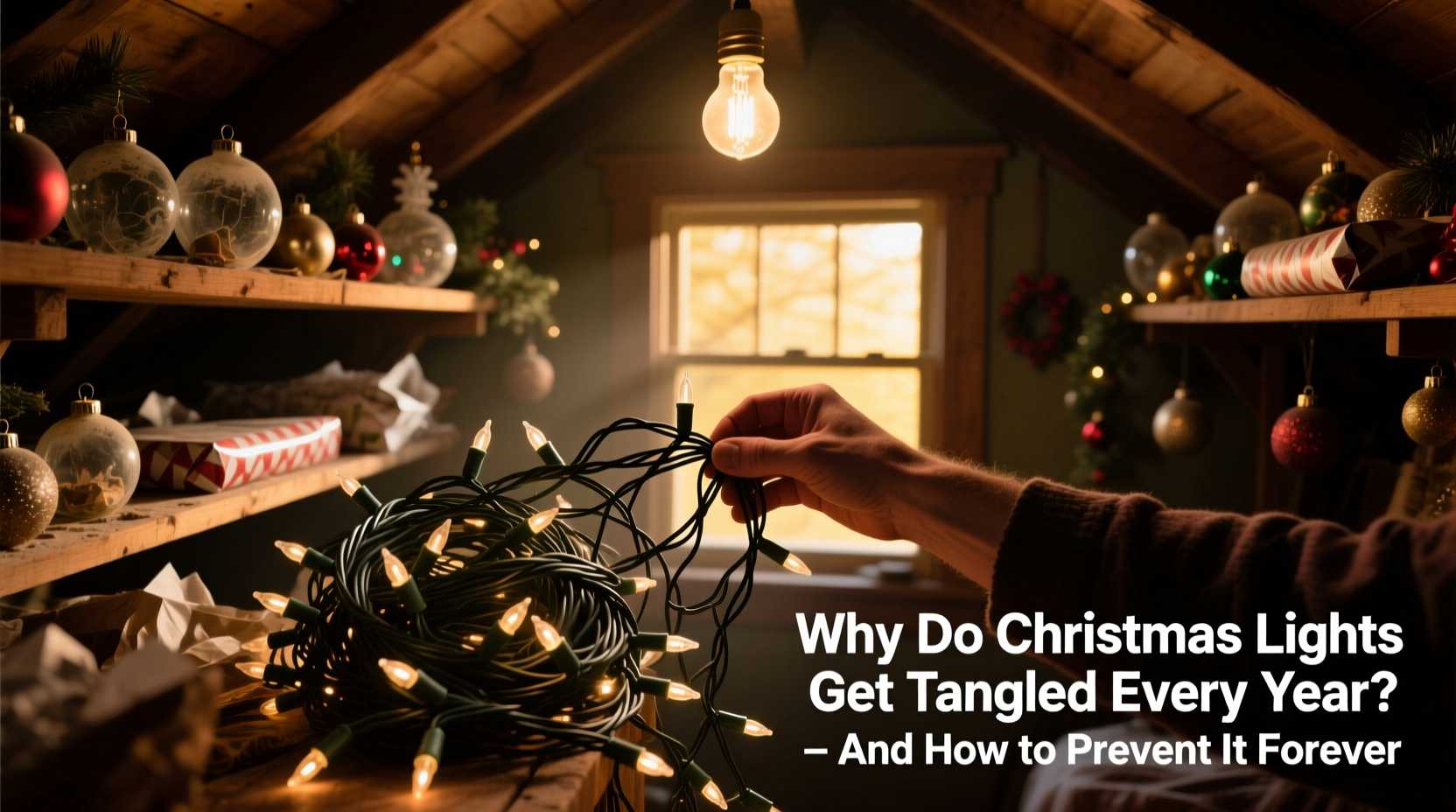
At first glance, tangled Christmas lights seem like bad luck. In reality, they are the predictable outcome of entropy—a principle in physics describing how systems naturally move toward disorder over time. A 2007 study by two physicists at the University of California, San Diego demonstrated that any long, flexible strand, when agitated (like being tossed into a box), will spontaneously form knots within seconds.
Christmas lights are especially prone because they combine three problematic traits:
- Length: Most strings are 25 feet or longer, providing ample opportunity for loops to catch.
- Flexibility: Thin wires bend easily, increasing knot formation potential.
- Rigidity points: Bulbs act as anchor points that snag other sections when twisted.
Even gentle handling isn’t enough. If lights aren’t wound with consistent tension and direction, microscopic twists accumulate. Over weeks in storage, movement from stacking boxes or temperature shifts adds agitation—just enough to turn orderly coils into chaos.
“Any flexible cord left to its own devices will eventually knot itself. The longer and more irregularly stored, the higher the probability.” — Dr. Douglas Smith, Professor of Physics, UCSD
How We Make It Worse: Common Storage Mistakes
Most people coil their lights using the “over-under” method without realizing they're introducing twist. Others use old cardboard rolls or hangers that compress bulbs, creating pressure points where kinks start. Here are the top storage errors that guarantee next-year tangles:
| Mistake | Why It Causes Problems | Better Alternative |
|---|---|---|
| Wrapping around your hand or elbow | Creates uneven tension and built-in twist | Use a winding tool or spool with fixed rotation |
| Tying with tight rubber bands | Damages insulation; increases friction between strands | Use soft fabric ties or Velcro straps |
| Throwing coiled lights into a bin loosely | Coils loosen and interact with other items | Store flat in rigid containers or on reels |
| Using clothespins or clips to bundle multiple strings | Pressure deforms wire; clips wear out and fail | Label and separate each string individually |
A Permanent Solution: The Step-by-Step Untangling Prevention System
Preventing tangles isn't about perfection—it's about consistency and process. Follow this six-step system annually, and your lights will remain knot-free for years.
- Unplug and inspect before removal
Before taking down your display, ensure all lights are cool and unplugged. Check for broken bulbs, frayed wires, or loose sockets. Replace faulty sections now to avoid future frustration. - Remove gently, never yank
Work from one end, carefully detaching clips or hooks. Avoid pulling entire strands off gutters or trees at once—this introduces sudden stress and twisting. - Choose a clean, open workspace
Lay out a towel or blanket on the floor or table. This prevents dirt buildup and gives you room to work methodically. - Use the over-under coiling technique correctly
Hold the plug in one hand. With the other, make a loop by bringing the cord over your fingers, then under on the next pass. Alternate directions with each loop. This cancels out twist and keeps the wire neutral. - Secure with soft fasteners
Once fully coiled, use a fabric tie, Velcro strap, or reusable zip-tie to bind the coil. Don’t pull too tight—just enough to hold shape. - Store in labeled, compartmentalized containers
Place each string in its own slot or box. Use clear bins so you can see contents without opening. Stack vertically if possible to reduce compression.
Optional Upgrade: Use Reels or Spools
For heavy-duty or commercial-grade lighting, invest in plastic or wooden reels. These allow you to wind lights smoothly under controlled tension. Some models even have handles and brakes for precision winding. Though initially more expensive, they pay off in saved time and reduced replacement costs.
Real-Life Success: How One Family Solved Their Light Chaos
The Peterson family in Portland, Oregon, used to spend nearly eight hours each December untangling lights. Three large outdoor displays, dozens of strings, and inconsistent storage led to annual frustration. In 2020, after another weekend lost to knot-picking, they decided to overhaul their system.
They purchased four plastic reels, color-coded labels, and soft closure straps. Each person was assigned a section of the house and trained in proper over-under coiling. After removal, every string was tested, coiled, labeled with location (e.g., “Front Roof – Warm White”), and stored upright in a dedicated closet shelf.
The result? By 2023, setup time dropped from three days to under seven hours. Not a single string arrived tangled. “It felt like magic,” said Sarah Peterson. “But really, it was just doing the same thing right every time.”
Expert-Approved Tools and Methods That Work
Not all storage solutions are created equal. Based on feedback from electricians, decorators, and physicists alike, here are the most effective tools for maintaining tangle-free lights:
- Cord Reels: Ideal for long runs. Look for non-abrasive surfaces and smooth rotation.
- Cardboard Boxes with Slits: DIY-friendly. Cut opposing slits on either end and feed the plug through to secure the start.
- Paper Towel Rolls: Slide the coil inside to prevent unraveling. Add tape across ends to seal.
- Wine Glass Holders: Surprisingly effective. The central post holds the coil in place while the outer ring protects it.
- 3D-Printed Winding Jigs: Available online, these small tools guide perfect over-under motion.
“The key isn’t fancy gear—it’s eliminating variables. When you coil the same way, store the same way, and handle the same way, tangles become rare.” — Mark Tran, Professional Holiday Lighting Installer
Checklist: Your Annual Christmas Light Storage Routine
✅ Do This Every Year to Prevent Tangled Lights Forever:
- Test all strings for function and damage.
- Remove gently from display points.
- Wipe down cords with a dry cloth to remove dust.
- Use the over-under method to coil each string.
- Secure with soft, non-binding fastener.
- Label each coil with location and color.
- Store upright in individual compartments.
- Keep in a cool, dry place away from rodents.
Frequently Asked Questions
Can I use twist ties to secure my Christmas lights?
No. Twist ties, especially metal ones, can cut into the insulation over time, exposing wires and creating fire hazards. They also apply uneven pressure. Use fabric ties, Velcro straps, or reusable silicone bands instead.
What should I do if my lights are already tangled?
Start by laying the string flat on a large surface. Locate the plug end and follow it slowly, loosening loops with your fingers—not by pulling. Work outward gradually. For severe tangles, use a crochet hook or blunt needle to gently tease apart knots without stressing the wire.
Is it worth repairing old lights, or should I replace them?
If the lights are incandescent and frequently failing, upgrading to LED is often smarter. LEDs use up to 90% less energy, last 25 times longer, and generate less heat—reducing degradation of materials. Many come pre-coiled on reels designed for easy storage.
Conclusion: Break the Cycle and Reclaim Your Holidays
Tangled Christmas lights don’t have to be a seasonal inevitability. They’re not a curse, nor bad luck—they’re the result of small, repeatable mistakes compounded over time. By applying scientific insight, disciplined technique, and simple organizational habits, you can eliminate this frustration permanently.
The effort you invest in proper storage pays exponential dividends. Less time untangling means more time enjoying the holidays. Fewer replacements mean cost savings and less waste. And a smooth setup process transforms what was once a chore into a joyful tradition.
This year, commit to doing it differently. Take an afternoon, gather your tools, and treat your lights with the care they deserve. Next December, when you open that box and pull out a perfectly coiled string—plugged in and glowing within seconds—you’ll know it was worth it.




 浙公网安备
33010002000092号
浙公网安备
33010002000092号 浙B2-20120091-4
Comments
No comments yet. Why don't you start the discussion?