
Christmas lights bring warmth and cheer to homes every holiday season. But when a strand suddenly goes dark, the culprit is often not a burned-out bulb—it’s a blown fuse. Many people don’t realize that most plug-in incandescent Christmas light strings come equipped with small internal fuses designed to protect the circuit from power surges and overheating. Understanding how these fuses work, where to locate them, and how to replace them can save time, money, and frustration during your festive decorating.
Fuses are a critical but often overlooked component of holiday lighting safety. They serve as a built-in safeguard, preventing electrical damage and reducing fire risk. Yet, because they’re so tiny and hidden, many users toss out entire strands thinking they’re beyond repair—when in fact, a simple fuse replacement could restore full function.
Why Christmas Lights Have Fuses
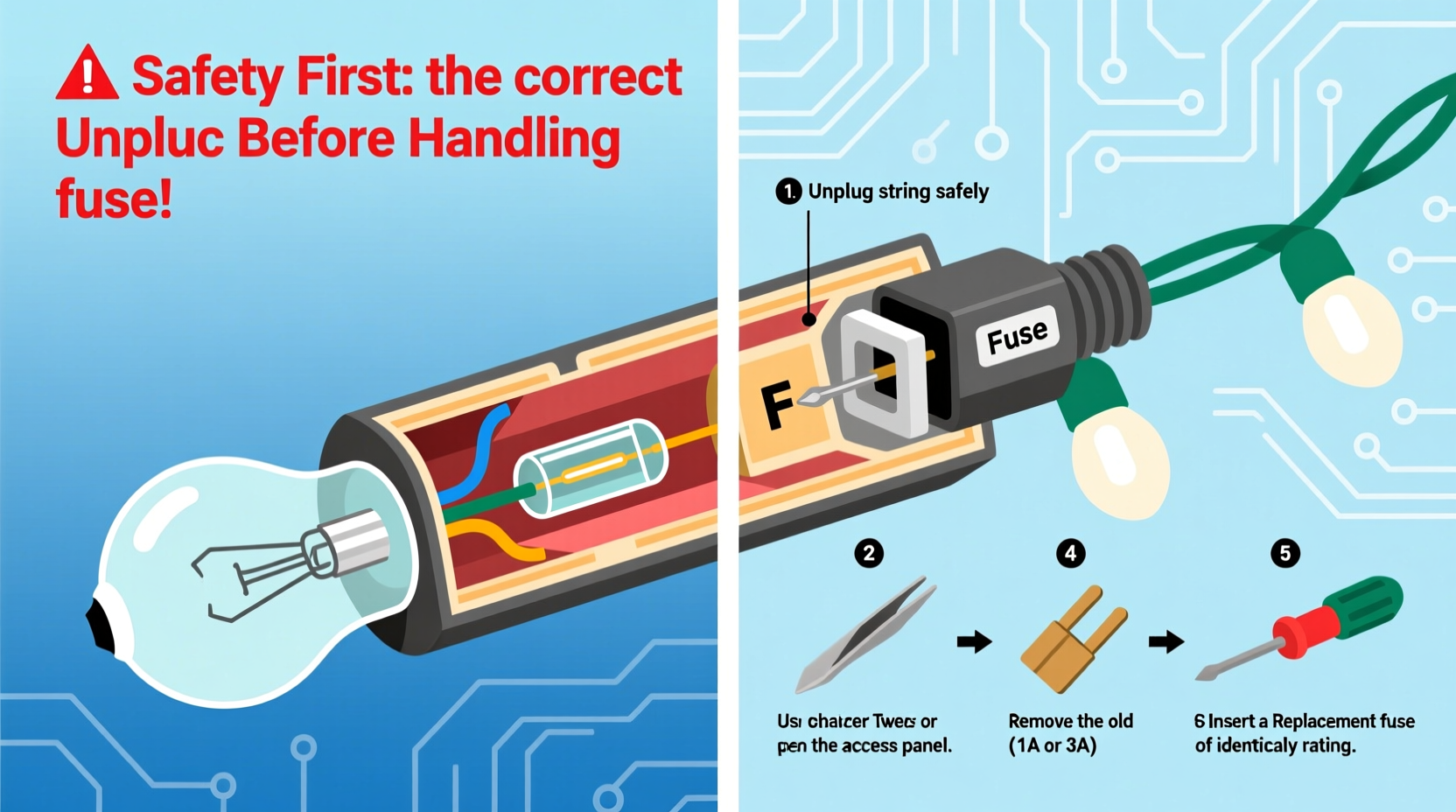
The primary reason Christmas lights include fuses is safety. Most traditional mini-light strands operate on low voltage but are still connected directly to household 120V power. Each bulb typically uses only about 2.5 volts, meaning a string of 50 bulbs divides the line voltage evenly across the circuit. However, if too much current flows through the strand—due to a short circuit, power surge, or manufacturing defect—the wires can overheat, potentially melting insulation or igniting nearby materials.
This is where the fuse comes in. A fuse is a sacrificial device: it contains a thin metal strip designed to melt and break the circuit when excessive current passes through. By interrupting the flow of electricity, the fuse protects the rest of the strand and the user from dangerous conditions.
Most incandescent Christmas light sets contain two small fuses located inside the male plug (the end you insert into the wall outlet). These are usually labeled “spare” and “main” or differentiated by color—one red, one clear or silver. The main fuse controls the active circuit, while the spare remains unused until needed.
“Fuses in Christmas lights are a crucial first line of defense against electrical hazards. They’re inexpensive, but their role in preventing fires is invaluable.” — James Rutherford, Electrical Safety Engineer, NFPA Contributor
Where to Find the Fuses in Christmas Light Strands
Finding the fuses requires close inspection of the plug. On most standard incandescent light strings, the male plug has a small sliding compartment on the bottom or side. This panel is often held in place by friction or a tiny tab and can be gently pried open using a flathead screwdriver or fingernail.
Once opened, you’ll see two small cylindrical fuses nestled in sockets. These are typically 3-amp, 125-volt fuses, about the size of a grain of rice (5mm x 20mm). One will be labeled as the working fuse; the other is the spare. Some manufacturers etch “FUSE” or use colored indicators to distinguish them.
If your lights aren’t working and all bulbs appear intact, the first diagnostic step should be checking the fuses. Look for visible signs of damage: a blackened interior, broken filament, or discolored glass. Even if the fuse looks fine, it may still be internally blown—so testing with a multimeter or trying a known-good spare is essential.
Step-by-Step: How to Open the Fuse Compartment
- Unplug the light strand completely from any power source.
- Examine the male plug for a small sliding or removable panel.
- Gently pry open the panel using a plastic tool or fingernail to avoid damaging contacts.
- Locate the two fuses inside the compartment.
- Carefully remove the main fuse using tweezers or pliers with insulated handles.
- Inspect visually for breaks or scorch marks.
- If uncertain, test continuity with a multimeter set to resistance mode.
If the fuse shows no continuity (infinite resistance), it’s blown and needs replacement.
How to Replace a Blown Fuse Safely
Replacing a fuse is straightforward, but precision matters. Using the wrong amperage or improperly installing the fuse can create new hazards. Always replace a fuse with one of the exact same rating—typically 3A 125V for standard mini-lights. Substituting a higher-rated fuse defeats the protective purpose and increases fire risk.
Luckily, most light sets come with a spare fuse already installed in the plug. If the spare hasn’t been used, simply swap it with the blown one. After replacement, close the compartment securely and plug in the lights to test.
If both fuses are blown, this may indicate a deeper issue such as a short circuit in the wiring, moisture damage, or an overloaded circuit. In such cases, proceed cautiously—even after fuse replacement, recurring failures suggest the strand should be retired.
When the Spare Fuse Isn’t Enough
Sometimes, even a new fuse won’t restore function. That doesn’t necessarily mean the strand is dead. Consider these possibilities:
- Multiple blown fuses: Some older or longer strands have more than one fuse point.
- Damaged socket or wire: Physical wear can break continuity elsewhere in the circuit.
- Bulb failure affecting series circuit: In older series-wired strands, one dead bulb can kill the whole string.
- Outlet or extension cord issues: Test the outlet with another device to rule out power supply problems.
Do’s and Don’ts of Christmas Light Fuse Maintenance
| Do | Don’t |
|---|---|
| Always unplug before handling fuses | Never use a fuse with a higher amp rating |
| Use the spare fuse provided when possible | Don’t force the fuse compartment open with metal tools |
| Test fuses with a multimeter for accuracy | Don’t reuse a visibly damaged fuse |
| Inspect cords and plugs for cracks or burns | Don’t daisy-chain more than three strands unless rated for it |
| Store lights carefully to prevent wire stress | Don’t leave faulty strands plugged in unattended |
Mini Case Study: The Strand That Wouldn’t Light
Sarah had a favorite string of red-and-white mini-lights she used every year on her front porch. Last December, after hanging them, only half the strand lit up. She replaced several bulbs but saw no improvement. Frustrated, she nearly threw the entire string away—until her neighbor suggested checking the fuse.
Sarah unplugged the lights, opened the small panel on the plug, and found the main fuse was blackened inside. She swapped in the spare, snapped the compartment shut, and plugged it back in. The entire strand lit up instantly.
Later, she realized she’d accidentally left the lights on during a brief rain shower earlier in the week. Moisture likely caused a minor short, blowing the fuse—but the protection worked exactly as intended. The strand survived, and Sarah now includes fuse checks in her annual holiday prep routine.
Checklist: Fuse Troubleshooting for Christmas Lights
- Unplug the light strand from the power source.
- Inspect the plug for a removable fuse compartment.
- Open the compartment carefully without damaging contacts.
- Remove the main fuse and examine it for discoloration or breakage.
- Test continuity with a multimeter if available.
- Replace with the spare fuse or an identical 3A 125V fuse.
- Reassemble the plug and test the lights.
- If lights still don’t work, check for damaged bulbs, sockets, or wiring.
- Retire any strand with cracked insulation, exposed wires, or repeated fuse failures.
- Label repaired strands for future reference.
Are LED Christmas Lights Different?
Modern LED light strings often don’t use replaceable fuses in the same way. Because LEDs consume far less power and generate minimal heat, they’re inherently safer and more energy-efficient. Many LED sets include internal current-limiting resistors or electronic protection circuits instead of physical fuses.
However, some LED strands—especially those designed to be daisy-chained or used outdoors—still incorporate fuses for overload protection. Always check the plug compartment just as you would with incandescent sets. If an LED strand fails, the issue is more likely to be a failed driver circuit, broken solder joint, or incompatible controller rather than a blown fuse.
Additionally, mixing LED and incandescent strands on the same circuit can cause issues due to differing power draws. Avoid connecting them together unless the packaging explicitly allows it.
FAQ: Common Questions About Christmas Light Fuses
Can I buy replacement fuses separately?
Yes. 3-amp, 125-volt miniature fuses are widely available at hardware stores, electronics retailers, and online marketplaces like Amazon or Home Depot. Look for \"miniature cartridge fuses\" or \"Christmas light replacement fuses.\" A pack of ten costs under $5 and can last for years.
Why did my fuse blow in the first place?
Fuses blow due to excess current. Common causes include power surges, moisture exposure, frayed wires, overloading by connecting too many strands, or manufacturing defects. Frequent blowing suggests the strand is worn or being used improperly.
Do all Christmas lights have fuses?
No. Only plug-in incandescent mini-light strings typically have fuses. Battery-operated lights, commercial-grade C7/C9 bulbs, and many modern LED sets either don’t require them or use alternative protection methods. Always check your specific product.
Extending the Life of Your Christmas Lights
Prevention is better than repair. Taking steps to protect your lights reduces the likelihood of fuse blowouts and extends the lifespan of your decorations.
- Use timers: Automate on/off cycles to prevent overheating and reduce wear.
- Avoid moisture: Use outdoor-rated strands outside, and never leave lights on in rainy or snowy conditions unless protected.
- Don’t overload circuits: Follow manufacturer limits on how many strands can be connected end-to-end (usually three for incandescent).
- Inspect annually: Before each season, examine cords, plugs, and bulbs for damage.
- Store properly: Wrap lights around a cardboard reel or use a storage reel to prevent tangling and wire stress.
“Treating your Christmas lights like the electrical devices they are—not just decorations—can prevent accidents and extend usability for decades.” — National Fire Protection Association (NFPA) Holiday Safety Guide
Conclusion: Stay Safe and Keep the Lights On
Christmas light fuses are small but vital components that ensure your holiday display remains bright and safe. Knowing how to identify, access, and replace them empowers you to troubleshoot common failures without discarding functional strands. With a few basic tools and a little patience, you can keep your favorite lights glowing year after year.
As holiday traditions evolve, the fundamentals of electrical safety remain unchanged. Respect the power behind the sparkle, maintain your equipment, and never underestimate the importance of a tiny fuse doing its job behind the scenes.




 浙公网安备
33010002000092号
浙公网安备
33010002000092号 浙B2-20120091-4
Comments
No comments yet. Why don't you start the discussion?