
That sharp, acrid scent—like hot plastic or singed insulation—wafting from your freshly plugged-in string of Christmas lights isn’t imagination. It’s real, it’s common, and for many households, it’s the unofficial olfactory overture to the holiday season. But while some dismiss it as “just the lights warming up,” others pause, sniff again, and reach for the outlet switch. Understanding this phenomenon isn’t about festive superstition—it’s about electrical safety, material science, and informed consumer awareness. The smell is rarely cause for panic—but it’s always worth investigating. This article explains precisely what causes that initial odor, distinguishes between benign off-gassing and genuine warning signs, and equips you with actionable steps to assess risk, prevent hazards, and enjoy safer, longer-lasting holiday lighting.
The Science Behind the Smell: Off-Gassing vs. Overheating
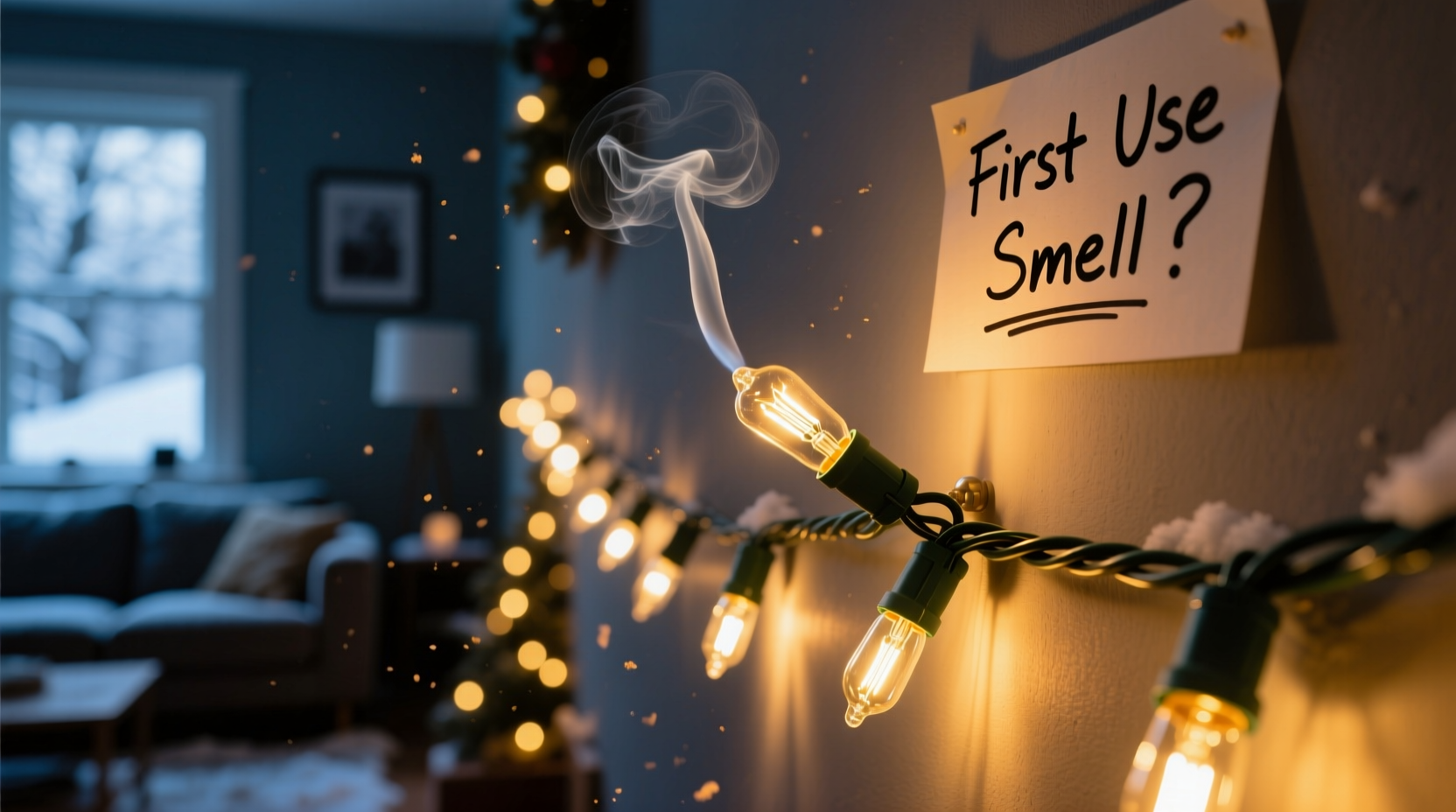
Two distinct physical processes produce similar odors—and confusing them can lead to either unnecessary alarm or dangerous complacency. The primary culprit behind the *normal* first-use smell is **thermal off-gassing**: the release of volatile organic compounds (VOCs) trapped in manufacturing materials during production. Most modern light strings use PVC (polyvinyl chloride) insulation around copper wires, along with plastic housings, solder flux residues, and adhesive binders. These compounds are stable at room temperature but begin to volatilize when heated—even mildly—during initial operation. Think of it like the “new car smell,” but triggered by electricity rather than ambient heat. This odor typically peaks within the first 10–30 minutes of use, then fades significantly or disappears entirely after the first few hours or days.
In contrast, a *dangerous* burning smell stems from **localized overheating**, often due to electrical faults. This occurs when resistance builds at weak points—such as frayed wire ends, corroded bulb sockets, overloaded circuits, or damaged insulation—causing excessive heat buildup. That heat degrades nearby plastics, melts solder, or chars insulation, releasing acrid smoke and a sharper, more pungent odor reminiscent of burnt toast or melting rubber. Unlike off-gassing, this smell intensifies over time, may be accompanied by visible discoloration, flickering, or warm spots along the cord, and does not subside with continued use.
“Off-gassing from new lights is chemically harmless in typical residential settings—but it’s a critical diagnostic cue. If the smell persists beyond 30 minutes, worsens, or is localized to one section, treat it as an electrical red flag—not a quirk.” — Dr. Lena Torres, Electrical Safety Researcher, National Fire Protection Association (NFPA)
What’s Inside Your Lights: A Material Breakdown
To understand why the smell happens—and why responses vary—you need to know what’s inside a standard incandescent or LED string:
| Component | Common Material | Role in Odor Production |
|---|---|---|
| Wire Insulation | PVC, PE (polyethylene), or newer flame-retardant thermoplastics | PVC off-gasses chlorine compounds and plasticizers when warmed; PE emits milder hydrocarbon odors |
| Bulb Bases & Sockets | Phenolic resin (bakelite), polycarbonate, or ABS plastic | Phenolics emit phenol-like odors when heated; ABS may release styrene under stress |
| Solder Flux Residue | Rosin-based or no-clean organic flux | Leaves behind residue that burns off at ~150°C, producing sharp, acrid smoke |
| Adhesives & Potting Compounds | Epoxy resins, silicone gels, or acrylic binders | May release formaldehyde or aldehydes during initial thermal cycling |
| Transformer/Rectifier Housing | Thermoset plastics (e.g., urea-formaldehyde) | Can emit formaldehyde if overheated—especially in low-cost, uncertified adapters |
Crucially, UL-listed or ETL-certified lights undergo rigorous thermal cycling tests to ensure off-gassing remains within safe VOC thresholds. Non-certified lights—often imported without compliance testing—may use cheaper, higher-VOC plastics and inadequate flux cleaning, resulting in stronger, longer-lasting odors and elevated fire risk.
When Is the Smell Safe? When Should You Unplug Immediately?
Not all burning smells are equal. Use this checklist to assess risk objectively before deciding whether to continue use:
- Timing matters: Odor appears only during first 15–20 minutes of initial use and fades steadily → likely benign off-gassing.
- Location matters: Smell is evenly distributed along the entire string, not concentrated near one socket, plug, or damaged section → supports off-gassing theory.
- Behavior matters: No flickering, dimming, or intermittent outages; bulbs remain uniformly lit; cord feels cool to the touch (not warm or hot) → low risk.
- Visual cues matter: No discoloration (yellowing, browning, or blackening) on sockets, wires, or plugs; no melted plastic, bubbling insulation, or exposed copper → reassuring sign.
- Context matters: Lights are UL/ETL listed, purchased from a reputable retailer (not unbranded marketplace sellers), and used per manufacturer instructions (e.g., not daisy-chained beyond rated limit) → increases confidence in safety.
If any of the following occur, unplug immediately and discard the set:
- The smell intensifies after 30 minutes of continuous use.
- You detect heat radiating from a specific bulb socket, plug housing, or section of cord.
- A single bulb flickers erratically or goes dark while others stay lit.
- You see charring, bubbling, or warping on any plastic component.
- The plug or transformer feels uncomfortably warm—hot enough to burn skin on brief contact.
A Real-World Example: The 2022 Cedar Hollow Incident
In December 2022, a family in Cedar Hollow, Ohio, noticed a strong “burnt plastic” odor from their newly unpacked pre-lit tree. They’d purchased the tree online from a third-party seller on a major e-commerce platform. The smell was intense from the start and did not fade—even after two hours of operation. When the father inspected the base, he found the transformer housing slightly warped and smelled smoke emanating from the lower third of the trunk wiring. He unplugged it immediately. Later that evening, a neighbor reported seeing smoke curling from the same model tree across the street—their set had ignited in the attic space where the transformer was concealed behind insulation.
Investigation by the U.S. Consumer Product Safety Commission (CPSC) revealed the trees used non-compliant transformers with undersized heat sinks and lacked internal thermal cutoffs. The “burning smell” wasn’t off-gassing—it was early-stage insulation breakdown caused by sustained overheating above 120°C. Over 47,000 units were recalled. This case underscores a vital truth: the first-use smell is a diagnostic tool, not background noise. Had those families dismissed the odor as “normal new-light smell,” the outcome could have been catastrophic.
Step-by-Step: How to Safely Break In New Christmas Lights
Follow this verified protocol to minimize risk and confirm safety before full deployment:
- Unbox & Inspect (Day 0): Lay lights flat on a non-flammable surface (concrete floor, ceramic tile). Check every socket, wire segment, and plug for cracks, frays, corrosion, or discoloration. Discard if any damage is present.
- Initial Power Test (Day 0, 10 min): Plug into a GFCI-protected outlet—never an extension cord. Set a timer for 10 minutes. Monitor closely: no heat, no flickering, no intensifying odor. If all clear, proceed.
- Extended Burn-In (Day 0 or 1, 60–90 min): Leave powered on for up to 90 minutes in a well-ventilated area, away from curtains, furniture, or flammable décor. Use a non-contact infrared thermometer (if available) to check socket and plug temperatures—should not exceed 40°C (104°F).
- Cool-Down & Re-Inspect (Post-Burn-In): Unplug and let cool completely. Re-examine sockets and wires. Look for subtle discoloration or stiffened insulation—early signs of thermal stress.
- Final Deployment (Day 1+): Only after passing all prior steps, install lights on tree or structure. Avoid covering transformers or plugging into power strips already at capacity. Use a smart plug with overload protection for added monitoring.
Frequently Asked Questions
Is the burning smell from new LED lights different from incandescent ones?
Yes—though both can off-gas, LEDs generally produce less odor because they operate at much lower temperatures (typically 30–50°C vs. 80–120°C for incandescents). However, cheap LED sets often use inferior driver circuitry housed in low-grade plastic enclosures, which can overheat and emit stronger odors than quality incandescent strings. Always prioritize certification (UL 588 for seasonal lighting) over bulb type.
Can I reduce or eliminate the first-use smell?
You cannot eliminate off-gassing, but you can mitigate its intensity and exposure. Run new lights outdoors or in a garage for their first hour. Open windows and use fans to increase ventilation indoors. Avoid using lights in enclosed spaces like glass cabinets or tightly wrapped wreaths until after burn-in. Never spray air fresheners or cleaners on lights—chemicals can degrade plastics and create conductive residues.
Why do some lights smell strongly every year—not just the first time?
Recurring odor signals degradation. Dust accumulation inside sockets acts as insulation, trapping heat. Corrosion on bulb contacts increases resistance, generating excess heat. Aging plastic becomes brittle and more prone to thermal breakdown. If a set that previously smelled only once now emits odor annually, it’s time to retire it. Continued use accelerates failure and raises fire risk exponentially.
Conclusion: Smell Smart, Light Safely
The burning smell from new Christmas lights isn’t folklore—it’s physics speaking. It’s the quiet exhalation of manufacturing residues, the whisper of thermal stress, and sometimes, the urgent hiss of impending failure. Recognizing that distinction transforms passive observation into active protection. You don’t need to fear the holidays—or avoid lights altogether. You simply need to listen to what the smell tells you, verify it with your eyes and hands, and respond with informed caution. Replace uncertified lights without hesitation. Respect burn-in protocols. Prioritize outlets with GFCI and surge protection. And never ignore persistent, localized, or intensifying odors—they’re not quirks. They’re data points in your home’s safety ledger.
This season, let your lights shine brightly—not because you ignored the warning signs, but because you understood them. Take five minutes today to inspect last year’s strings. Test a new set using the burn-in steps outlined here. Share this knowledge with a neighbor, a parent, or a friend who’s still using that 2007 light strand “because it still works.” Safety isn’t the absence of risk—it’s the presence of attention. And attention, especially during the holidays, is the most meaningful gift you can give your home.




 浙公网安备
33010002000092号
浙公网安备
33010002000092号 浙B2-20120091-4
Comments
No comments yet. Why don't you start the discussion?