
Every holiday season, millions of homes light up with festive Christmas displays. Strings of twinkling bulbs adorn trees, rooftops, and porches—creating warmth and cheer. But sometimes, that joy is interrupted by a small but startling event: a visible spark when plugging in the lights. While occasional sparking can be normal, it can also signal an underlying hazard. Understanding why this happens—and when to take action—is essential for safety, especially during a time when electrical loads increase significantly.
This article breaks down the science behind sparking Christmas lights, distinguishes between harmless and dangerous sparks, and provides practical steps to ensure your holiday lighting remains both dazzling and safe.
The Science Behind Sparking at Plug-In
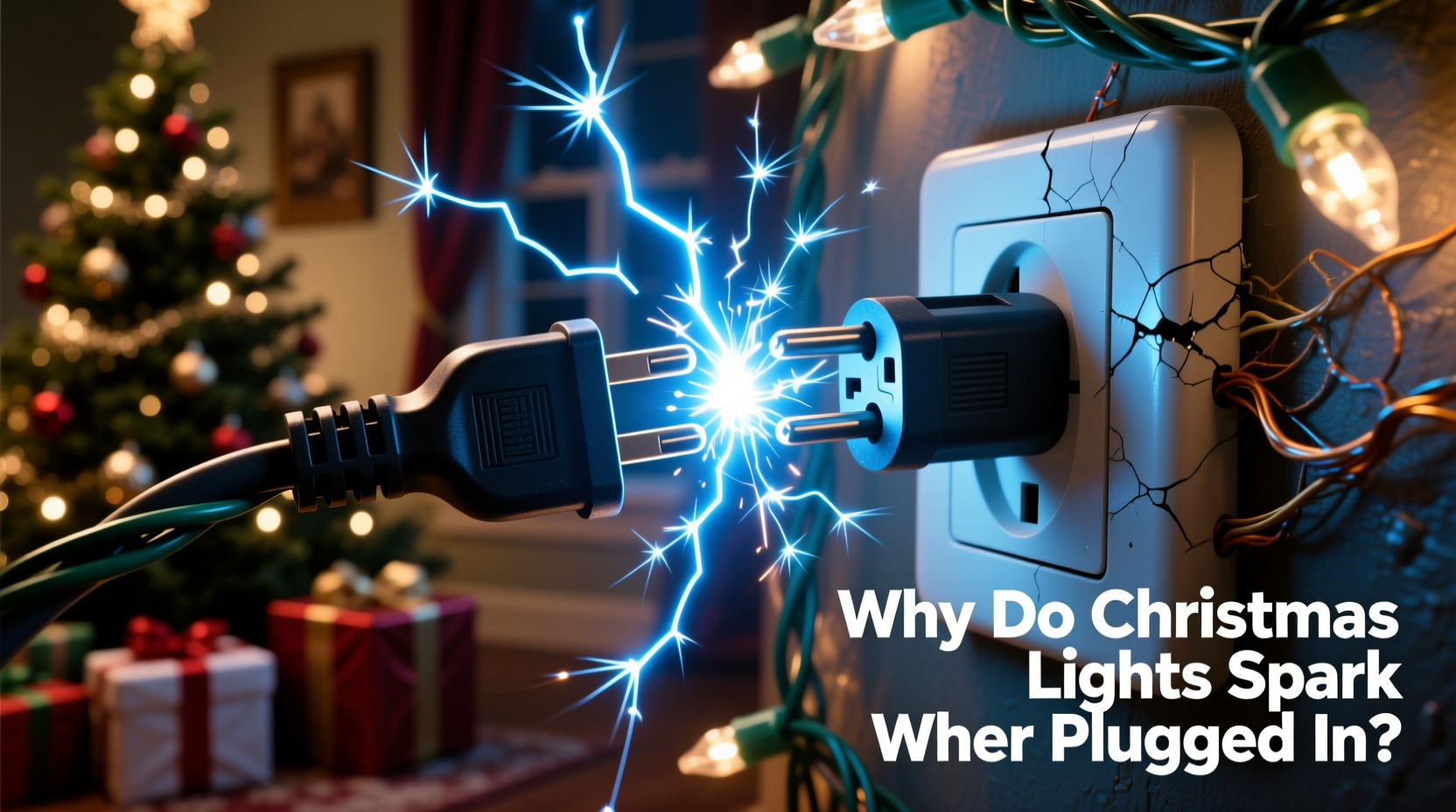
When you insert a plug into an outlet, a brief spark can occur due to a phenomenon known as inrush current. This refers to the sudden surge of electricity that flows into a device the moment it’s connected. In the case of Christmas lights, especially older incandescent models or long strands with multiple bulbs, this initial current demand can momentarily bridge the gap between the plug prongs and the outlet contacts before full connection is made.
This microsecond arc is typically blue-white and disappears instantly. It's more common with devices that have capacitive or resistive loads, such as strings of lights, motors, or transformers. The spark happens because electrons jump across the tiny air gap just before physical contact is complete—a process similar to static discharge, though on a slightly larger scale.
In most cases, this kind of sparking is harmless and occurs without any damage to the outlet, cord, or lights. However, not all sparks are created equal. The size, frequency, color, and accompanying symptoms (like heat, odor, or flickering) determine whether the spark is routine or a red flag.
Common Causes of Sparking Christmas Lights
Several factors contribute to sparking beyond simple inrush current. Some are benign; others point to deteriorating equipment or unsafe conditions. Below are the most frequent causes:
- Loose Outlet Contacts: Older outlets may have worn internal springs that don’t grip plugs tightly. This creates intermittent contact, increasing the chance of arcing each time the plug moves slightly.
- Damaged or Frayed Wiring: Exposed copper wires from cracked insulation can short-circuit when plugged in, creating visible sparks either at the plug or along the strand.
- Moisture Exposure: Outdoor lights exposed to rain, snow, or condensation can develop conductive paths across damp surfaces, leading to unintended current flow and sparking.
- Overloaded Circuits: Connecting too many light strands together increases total wattage. When the load exceeds the circuit’s capacity, voltage fluctuations can cause erratic behavior—including sparking.
- Corroded Connectors: Over time, metal parts in connectors can oxidize, especially in humid environments. Corrosion increases resistance, which generates heat and can lead to micro-arcing.
- Faulty Bulb Sockets: A broken or misaligned socket may allow current to arc between contacts instead of flowing through the filament.
Each of these issues affects how electricity travels through the system. Even minor imperfections can become focal points for energy discharge—especially under repeated use and seasonal storage conditions.
Dangerous vs. Normal Sparks: How to Tell the Difference
Not every spark requires panic—but knowing the difference could prevent a fire. Use the following table to assess what you're seeing:
| Characteristic | Normal Spark | Dangerous Spark |
|---|---|---|
| Duration | Instantaneous (less than 0.5 seconds) | Persists longer or reoccurs frequently |
| Color | Blue-white | Yellow-orange, bright white, or accompanied by smoke |
| Sound | Soft snap or pop | Loud crackle, buzzing, or sizzling |
| Heat | No noticeable warmth | Outlet, plug, or wire feels hot to touch |
| Smell | None | Burning plastic or ozone odor |
| Aftermath | Lights function normally | Flickering, partial failure, or no power |
If your situation matches multiple “dangerous” criteria, stop using the lights immediately. Unplug them and inspect thoroughly—or replace them altogether.
“Any persistent sparking, especially with heat or odor, should be treated as a potential fire hazard. Electricity doesn’t forgive complacency.” — Robert Linwood, Certified Electrical Safety Inspector (CESI)
Step-by-Step Guide to Safely Diagnose and Prevent Sparking
Follow this timeline-based checklist to inspect, maintain, and safely operate your Christmas lights each season.
- Before Storage (Post-Holiday): Carefully coil lights around a cardboard spool or use a dedicated light reel. Avoid yanking them off trees or stuffing into boxes, which damages wires.
- Prior to Reuse (Pre-Season): Unpack lights and visually inspect every inch of the cord. Look for cuts, abrasions, melted spots, or corroded connectors.
- Bulb Check: Test each bulb in series strands. One dead bulb can increase resistance elsewhere, causing overheating. Replace faulty bulbs with correct voltage/wattage types.
- Dry Inspection: Never plug in lights that were stored damp or show signs of moisture. Allow them to air-dry completely in a warm room for 24 hours.
- Indoor Test: Plug the strand into a GFCI-protected outlet indoors first. Watch for sparking, flickering, or unusual warmth. Use a multi-outlet power strip with surge protection for better control.
- Outdoor Setup: Use only lights rated for outdoor use. Ensure extension cords are also weather-rated (look for \"W\" on jacket). Elevate connections off the ground using drip loops.
- Circuit Load Management: Don’t exceed 80% of a circuit’s capacity. For a standard 15-amp household circuit, that’s about 1,440 watts. Most mini-lights draw 4–7 watts per set—so limit chains accordingly.
- Monthly Monitoring: During display period, check lights weekly. Touch plugs and outlets gently (when powered) to detect abnormal heat. Listen for buzzing sounds near connections.
This proactive approach minimizes risks and extends the lifespan of your decorations. Prevention is far safer—and cheaper—than dealing with damaged wiring or worse, an electrical fire.
Real Example: A Close Call in Denver
In December 2022, a homeowner in Denver noticed a faint buzzing sound coming from her porch lights. She had installed three strands of vintage-style C9 bulbs along the eaves. When she went outside to investigate, she saw small sparks jumping from the male end of one connector—even though the lights were already on.
She unplugged the entire run and discovered that water had seeped into the female connector through a cracked housing. Overnight frost had expanded the moisture, widening the crack. The next time she plugged it in, the current arced across the damp interior, creating a sustained spark.
Luckily, she acted quickly. After drying the components and replacing the damaged section, she rewired the display with proper drip loops and sealed connectors. Her electrician later confirmed that continued use could have led to a short circuit capable of igniting nearby wood trim.
This scenario illustrates how environmental exposure compounds wear over time—and why visual checks matter even if lights worked perfectly last year.
Checklist: Holiday Lighting Safety Audit
Use this concise checklist before installing any Christmas lights:
- ✅ Inspect cords for fraying, kinks, or exposed wires
- ✅ Confirm all bulbs are intact and properly seated
- ✅ Verify labels: “For indoor,” “for outdoor,” or “indoor/outdoor” use only
- ✅ Use GFCI outlets for all outdoor circuits
- ✅ Install drip loops where cords descend from elevated points
- ✅ Avoid running cords under rugs, through doors, or near heat sources
- ✅ Limit chain length per manufacturer instructions (usually max 3–4 sets)
- ✅ Plug into surge-protected power strips, not daisy-chained extensions
- ✅ Turn off lights when leaving home or sleeping
- ✅ Schedule mid-season inspection for prolonged displays
Completing this audit takes less than 15 minutes but dramatically reduces fire risk. Treat it like winterizing your car—routine maintenance prevents bigger problems.
Frequently Asked Questions
Is it normal for Christmas lights to spark when I plug them in?
A very brief, blue-white spark that lasts less than a second is generally normal due to inrush current. However, repeated, loud, or yellow/orange sparks are not normal and indicate a problem such as loose connections, damaged wiring, or moisture intrusion.
Can LED Christmas lights spark too?
Yes, although LEDs draw less power, they still experience inrush current—especially if they include built-in rectifiers or drivers. Poor-quality LED strings or counterfeit products may lack proper surge protection, increasing sparking risk. Always buy UL-listed LED lights from reputable brands.
What should I do if my outlet keeps sparking with different devices?
If sparking persists across multiple appliances—not just lights—the issue may lie with the outlet itself. Loose terminals, outdated wiring, or worn internal contacts can cause dangerous arcing. Have a licensed electrician inspect and replace the outlet if needed. Do not ignore recurring outlet issues.
Conclusion: Shine Bright, Stay Safe
Christmas lights bring magic to the darkest time of year—but that magic shouldn’t come at the cost of safety. A momentary spark may seem trivial, but electricity demands respect. By understanding the causes behind sparking, learning to distinguish warning signs, and adopting a disciplined inspection routine, you protect not only your home but your family’s peace of mind.
Take a few extra minutes this season to examine every strand, test every connection, and upgrade outdated equipment. Your future self will thank you when the holidays pass without incident. And who knows? With proper care, those same lights might become a cherished tradition passed down for years to come.




 浙公网安备
33010002000092号
浙公网安备
33010002000092号 浙B2-20120091-4
Comments
No comments yet. Why don't you start the discussion?