
Every holiday season, millions of homes are transformed by the warm glow of Christmas lights. But when it’s time to pack them away, frustration often follows: what was once a carefully arranged string now resembles a chaotic knot. Untangling can take longer than decorating. The question isn’t just “how” to avoid this — it’s understanding *why* it happens in the first place. Behind the mess is science, physics, and a bit of human behavior. More importantly, there are proven methods to prevent tangles and extend the life of your lights.
The Science Behind Tangled Lights
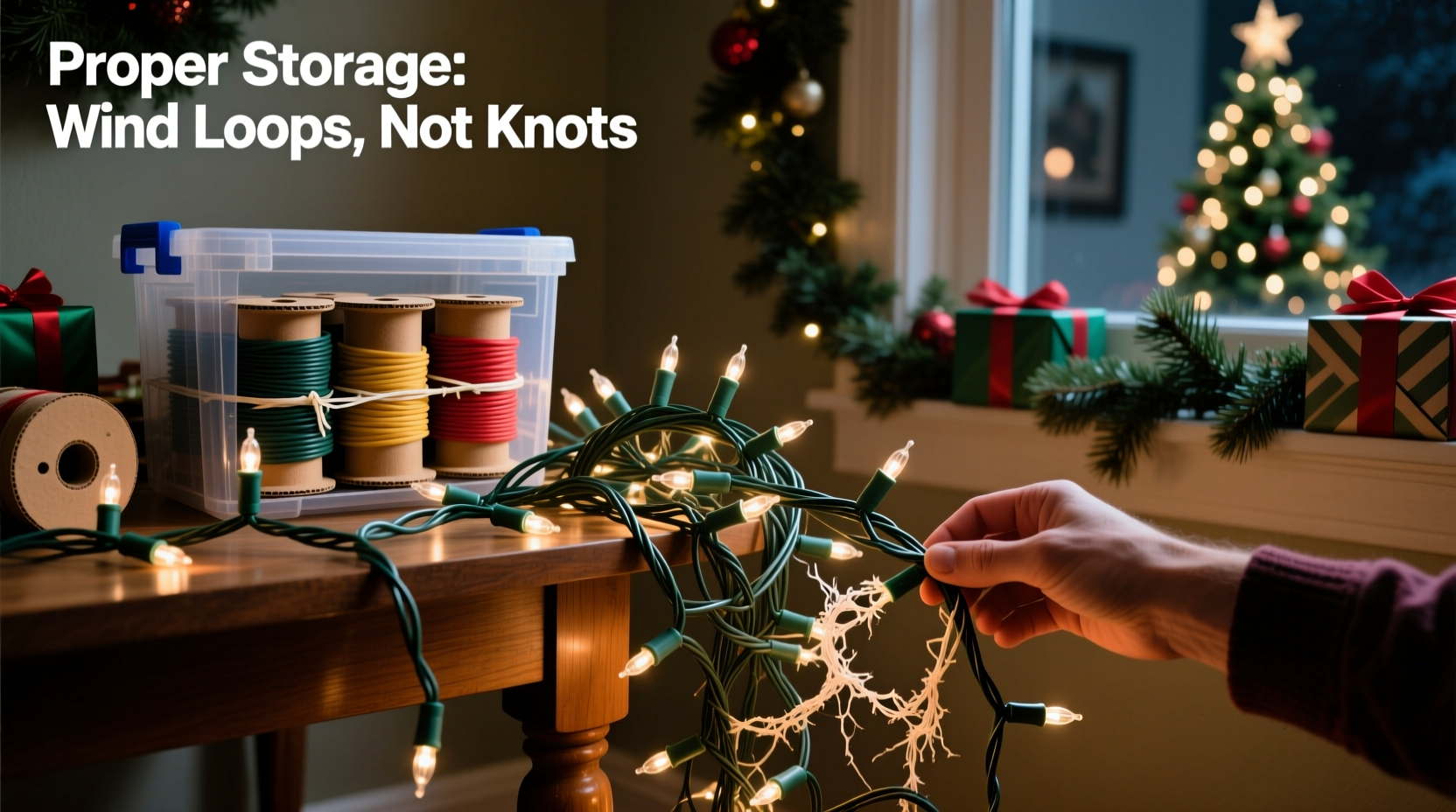
At first glance, tangled Christmas lights seem like bad luck or poor handling. But research shows that knots form spontaneously under certain conditions. A 2007 study by physicists at the University of California, San Diego demonstrated that any long, flexible strand — from earbuds to holiday strings — has a high probability of self-knotting when agitated inside a confined space. This applies directly to tossing lights into a box without care.
The longer the string and the more flexible the wire, the greater the chance of tangling. Christmas lights meet both criteria perfectly. With dozens of bulbs and several meters of pliable copper wiring, they behave like polymer chains in motion. When jostled — whether during storage, transport, or unpacking — loops form, cross over themselves, and tighten into knots through random movement.
Additionally, most people remove lights by yanking them down from trees or eaves, creating twists and coils that set the stage for future tangles. Once stored loosely, these initial twists evolve into complex snarls over time due to shifting and compression within storage containers.
“Any flexible string over 50 centimeters, when subjected to motion, will knot itself with surprising speed. Christmas lights are essentially designed to tangle.” — Dr. Dorian Raymer, co-author of the UCSD knot formation study
Best Practices for Storing Christmas Lights
Preventing tangles isn’t about perfection — it’s about consistency and using the right technique. The key is minimizing movement, eliminating twists, and securing the coil. Below are five essential principles backed by decorators, electricians, and storage experts.
1. Unplug and Inspect Before Storage
Never store lights while still connected to power. Always unplug and allow them to cool if recently used. Then inspect each strand thoroughly:
- Check for frayed wires or cracked insulation.
- Replace any broken bulbs or sockets.
- Test functionality with a quick plug-in before packing.
- Label non-working strands separately to avoid confusion next year.
Catching issues early prevents safety hazards and ensures you’re storing only reliable lights.
2. Choose the Right Winding Method
How you wrap matters more than where you store. Avoid wrapping lights around your hand — this introduces twist and tension that lead to kinks. Instead, use one of two professional methods: the over-under technique or spool-based winding.
3. Maintain Slack and Prevent Twisting
Tension is the enemy. Over-tightening causes wires to deform and increases friction between sections, making separation difficult later. Keep gentle loops with consistent spacing. Use twist ties, velcro straps, or reusable cable organizers to secure every 12–18 inches without squeezing.
4. Protect from Environmental Damage
Even indoors, moisture, rodents, and temperature swings can degrade wires. Store lights in climate-controlled areas whenever possible. Avoid attics (which get hot) and basements (which may be damp). Use sealed plastic bins with desiccant packs to reduce humidity exposure.
5. Label Everything Clearly
Use waterproof labels or permanent markers to note length, color, bulb type, and location used (e.g., “Front Porch – 50 Red LEDs”). This saves time during setup and reduces unnecessary handling — less handling means fewer chances for tangles.
Step-by-Step Guide: How to Store Christmas Lights Without Tangling
Follow this sequence to store each strand efficiently and safely. With practice, the process takes under two minutes per string.
- Unplug and test: Confirm all bulbs work and the strand is safe to store.
- Clean gently: Wipe down cords with a dry microfiber cloth to remove dust and salt residue (especially for outdoor sets).
- Begin the over-under coil: Hold the plug end in one hand. Loop the cord over your fingers, then under on the next pass, alternating directions. This cancels out twist buildup.
- Secure every few loops: After every 3–4 feet, fasten with a soft tie or velcro strip. Do not pull tightly.
- Place in protective container: Use a rigid box or specialized light reel. If stacking multiple strands, separate them with cardboard or dividers.
- Label and seal: Mark contents clearly and close the container securely.
This method is widely used by professional holiday decorators and theatrical lighting crews who manage hundreds of cords annually.
Storage Tools Compared: What Works Best
Not all storage solutions are created equal. Here’s a comparison of popular options based on effectiveness, cost, and ease of use.
| Solution | Pros | Cons | Best For |
|---|---|---|---|
| Cardboard Reels | Inexpensive, DIY-friendly, prevents twisting | Bulky, not rodent-proof | Indoor LED strands |
| Plastic Spools | Durable, stackable, protects against crush damage | Can be expensive, limited sizes | Frequent users, commercial displays |
| Zip Ties + Box | Cheap, widely available | Hard to reuse, risk of cutting wires | Short-term or budget storage |
| Velcro Cable Ties | Reusable, gentle on insulation, easy release | Must buy in bulk for full benefit | All types, especially delicate wires |
| Original Packaging | Compact, labeled, often includes spool | Easily damaged, not always resealable | New purchases, short-term use |
For maximum longevity, combine methods: wind using the over-under technique, secure with velcro, and store on a spool inside a lidded bin.
Avoid These Common Mistakes
Even well-intentioned efforts can backfire if based on outdated habits. Below are frequent errors that defeat the purpose of careful storage.
- Hanging lights on nails or hooks: Causes stress at suspension points, leading to wire fatigue and breakage.
- Using rubber bands: They degrade over time, become sticky, and snap unexpectedly.
- Storing in vacuum-sealed bags: Compression damages filament wires and distorts bulb alignment.
- Leaving lights attached to trees or wreaths: Increases exposure to dust, pests, and physical strain.
- Skipping inspection: One faulty strand can compromise an entire display or pose fire risks.
“We see at least a dozen house fires each December linked to degraded or improperly stored holiday lights. Most could have been prevented with basic checks.” — Fire Marshal Linda Ruiz, National Holiday Safety Initiative
Real Example: From Chaos to Control
Mark T., a homeowner in Portland, Oregon, used to spend nearly eight hours every November untangling his collection of 17 light strands. His family displayed an elaborate rooftop nativity scene, requiring precise placement of multicolored mini-lights, icicle drops, and net lights for bushes. Each year, the process grew more frustrating.
In 2022, after reading about the over-under method, he invested in four plastic reels and a set of reusable velcro ties. He dedicated a Saturday to unwrapping, testing, and rewinding each strand using the alternating loop technique. He labeled each by zone (roof, porch, tree) and stored them vertically in a clear bin.
Last November, he retrieved the lights and unspooled the first strand in under 30 seconds — completely tangle-free. By Sunday evening, the entire display was up, with zero time lost to knot removal. “It felt like magic,” he said. “I gained back a whole weekend.”
Essential Checklist for Tangle-Free Storage
Use this checklist annually to ensure your lights stay organized and functional.
- ☐ Unplug and test each strand
- ☐ Replace burned-out bulbs or faulty fuses
- ☐ Clean cords with a dry cloth
- ☐ Use the over-under coiling method
- ☐ Secure with soft, reusable ties (no rubber bands)
- ☐ Store on reels or in rigid containers
- ☐ Label each strand clearly
- ☐ Keep in a cool, dry, pest-free area
- ☐ Separate indoor and outdoor sets
- ☐ Inventory total strands for next year’s planning
Frequently Asked Questions
Can I use masking tape to label my light strands?
Masking tape is not ideal for long-term storage. It tends to lose adhesion and leave residue over months. Use waterproof labels, permanent markers on masking tape applied to the plug, or attach small luggage tags with string.
Should I store LED and incandescent lights differently?
Yes. While both benefit from proper coiling, incandescent wires are thicker and more heat-resistant but heavier and prone to shape memory. LEDs are lighter but more sensitive to sharp bends. Use wider-radius coils for incandescents and gentler ties for LEDs to protect solder joints.
Is it safe to store lights in the garage?
Only if the garage is insulated and climate-controlled. Extreme cold makes plastic brittle; heat accelerates wire degradation. If unheated, use sealed bins with moisture absorbers and elevate off concrete floors to prevent condensation damage.
Final Thoughts: Make Next Year Easier
The effort you invest in storing Christmas lights properly pays dividends every holiday season. What feels like a minor chore in January becomes a time-saving triumph 11 months later. Beyond convenience, correct storage enhances safety, reduces waste, and extends the usable life of your decorations — many strands can last 10 years or more with proper care.
Understanding the physics of tangles empowers you to fight them intelligently. You don’t need perfect organization — just consistent habits. Whether you adopt the over-under method, invest in reels, or simply switch to velcro ties, small changes make a lasting difference.




 浙公网安备
33010002000092号
浙公网安备
33010002000092号 浙B2-20120091-4
Comments
No comments yet. Why don't you start the discussion?