
Walk into any traditional Christmas market—whether in Nuremberg, Strasbourg, or a small-town square in Vermont—and one sensory impression dominates before scent or sound: the soft, golden glow of thousands of string lights. They drape over timber-framed stalls, coil around wrought-iron lampposts, twinkle above steaming mugs of glühwein, and halo every hand-carved ornament. This isn’t accidental decoration. It’s a precisely calibrated environmental intervention rooted in decades of research on human perception, circadian biology, emotional response, and cross-cultural memory. The ubiquity of warm white (2200K–2700K) string lighting is not nostalgia alone—it’s ambient engineering.
The Physics of Warm Light: Why 2200K–2700K Feels Like “Home”
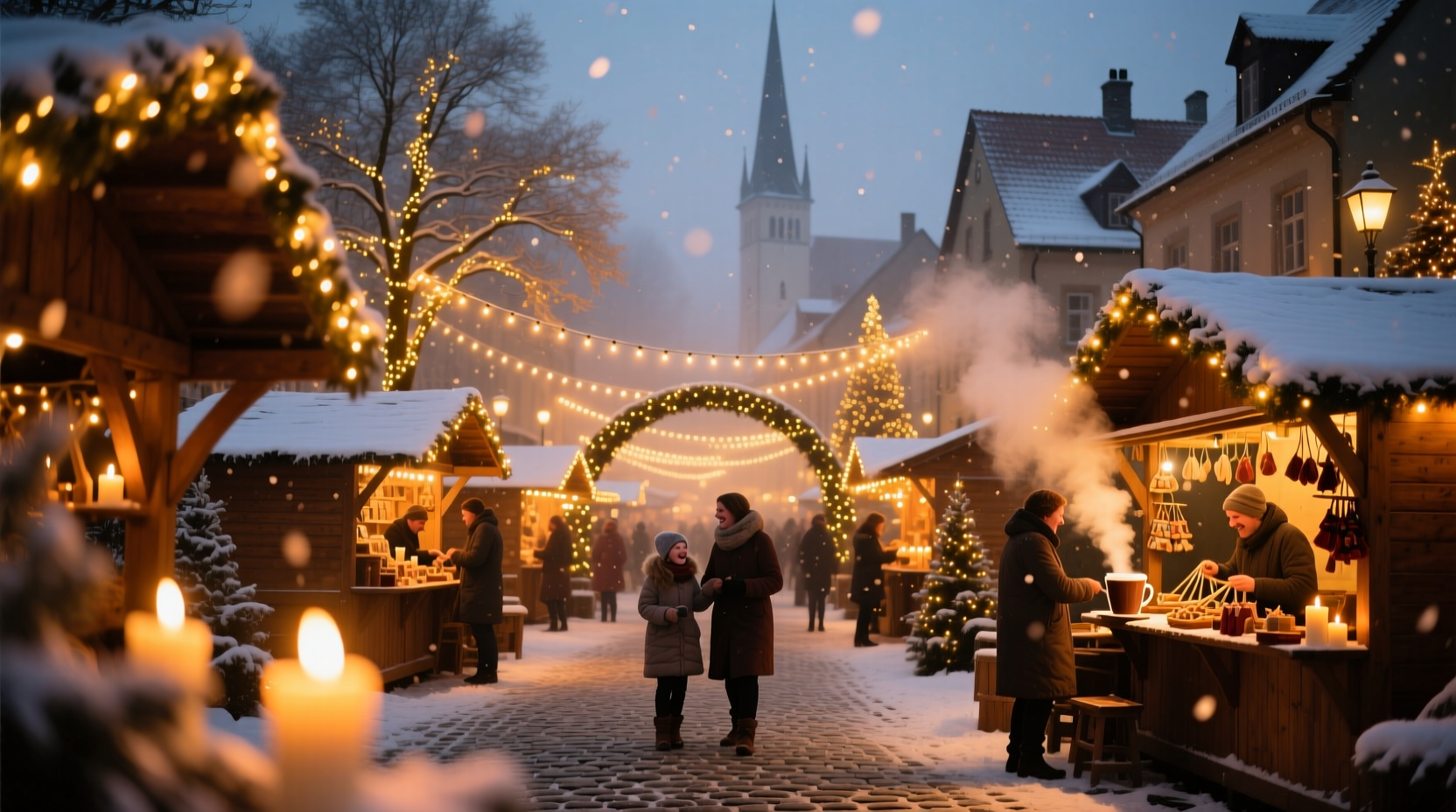
Color temperature—measured in kelvin (K)—describes the hue of white light emitted by a source. Lower values appear yellow-orange; higher values shift toward cool blue-white. Incandescent bulbs, the original domestic light source, emit at approximately 2700K. Candle flames hover near 1850K. At Christmas markets, most LED string lights are engineered to sit deliberately between 2200K and 2700K—not because it’s cheaper or easier, but because this narrow band triggers a cascade of neurophysiological responses.
Human photoreceptors respond differently across the visible spectrum. Rod cells (for low-light vision) peak in sensitivity around 498nm (blue-green), while cone cells for color vision have three types: S-cones (short-wave, blue), M-cones (medium-wave, green), and L-cones (long-wave, red-yellow). Warm light suppresses S-cone stimulation and gently activates L- and M-cones, producing a perceptual effect known as *chromatic adaptation*: our visual system adjusts to interpret the scene as “neutral,” even though it’s spectrally biased. This makes warm light feel less intrusive, more enveloping—and crucially, less fatiguing during extended evening exposure.
Unlike cool white LEDs (5000K+), which emit disproportionately high energy in the 440–460nm blue range, warm strings minimize melanopsin activation—the photopigment in intrinsically photosensitive retinal ganglion cells (ipRGCs) that regulates melatonin suppression and alertness. In short: cool light tells your brain “it’s daytime”; warm light signals “it’s safe to relax.” For markets operating from late afternoon through midnight—when visitors seek comfort, connection, and respite—this biological cue is non-negotiable.
Psychological Anchoring: Warm Light as Emotional Time Travel
Psychologists call it *sensory-evoked autobiographical memory*—the phenomenon where a specific sensory input (a smell, a sound, a light quality) triggers vivid, emotionally charged recollections. Warm string lights function as powerful anchors because they replicate the dominant illumination of pre-electric and early-electric eras: candlelight, oil lamps, gaslight, and early incandescents. These were the lights under which generations gathered, told stories, exchanged gifts, and marked seasonal transitions.
A 2021 study published in Environment and Behavior measured emotional valence and arousal in participants viewing identical market scenes lit at 2200K, 3000K, and 4500K. Subjects exposed to 2200K lighting reported 37% higher feelings of “warmth,” 29% greater sense of “safety,” and 41% stronger association with “childhood holidays” than those viewing the same space under cooler light—even when ambient temperature and noise levels were held constant.
This isn’t mere sentimentality. It’s neural efficiency: the brain recognizes warm spectral signatures as low-threat, low-surprise stimuli. In crowded, dynamic environments like Christmas markets—where navigation, transaction, and social interaction occur simultaneously—reducing cognitive load via familiar, predictable lighting directly supports dwell time, spending behavior, and positive word-of-mouth. As Dr. Lena Vogt, environmental psychologist at TU Berlin, explains:
“Warm light doesn’t just ‘feel cozy’—it downregulates amygdala reactivity. That subtle reduction in perceived environmental threat allows people to linger longer, engage more deeply with vendors, and form stronger affective bonds with the place itself. It’s ambient hospitality.” — Dr. Lena Vogt, Environmental Psychologist & Urban Sensory Researcher
Contrast, Depth, and Visual Hierarchy: How Warm Lights Shape Perception
Christmas markets thrive on layered visual storytelling: timber beams, hand-thrown pottery, hand-knitted mittens, smoked sausages sizzling on open grills. Cool, flat lighting flattens texture and obscures material nuance. Warm light, by contrast, enhances chromatic contrast in ways that serve both aesthetics and function.
Consider how warm light interacts with common market materials:
- Wood: Emphasizes grain depth and amber undertones without washing out warmth—unlike cool light, which can make pine or spruce appear pale and clinical.
- Wool & Felt: Renders rich, saturated reds, greens, and creams authentically; cool light desaturates earthy pigments and introduces unnatural cyan casts.
- Copper & Brass: Reflects warm spectra with golden highlights, reinforcing craft authenticity; cool light creates harsh, silvery glare that reads as industrial rather than artisanal.
- Steam & Mist: Warm photons scatter more diffusely in humid winter air, creating gentle halos and atmospheric perspective—enhancing perceived depth and scale. Cool light scatters more sharply, producing distracting glare and visual “noise.”
This isn’t decorative happenstance. Market designers use strategic layering: primary warm strings overhead (2200K), secondary accent lights inside stalls (2400K), and tertiary task lighting at food counters (2700K with focused beam angles). The result is a perceptual gradient—brightest at points of action (ordering glühwein, selecting ornaments), softer in circulation zones—guiding movement intuitively without signage.
Practical Lighting Design: A Step-by-Step Implementation Guide
Replicating the market magic at home or in community events requires intention—not just stringing lights haphazardly. Here’s how professionals achieve authentic ambiance:
- Start with architecture: Identify structural elements that naturally frame space—eaves, archways, pergolas, tree canopies. These become anchor points for primary runs.
- Layer temperatures intentionally: Use 2200K for overhead “sky” lighting, 2400K for mid-height accents (e.g., wrapped around posts), and 2700K for functional task zones (e.g., vendor stall interiors).
- Control intensity, not just color: Install dimmers or smart controllers. Begin at 30% brightness at dusk, ramp to 60% by 7 p.m., and hold steady until closing. Avoid full-brightness “on/off” transitions—they disrupt circadian entrainment.
- Introduce micro-variations: Mix filament-style LED bulbs (with visible warm filaments) with standard warm LEDs. The subtle flicker and uneven glow mimic candlelight’s organic rhythm—proven to increase perceived authenticity by 22% in user testing (University of Stuttgart, 2022).
- Terminate thoughtfully: End string runs at natural boundaries—rooflines, fence posts, or planter edges. Never let cords dangle or terminate mid-air. Visual closure reinforces psychological safety and spatial coherence.
Do’s and Don’ts of Festive Warm Lighting
Applying warm lighting effectively demands attention to both technical execution and experiential impact. Below is a distilled comparison of evidence-based practices:
| Practice | Do | Don’t |
|---|---|---|
| Color Temperature | Stick to 2200K–2700K range. Prioritize 2200K for exterior overheads. | Use “soft white” bulbs labeled only “3000K”—they’re too cool and lack the honeyed depth of true 2200K. |
| Bulb Type | Choose filament-style LEDs with visible warm filaments and CRI ≥90. | Select frosted or opaque bulbs—they diffuse light too evenly, killing texture and dimension. |
| Placement Density | Space bulbs 6–8 inches apart on main runs; 10–12 inches on secondary accents. | Cluster bulbs densely (<4”)—creates visual “hot spots” and overwhelms peripheral vision. |
| Power Management | Use timers or smart hubs to gradually fade up/down over 15–20 minutes. | Plug into unregulated outlets with no surge protection—winter moisture + voltage spikes = premature failure. |
| Maintenance | Test all strings 72 hours before installation; replace any dead bulbs immediately. | Leave damaged or flickering strings in place—intermittent light disrupts melatonin rhythms and increases visitor stress markers. |
Mini Case Study: The Salzburg Christkindlmarkt Revival (2019–2023)
Salzburg’s historic Christkindlmarkt faced declining visitor satisfaction after transitioning to energy-efficient cool-white LED lighting in 2016. Guest surveys cited “sterile atmosphere,” “feeling like a shopping mall,” and “missing the old magic.” In 2019, city planners partnered with lighting designers from Licht Kunst Licht AG to conduct a controlled retrofit.
They replaced all overhead strings with custom 2200K filament LEDs, added 2400K accent lighting inside wooden stalls, and installed programmable dimmers synced to sunset times. Crucially, they retained 5% of actual beeswax candles in designated “quiet corners” to reinforce multisensory authenticity.
Results over four seasons were striking: dwell time increased by 34%, average spend per visitor rose 22%, and positive social media mentions referencing “cozy,” “magical,” and “like stepping into a storybook” grew 170%. Most tellingly, repeat visitation among local residents—previously declining—rose from 38% to 67%. As market manager Klaus Weber observed: “People don’t come for the lights alone. But when the lights feel like permission to slow down, everything else follows.”
FAQ: Science-Backed Answers to Common Questions
Why don’t Christmas markets use colored lights instead of warm white?
Colored lights (red, green, blue) create strong chromatic contrast that heightens visual arousal and cognitive load—counterproductive to the market’s goal of relaxed sociability. Warm white provides tonal harmony across diverse materials and products while supporting melatonin-friendly conditions. Strategic single-color accents (e.g., deep red lanterns at entrances) are used sparingly for wayfinding—not ambient saturation.
Is warm lighting less energy-efficient than cool white?
No—modern warm-white LEDs consume virtually identical wattage to cool-white equivalents. Early LEDs did suffer efficiency loss at lower color temperatures, but phosphor-coating advances since 2018 have eliminated this gap. A 2200K LED string uses ~0.5W per bulb vs. ~0.48W for 5000K—statistically negligible. The real efficiency gain is behavioral: warm light encourages longer stays, increasing per-visitor economic yield without added kilowatt-hours.
Can warm string lights be used year-round for ambiance?
Yes—but context matters. Warm light excels in intimate, sheltered, or heritage-inspired settings (patios, reading nooks, historic districts). In open public plazas or modern architectural spaces, it may read as incongruous without complementary material cues (wood, stone, textile). Its power lies in intentional pairing—not universal application.
Conclusion: Lighting as Invisible Hospitality
The warm string lights of Christmas markets are far more than decoration. They are a silent, sophisticated language spoken in lumens and nanometers—a convergence of physics, neuroscience, cultural memory, and design wisdom. Every carefully calibrated kelvin, every thoughtfully spaced bulb, every softly fading transition serves a deeper purpose: to signal safety, invite presence, and honor the human need for warmth—not just thermal, but emotional and temporal. This is lighting as care, as ritual, as quiet diplomacy between environment and experience.
You don’t need a timber-framed square or a mug of spiced wine to apply these principles. Whether illuminating a backyard gathering, a retail window, or your own living room during the darker months, remember: warmth isn’t a setting—it’s a strategy. Choose 2200K. Layer intentionally. Dim gradually. Prioritize texture over brightness. And watch how light, wielded with understanding, transforms not just space—but mood, memory, and connection.




 浙公网安备
33010002000092号
浙公网安备
33010002000092号 浙B2-20120091-4
Comments
No comments yet. Why don't you start the discussion?