
It happens without warning: a few opening notes of “Jingle Bells,” “All I Want for Christmas Is You,” or “O Holy Night” drift through the air, and suddenly you’re transported—not just to another time, but to another version of yourself. A child standing by the tree in your grandparents’ living room. The smell of pine and cinnamon. A snow-covered street lit by red and green bulbs. For many, Christmas music doesn’t just signal the season—it unlocks vivid memories with startling clarity. But why? What is it about these familiar songs that can trigger such powerful waves of nostalgia almost instantly?
The answer lies at the intersection of neuroscience, psychology, and culture. Holiday music isn’t merely background noise; it’s a psychological time machine. From early childhood experiences to repeated exposure during emotionally charged family gatherings, Christmas songs become deeply embedded in our personal histories. When we hear them again—even decades later—our brains don’t just recognize the melody. They reconstruct entire sensory landscapes from the past.
The Neuroscience of Nostalgia and Music
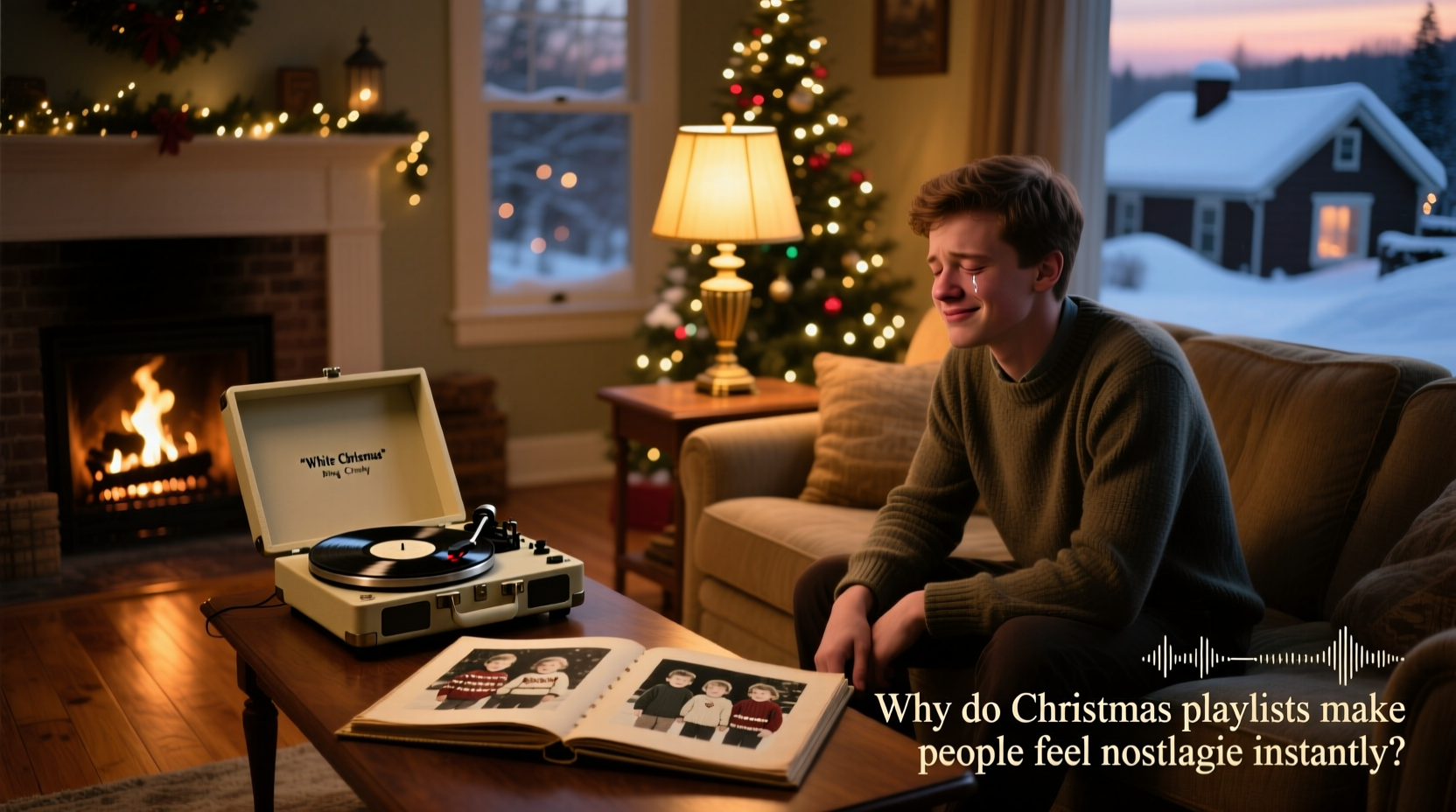
Music has a unique ability to bypass the brain’s rational filters and go straight to the limbic system—the region responsible for emotion, memory, and motivation. Within this network, the hippocampus plays a central role in forming and retrieving autobiographical memories, while the amygdala processes emotional significance. When a familiar song plays, especially one tied to strong feelings, these areas light up in synchrony.
Studies using functional MRI have shown that music associated with personal memories activates not only auditory cortex regions but also the medial prefrontal cortex—a hub for self-reflection and long-term memory retrieval. This area remains relatively intact even in advanced stages of dementia, which explains why Alzheimer’s patients often recall lyrics and emotions from songs despite losing other cognitive functions.
Christmas music, due to its annual recurrence and emotional context, becomes particularly potent. Each December, we re-engage with the same melodies under similar circumstances: family dinners, gift exchanges, religious services, shopping trips. Over years, this repetition creates what neuroscientists call “memory consolidation”—the strengthening of neural pathways linking sound, emotion, and experience.
“Music is one of the most effective cues for episodic memory because it carries rhythm, pitch, and emotional valence all at once. Holiday songs are especially powerful due to their seasonal exclusivity.” — Dr. Elena Ramirez, Cognitive Neuroscientist, University of Toronto
Psychological Triggers Behind Seasonal Nostalgia
Nostalgia itself is not simply reminiscing. It’s a complex emotional state characterized by bittersweet longing for the past, often idealized. Psychologists now understand that nostalgia serves an adaptive function: it enhances social connectedness, boosts mood, and reinforces identity.
Christmas playlists act as what researchers call “retrieval cues.” These are external stimuli—like a scent, image, or sound—that reactivate dormant memories. Because holiday music is typically played only between late November and December 25th, it becomes temporally bounded. This limited exposure increases its symbolic weight. Hearing “The Christmas Song” in July might be odd—but hearing it on December 1st feels like stepping into a tradition.
Moreover, many people associate Christmas with safety, love, and belonging—especially from childhood. Even if actual past holidays were complicated or stressful, memory tends to smooth over conflict and emphasize warmth. The music amplifies this selective recall. Songs like “White Christmas” or “Do You Hear What I Hear?” evoke imagery of innocence, wonder, and unity, making them ideal vessels for sentimental reflection.
How Emotional Context Shapes Memory
The emotional intensity of an event determines how well it's remembered. Events involving strong feelings—joy, excitement, grief, love—are encoded more deeply than neutral ones. Since Christmas often involves heightened emotions (anticipation before gifts, tension during family interactions, relief after hosting), any music present during those moments gains extra significance.
A study published in the journal *Memory & Cognition* found that participants who heard music during emotionally engaging films later recalled scenes more vividly when exposed to the same soundtrack. Applied to holiday seasons, this means that every year you hear Mariah Carey’s “All I Want for Christmas Is You” while wrapping presents with your sister, your brain links that song not just to the activity, but to her laughter, the crinkle of paper, the shared jokes. Repeat this over ten years, and the song becomes inseparable from that relationship.
Cultural Repetition and Shared Symbolism
Beyond individual experience, there’s a collective dimension to Christmas music nostalgia. These songs form part of a shared cultural script. From radio stations switching formats to “24/7 Christmas” in mid-November, to stores piping carols through speakers, society signals that the holiday season has begun—and music is the primary messenger.
This mass synchronization reinforces personal memories. When millions hear “Rockin’ Around the Christmas Tree” simultaneously, they aren’t just experiencing a song—they’re participating in a ritual. That sense of belonging intensifies emotional resonance. You may never have met the person next to you at the mall, but when Brenda Lee starts singing, you both smile. You’re sharing something intangible yet real: a moment of synchronized nostalgia.
| Song | Year Released | Common Nostalgic Association |
|---|---|---|
| \"White Christmas\" – Bing Crosby | 1942 | Post-war peace, family reunions, snowy childhood mornings |
| \"Last Christmas\" – Wham! | 1984 | Teenage heartbreak, first jobs, 80s fashion |
| \"All I Want for Christmas Is You\" – Mariah Carey | 1994 | Childhood excitement, modern traditions, pop culture joy |
| \"Fairytale of New York\" – The Pogues | 1987 | Irish heritage, adult relationships, bittersweet realism |
| \"Santa Claus Is Coming to Town\" – Bruce Springsteen (live) | 1985 | Live performances, energetic family moments, rock energy |
Note how different generations attach distinct meanings to various tracks. A Gen Z listener might feel nostalgic for TikTok dance trends set to “Last Christmas,” while a Boomer recalls listening to Perry Como on vinyl. Yet all are responding to the same mechanism: culturally reinforced emotional memory.
Creating Intentional Nostalgic Experiences
Understanding how music triggers nostalgia allows us to harness it purposefully. Whether you're curating a playlist for a holiday gathering or trying to reconnect with your own past, certain strategies can enhance the emotional impact.
Step-by-Step Guide to Building a Meaningful Christmas Playlist
- Reflect on key life stages: Identify periods (e.g., ages 6–10, college years, first home) and think about what music played during those Christmases.
- Select 2–3 songs per era: Choose tracks that weren't just popular, but present during significant moments—driving home from school, attending church, opening gifts.
- Mix classics with personal hits: Balance universally recognized carols (“Silent Night”) with less-known favorites that hold private meaning (“that one John Legend cover Grandma loved”).
- Sequence for emotional flow: Start gently (instrumentals), build energy (upbeat pop), then wind down (sentimental ballads).
- Add ambient sounds (optional): Include short clips of crackling fireplaces, sleigh bells, or children laughing between tracks to deepen immersion.
Mini Case Study: Reconnecting Through Sound
Sarah Thompson, a 38-year-old teacher from Vermont, hadn’t celebrated Christmas with her extended family since she moved across the country at 22. After her mother passed away in 2020, the holidays felt hollow. In 2022, while cleaning out old boxes, she found a cassette labeled “Our Christmas Mix – 1995.” She transferred it to digital format and listened.
Instantly, she remembered sitting in the backseat of her parents’ station wagon, snow falling outside, her mom humming along to “It’s the Most Wonderful Time of the Year.” Tears came quickly—not just from loss, but from reconnection. Inspired, Sarah created a new family playlist combining songs from that original tape with newer tracks her nieces and nephews enjoyed. At the next holiday dinner, she played it softly in the background.
“My aunt stood up and said, ‘That’s Mom’s voice!’” Sarah recalled. “We realized someone had recorded my mom singing backup vocals on one track. We’d never noticed before. That playlist didn’t just bring back memories—it revealed something new.”
For Sarah, the music became a bridge—not only backward in time, but forward into healing.
When Nostalgia Becomes Overwhelming
While nostalgia is generally positive, it can sometimes tip into melancholy, especially for those grieving, isolated, or struggling with mental health. The contrast between idealized past memories and current loneliness can intensify sadness. If holiday music consistently triggers distress rather than comfort, consider adjusting your exposure.
- Limited listening windows (e.g., only during meals)
- Replacing traditional songs with instrumental versions
- Introducing non-holiday music into seasonal routines
Nostalgia should uplift, not imprison. It’s okay to honor the past while protecting your present well-being.
FAQ
Can people develop nostalgia for Christmas music they didn’t grow up with?
Yes. While early exposure creates the strongest associations, adults can form deep nostalgic bonds with holiday music through repeated emotional experiences. Immigrants adopting new traditions, couples building shared rituals, or fans embracing pop culture phenomena (like streaming *Die Hard* with its score) can all develop authentic, powerful connections—even without childhood roots.
Why do some people dislike Christmas music intensely?
Overexposure is a major factor—commercial repetition can turn joyful songs into irritants. Others may associate the music with trauma, family conflict, or religious disconnection. For some, the pressure to feel “festive” when they don’t can make the music feel alienating rather than comforting.
Does nostalgia from Christmas music fade with age?
Not necessarily. While the intensity may shift, the emotional anchor often remains. Older adults frequently report stronger reactions to holiday music, as each playback accumulates additional layers of memory. A song heard at age 10, 30, and 60 carries decades of lived experience within its chords.
Conclusion: Let the Music Move You—Wherever It Takes You
Christmas playlists do more than fill silence. They awaken dormant stories, reconnect us to lost loved ones, and remind us of who we were—and who we’ve become. The reason they spark nostalgia so instantly isn’t magic, but memory: a finely tuned interplay of sound, emotion, and time.
Whether you welcome the rush of tears or prefer to keep the volume low, your response is valid. And if you find yourself pausing a song to call an old friend or write a letter to someone gone, know that the music has done its job. It hasn’t just played a tune. It’s reignited connection.
This season, don’t just listen to the songs—let them speak. Create your own playlist. Share one with someone you miss. Or simply sit quietly as “Have Yourself a Merry Little Christmas” plays, and allow the years to fold into one perfect, fleeting moment.




 浙公网安备
33010002000092号
浙公网安备
33010002000092号 浙B2-20120091-4
Comments
No comments yet. Why don't you start the discussion?