
Every year, families bring home a fresh Christmas tree with care, only to find brittle or broken branch tips within days. These fragile ends not only reduce the tree’s fullness but can also create safety hazards from sharp fragments or increased fire risk due to dry debris. Understanding why these breaks occur—and how to prevent them—is essential for maintaining a beautiful, long-lasting centerpiece during the holidays. The causes range from biological factors in the tree species to environmental stress and improper handling. More importantly, there are proven techniques to reinforce weak areas and extend the life of your tree.
The Biology Behind Brittle Branch Tips
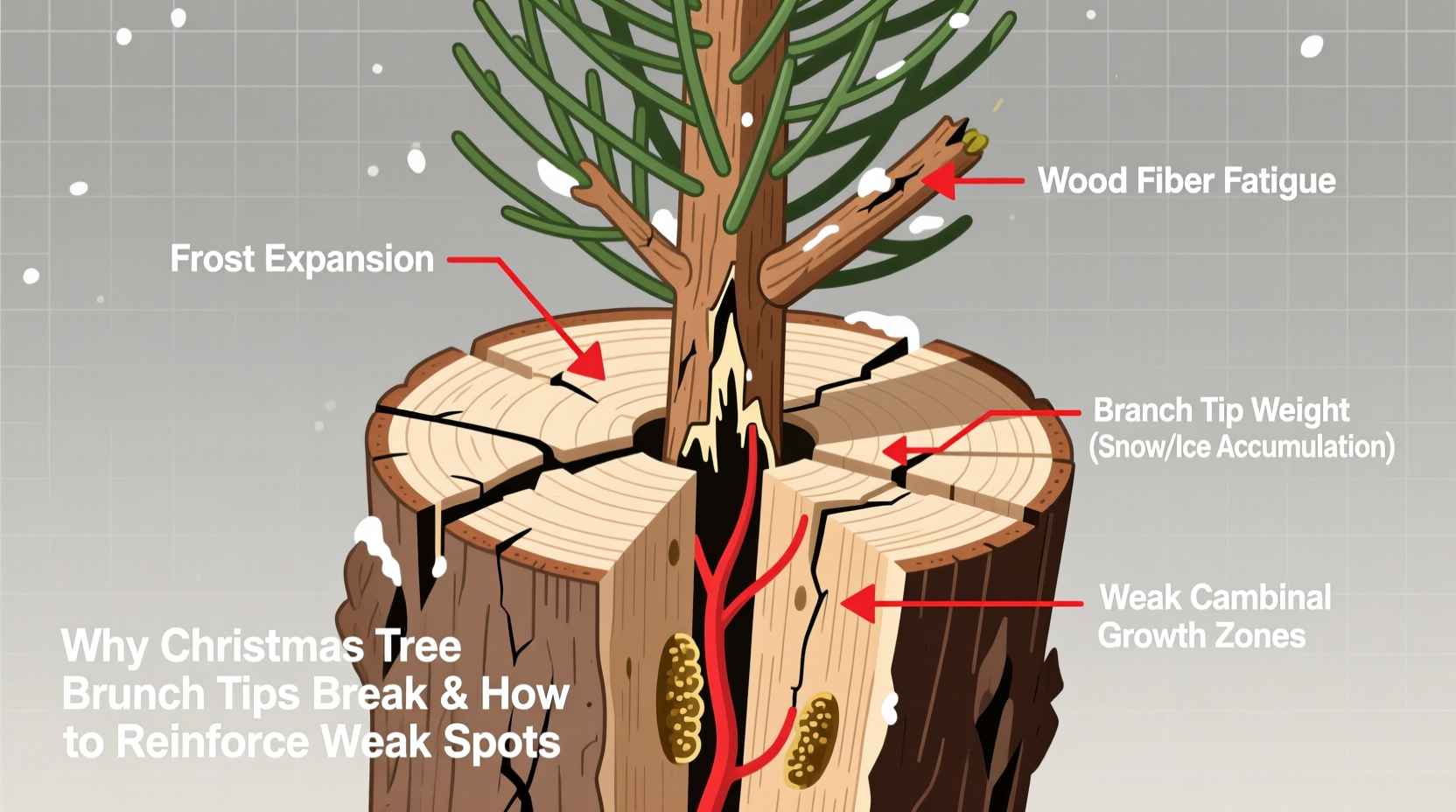
Not all evergreens are created equal when it comes to resilience. Species like Fraser fir, Balsam fir, and Noble fir are popular for their fragrance and needle retention, but even they have inherent structural weaknesses at the extremities of their branches. The tips—being the youngest growth—are composed of softer wood and fewer supportive vascular bundles compared to the thicker base sections. This makes them naturally more vulnerable to snapping under minor pressure.
Additionally, conifer branches grow outward and slightly upward, creating a natural cantilever effect. The tip bears the most mechanical stress when weight is applied, whether from ornaments, accidental bumps, or accumulated dust. As the tree dehydrates after being cut, lignin—the compound that gives plant cell walls rigidity—begins to degrade. This loss of internal support further compromises tip integrity.
“Freshly cut evergreens lose moisture rapidly through transpiration. Once water potential drops below a critical threshold, cellular turgor collapses, making tissues prone to fracture.” — Dr. Laura Hines, Arborist & Post-Harvest Horticulture Researcher, Oregon State University
This biological reality means that even gentle handling can lead to breakage if the tree has begun to dry out. The process accelerates in warm indoor environments, especially near heating vents or fireplaces.
Common Causes of Breakage (And How to Avoid Them)
While some fragility is natural, many instances of broken tips stem from preventable mistakes. Recognizing these triggers helps in crafting a protective strategy.
- Rough transport: Jostling during transit—especially if the tree isn’t securely netted—can cause repeated whipping motions that snap delicate ends.
- Dry stand conditions: Failing to provide adequate water immediately upon setup leads to rapid dehydration. A tree can consume over a quart of water per day initially; without it, needles and twigs desiccate within 48 hours.
- Overloading lower branches: Heavy ornaments placed too far from the trunk increase leverage on thin distal segments, increasing breakage risk.
- Poor storage before setup: Leaving a tree outdoors in freezing wind or direct sun for extended periods pre-dries the foliage and weakens structure.
- Physical contact: High-traffic areas near the tree invite brushing, pulling, or pet interference, especially from curious cats or dogs.
Step-by-Step Guide to Reinforcing Weak Spots
Once you’ve set up your tree, proactive reinforcement can save dozens of fragile tips. Follow this sequence to strengthen vulnerable areas before damage occurs.
- Inspect thoroughly: Examine each major branch, paying close attention to drooping or discolored tips. Gently flex outer twigs to test brittleness.
- Cut and seal broken ends: If a tip is already split or cracked, use clean pruning shears to make a clean cut just behind the damaged zone. Immediately dab the cut end with white glue or melted candle wax to reduce moisture loss.
- Install support stakes: For long, sagging limbs, insert thin wooden dowels (¼ inch thick) along the underside of the branch. Use floral tape to secure every 6–8 inches, starting from the trunk outward.
- Create splints for fragile tips: Cut small pieces of flexible wire (e.g., pipe cleaner or twist tie) and wrap them around the last 3–4 inches of weak tips. Bend gently into shape and cover with matching green floral tape for discretion.
- Distribute ornament weight strategically: Hang heavier decorations closer to the trunk where branches are thickest. Use lightweight alternatives (foam, felt, paper) on outer zones.
- Mist lightly (if humidity is low): In very dry homes, a quick morning mist with plain water can slow dehydration. Avoid soaking, which may encourage mold.
This reinforcement process takes about 20–30 minutes for an average-sized tree but can prevent weeks of progressive damage.
Do’s and Don’ts: Best Practices for Tree Longevity
| Do’s | Don’ts |
|---|---|
| Make a fresh ½-inch cut off the trunk base before placing in water | Wait more than 4 hours to water after cutting |
| Use a stand that holds at least one gallon of water | Place the tree near heat sources or sunny windows |
| Reinforce long branches with hidden dowels | Hang glass ornaments weighing over 3 oz on outer tips |
| Check water levels twice daily for the first week | Allow the water basin to run dry even once |
| Use LED lights (they emit less heat) | String incandescent lights tightly along thin branches |
Real Example: A Family’s Near-Disaster Turned Success Story
The Reynolds family in Vermont purchased a 7-foot Balsam fir known for its rich scent but delicate branching. After bringing it home, they noticed several snapped tips from transport and were dismayed by the sparse appearance on one side. Instead of accepting it, they followed a reinforcement protocol learned from a local tree farm workshop.
They began by recutting the trunk and submerging it in water overnight. The next day, they installed bamboo skewers along three long, drooping limbs using green tape. They replaced heavy heirloom balls on the outer edges with lightweight polymer versions and added small fabric stars to mask previous break points. They also positioned a portable humidifier nearby to combat their home’s dry air.
By Christmas Eve, the tree looked fuller and more balanced than when first erected. Not a single additional break occurred during the holiday period—even with two young children and a playful golden retriever in the house. Their proactive approach turned a potentially disappointing display into a cherished seasonal highlight.
Expert-Approved Methods to Prevent Future Breakage
Beyond immediate fixes, long-term prevention starts before purchase. Experts recommend evaluating trees not just for symmetry and scent, but for structural health.
- Test flexibility: Gently bend several branch tips. If they snap easily or feel chalky, the tree is likely dehydrated or old.
- Shake the trunk: A healthy tree should shed only a few brown needles. Excessive shedding indicates stress or age.
- Look for resin flow: Scratch a small area on a lower branch. Fresh sap indicates recent cutting and good moisture retention.
- Choose species wisely: If durability matters most, consider Colorado blue spruce or Scotch pine—they’re sturdier than firs, though less fragrant.
“A well-hydrated tree is a resilient tree. The first 24 hours after setup are the most critical for establishing water uptake.” — Mark Delgado, Certified Arborist & Christmas Tree Grower, North Carolina Cooperative Extension
Checklist: Preparing and Protecting Your Tree
Action Plan: Preventing and Repairing Broken Tips
- ☐ Recut the trunk at a 45-degree angle before placing in stand
- ☐ Fill stand with room-temperature water immediately
- ☐ Inspect all branches for weak or broken tips
- ☐ Seal any open cuts with glue or wax <5>☐ Install dowel supports on long, heavy limbs
- ☐ Splint fragile tips with wire and floral tape
- ☐ Position tree away from foot traffic and heat sources
- ☐ Hang heavy ornaments only on sturdy inner branches
- ☐ Check water level twice daily for the first week
- ☐ Mist lightly if indoor air is extremely dry
Frequently Asked Questions
Can I glue broken branch tips back on?
No—once a tip is broken, reattaching it won’t restore structural or vascular function. Instead, trim the jagged end cleanly and reinforce the remaining limb if needed. Use the broken piece in wreaths or table decor.
Will coating branches with hairspray help prevent breakage?
No. While some suggest hairspray as a moisture sealant, it can build up residue, attract dust, and potentially increase flammability. Stick to water maintenance and physical supports instead.
How long should a healthy Christmas tree last indoors?
With proper care—including daily watering and cool placement—a fresh-cut tree can remain vibrant for 4 to 5 weeks. Beyond that, natural senescence increases brittleness regardless of intervention.
Conclusion: A Fuller, Safer Tree Starts With Smart Care
Broken branch tips don’t have to be an inevitable part of the holiday experience. By understanding the science behind conifer fragility and applying simple reinforcement techniques, you can preserve your tree’s shape, safety, and beauty throughout the season. Hydration is the foundation, but strategic support and mindful decoration placement make the difference between a scraggly silhouette and a lush, inviting centerpiece.
Start early—care begins the moment you select your tree. Inspect, hydrate, reinforce, and monitor. These steps take little time but deliver lasting rewards. A well-maintained tree not only looks better but reduces fire risk, minimizes mess, and enhances the joy of the season.




 浙公网安备
33010002000092号
浙公网安备
33010002000092号 浙B2-20120091-4
Comments
No comments yet. Why don't you start the discussion?