
Every year, millions of households bring home a fresh-cut or artificial Christmas tree, carefully decorating it with lights, ornaments, and tinsel. Yet, as the weeks go by, many notice a familiar issue: the once-sturdy branches begin to droop, losing their fullness and symmetry. This phenomenon—common but often misunderstood—is more than just an aesthetic concern. Sagging branches can affect ornament placement, increase fire risk from nearby candles or lights, and shorten the tree’s usable life. Understanding the science behind branch drooping and knowing how to prevent or correct it ensures your tree remains a centerpiece of holiday cheer.
The Science Behind Branch Sagging
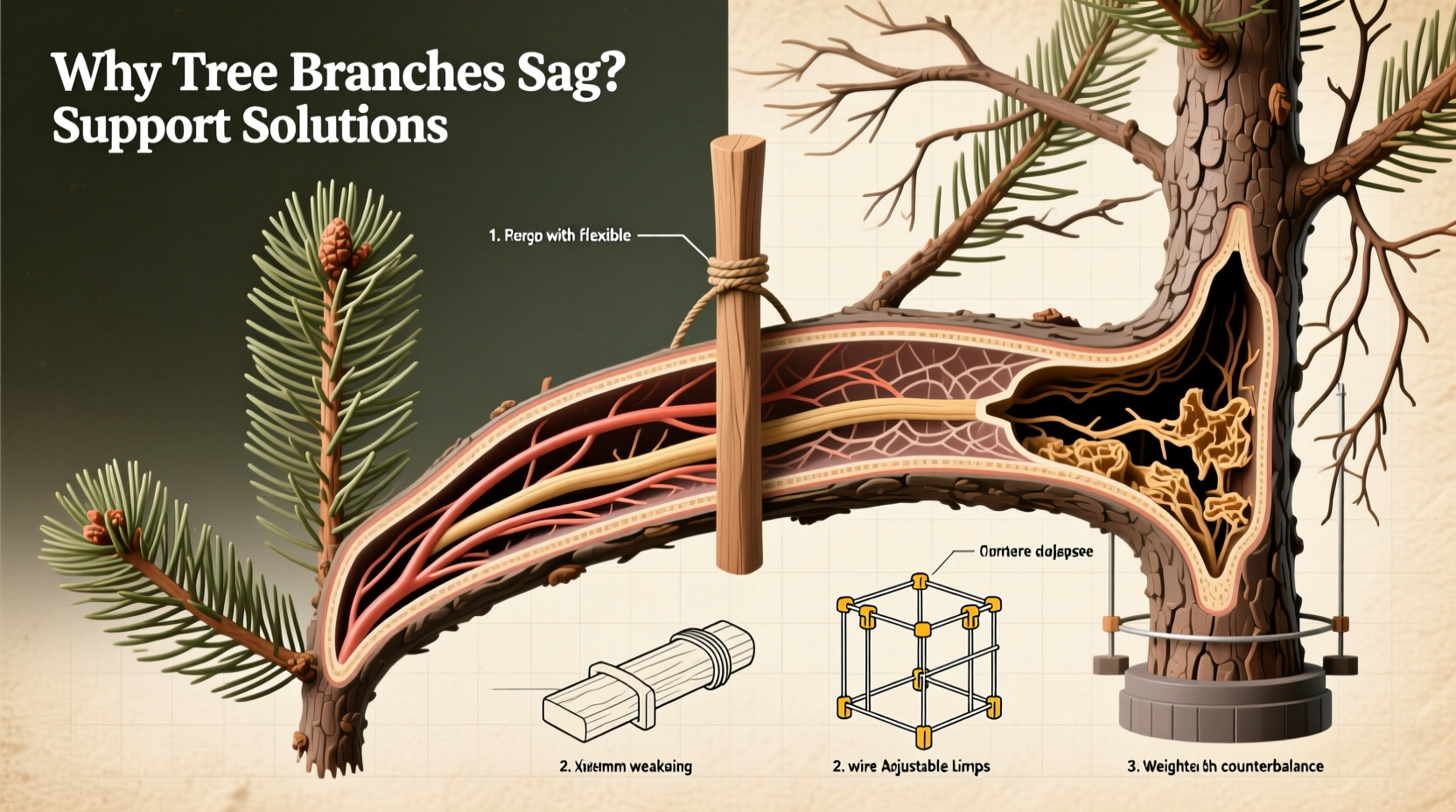
Christmas trees, particularly real ones, are living organisms even after being cut. Their branches rely on internal moisture and structural integrity to maintain rigidity. When a tree is harvested, it loses its primary source of water and nutrients, beginning a slow process of dehydration and cellular degradation. As moisture evaporates from the needles and stems, the lignin—a complex polymer that provides stiffness in plant cell walls—loses turgor pressure. Without this internal pressure, branches become pliable and gradually succumb to gravity, especially when weighted with decorations.
This effect is most pronounced in species like the Fraser fir, Balsam fir, and Douglas fir, which have naturally horizontal branching patterns. While these trees offer excellent form when freshly cut, their lateral limbs are not evolved to bear long-term external loads. Over time, even modest ornament weight (as little as 3–5 ounces per branch) can trigger cumulative stress, leading to permanent bending or breakage.
“Tree branch droop isn’t just about dryness—it’s a combination of hydration loss, mechanical fatigue, and improper load distribution.” — Dr. Alan Prescott, Arborist and Holiday Tree Specialist, University of Vermont Extension
Key Factors That Accelerate Branch Drooping
Several environmental and human factors influence how quickly branches begin to sag. Recognizing these allows for proactive intervention.
- Low humidity: Indoor heating systems drastically reduce air moisture, accelerating needle drying and branch flexibility.
- Inadequate water supply: A real tree can consume up to a quart of water per day. If the stand runs dry, reabsorption becomes difficult even after refilling.
- Heavy ornamentation: Concentrating heavy ornaments on outer tips increases leverage, magnifying downward force.
- Poor trunk cut: Failing to make a fresh diagonal cut before placing the tree in water seals the sap-exuding end, blocking capillary action.
- Warm room temperatures: Trees kept above 70°F (21°C) dehydrate faster, increasing branch malleability within days.
Support Strategies for Real and Artificial Trees
Whether you prefer the scent of a real pine or the convenience of a reusable artificial model, branch support techniques vary slightly—but the principles remain consistent: distribute weight, reinforce structure, and maintain material integrity.
For Real Trees: Hydration and Mechanical Support
The first line of defense against sagging is proper hydration. A well-watered tree maintains turgor pressure in its vascular tissues, helping branches resist deformation. Always make a fresh ¼-inch diagonal cut at the base before placing it in the stand. This exposes open xylem vessels, allowing immediate water uptake.
Check water levels daily. The stand should never run dry—even for a few hours—as resin quickly seals the cut end. Refill with plain tap water; avoid additives like sugar, aspirin, or commercial preservatives, which studies show offer no significant benefit over water alone.
For branches already showing signs of droop, consider temporary bracing. Use smooth wooden dowels (¼ to ½ inch thick) inserted beneath weak limbs and anchored into the trunk or adjacent sturdier branches. Wrap connections with soft floral tape to prevent bark damage. These props act like splints, redistributing weight until the tree is taken down.
For Artificial Trees: Frame Reinforcement and Weight Management
Artificial trees don’t dehydrate, but their branches sag due to metal wire fatigue and repeated folding. Over years of storage, the internal armature weakens, especially at hinge points. Lower-tier models with thin-gauge wires are especially prone to permanent deformation.
To combat this, inspect branches annually before setup. Gently bend each limb to test springback. If a branch stays bent, it needs reinforcement. Insert a flexible support such as a plastic-coated cable tie or a length of insulated copper wire alongside the existing stem, then twist securely at both ends. For heavier sections, use pre-bent steel rods shaped to match the branch arc.
Also consider upgrading to a rotating tree stand. These distribute weight more evenly and reduce torsional stress on lower branches caused by frequent decoration adjustments.
Step-by-Step Guide to Supporting Sagging Branches
Follow this timeline-based approach to assess, stabilize, and maintain your tree’s structure throughout the season.
- Day 1 – Setup and Inspection: After assembling the tree, examine all major limbs. Identify any that droop below the desired angle. Mark them lightly with colored ribbon.
- Day 2 – Load Test: Add 30% of planned ornaments. Observe changes in branch position over 24 hours. Note any new drooping.
- Day 3 – Install Supports: Attach dowels or internal braces to compromised branches. Ensure supports are flush and invisible from the front view.
- Day 4 – Final Decoration: Distribute remaining ornaments evenly. Avoid clustering heavy items on one side.
- Ongoing (Daily): Check water levels (real trees), adjust supports if needed, and rotate ornaments weekly to prevent static stress.
- Last Week: Begin removing heavier ornaments to relieve strain during final days.
Do’s and Don’ts of Branch Support
| Do | Don't |
|---|---|
| Use soft materials (fabric tape, foam padding) where supports contact branches | Use duct tape or zip ties directly on delicate boughs—they can tear bark or crush wires |
| Distribute heavy ornaments near the trunk, not at branch tips | Hang multiple heavy items on the same limb |
| Re-cut the trunk base if setting up more than 4 hours after initial cut | Place the tree near heat vents, fireplaces, or direct sunlight |
| Rotate artificial tree sections during storage to prevent creasing | Store artificial trees in compressed boxes without branch protection |
| Use a tree skirt that allows easy access to the water reservoir | Let water levels drop below the base of the trunk |
Real Example: The Prescott Family Tree Rescue
The Prescotts in Burlington, Vermont, had a tradition of buying a 9-foot Fraser fir each December. By Year Three, they noticed severe drooping in the lower third of the tree by mid-December. Ornaments were tilting, and one branch nearly touched the floor. Concerned about safety and appearance, they consulted a local arborist.
After inspection, the expert identified two main issues: the tree stand held only two quarts of water (insufficient for the trunk diameter), and the family had been using vintage glass ornaments averaging 8 ounces each, concentrated on outer limbs. They upgraded to a 4-quart stand with a fill indicator and implemented a support system using bamboo skewers and twine. Heavy ornaments were moved inward, and lighter replicas replaced the heaviest pieces.
The result? The tree maintained its shape through New Year’s Eve—its longest successful display yet. “We didn’t realize how much physics played into holiday decorating,” said homeowner Lisa Prescott. “Now we treat our tree like a structural project—and it looks better than ever.”
Expert Tips for Long-Term Tree Health
Frequently Asked Questions
Can I revive already-sagged branches on a real tree?
Partially. If the branch is still flexible and the tree is well-hydrated, gently lifting and supporting it with a stake may restore some shape. However, if cells have collapsed due to prolonged dryness, recovery is unlikely. Prevention is far more effective than correction.
Are certain tree species less prone to sagging?
Yes. The Colorado blue spruce and Norway spruce have stiffer, upward-curving branches that resist drooping better than firs. For artificial trees, look for models with dual-wire stems or hinged branch construction, which offer greater resilience.
How can I decorate heavily without causing droop?
Distribute weight strategically. Use lightweight alternatives like foam, paper, or plastic ornaments for outer limbs. Reserve heavier items—glass, wood, or ceramic—for central or interior branches supported closer to the trunk. Consider using ornament hooks with built-in micro-straps that attach to stronger inner stems.
Conclusion: Keep Your Tree Standing Tall
A sagging Christmas tree doesn’t have to be inevitable. With an understanding of the biological and mechanical forces at play, combined with thoughtful support strategies, you can maintain a full, vibrant display from setup to takedown. Whether your tree is real or artificial, the key lies in proactive care: hydrate diligently, distribute weight wisely, and reinforce where necessary. These steps not only enhance appearance but also extend the safe enjoyment of your holiday centerpiece.




 浙公网安备
33010002000092号
浙公网安备
33010002000092号 浙B2-20120091-4
Comments
No comments yet. Why don't you start the discussion?