
Every year, as families gather to decorate their homes for the holidays, a curious phenomenon occurs: tiny pine needles from real Christmas trees seem magnetically drawn to black leggings. It’s not just a coincidence—it happens in living rooms across the country. While it might seem like a minor annoyance, anyone who has spent time vacuuming spruce fragments off yoga pants knows this is more than just seasonal clutter. The truth lies in the intersection of physics, fabric composition, and environmental conditions. Understanding why this happens—and how to stop it—can make your holiday decorating experience cleaner, less frustrating, and far more comfortable.
The Science Behind Static Cling and Pine Needles
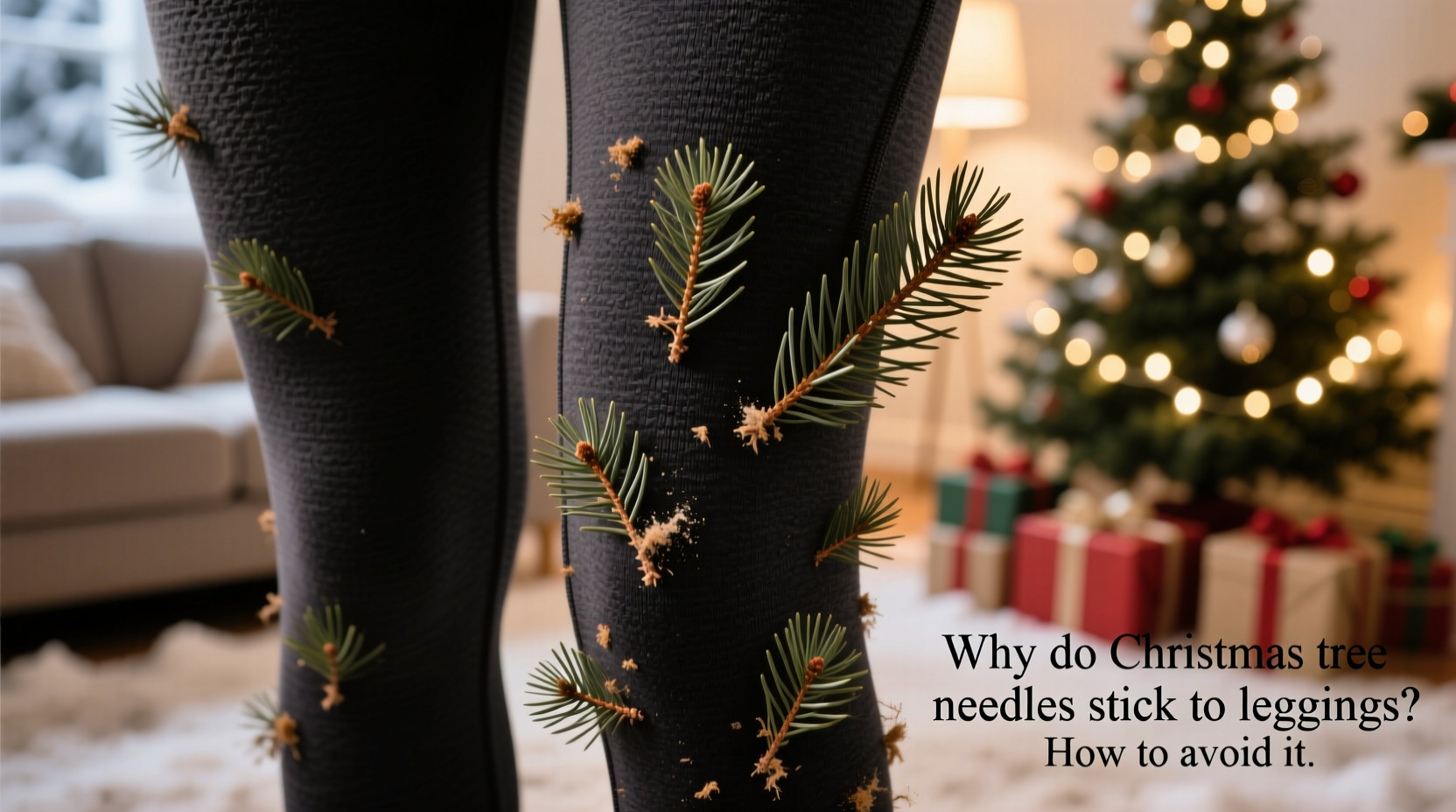
At first glance, it may appear that pine needles are simply falling and sticking where they land. But the reason they adhere so stubbornly to leggings—especially dark-colored, tight-fitting ones—is due to static electricity. When two materials rub together, electrons can transfer between them, creating an imbalance that results in a static charge. This is known as the triboelectric effect.
Synthetic fabrics such as polyester, nylon, and spandex (common components of most leggings) are particularly prone to building up static charge. These materials rank high on the triboelectric series, meaning they easily lose or gain electrons when in contact with other surfaces. As you move around the tree—adjusting branches, hanging ornaments, or stepping on stray needles—you generate friction between your clothing and the environment. This friction charges your leggings, turning them into unintentional dust magnets.
Pine needles, though small, carry their own slight electrical charge and are extremely lightweight. Once charged, they’re easily attracted to oppositely charged surfaces—like your statically charged leggings. Dry indoor air during winter months exacerbates the problem. Low humidity reduces conductivity in the air, preventing static charges from dissipating naturally. The result? A perfect storm for needle attraction.
“Static cling isn’t random—it follows predictable physical laws. Synthetic fabrics in dry environments become natural collectors for lightweight organic debris like pine needles.” — Dr. Lena Pruitt, Materials Physicist, University of Colorado Boulder
Why Leggings Are Especially Vulnerable
Leggings are practically engineered to attract pine needles during tree season. Several factors combine to make them prime targets:
- Material Composition: Most leggings are made from synthetic blends designed for stretch and comfort. Unfortunately, these same materials trap static charge.
- Surface Area Contact: Tight-fitting garments have more contact with chairs, carpets, and flooring—all potential sources of friction and charge buildup.
- Proximity to the Floor: Since fallen needles accumulate at ground level, low-hanging clothing picks them up easily while bending or kneeling near the tree.
- Color Visibility: Dark leggings show light-colored debris more clearly, making the issue seem worse even if other clothes collect similar amounts.
In contrast, cotton pants or wool skirts may still pick up some debris but are less likely to hold a strong static charge. Natural fibers tend to be more breathable and less prone to electron transfer, reducing the cling factor significantly.
How to Prevent Pine Needles from Sticking to Your Clothes
Prevention is far more effective than cleanup. With a few smart strategies, you can minimize—or even eliminate—the problem of needles clinging to your outfit during holiday preparations.
1. Choose the Right Clothing Material
Opt for natural fibers like cotton, linen, or merino wool when spending extended time near the tree. These materials generate less static and don’t hold onto debris as aggressively. If leggings are non-negotiable, look for blends with cotton or bamboo fiber, which help reduce static buildup.
2. Increase Indoor Humidity
Dry air fuels static electricity. Using a humidifier in the room where your tree is located helps maintain moisture levels above 40%, which allows charges to dissipate naturally. Ideal indoor humidity during winter ranges between 40% and 60%. You can monitor this with an inexpensive hygrometer.
3. Pre-Treat Your Leggings
Before putting on your leggings, lightly rub a dryer sheet over the outer surface. The anti-static chemicals in the sheet create a temporary barrier that repels charged particles. Alternatively, spray a fine mist of water mixed with a drop of fabric softener (one part softener to ten parts water) and apply it lightly to the legs—avoid soaking.
4. Shake Out the Tree Before Bringing It Inside
Most needle shedding occurs in the first few days after setup. To reduce loose debris, vigorously shake your tree outdoors before placing it in the stand. Some experts recommend giving it a quick “bath” by hosing it down lightly and letting it dry completely overnight in a garage or covered area. This removes dust, pests, and weak needles likely to fall early.
5. Use a Needle-Trap Mat
Place a wide, textured mat or tarp under and around the base of the tree. Choose one with raised edges to contain debris. Rubber-backed mats work well because they don’t slide and help ground static charges. Vacuum the area daily to prevent needles from being tracked elsewhere in the house.
| Prevention Method | Effectiveness | Effort Level |
|---|---|---|
| Wear cotton pants instead of leggings | High | Low |
| Use a humidifier | High | Medium |
| Pre-treat clothes with dryer sheet | Moderate | Low |
| Shake tree before setup | High | Medium |
| Vacuum under tree daily | Moderate | Medium |
Step-by-Step Guide: Minimizing Needle Cling During Tree Setup
If you plan to assemble or decorate your tree today, follow this sequence to keep your clothes clean and static-free:
- Prepare the space: Lay down a large mat or old bedsheet around the tree area to catch falling needles.
- Humidify the room: Turn on a humidifier at least one hour before starting.
- Treat your clothing: Rub a dryer sheet over any synthetic garments you’ll wear, especially leggings or tights.
- Inspect and shake the tree: Take the tree outside and give it several firm shakes. Rotate it to dislodge debris from all sides.
- Set up the stand and water reservoir: Ensure the tree is stable and immediately begin watering—it helps keep needles attached longer.
- Decorate strategically: Start from the top and work downward, minimizing contact with lower branches where loose needles accumulate.
- Change clothes afterward: Remove outer layers before walking through other rooms to avoid spreading debris.
- Vacuum thoroughly: Clean the surrounding area with a vacuum equipped with a HEPA filter to capture fine particles.
Real Example: The Holiday Hostess Who Cracked the Case
Sarah M., a mother of two in Portland, Oregon, used to dread setting up her family’s Fraser fir each December. “Every year, I’d end up looking like a human pincushion,” she said. “I wore my favorite black leggings, and within minutes, they were covered in tiny green specks. I’d bend over to plug in lights and stand back up with a trail of needles stuck to my thighs.”
Determined to solve the problem, Sarah experimented with different approaches. She started by switching to cotton joggers—effective but too warm for indoor use. Then she tried spraying her leggings with water, which helped temporarily but left damp patches. Her breakthrough came when she remembered using dryer sheets on her holiday sweaters to reduce fuzz.
She rubbed a Bounce sheet over her leggings before decorating. The difference was immediate. Not only did fewer needles stick, but the ones that did fell off easily when brushed. She now keeps a basket near her tree with dryer sheets, a mini vacuum, and a lint roller—her “anti-needle kit.” “It’s a small thing,” she says, “but it makes the whole experience feel more peaceful.”
Checklist: Keep Your Clothes Needle-Free This Holiday Season
Use this checklist to stay ahead of static cling and pine needle mess:
- ☑ Choose natural-fiber clothing when decorating
- ☑ Run a humidifier in the tree room
- ☑ Shake the tree vigorously before bringing it inside
- ☑ Place a containment mat under the tree
- ☑ Pre-treat synthetic clothes with a dryer sheet
- ☑ Keep a lint roller handy in the living area
- ☑ Vacuum around the tree every 1–2 days
- ☑ Water the tree daily to improve needle retention
Frequently Asked Questions
Do artificial trees cause the same problem?
No—artificial trees don’t shed organic needles, so there’s nothing to stick to your clothes. However, dust accumulation on plastic branches can create a similar issue. Wipe down your artificial tree annually with a microfiber cloth to prevent dust transfer.
Can washing leggings remove built-up static charge?
Yes, but temporarily. Washing with regular detergent doesn’t fully neutralize static tendencies. For better results, add white vinegar (½ cup) or baking soda (¼ cup) to the rinse cycle. These natural additives help break down residues that contribute to static buildup.
Are certain types of Christmas trees less likely to shed?
Yes. Fraser fir, balsam fir, and noble fir are known for excellent needle retention when properly hydrated. Avoid Scotch pine if static cling is a concern—it tends to drop more needles initially. Always cut a fresh inch off the trunk and place it in water within four hours of purchase.
Conclusion: Enjoy the Holidays Without the Stickiness
The battle between leggings and pine needles doesn’t have to be inevitable. With a deeper understanding of static electricity and simple preventive habits, you can protect your clothes and preserve your peace of mind during the busiest time of year. Whether you're hosting a gathering, filming a festive video, or simply enjoying quiet time by the tree, staying needle-free enhances the experience. These small adjustments aren’t about perfection—they’re about making traditions more enjoyable.




 浙公网安备
33010002000092号
浙公网安备
33010002000092号 浙B2-20120091-4
Comments
No comments yet. Why don't you start the discussion?