
When you're pulled over for a routine traffic violation, one of the first things you might notice is the officer placing their hand on your vehicle before approaching the window. It’s a subtle gesture, but it raises questions: Why do cops touch your car during a traffic stop? Is it a safety tactic? A procedural formality? Or something more strategic? Understanding this practice reveals insights into law enforcement protocols, officer safety, and the balance between authority and accountability.
Officer Safety: The Primary Reason
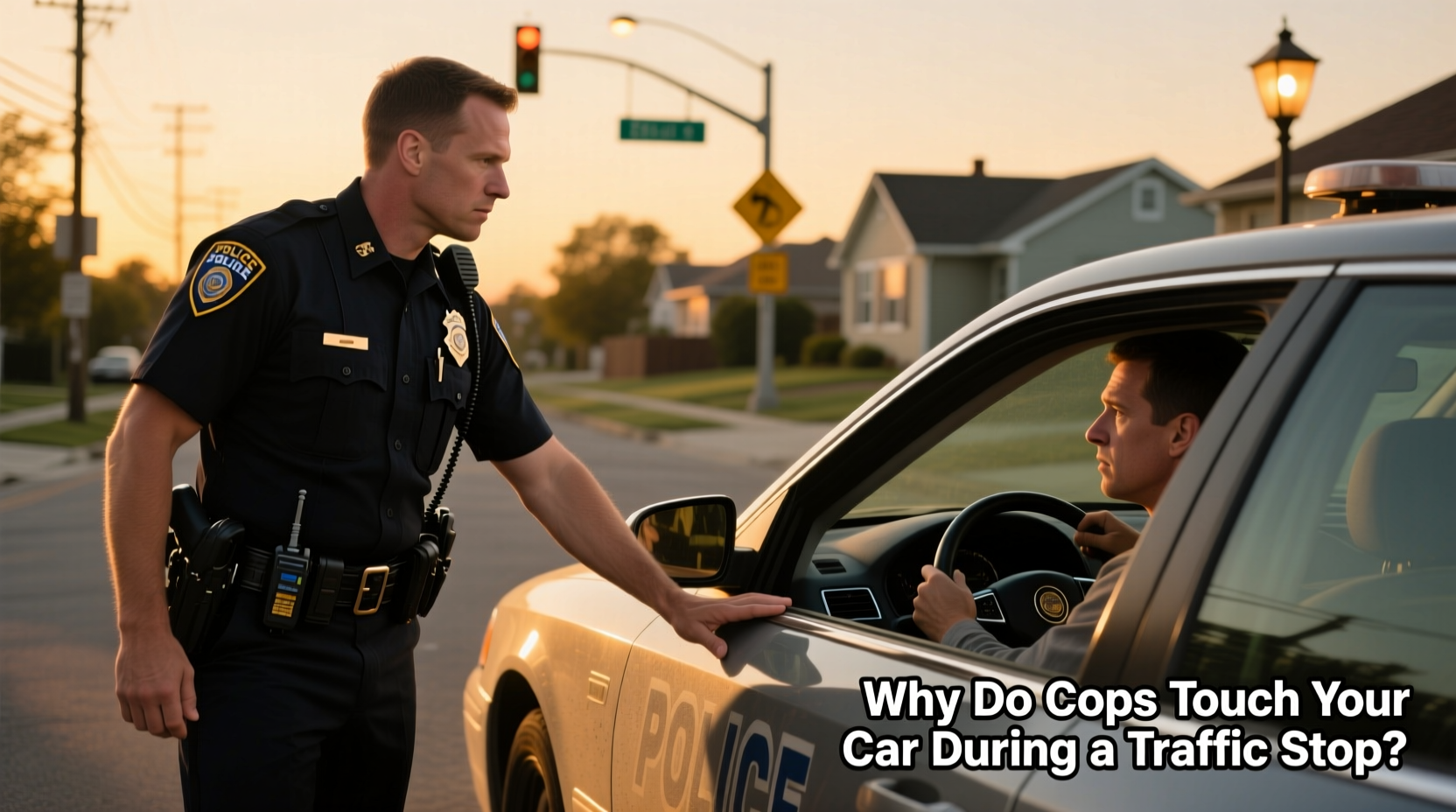
The most widely accepted explanation for why an officer touches your car during a traffic stop is officer safety. Law enforcement professionals are trained to remain vigilant at all times, especially during unpredictable interactions. By briefly touching the rear of your vehicle—often near the trunk or taillight—the officer accomplishes several critical objectives.
- Maintaining awareness of surroundings: As the officer walks from their patrol car to yours, they use physical contact with your vehicle to keep one hand oriented while scanning for potential threats inside the cabin.
- Ensuring the trunk is secure: If the trunk pops open after the officer touches it, that could indicate tampering or even someone hidden inside—a known risk in high-crime areas.
- Creating muscle memory: The touch serves as a tactile checkpoint, reinforcing spatial awareness and helping the officer stay grounded during a high-stress situation.
“An officer’s number one priority during any stop is personal safety. That simple touch can be the difference between control and chaos.” — Sgt. Daniel Reyes, 18-year veteran of the California Highway Patrol
Fingerprints and Evidence Collection: Myth vs. Reality
A common misconception is that officers touch your car to leave fingerprints as evidence in case something goes wrong. The idea is that if the officer is injured or killed during the stop, their prints on the vehicle would place them there at a specific time. While this sounds plausible, experts largely dismiss it as a secondary or coincidental benefit rather than the primary intent.
In reality, fingerprint collection from outdoor surfaces like car bodies is highly unreliable. Rain, dust, temperature changes, and surface materials (such as painted metal or plastic) make successful lifting extremely difficult. Forensic units rarely rely on such prints in investigations.
Still, some departments acknowledge that the possibility of trace evidence being left behind adds a minor layer of documentation. But again, this is not the driving reason behind the action.
| Claim | Reality Check | Verdict |
|---|---|---|
| Cops touch cars to leave fingerprints as proof they made contact. | Fingerprints degrade quickly outdoors; rarely used in investigations. | Mostly myth |
| Touching ensures the trunk isn't open or tampered with. | Valid safety check, especially in urban or high-risk zones. | True |
| The touch helps officers maintain balance and focus. | Tactile feedback improves situational awareness. | True |
Tactical Positioning and Control
Law enforcement training emphasizes controlling the environment during a traffic stop. Touching the vehicle is often part of a broader tactical approach known as “contact and cover.” Officers are taught to stay slightly behind the driver’s side door, out of the direct line of fire, while maintaining physical connection with the car.
This positioning allows them to:
- React quickly if a door suddenly opens or someone exits aggressively.
- Feel vibrations or movement from inside the car (e.g., someone shifting positions).
- Use the vehicle as a partial barrier between themselves and potential threats.
The touch becomes a grounding technique—something tangible in a fluid, uncertain moment. It's similar to how a firefighter might keep a hand on a hose or wall in low visibility: it provides orientation and stability.
Real Example: A Stop Gone Right
In 2021, a deputy in Harris County, Texas, initiated a routine traffic stop for a broken taillight. As he approached the vehicle, he placed his hand on the trunk lid. Moments later, he noticed the trunk latch was loose. He stepped back, called for backup, and upon inspection, discovered two concealed individuals inside attempting to cross state lines illegally. The initial touch helped him detect a subtle mechanical anomaly that visual inspection alone might have missed.
This incident illustrates how a seemingly small gesture can lead to major discoveries when combined with training and awareness.
Legal and Psychological Dimensions
While the act of touching a vehicle is not legally required, it falls within the scope of permissible police conduct during a lawful traffic stop. Courts have consistently ruled that brief contact with the exterior of a vehicle does not constitute a search under the Fourth Amendment, provided no further intrusion occurs.
Psychologically, the gesture also serves another function: it subtly asserts control. Without being overtly aggressive, the officer establishes presence and authority. For drivers, this can reinforce compliance. However, for others, it may provoke anxiety—especially in communities with strained police relations.
Transparency about the purpose of these actions can help build trust. When officers explain their behavior—or when the public understands the reasoning—it reduces fear and misinterpretation.
What You Should Know: Passenger and Driver Rights
Understanding your rights during a traffic stop is just as important as understanding police procedures. Here’s what you need to know:
- You are not required to consent to a search unless the officer has probable cause or a warrant.
- Remaining calm and cooperative does not mean surrendering your rights.
- Recording the interaction (where legal) can provide transparency—but inform the officer respectfully if you’re doing so.
- Never make sudden movements, even to retrieve documents, without announcing your intent.
The officer touching your car doesn’t imply suspicion or wrongdoing on your part. It’s a standardized practice rooted in training, not personal judgment.
Checklist: How to Handle a Traffic Stop Calmly and Safely
- Pull over safely and turn on your interior light if it’s dark.
- Keep both hands on the steering wheel until the officer approaches.
- Wait for instructions before reaching for your license or registration.
- Remain polite and avoid arguing on the roadside.
- Ask if you’re free to leave if the officer hasn’t cited a violation.
Frequently Asked Questions
Does every officer touch the car during a traffic stop?
No, not all officers do this consistently. Practices vary by department, region, training academy, and individual preference. Some agencies emphasize the technique more than others, particularly those with higher emphasis on tactical response.
Can I ask the officer why they touched my car?
Yes, you can ask—as long as you do so respectfully and without sudden movements. Most officers will appreciate the opportunity to clarify and may even use it as a chance to de-escalate tension.
Is it legal for an officer to touch my car without permission?
Yes. Courts have generally upheld that touching the exterior of a vehicle during a lawful stop does not violate the Fourth Amendment. It is considered a minimal intrusion aimed at officer safety, not a search.
Conclusion: Knowledge Builds Confidence and Safety
The next time you’re pulled over and see an officer place a hand on your bumper or trunk, remember: it’s not arbitrary. It’s a calculated move rooted in years of law enforcement experience, tactical training, and a commitment to safety—for both the officer and the driver. While myths persist about fingerprint evidence, the truth lies in practicality and preparedness.
By understanding the reasons behind common police behaviors, you become a more informed citizen, better equipped to navigate interactions with confidence and composure. Whether you're a daily commuter or an occasional driver, this knowledge empowers you to stay safe, respectful, and aware.




 浙公网安备
33010002000092号
浙公网安备
33010002000092号 浙B2-20120091-4
Comments
No comments yet. Why don't you start the discussion?