
Every December, veterinary emergency rooms see a predictable surge: dogs with oral burns, electrical injuries, or gastrointestinal obstructions—often traced back to one culprit: chewed Christmas lights. It’s not just inconvenient; it’s dangerous. According to the ASPCA Animal Poison Control Center, electrical cord chewing ranks among the top 10 holiday-related pet hazards—and lights are the most common source. Yet many owners dismiss it as “just puppy behavior” or assume their dog “won’t go near the tree.” The truth is more nuanced—and far more preventable. This article explains the behavioral and physiological drivers behind light-chewing, outlines what actually happens when a dog bites into live wiring, and delivers actionable, science-informed strategies—not just quick fixes—that safeguard both your pet and your peace of mind.
The Real Reasons Dogs Chew Christmas Lights
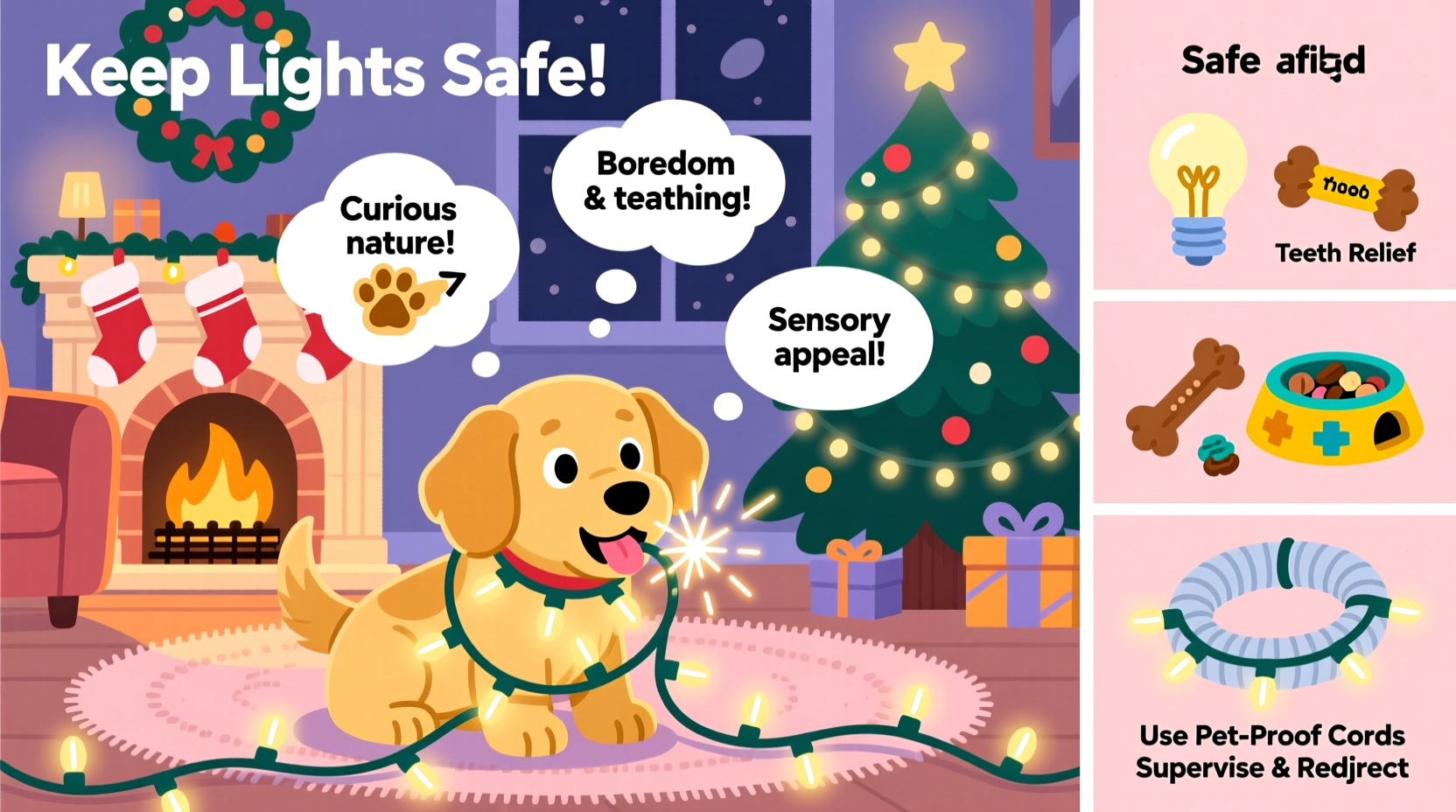
Dogs don’t target Christmas lights out of malice or mischief. Their actions stem from instinctual drives, developmental needs, or unmet environmental demands. Understanding the “why” transforms prevention from guesswork into precision care.
Teething (especially in puppies under 6 months): Puppies experience intense gum discomfort as adult teeth erupt. Flexible, cool, textured cords mimic ideal chew toys—offering pressure relief that soothes inflamed gums. Unlike rope or rubber chews, lights provide subtle vibration and warmth (from low-voltage current), which some pups find oddly soothing.
Curiosity and object play: Dogs explore the world through their mouths. Twinkling lights, dangling wires, and the faint hum of transformers trigger prey-like interest—particularly in high-energy or herding-breed dogs. A flickering bulb may resemble an insect; a swaying cord, a moving tail. This isn’t “naughtiness”—it’s species-typical investigation gone awry.
Boredom and under-stimulation: Holiday routines often disrupt normal schedules—walks get shorter, playtime declines amid family gatherings, and mental enrichment drops. A bored dog seeks stimulation anywhere it can find it. A glowing cord becomes the most novel, dynamic object in the room.
Anxiety and stress: Contrary to popular belief, light-chewing isn’t always playful. For some dogs, the holidays bring overwhelming sensory input—loud music, unfamiliar guests, altered sleeping spaces, or even changes in owner attention. Chewing releases endorphins and provides a calming, rhythmic outlet. In these cases, the behavior is self-soothing, not destructive.
Lack of appropriate alternatives: Many owners provide “safe” chew toys—but fail to match the sensory profile of lights: thin, flexible, slightly yielding, and temperature-sensitive. If a dog’s only approved chews are rigid nylon bones or plush squeakers, they’ll naturally gravitate toward something that feels *right* in their mouth—even if it’s hazardous.
What Happens When a Dog Bites Into Live Wiring?
It’s critical to understand the physical risks—not just to motivate prevention, but to recognize warning signs early. Electrical injury in dogs is rarely dramatic (no sparks or smoke) but often insidious.
When a dog bites through insulation and contacts live conductors, current flows through oral tissues—causing immediate thermal burns to lips, tongue, and gums. These burns may appear minor externally (slight swelling or redness) but often involve deep tissue necrosis beneath the surface. Within 24–72 hours, affected tissue can slough off, exposing bone or muscle and leading to severe infection.
More dangerously, electricity can travel along saliva paths—entering through the mouth and exiting via paws or abdomen—disrupting cardiac rhythm. Ventricular fibrillation is rare but possible with higher-voltage household currents (120V in North America). Even non-fatal shocks can cause pulmonary edema (fluid in lungs), seizures, or delayed-onset kidney damage from muscle breakdown (rhabdomyolysis).
Gastrointestinal obstruction is another serious risk. Swallowed plastic housings, glass bulb shards, or copper wire fragments can perforate the esophagus or intestines—or create blockages requiring surgery. One 2022 study in the Journal of Veterinary Emergency and Critical Care found that 38% of dogs presenting with light-chewing incidents required surgical intervention for foreign bodies or burn debridement.
“Electrical injuries in dogs are deceptive. A dog may seem fine minutes after chewing a cord—then collapse hours later from pulmonary edema or sepsis. Any suspected contact warrants immediate veterinary assessment—even if no symptoms are visible.” — Dr. Lena Torres, DVM, DACVECC, Director of Emergency Services at Midwest Veterinary Referral Center
Proven Prevention Strategies: Beyond Taping Cords
Generic advice like “keep cords out of reach” ignores canine ingenuity—and fails in real homes where trees stand on rugs, outlets sit low, and dogs jump, dig, or nudge ornaments loose. Effective prevention addresses root causes while respecting canine nature.
Step-by-Step Light-Safe Setup Timeline
- Week Before Tree Setup: Audit all extension cords and light strands. Discard any with cracked, brittle, or frayed insulation—even if they still work. Replace with UL-listed, heavy-duty cords rated for indoor use.
- Day of Setup (Before Decorating): Install cord covers *before* hanging lights. Use rigid, snap-together PVC raceways—not soft sleeves—which dogs can bite through. Secure raceways to baseboards with screws (not tape).
- During Decoration: Route all cords vertically up walls using adhesive-backed cord clips, then down behind furniture. Never run cords across floors—even under rugs (heat buildup + chewing risk).
- Tree Placement: Position the tree at least 3 feet from walls, furniture, and heat sources. Use a sturdy, weighted stand. Anchor the trunk to a wall stud with a breakaway leash clip (snaps under 5 lbs of force to prevent strangulation if pulled).
- Ongoing (Daily): Unplug lights whenever the room is unoccupied—including overnight. Use smart plugs with motion-sensing auto-shutoff or timers set to turn off at 10 p.m.
Do’s and Don’ts: A Practical Safety Table
| Action | Do | Don’t |
|---|---|---|
| Cord Management | Use rigid PVC cord raceways secured with screws; route vertically behind furniture | Wrap cords in duct tape, hide under rugs, or use soft silicone sleeves |
| Chew Alternatives | Offer frozen Kongs filled with low-sodium broth + peanut butter; rubber chews with ridges that mimic cord texture | Give rawhide, cooked bones, or toys with small detachable parts (choking hazard) |
| Supervision & Access | Use baby gates to restrict access to the tree room; crate or confine when unsupervised | Rely on “just this once” or assume “he’s never done it before” |
| Stress Reduction | Play white noise during parties; offer calming chews with L-theanine or CBD (vet-approved); maintain walk schedule | Leave dog alone for >4 hours during holiday chaos; punish chewing after the fact |
| Post-Incident Response | Unplug immediately; examine mouth for burns (swelling, drooling, brown discoloration); call vet within 1 hour | Wait to see if “he seems okay”; rinse mouth with water (spreads current); apply ointments |
Real-World Case Study: How Maya Saved Her Rescue Terrier Mix
Maya adopted 8-month-old Finn—a spirited Jack Russell/Beagle mix—three weeks before Thanksgiving. Energetic and curious, he’d already chewed two phone chargers. When she brought home her first pre-lit artificial tree, she assumed the built-in cord would be safer. On Christmas Eve, Finn slipped past her while she was wrapping gifts. She heard a sharp *pop*, rushed in, and found him shaking his head—saliva dripping, one lip swollen and blistered.
She rushed him to the ER. Veterinarians confirmed second-degree oral burns and mild pulmonary edema. Recovery took 10 days of antibiotics, pain control, and soft-food feeding. But Maya didn’t stop there. She consulted a certified dog behaviorist who helped her redesign Finn’s environment: she installed wall-mounted cord raceways, introduced daily “nosework” games using hidden treats in cardboard boxes (to redirect investigative drive), and began freezing Kongs with pumpkin puree and cinnamon every evening—replacing the “light-hunt” with a predictable, rewarding ritual. By New Year’s, Finn ignored the tree entirely. “It wasn’t about stopping the chewing,” Maya says. “It was about giving him something better to do—and making the dangerous thing impossible to reach.”
FAQ: Your Top Questions Answered
Can I use LED lights instead of incandescent to reduce risk?
Yes—but with caveats. LEDs operate at lower voltage (typically 12V vs. 120V), reducing electrocution severity. However, most plug-in LED strands still connect to 120V outlets via transformers. The real danger lies in biting the transformer or main cord—not the bulbs themselves. Opt for battery-operated LED strings (with secure, screw-down battery compartments) for lowest risk. Avoid cheap, uncertified LEDs: poor insulation remains a burn hazard.
My dog only chews when I’m not home. Is crating cruel?
No—if done correctly. Crating prevents injury and builds security when introduced gradually with positive reinforcement. For dogs prone to anxiety, pair crating with calming aids (Adaptil diffusers, Thundershirts) and ensure the crate is large enough for standing, turning, and lying down comfortably. Never crate longer than 4 hours for adult dogs—or more than 2 hours for puppies. Better yet: combine crating with remote monitoring (pet cameras with two-way audio) so you can intervene if distress occurs.
Are “pet-safe” light brands actually safer?
Most “pet-safe” labels refer to shatterproof bulbs or lower heat output—not chew resistance. No commercially available light strand is designed to withstand sustained canine gnawing. True safety comes from engineering the environment—not relying on marketing claims. Look instead for UL certification, thick-gauge wiring (18 AWG or lower), and reinforced connectors.
Conclusion: Safety Starts With Understanding—Not Scolding
Chewing Christmas lights isn’t a character flaw in your dog—it’s a signal. A signal that their mouth needs relief, their mind needs engagement, their body needs movement, or their nervous system needs calm. Responding with punishment or frustration doesn’t address the cause; it erodes trust and may worsen anxiety-driven chewing. Instead, approach the holidays with proactive compassion: invest time in setting up physical barriers that work, choose chew alternatives that satisfy biologically, and honor your dog’s need for routine amid seasonal chaos. The safest tree isn’t the one with the most ornaments—it’s the one where your dog feels so settled, so stimulated, and so secure that blinking lights simply fade into the background. Start today: unplug unused strands, install one cord raceway, and freeze a Kong with something new. Small, consistent actions build lasting safety—not just for this season, but for every celebration to come.




 浙公网安备
33010002000092号
浙公网安备
33010002000092号 浙B2-20120091-4
Comments
No comments yet. Why don't you start the discussion?