
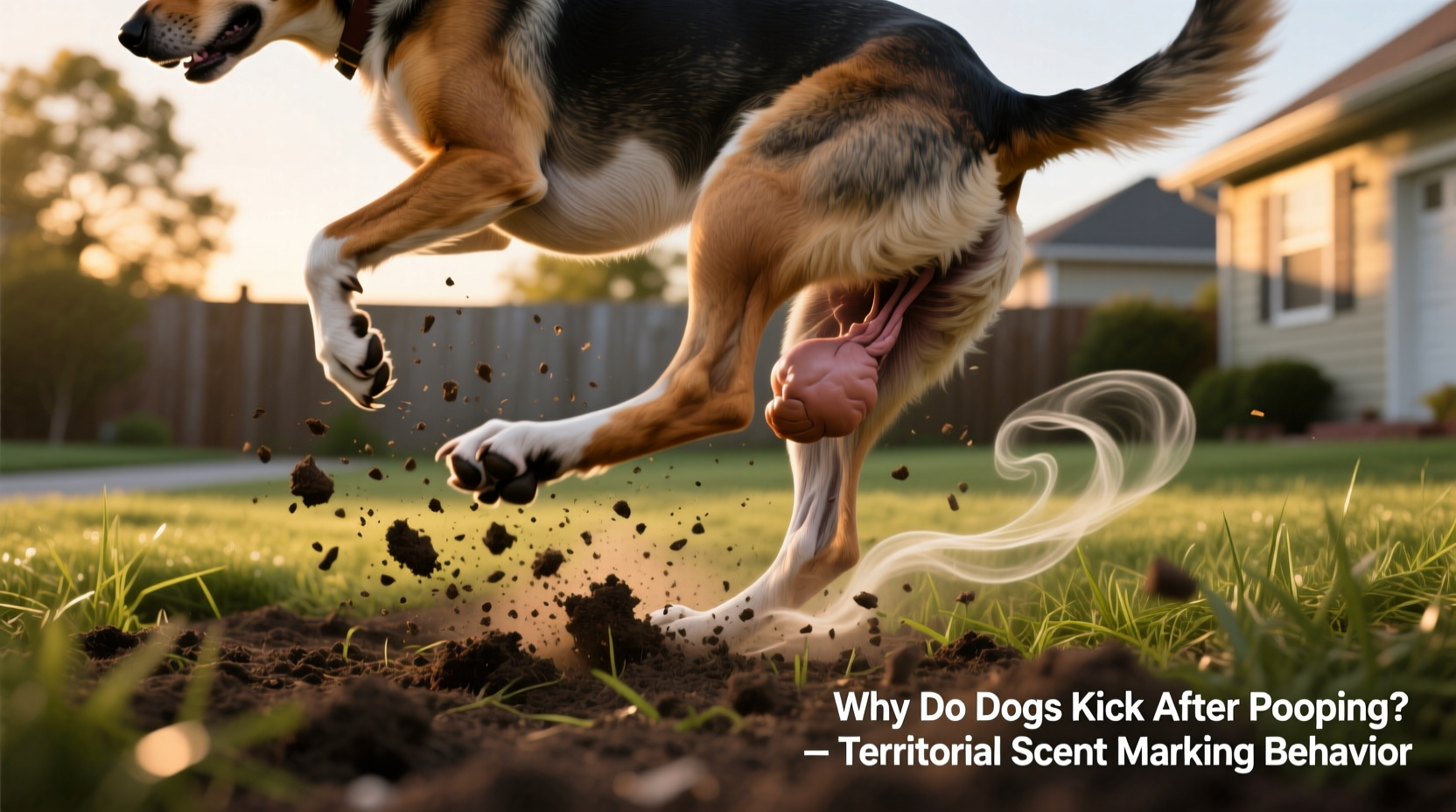
Dog owners often observe their pets engaging in a peculiar post-poop ritual: kicking their back legs against the ground as if trying to scratch or scatter something invisible. This behavior, while seemingly odd, is deeply rooted in canine biology and social communication. Far from being random, this action plays a critical role in how dogs mark territory, spread scent, and assert dominance. Understanding the reasons behind this instinctive behavior offers insight into your dog’s natural instincts and helps foster a deeper appreciation of their world.
This article explores the evolutionary, physiological, and behavioral drivers behind why dogs kick after defecating. From scent glands to social signaling, we’ll break down what’s really happening when your dog scrapes the grass or dirt with their hind feet — and why it matters in the animal kingdom.
The Science Behind the Scratch: Scent Glands and Communication
Dogs communicate primarily through smell, a sense far more developed than human vision or hearing. While humans rely on words and facial expressions, dogs \"read\" their environment through olfactory cues. When a dog defecates, they’re not just eliminating waste — they’re leaving behind a detailed chemical message about themselves.
Buried within this process are specialized scent glands located between the toes and in the anal sacs. These glands secrete unique pheromones that carry information such as age, sex, reproductive status, health condition, and emotional state. When a dog kicks the ground after pooping, they're not only covering or uncovering the feces — they're actively dispersing these pheromones into the surrounding area.
The physical act of kicking creates both airborne and ground-level scent trails. As the paws scrape the soil, fur, and grass, microscopic particles infused with glandular secretions are scattered across a wider radius. This amplifies the signal, making it detectable by other dogs from greater distances.
“Dogs don’t just leave messages — they broadcast them. Kicking after elimination is like posting a billboard in a high-traffic zone.” — Dr. Lena Torres, Canine Ethologist, University of California, Davis
Territorial Marking: More Than Just Waste Disposal
In the wild, canines live in hierarchical packs where space and resources must be clearly defined. Territory is everything — for safety, mating rights, and food access. Domestic dogs may not need to hunt or defend dens, but their genetic programming remains intact. The act of kicking after defecation is an inherited territorial behavior used to stake claim over an area.
By combining fecal deposits with vigorous ground scratching, dogs create a multi-sensory marker. Visually, disturbed earth signals recent activity. Olfactorily, the blended scents from feces and paw glands form a complex profile. Even tactilely, the churned-up terrain can be sensed under another dog’s paws, reinforcing the presence of a previous visitor.
This dual-layered approach — depositing waste *and* enhancing its reach — ensures that the message persists longer and travels farther than passive defecation alone. It's especially common in male dogs and unneutered individuals, who tend to be more driven by dominance and reproductive competition.
Mechanics of the Kick: How Dogs Spread Scent and Debris
The kicking motion itself is highly coordinated. Using rapid, alternating thrusts of the hind legs, dogs dig their claws into the surface and fling loose material backward. Whether on grass, dirt, mulch, or snow, the goal is displacement — not destruction.
This action serves several mechanical purposes:
- Scent diffusion: Scratching breaks up dried fecal matter and mixes it with fresh substrate, prolonging odor release.
- Visual cue creation: Freshly turned soil stands out, drawing attention from passing animals.
- Pheromone layering: Paw pad secretions are deposited directly onto disturbed ground, layering new information over old.
- Debris redistribution: Loose particles carry scent further via wind or foot traffic.
Interestingly, the intensity of the kick often correlates with the dog’s confidence level. Dominant or assertive dogs typically engage in longer, more forceful scraping sessions. Submissive or anxious dogs may skip the behavior entirely or perform abbreviated versions.
Comparative Behavior Across Canine Species
This behavior isn't exclusive to domesticated dogs. Wolves, coyotes, and foxes exhibit similar post-defecation kicking, suggesting a shared evolutionary origin. In fact, studies of wild canids show that scent-marking rituals increase during breeding seasons and territorial disputes, reinforcing the link between kicking and social signaling.
| Species | Kicks After Defecation? | Purpose |
|---|---|---|
| Domestic Dog | Yes (common) | Territory marking, social communication |
| Gray Wolf | Yes (frequent) | Boundary definition, pack cohesion |
| Coyote | Yes (seasonal peak) | Mating signals, inter-pack warnings |
| Red Fox | Occasionally | Resource guarding, den protection |
The consistency of this trait across species underscores its survival value. Over thousands of years, animals that effectively communicated their presence were more likely to avoid conflict, attract mates, and maintain control over essential areas.
Behavioral Context: When and Why Kicking Increases
While all dogs have the capacity to kick after pooping, the frequency and vigor of the behavior vary based on context. Certain situations trigger stronger marking impulses:
- New environments: Dogs often kick more when walking unfamiliar routes, asserting presence in unknown territory.
- Presence of other dogs: Smelling rival scents can provoke exaggerated kicking as a competitive response.
- Unneutered males: Higher testosterone levels correlate with increased marking behaviors, including kicking.
- Stress or anxiety: Some dogs use marking as a coping mechanism, reinforcing their sense of security.
Conversely, neutered dogs, older individuals, or those in secure home environments may exhibit reduced kicking. This doesn’t indicate poor health — rather, it reflects lower social pressure to advertise their presence.
Real Example: A Walk in the Park
Consider Max, a three-year-old intact male Siberian Husky taken on a morning walk through a local dog park. As he moves along the perimeter trail, he pauses at multiple spots to defecate. Each time, he performs a vigorous kicking sequence, scraping his hind legs forcefully against the damp grass for several seconds.
Later that day, Luna, a female Labrador, walks the same path with her owner. She sniffs each marked location intently, particularly focusing on Max’s kicked sites. Her body language shifts — ears perk up, tail lowers slightly — indicating she’s processing significant information: a male dog has recently passed through, is likely unneutered, and is claiming space.
This interaction demonstrates how kicking enhances interspecies communication. Without direct contact, Max has influenced Luna’s perception of the environment — all through a simple, instinctive motion.
Common Misconceptions About Post-Poop Kicking
Many pet owners misinterpret this behavior, leading to confusion or unnecessary concern. Here are some widespread myths:
- Myth: Dogs kick to bury their poop.
Reality: Unlike cats, dogs rarely attempt full burial. The motion spreads, rather than conceals, waste. - Myth: Kicking means the dog is dirty or needs training.
Reality: It’s a natural, healthy expression of canine instinct — not a behavioral flaw. - Myth: Only poorly trained dogs do this.
Reality: Even well-socialized, obedient dogs perform this act. Training doesn’t suppress innate biological drives.
Understanding the truth behind these misconceptions allows owners to accept the behavior without judgment and respond appropriately.
Practical Tips for Dog Owners
While you can’t (and shouldn’t) stop your dog from kicking after pooping, there are ways to manage the impact, especially in shared spaces or delicate landscapes.
- Use designated potty zones: Train your dog to eliminate in a specific part of your yard, preferably on mulch or stone, minimizing turf damage.
- Rake disturbed areas regularly: Light grooming of kicked-up patches keeps your lawn looking neat and prevents soil compaction.
- Monitor for obsessive behavior: If your dog kicks excessively or seems fixated on marking, consult a veterinarian or behaviorist — it could indicate anxiety.
- Avoid punishment: Never scold your dog for kicking. It’s a natural behavior, and suppression can lead to stress or inhibited elimination.
- Keep nails trimmed: Long claws can increase turf damage and risk injury during vigorous kicking.
Checklist: Managing Post-Poop Kicking Responsibly
- ✅ Allow natural marking behavior during walks
- ✅ Designate a durable bathroom area in your yard
- ✅ Clean up feces promptly (kicking doesn’t remove waste)
- ✅ Maintain short claws for safety and lawn care
- ✅ Observe frequency and context for behavioral changes
Frequently Asked Questions
Do all dogs kick after pooping?
No, not all dogs do. While most have the instinct, individual variation exists based on breed, temperament, hormonal status, and environment. Some dogs may kick lightly or infrequently, while others perform dramatic scraping motions.
Is kicking a sign of aggression?
Not directly. Kicking is a communicative act, not an aggressive one. However, frequent or intense marking in multi-dog households could indicate underlying tension or dominance struggles. Context matters — observe overall body language for clues.
Can neutering reduce kicking behavior?
Yes, in many cases. Neutering lowers testosterone levels, which can decrease territorial motivation. While the behavior may not disappear entirely, it often becomes less frequent or intense, especially in male dogs.
Conclusion: Respecting Instinct, Enhancing Understanding
The next time your dog kicks up dirt after relieving themselves, remember: they’re not misbehaving — they’re speaking a language older than words. This simple act connects them to centuries of canine ancestors who relied on scent, signal, and space to survive.
Far from being a quirk to correct, post-poop kicking is a window into your dog’s inner world — a blend of biology, communication, and identity. By recognizing its purpose, you deepen your bond and support their natural needs without conflict.




 浙公网安备
33010002000092号
浙公网安备
33010002000092号 浙B2-20120091-4
Comments
No comments yet. Why don't you start the discussion?