
Dogs don’t just walk through the world—they experience it through scent. To humans, a walk is primarily visual: we notice colors, shapes, movement. But for dogs, every outing is an olfactory journey. A lamppost isn't just metal; it's a message board. A patch of grass isn’t just greenery—it’s a detailed narrative written in pheromones and chemical traces. This deep reliance on smell is not quirky behavior; it’s fundamental to how dogs perceive reality. Understanding why dogs sniff everything on walks reveals much about their cognitive function, emotional well-being, and evolutionary design.
The Canine Nose: A Biological Superpower
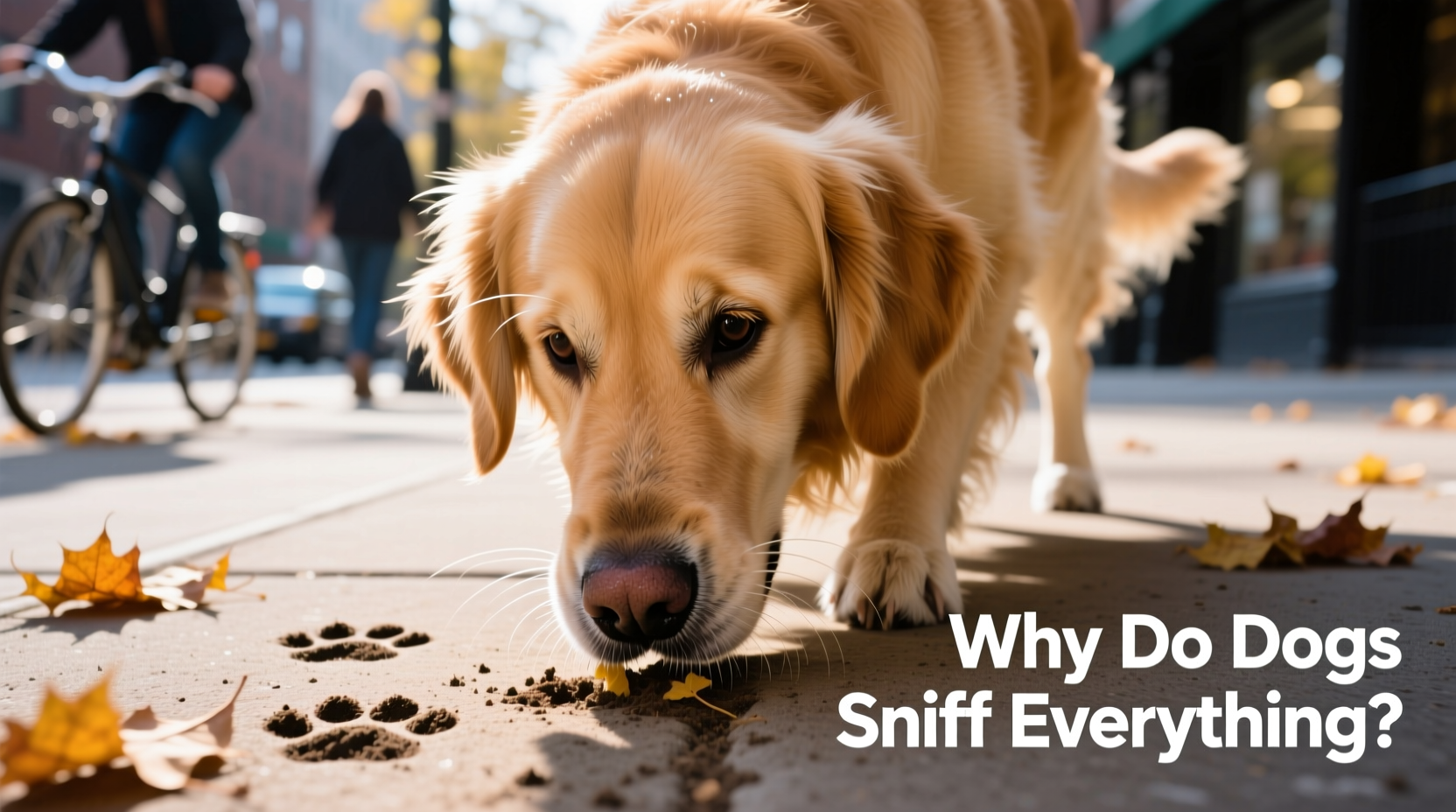
A dog’s sense of smell is staggeringly advanced compared to humans. While we have about 5 million olfactory receptors, dogs possess anywhere from 125 million (in breeds like Beagles) to over 300 million (in Bloodhounds). This biological advantage allows them to detect odors at concentrations up to 100,000 times lower than what humans can perceive.
Beyond receptor count, the structure of a dog’s nose enhances scent detection. Air entering the nostrils splits into two pathways: one for breathing, the other directed toward the olfactory epithelium, where scent molecules are analyzed. Their elongated snouts and specialized nasal turbinates increase surface area for odor absorption. Even their breathing mechanics support scent tracking—rapid sniffing (up to five times per second) pulls in new air while retaining previous samples for comparison.
But perhaps most remarkable is the vomeronasal organ, also known as Jacobson’s organ, located in the roof of the mouth. This accessory system detects pheromones and social chemical signals, allowing dogs to “taste” the air and gather information about the reproductive status, stress levels, or identity of other animals.
“Dogs live in a world built on scent. For them, smelling is equivalent to reading a newspaper, checking social media, and watching the news—all at once.” — Dr. Alexandra Horowitz, Cognitive Scientist and Author of *Inside of a Dog*
Scent as Communication: The Social Network of Smell
When a dog stops to investigate a fire hydrant or sniffs another dog’s urine mark, they’re not being rude—they’re gathering intelligence. Urine, feces, saliva, and glandular secretions all contain biochemical signatures that convey specific details:
- Identity: Who passed by?
- Sex and reproductive status: Is this dog neutered? In heat?
- Emotional state: Was the animal anxious, confident, or aggressive?
- Time elapsed: How long ago did they leave this signal?
This invisible network functions like a community bulletin board. A single sniff can tell a dog whether a rival has entered their territory, if a potential mate is nearby, or if a familiar friend recently walked the same path. In multi-dog households or urban environments, these updates help maintain social hierarchies and reduce conflict through passive monitoring.
Mental Stimulation and Emotional Regulation
Sniffing isn’t just informative—it’s mentally enriching. Unlike humans, who often equate exercise with physical output, dogs derive significant cognitive benefits from olfactory engagement. Studies show that sniffing activates multiple regions of the brain, including those associated with memory, decision-making, and reward processing.
In fact, a 2018 study published in *Behavioural Processes* found that dogs allowed to follow their noses during walks exhibited lower cortisol levels (a stress hormone) and higher heart rate variability—a marker of emotional resilience—compared to dogs on structured, heel-focused walks.
This explains why many dogs appear calmer after a sniff-rich walk, even if they haven’t run or played vigorously. Sniffing provides a form of problem-solving: interpreting layered scents, identifying patterns, and making predictions based on subtle cues. It’s akin to solving a puzzle or reading a complex story. Depriving dogs of this natural behavior can lead to boredom, anxiety, and compulsive behaviors such as pacing or excessive barking.
Case Study: Max, the Anxious Rescue Dog
Max, a three-year-old mixed-breed rescue, was adopted after spending months in a high-noise shelter environment. His new owner reported frequent whining, restlessness, and difficulty settling indoors. A certified canine behaviorist recommended shifting focus from brisk, goal-oriented walks to slow, exploratory ones emphasizing scent work.
Over six weeks, Max’s daily routine included 15-minute “sniff walks” in quiet parks where he could freely investigate leaves, tree trunks, and grassy patches. No commands were enforced unless safety required it. Within three weeks, his indoor calmness improved noticeably. By week six, Max was sleeping through the night and engaging more confidently with visitors.
The transformation wasn’t due to increased physical exertion—but rather to enhanced mental clarity and environmental control gained through scent-based exploration.
How to Support Healthy Sniffing Behavior
Many dog owners unintentionally suppress sniffing by pulling on the leash, rushing walks, or insisting on constant attention. While obedience training has its place, balancing structure with freedom is key to a dog’s psychological health. Below is a practical guide to integrating meaningful sniff time into daily routines.
Step-by-Step Guide: Creating a Sniff-Friendly Walk
- Choose the right time: Schedule walks when distractions are low—early morning or late evening—to allow uninterrupted focus.
- Use a longer leash: A 6-foot leash gives more range than a 3-foot one, enabling access to varied terrain and scent sources.
- Let go of pace expectations: Accept that some walks will be slower. Prioritize quality of experience over distance covered.
- Identify sniff zones: Parks, wooded trails, or quiet residential streets offer richer olfactory landscapes than paved sidewalks.
- Allow investigative pauses: When your dog stops to sniff, wait patiently. Use this time to observe their body language—ears forward, tail slightly raised, focused breathing.
- End with purpose: If needed, transition back to structured walking near the end of the walk to reinforce recall or heel work.
Checklist: Signs Your Dog Is Getting Enough Olfactory Enrichment
- Relaxed posture after walks
- Reduced destructive chewing or barking at home
- Willingness to return to the leash without resistance
- Curious but non-frantic exploration outdoors
- Improved sleep patterns
Common Misconceptions About Sniffing
Despite growing awareness, several myths persist about why dogs sniff and whether it should be controlled:
| Myth | Reality |
|---|---|
| “Sniffing means my dog isn’t listening.” | Sniffing is a primary mode of learning. Dogs can still respond to cues while investigating scents. |
| “Letting them sniff encourages bad behavior.” | Controlled sniffing reduces frustration and improves overall obedience. |
| “Only untrained dogs sniff obsessively.” | All dogs, regardless of training level, benefit from scent engagement. |
| “They’re just marking territory.” | While dogs do mark, most outdoor sniffing is receptive—not territorial. |
When Sniffing Becomes Problematic
While sniffing is healthy, certain patterns may indicate underlying issues:
- Obsessive sniffing: Repeatedly circling the same spot or fixating on one scent for extended periods could signal anxiety or neurological concerns.
- Refusal to move: If a dog plants themselves and ignores all cues—even in unsafe situations—consult a veterinarian or behaviorist.
- Excessive licking or eating of waste: Coprophagia or indiscriminate ingestion may stem from nutritional deficiencies or compulsive disorders.
In such cases, professional evaluation is advised. However, in most instances, enthusiastic sniffing is simply normal canine behavior expressed in a human-controlled environment.
FAQ
How long should I let my dog sniff on a walk?
There’s no fixed rule, but aim for at least 30% of the walk to be dedicated to free exploration. For a 30-minute walk, that means 9–10 minutes of unhurried sniffing. Adjust based on your dog’s breed, age, and energy levels.
Can too much sniffing be harmful?
Rarely. Most risks come from ingesting contaminated materials (e.g., feces, chemicals), not from sniffing itself. Supervise closely and redirect only when necessary for safety.
Do some breeds need more sniffing than others?
Yes. Scent hounds (Basset Hounds, Beagles, Coonhounds) and working breeds (German Shepherds, Border Collies) have stronger innate drives to track and interpret odors. They typically require more olfactory stimulation to stay mentally balanced.
Conclusion: Honor the Sniff
Walking a dog isn’t just about fulfilling a bodily function—it’s an invitation to coexist across species lines. When we allow our dogs to sniff, we grant them autonomy in a world largely shaped by human rhythms and restrictions. We acknowledge that their way of knowing is different, yet equally valid.
Next time your dog pauses to examine a crumpled leaf or a blade of grass, resist the urge to pull. Instead, pause with them. Watch the twitch of their nostrils, the flick of their ears. In that moment, they’re not lagging behind—they’re fully present, decoding a universe invisible to you.
By embracing sniffing as essential, not indulgent, we deepen our bond, support their well-being, and honor the extraordinary sensory legacy of the domestic dog.




 浙公网安备
33010002000092号
浙公网安备
33010002000092号 浙B2-20120091-4
Comments
No comments yet. Why don't you start the discussion?