
Dogs often perform a curious little dance before settling into rest—circling once, twice, or even three times in tight loops before finally plopping down. To many owners, it’s an amusing quirk. But beneath that seemingly whimsical behavior lies a deep-rooted survival mechanism passed down through generations. This spinning ritual isn’t random; it’s a blend of instinct, environmental adaptation, and inherited wolf ancestry. Understanding why dogs spin before lying down offers insight not only into their physical comfort but also into the evolutionary blueprint still embedded in modern domesticated canines.
While today’s dogs nap on plush dog beds or your favorite couch, their ancestors didn’t have that luxury. Wild canids like wolves and coyotes had to prepare their sleeping areas in the wild—flattening grass, chasing away insects, and checking for threats. That same sequence lives on in your Labrador or Chihuahua, even if all they’re doing is turning in circles on a memory foam mat. The question isn’t whether this behavior is instinctual—it clearly is—but rather how much of it remains functional today, and whether any new factors might influence it.
The Evolutionary Roots of Spinning Behavior
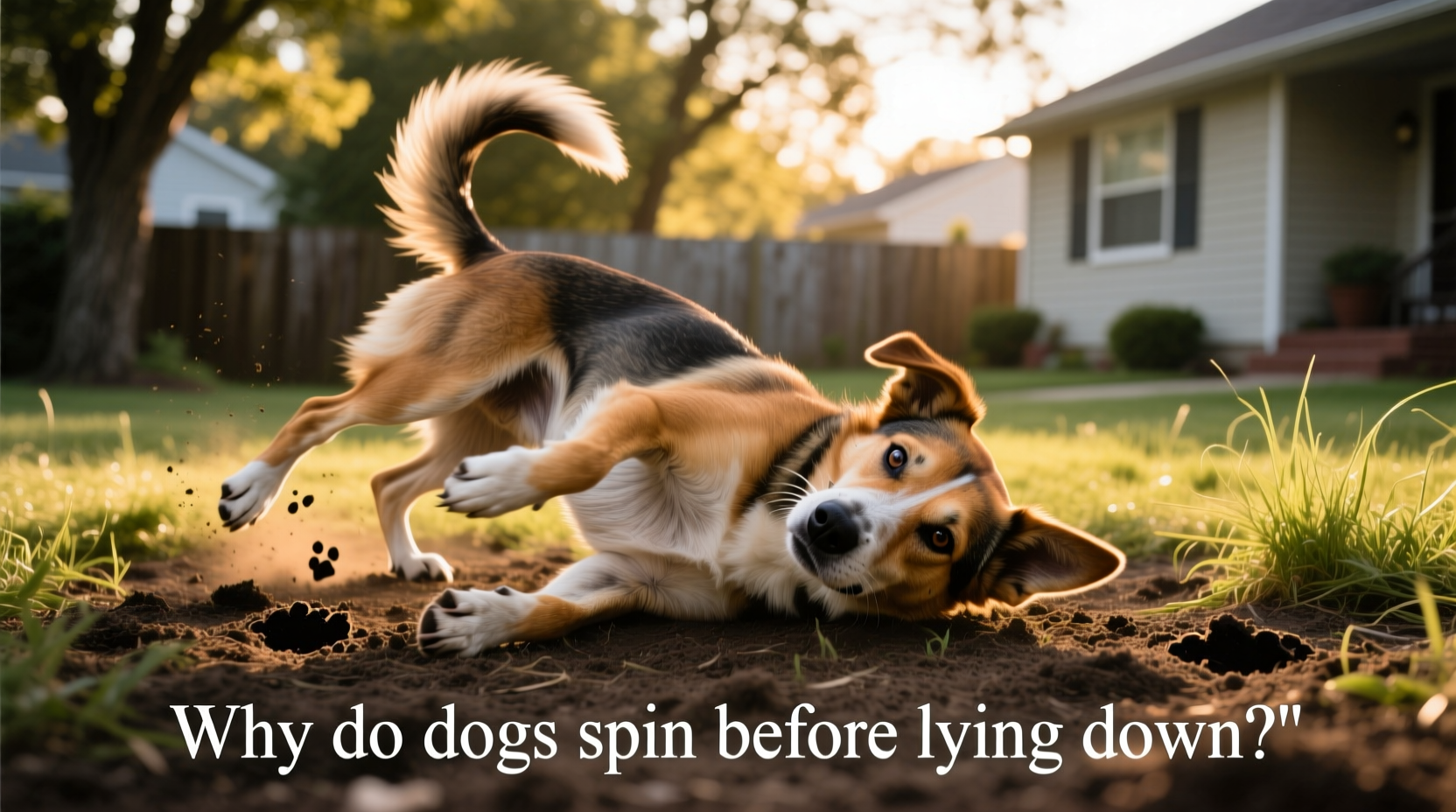
The act of circling before lying down traces back to dogs’ wild ancestors. In natural environments, safety and comfort were not guaranteed. A patch of tall grass could hide snakes, sharp objects, or biting insects. By walking in circles, early canids would trample down vegetation, creating a flatter, safer surface. This motion also served as a way to detect movement underneath—any rustling or discomfort during the turn could signal danger.
Additionally, circling helped regulate body temperature. In colder climates, wolves would curl up tightly after several turns, conserving heat by minimizing exposed surface area. In hotter regions, dogs might spin to expose cooler earth beneath the topsoil. Even now, some dogs dig or paw at their beds—a related behavior that mimics nest-building in the wild.
“Circling is a deeply ingrained behavior shaped by thousands of years of evolution. It’s not just habit—it’s survival encoded in movement.” — Dr. Lena Torres, Canine Ethologist, University of Edinburgh
This ancestral programming persists despite domestication. Modern dogs may sleep indoors on orthopedic beds, yet their brains still follow ancient protocols. The neural pathways responsible for this routine haven’t been erased by soft blankets or central heating. Instead, they remain active, triggered automatically when a dog prepares to rest.
Instinct vs. Learned Behavior: What Science Says
Is spinning purely instinctual, or can it be influenced by learning and environment? Research suggests it's primarily hardwired, but context plays a role. Puppies as young as a few weeks old exhibit circling behavior, long before they’ve had time to learn it from adult dogs. This supports the theory that the action is genetically programmed rather than socially taught.
However, observational studies show variations based on breed, age, and surroundings. Herding breeds like Border Collies tend to spin more deliberately, possibly due to heightened environmental awareness. Senior dogs may circle less frequently or struggle with mobility, leading to abbreviated versions of the ritual. Meanwhile, dogs living in highly controlled indoor spaces sometimes skip the spin altogether—indicating that perceived safety reduces the need for the full sequence.
A 2020 study published in *Animal Cognition* analyzed over 300 dogs across 40 breeds and found that 78% engaged in pre-lie-down circling. Of those, 62% completed two to three full rotations, while only 9% spun more than five times. The researchers concluded that frequency correlates with anxiety levels and environmental novelty: dogs in unfamiliar settings spun significantly more, suggesting the behavior also functions as a reassurance ritual.
Environmental and Physical Factors Influencing the Spin
While instinct drives the basic urge to circle, external conditions shape how it manifests. Surface type, temperature, lighting, and even bedding material can affect both the number of rotations and the dog’s overall comfort.
For example, dogs on slippery floors (like hardwood or tile) may spin awkwardly or avoid the behavior altogether due to lack of traction. Conversely, on carpeted or textured surfaces, they often complete full turns with ease. Similarly, dogs with arthritis or hip dysplasia may reduce or abandon spinning because the twisting motion causes discomfort.
Temperature also plays a subtle role. On hot days, dogs may spin more vigorously in search of cooler ground, while in winter, they might circle briefly before curling up quickly to retain warmth. Interestingly, some owners report their dogs adjusting their spinning direction based on wind patterns—even indoors—possibly a remnant of scent-checking behaviors used to detect predators or prey.
| Factor | Effect on Spinning Behavior |
|---|---|
| Surface Texture | Rougher surfaces encourage more confident spinning; smooth floors may inhibit it. |
| Age & Mobility | Older or injured dogs often spin less or partially due to joint strain. |
| Environment Familiarity | Unfamiliar spaces increase spinning frequency as a security check. |
| Bed Design | Elevated or enclosed beds may reduce spinning since they offer built-in protection. |
| Time of Day | Nighttime resting often involves more cautious preparation, including extra turns. |
When Spinning Might Signal a Problem
In most cases, pre-sleep spinning is normal and harmless. However, there are instances when this behavior crosses into concern. Excessive circling—defined as more than six rotations without lying down—or repetitive spinning unrelated to resting can point to underlying issues.
- Orthopedic pain: Arthritis, spinal injuries, or muscle soreness can make lying down uncomfortable, causing hesitation and repeated attempts to find a comfortable position.
- Cognitive decline: Older dogs with canine cognitive dysfunction (similar to dementia in humans) may lose the ability to complete the sequence logically, resulting in aimless pacing or looping.
- Anxiety or OCD: Dogs under stress may develop compulsive behaviors, including obsessive spinning even when not preparing to sleep.
- Neurological disorders: Conditions affecting the vestibular system (such as inner ear infections or brain tumors) can cause disorientation and circular walking patterns.
If you notice sudden changes—such as increased frequency, difficulty settling, vocalization during spinning, or signs of confusion—it’s wise to consult a veterinarian. Early diagnosis can prevent minor issues from escalating.
Mini Case Study: Max, the Rescue Beagle
Max, a 5-year-old rescue Beagle adopted from a rural shelter, exhibited intense spinning behavior upon arrival at his new home. He would rotate ten or more times before lying down, often appearing frustrated. His owner initially assumed it was a quirky habit, but after noticing stiffness in his hind legs, she sought veterinary advice.
X-rays revealed mild hip dysplasia, likely exacerbated by years of rough terrain and inadequate nutrition. With anti-inflammatory medication, joint supplements, and a supportive orthopedic bed, Max’s spinning decreased dramatically within three weeks. He now completes one or two gentle turns before settling—closer to the typical pattern. His case illustrates how instinctual behaviors can be distorted by physical discomfort, masking medical needs beneath what appears to be normal conduct.
How to Support Healthy Resting Habits
You can’t—and shouldn’t—stop your dog from spinning if it’s part of their natural routine. But you can create an environment where the behavior serves its purpose efficiently and comfortably. Here’s how:
- Provide non-slip flooring: Use rugs or mats in areas where your dog rests to give them secure footing during rotation.
- Choose supportive bedding: Orthopedic or bolstered beds help older or large-breed dogs lie down smoothly after circling.
- Maintain consistent routines: Predictable schedules reduce anxiety, which in turn minimizes compulsive behaviors.
- Monitor joint health: Regular vet checkups, weight management, and appropriate exercise support mobility.
- Respect the ritual: Avoid interrupting your dog mid-spin. Let them complete their sequence to feel secure.
Checklist: Evaluating Your Dog’s Spinning Behavior
- ✅ Does your dog typically complete 1–3 full rotations?
- ✅ Do they lie down calmly afterward without signs of pain?
- ✅ Is the behavior consistent across different environments?
- ✅ Have there been recent changes in frequency or intensity?
- ✅ Are they showing other symptoms like limping, whining, or confusion?
- ✅ Is your dog’s age over 7 years (higher risk for cognitive or joint issues)?
If most answers align with normal behavior and no red flags are present, your dog is likely expressing a healthy instinct. If concerns arise, especially sudden changes, professional evaluation is recommended.
Frequently Asked Questions
Do all dogs spin before lying down?
No, not all dogs do. While it’s common, some skip the behavior entirely—especially those raised in highly secure environments or with physical limitations. Breed tendencies and individual personality also play roles.
Can I train my dog to stop spinning?
It’s not advisable to suppress this natural behavior unless it’s linked to a medical or psychological issue. Forcing a change may increase anxiety. Focus instead on addressing root causes if the spinning becomes excessive or painful.
Why does my dog spin and then not lie down?
If your dog spins repeatedly but doesn’t settle, it could signal discomfort, distraction, or anxiety. Check for noise, light, temperature extremes, or physical pain. Persistent failure to rest warrants a vet visit.
Conclusion: Honoring the Ritual, Supporting Well-Being
The simple act of a dog spinning before lying down is far more meaningful than it appears. It connects today’s pets to a lineage stretching back to wild canids who relied on vigilance and preparation for survival. Though our homes offer safety and comfort, the instinct remains—a silent testament to evolution’s enduring influence.
Recognizing this behavior as both natural and functional allows us to appreciate our dogs more deeply. Rather than viewing it as odd or unnecessary, we can see it as a window into their inner world: one shaped by history, finely tuned by environment, and expressed through small, deliberate movements.
By supporting this ritual with thoughtful care—appropriate bedding, joint health maintenance, and a calm environment—we honor our dogs’ instincts while ensuring their modern lives are as comfortable as possible. The next time your dog turns in a tight circle before flopping onto their side, remember: they’re not just getting cozy. They’re following a script written long before leashes and kibble existed.




 浙公网安备
33010002000092号
浙公网安备
33010002000092号 浙B2-20120091-4
Comments
No comments yet. Why don't you start the discussion?