
Dogs perform many behaviors that seem quirky to human observers, but few are as universally observed—and often overlooked—as the pre-sleep spin. Whether it’s one quick circle or three deliberate rotations, most dog owners have seen their pets turn in tight circles before finally settling down. While it might appear random or even comical, this action is deeply rooted in instinct. Understanding why dogs spin before lying down offers a window into their evolutionary past, survival mechanisms, and natural instincts that persist even in modern, domesticated environments.
This behavior transcends breed, size, and age. From Chihuahuas to Great Danes, puppies to senior dogs, the spinning ritual remains consistent. But far from being meaningless, it reflects an inherited set of behaviors shaped over thousands of years of evolution. By examining the biological, environmental, and psychological factors behind this habit, we gain deeper insight into how dogs perceive safety, comfort, and territory—even on a cozy living room rug.
The Evolutionary Roots of Spinning Behavior
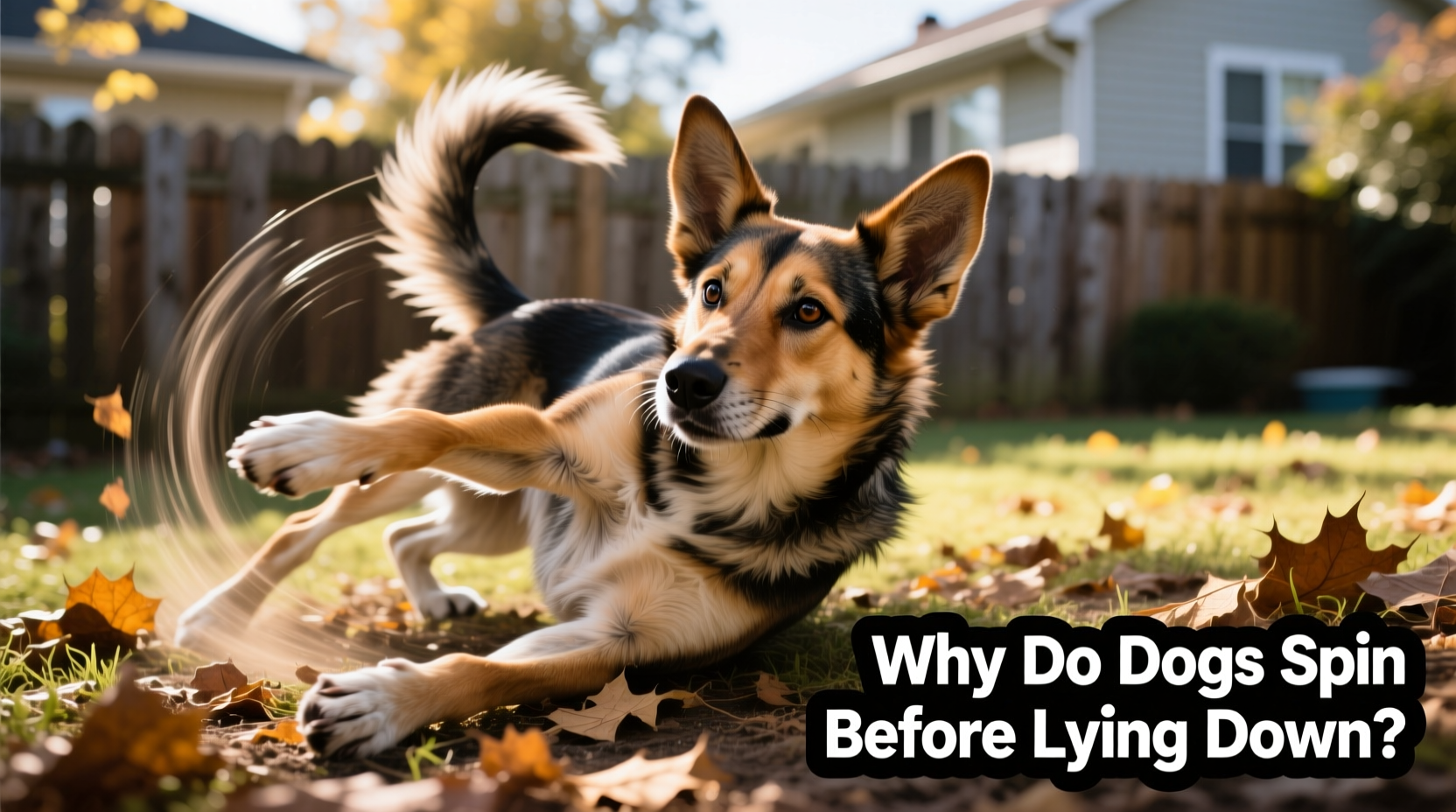
To understand the spinning ritual, we must look back to the ancestors of today’s domestic dogs: wild canids such as wolves, coyotes, and jackals. In the wild, these animals did not have the luxury of plush dog beds or climate-controlled homes. Their sleeping areas were exposed to the elements—wind, rain, uneven terrain, and lurking predators. Before lying down, they needed to prepare their resting spot for both comfort and security.
Spinning served several practical purposes in ancestral environments:
- Flattening vegetation: In grassy or brushy areas, circling helped trample down tall grass, thistles, or undergrowth to create a flatter, more comfortable surface.
- Checking for threats: As a dog turns, it uses its body and nose to scan the immediate area for insects, snakes, or other hidden dangers.
- Regulating temperature: In colder climates, dens were often lined with insulating materials like leaves or fur. Circling helped pack down loose material and create a snug nest that retained body heat.
- Scent marking and orientation: Dogs have scent glands in their paws. Turning may help disperse their personal scent, marking the space as “safe” and familiar.
Dr. Karen Becker, a proactive and integrative veterinarian, explains:
“Even though our dogs now sleep on orthopedic memory foam, their brains are still wired for survival. The spin is a hardwired behavior passed down through generations—it wasn’t taught, it was inherited.” — Dr. Karen Becker, DVM
This ingrained sequence of actions has become a fixed action pattern—an automatic behavior triggered by the intention to rest. Even without tall grass or predators, the brain still runs the program: assess, adjust, align, then rest.
How Spinning Relates to Canine Sensory Perception
Dogs rely heavily on sensory input to interpret their surroundings. Vision, smell, hearing, and even tactile feedback from their paws play roles in determining whether a location is suitable for rest. The spinning motion allows them to gather multiple layers of information before committing to a lying position.
For instance, as a dog circles, it is subconsciously checking:
- Surface texture: Is the ground too hard, cold, or uneven?
- Air currents: Which direction is the wind coming from? This could affect scent detection or exposure to drafts.
- Potential disturbances: Are there sharp objects, crumbs, or unfamiliar smells embedded in the carpet?
- Buried scents: Other animals (or previous occupants) may have left pheromones. Spinning helps identify overlapping scent markers.
In outdoor settings, this sensory sweep is critical. A wolf choosing a den site will circle repeatedly to ensure no predators are downwind and that the terrain provides cover. Domestic dogs, while not facing the same threats, still run this diagnostic loop. It's not paranoia—it's preparation.
Behavioral Variations Across Breeds and Individuals
While all dogs exhibit some form of pre-lie-down movement, the number of spins and intensity vary significantly. These differences are influenced by breed lineage, individual temperament, and learned experience.
| Breed Group | Typical Spinning Pattern | Possible Reason |
|---|---|---|
| Herding (e.g., Border Collie) | Multiple fast circles, sometimes 3–5 turns | High alertness; bred for constant environmental monitoring |
| Sighthounds (e.g., Greyhound) | Minimal or no spin, quick lie-down | Energy conservation; evolved for short bursts, not prolonged vigilance |
| Spitz-types (e.g., Husky, Shiba Inu) | Frequent, deliberate spins; may dig or paw afterward | Strong ancestral ties to Arctic survival behaviors |
| Terriers | Quick spin + scratching motion | Instinct to \"dig out\" a den-like depression |
| Companion breeds (e.g., Poodle, Cavalier) | One to two gentle turns | Less survival pressure; more socially conditioned behavior |
Interestingly, puppies begin exhibiting spinning behavior around 4–6 weeks of age, shortly after they start exploring independently. This suggests the behavior is not learned from littermates or parents but emerges naturally as part of motor development and environmental interaction.
When Spinning Becomes a Concern: Health and Behavioral Red Flags
In most cases, spinning before lying down is completely normal. However, changes in frequency, duration, or associated behaviors can signal underlying issues. Excessive spinning—such as dozens of circles without settling—may point to medical or neurological conditions.
Potential causes include:
- Pain or discomfort: Arthritis, hip dysplasia, or spinal issues can make it difficult for a dog to find a comfortable position, leading to repeated attempts.
- Cognitive dysfunction: Older dogs with canine cognitive decline may forget they’ve already spun, repeating the motion compulsively.
- Anxiety or OCD: In high-stress environments, dogs may develop compulsive behaviors, including repetitive circling unrelated to resting.
- Vestibular disease: Inner ear or neurological problems can cause dizziness, making dogs spin uncontrollably, even when not preparing to lie down.
If your dog suddenly starts spinning more than usual, appears distressed, or shows signs of imbalance, consult a veterinarian promptly. Early diagnosis can prevent further complications.
“Just because a behavior is instinctual doesn’t mean it’s always benign. Context matters. A single spin is nature. Endless circling could be pathology.” — Dr. Nicholas Dodman, Veterinary Behaviorist
Real-Life Example: The Case of Max, the Rescue German Shepherd
Max, a four-year-old German Shepherd rescued from a rural shelter, exhibited extreme spinning behavior upon arrival at his new home. He would circle 10–15 times before lying down, sometimes stopping mid-spin to sniff the floor again. His adopters were concerned, fearing he had neurological damage.
After a veterinary exam ruled out physical illness, a certified dog behaviorist evaluated Max’s environment. The home had hardwood floors with minimal rugs, bright overhead lighting at night, and frequent foot traffic near his bed. The behaviorist concluded that Max didn’t feel safe or insulated from stimuli.
Recommendations included:
- Placing a thick, padded dog bed in a quiet corner.
- Adding a blanket with the owner’s worn clothing to provide familiar scent.
- Using a white noise machine to mask sudden sounds.
Within two weeks, Max’s spinning reduced to 2–3 circles. He began lying down faster and sleeping more soundly. The case illustrates how instinctual behaviors can intensify in insecure environments—and how small adjustments restore balance.
Practical Tips for Supporting Natural Canine Behaviors
Instead of discouraging spinning, consider how you can support your dog’s natural instincts in a modern home. Respecting these behaviors fosters mental well-being and reduces stress.
Checklist: Creating a Dog-Friendly Resting Space
- ✅ Choose a low-traffic area where your dog feels secluded.
- ✅ Use textured bedding (like fleece or memory foam) to simulate natural ground cover.
- ✅ Allow access to outdoor spaces where safe, so your dog can choose their own resting spots.
- ✅ Rotate bedding occasionally to refresh scents and prevent bacterial buildup.
- ✅ Observe your dog’s routine and note any changes in behavior.
Frequently Asked Questions
Is it normal for my dog to spin in place before pooping too?
Yes. Spinning before elimination is another instinctual behavior. It may help align the body, check for threats, or mark territory via paw glands. As long as the motion is smooth and not excessive, it’s considered normal.
Why does my dog spin and then not lie down?
This usually means the environment isn’t meeting their comfort criteria. They may detect a draft, hear distant noises, or feel the surface is too hard. Try relocating their bed or adding padding.
Do wild canids still spin before lying down?
Yes. Field studies of wolves and feral dogs show consistent circling behavior before rest. Researchers believe it’s one of the most conserved behaviors across canid species, underscoring its survival value.
Conclusion: Honoring Instinct in the Modern Home
The simple act of spinning before lying down is far more than a quirky habit—it’s a living echo of a dog’s wild ancestry. Every rotation carries the weight of evolutionary wisdom: assess the space, eliminate hazards, claim the territory, and only then, rest. In understanding this behavior, we don’t just learn about dogs—we learn how to better care for them.
By creating environments that respect their instincts, we reduce stress and strengthen trust. Whether your dog spins once or five times, allow the ritual to unfold. In that small circle, your dog isn’t just getting comfortable—they’re feeling safe, and that’s everything.




 浙公网安备
33010002000092号
浙公网安备
33010002000092号 浙B2-20120091-4
Comments
No comments yet. Why don't you start the discussion?