
Dogs perform many behaviors that seem odd to human observers—chasing their tails, sniffing each other’s rear ends, and barking at nothing visible. One of the most common yet puzzling habits is spinning in tight circles before lying down. To dog owners, this ritual may appear quirky, unnecessary, or even obsessive. But behind this seemingly whimsical act lies a complex interplay of evolution, instinct, and sometimes, underlying behavioral concerns. Understanding why dogs spin before settling helps us appreciate their natural instincts while also recognizing when such actions might indicate something more serious like anxiety or obsessive-compulsive disorder (OCD).
The Evolutionary Roots of Circling Behavior
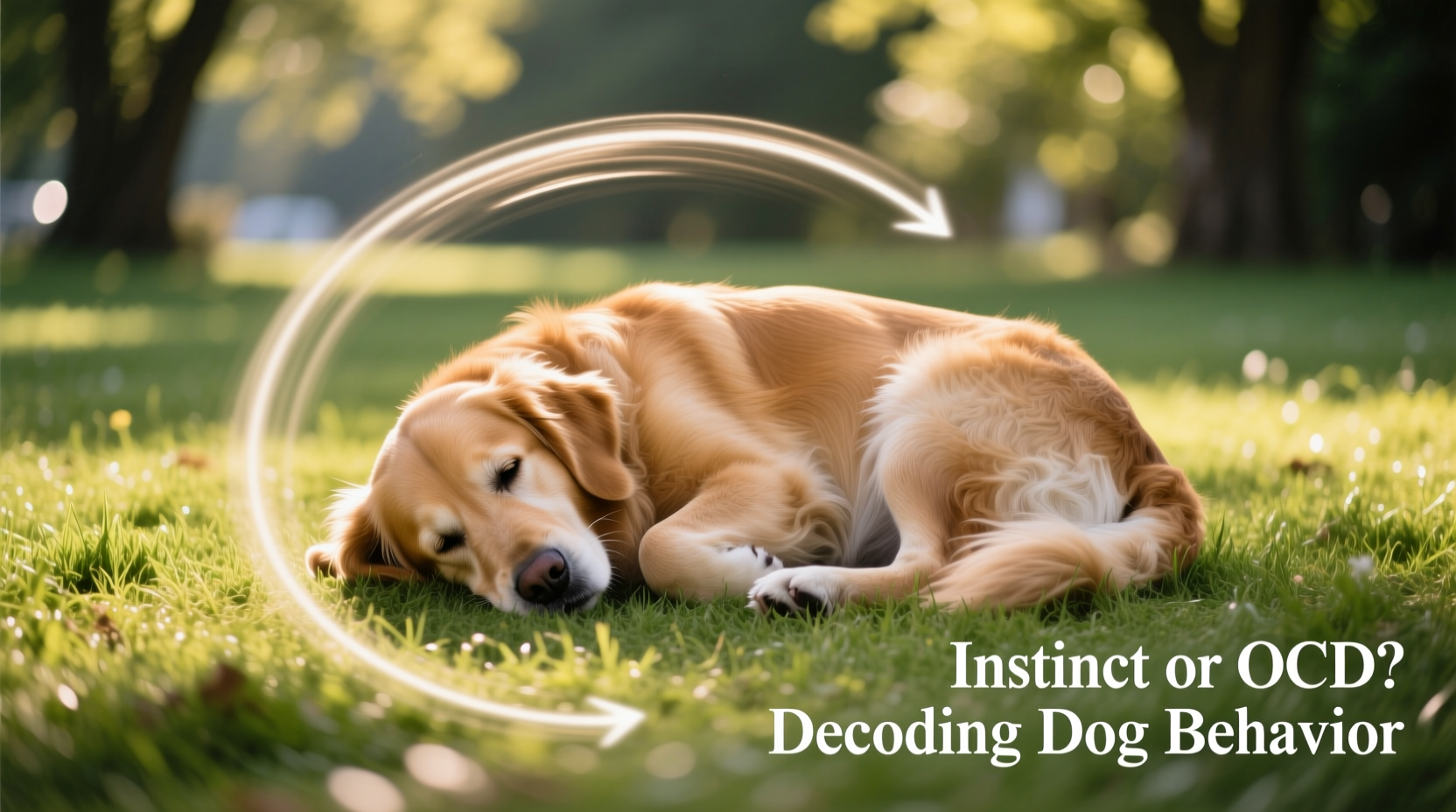
This circling habit traces back to dogs’ wild ancestors—wolves and early canids. In the wild, safety and comfort were not guaranteed. Before resting, animals needed to assess their environment for threats and prepare their sleeping area. Spinning served multiple practical purposes:
- Flattening vegetation: Wild canines would trample tall grass, leaves, or snow to create a level, dry surface.
- Checking for predators or pests: The motion allowed them to scan their surroundings and detect snakes, insects, or hidden dangers.
- Aligning with environmental cues: Some researchers suggest dogs may align themselves with the Earth’s magnetic field, particularly along a north-south axis, when preparing to rest—a phenomenon observed in studies published in Frontiers in Zoology.
Over thousands of years of domestication, these survival behaviors became ingrained in canine DNA. Even today’s pampered pets, lounging on orthopedic beds indoors, continue the ritual. It’s not about necessity anymore—it’s about instinct.
“Circling before lying down is a deeply rooted ethological behavior. It’s not learned; it’s inherited.” — Dr. Karen Overall, Veterinary Behavioral Medicine Specialist
Instinct vs. Compulsion: When Is Spinning Normal?
Most dogs spin once, twice, or even three times before lying down. This brief sequence is considered normal and healthy. The key characteristics of instinctual circling include:
- Limited duration (usually under 10 seconds)
- Consistent pattern (same number of turns each time)
- No signs of distress or agitation
- Followed by immediate settling and relaxation
In contrast, repetitive, prolonged, or frantic spinning—especially if accompanied by vocalization, difficulty settling, or pacing—may point to compulsive behavior. Unlike instinctual circling, compulsive spinning serves no functional purpose and often interferes with rest or daily activities.
Biological Triggers Behind the Ritual
Beyond survival, there are physiological reasons why dogs circle. One theory involves thermoregulation. By turning in place, dogs may be adjusting their body position to maximize heat retention or avoid cold drafts. Another explanation relates to proprioception—the body’s ability to sense its position in space. Circling may help dogs fine-tune their spatial awareness before assuming a stationary posture.
Additionally, scent marking plays a subtle role. Dogs have sweat glands in their paws that release pheromones. Each time they step in a circle, they’re subtly marking the area, reinforcing a sense of ownership and security. This olfactory signaling contributes to emotional comfort, especially in unfamiliar environments.
When Circling Crosses Into OCD Territory
Canine compulsive disorder (CCD), often referred to as OCD in dogs, manifests through repetitive, out-of-context behaviors that persist despite attempts to stop them. Common compulsions include tail chasing, shadow staring, flank sucking, and excessive licking. Spinning can also fall into this category when it becomes ritualistic and disruptive.
OCD-like spinning typically presents with these red flags:
- Spinning for minutes at a time without lying down
- Appearing \"locked in\" or unaware of surroundings
- Difficulty being redirected or interrupted
- Occurring in inappropriate contexts (e.g., during meals, walks, or training)
- Increasing in frequency over time
Genetics, stress, lack of stimulation, and medical conditions all contribute to compulsive behaviors. Certain breeds—such as Bull Terriers, German Shepherds, and Doberman Pinschers—are more predisposed to CCD, suggesting a hereditary component.
Medical Conditions That Mimic OCD
Before labeling spinning as psychological, rule out physical causes. Several medical issues can lead to repetitive circling, including:
| Condition | Symptoms | Diagnostic Approach |
|---|---|---|
| Vestibular Disease | Head tilt, loss of balance, nausea, circling in one direction | Neurological exam, blood tests, MRI |
| Seizure Activity (Focal Seizures) | Staring spells, lip smacking, twitching, post-episode confusion | EEG, video monitoring, veterinary neurology consult |
| Pain (e.g., arthritis, spinal issues) | Reluctance to lie down, whimpering, stiffness | X-rays, orthopedic evaluation |
| Cognitive Dysfunction (in senior dogs) | Disorientation, nighttime pacing, house soiling | Behavioral history, cognitive screening |
A thorough veterinary workup is essential to differentiate between medical illness and true behavioral OCD. Never assume spinning is “just a quirk” without evaluating for underlying health problems.
How to Respond: Supporting Healthy Behavior and Addressing Concerns
For typical pre-sleep circling, the best approach is non-intervention. Correcting or discouraging the behavior may cause confusion or stress. However, if spinning appears excessive or compulsive, proactive steps should be taken.
Step-by-Step Guide: Assessing and Managing Repetitive Spinning
- Observe and document: Record how often spinning occurs, how long it lasts, and whether it prevents rest. Note any triggers (e.g., after excitement, in certain rooms).
- Visit your veterinarian: Rule out medical causes with a full physical and neurological exam. Bloodwork and imaging may be recommended.
- Assess environmental factors: Evaluate your dog’s routine for stressors—lack of exercise, isolation, loud noises, or changes in household dynamics.
- Increase mental and physical enrichment: Provide puzzle toys, longer walks, nose work games, and structured training sessions to reduce boredom-related behaviors.
- Consult a veterinary behaviorist: If compulsive behavior persists, a specialist can design a treatment plan involving behavior modification and, if necessary, medication like SSRIs (e.g., fluoxetine).
“Many cases of apparent OCD are actually frustration or anxiety disorders exacerbated by an under-stimulated lifestyle.” — Dr. Sophia Yin, Applied Animal Behaviorist
Real-Life Example: Max the Border Collie
Max, a 4-year-old Border Collie, began spinning for up to five minutes before lying down. His owner initially dismissed it as a harmless habit. Over time, the behavior worsened—he spun even during play breaks and seemed unable to settle. Concerned, she recorded a video and shared it with her vet.
After ruling out vestibular disease and pain, the vet referred Max to a veterinary behaviorist. Evaluation revealed that Max was highly intelligent but underemployed—his days consisted of short walks and minimal mental engagement. The diagnosis: environmentally induced compulsive disorder.
The solution wasn’t medication, but lifestyle redesign. His owner introduced daily scent games, advanced obedience drills, and agility training. Within six weeks, Max’s spinning decreased dramatically. He still turned once or twice before lying down—but now he settled quickly and peacefully.
Max’s case illustrates a crucial point: what looks like a neurological issue may actually stem from unmet behavioral needs.
Tips for Dog Owners: Promoting Calm Transitions to Rest
- Provide a designated, comfortable sleeping area free from drafts and noise.
- Avoid high-energy activity right before bedtime.
- Use calming aids like pheromone diffusers (Adaptil) or white noise machines for anxious dogs.
- Never punish circling behavior—it reinforces anxiety and can worsen compulsions.
Checklist: Is Your Dog’s Spinning Normal or Cause for Concern?
- ✅ Spins only briefly (1–3 turns) before lying down
- ✅ Settles immediately after circling
- ✅ No signs of distress or fixation
- ❌ Spins repeatedly without lying down
- ❌ Seems unaware of people or surroundings during spinning
- ❌ Behavior is increasing in frequency or intensity
- ❌ Occurs outside of rest transitions (e.g., during feeding or play)
If three or more “❌” items apply, seek professional evaluation.
Frequently Asked Questions
Do all dogs spin before lying down?
No, not all dogs exhibit this behavior. While common, some dogs skip circling entirely, especially those raised in highly controlled indoor environments. Others may have learned to settle quickly due to training or temperament.
Can I train my dog to stop spinning?
If the spinning is instinctual and brief, there’s no need to stop it. Attempting to correct it may cause confusion. However, if the behavior is compulsive, work with a professional trainer or behaviorist to implement redirection techniques and environmental enrichment—not punishment.
Is spinning related to dominance or territory marking?
Not directly. While dogs do leave scent marks via paw glands when circling, this isn’t about asserting dominance. It’s more about creating a familiar, secure micro-environment—a form of self-soothing rather than social signaling.
Conclusion: Respecting Instinct, Recognizing Concern
The act of spinning before lying down is a window into the ancient world of canine survival. What once ensured safety in the wild now persists as a gentle ritual in our living rooms. For most dogs, it’s a harmless echo of instinct—a final check before surrendering to sleep.
But as responsible guardians, we must stay observant. When circling becomes compulsive, prolonged, or disruptive, it’s a call to action. Addressing such behaviors with empathy, science, and professional support ensures our dogs don’t just survive, but thrive.




 浙公网安备
33010002000092号
浙公网安备
33010002000092号 浙B2-20120091-4
Comments
No comments yet. Why don't you start the discussion?