
Every holiday season, homes come alive with colorful light displays—porches glow, trees sparkle, and rooftops shimmer. Behind these festive scenes, extension cords snake across lawns and walls, silently carrying electricity to dozens of light strands. But sometimes, that cord feels warm—or worse, hot—to the touch. This isn’t just a quirk; it’s a warning sign. Understanding why extension cords heat up when powering multiple light strands is essential for both safety and efficiency. The warmth indicates resistance in the circuit, often caused by overloading, poor-quality cords, or inadequate wire gauge. Left unchecked, this can lead to insulation damage, short circuits, or even fires.
This article breaks down the science behind cord heating, identifies common risk factors, and provides practical solutions to keep your lighting displays safe and functional year after year.
The Science Behind Heat in Extension Cords
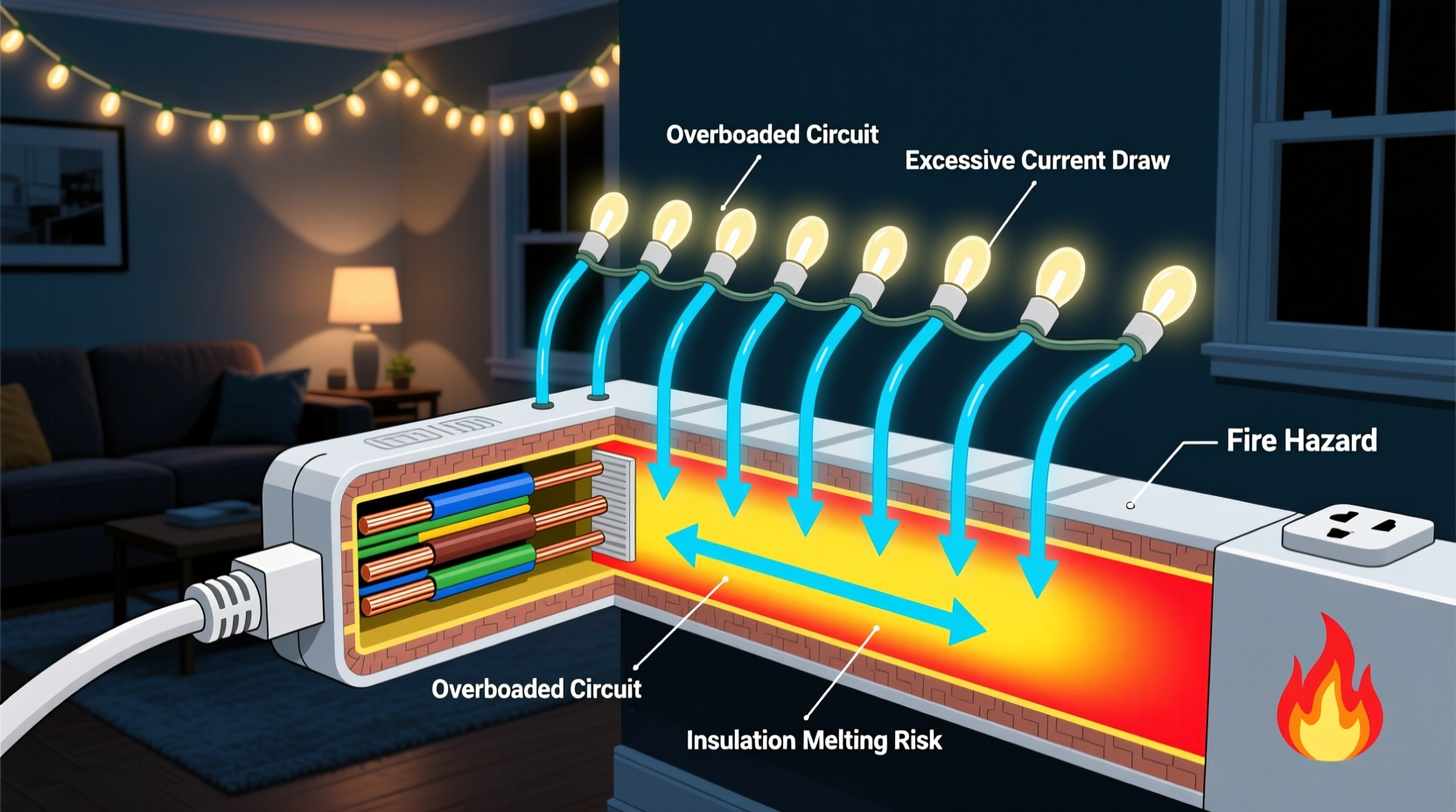
Electricity flows through wires like water through a pipe. When current passes through a conductor—such as the copper wires inside an extension cord—it encounters resistance. This resistance converts some electrical energy into heat, a phenomenon known as Joule heating (or resistive heating). The formula for this is:
P = I² × R
Where:
P = Power dissipated as heat (in watts)
I = Current flowing through the wire (in amperes)
R = Resistance of the wire (in ohms)
The higher the current or resistance, the more heat is generated. In the case of light strands connected via extension cords, several factors increase both variables. For instance, connecting too many strings increases the total current draw. Meanwhile, long or thin cords have higher resistance due to their physical properties. Together, these conditions create a perfect storm for overheating.
Copper is an excellent conductor, but even copper has limits. Wires are rated by gauge—the smaller the number, the thicker the wire and the lower its resistance. A 16-gauge cord handles less current than a 12-gauge one. Using an undersized cord for a high-load application forces electrons through a narrow path, increasing friction and heat.
“Any noticeable warmth in an extension cord under load suggests inefficiency—and potential danger. It means energy is being wasted as heat instead of powering devices.” — Dr. Alan Reeves, Electrical Systems Engineer, MIT Lincoln Laboratory
Common Causes of Overheating with Light Strands
Holiday lights may seem harmless, but daisy-chaining multiple strands multiplies electrical demand quickly. Here are the most frequent culprits behind overheating extension cords:
- Exceeding cord capacity: Most standard extension cords are rated for 13 amps (about 1,560 watts at 120 volts). Plug in too many incandescent light sets, each drawing 40–100 watts, and you can surpass this limit rapidly.
- Daisy-chaining light strings: Many manufacturers allow only three to four incandescent strands to be linked together. Exceeding this creates excessive load on the first cord in the chain.
- Using indoor cords outdoors: Indoor-rated cords lack weather-resistant insulation and are often thinner. When used outside, especially in damp conditions, they degrade faster and heat more easily.
- Long cord runs: The longer the extension cord, the greater its resistance. A 100-foot cord has significantly more resistance than a 25-foot one, leading to voltage drop and increased heat generation.
- Poor ventilation: Coiling excess cord while in use traps heat. Loops act like inductors and prevent proper cooling, accelerating temperature rise.
Comparing Cord Types and Safety Limits
Not all extension cords are created equal. Choosing the right type makes a critical difference in performance and safety. The table below compares common cord gauges and their suitability for powering light displays.
| Wire Gauge | Max Current (Amps) | Recommended Max Length | Suitable For Holiday Lights? | Notes |
|---|---|---|---|---|
| 16 AWG | 10 A | 25 ft | Limited (LED only) | Thin, inexpensive; avoid with incandescents |
| 14 AWG | 13 A | 50 ft | Moderate (up to 10 LED strands or 3–4 incandescent) | Better durability; common for outdoor use |
| 12 AWG | 20 A | 100 ft | Yes (large displays, mixed types) | Heavy-duty; ideal for long runs and high loads |
| 10 AWG | 30 A | 150+ ft | Yes (commercial-grade installations) | Bulky and expensive; overkill for most homes |
Additionally, look for cords labeled “UL Listed” and check whether they’re rated for indoor, outdoor, or both uses. Outdoor cords feature thicker jackets resistant to UV rays, moisture, and temperature swings—all crucial for winter conditions.
Step-by-Step Guide to Safe Holiday Lighting Setup
Preventing overheating starts with planning. Follow this sequence to ensure your display stays bright and safe:
- Calculate total wattage: Add up the wattage of all light strands you plan to connect. Check labels on each set. For example, ten 50-watt incandescent strands = 500 watts total (~4.2 amps).
- Select the correct cord: Use at least 14-gauge for outdoor setups under 50 feet. For longer distances or heavier loads, step up to 12-gauge.
- Limit daisy chains: Follow manufacturer instructions. Typically no more than four incandescent sets should be linked. For LEDs, limits are higher—often 20+ strands—but verify per product.
- Use multiple circuits: Instead of running everything through one outlet and cord, split the load across different house circuits. This reduces strain on any single line.
- Uncoil completely: Lay out the full length of each extension cord before plugging in. Avoid bundling or looping.
- Inspect connections: Ensure plugs are fully seated and dry. Loose or corroded contacts create resistance points that generate heat.
- Monitor temperature: After turning on the display, check cords every 30 minutes for the first few hours. If warm, reduce load or upgrade wiring.
- Install timers: Use outdoor-rated timers to limit operation to evening hours. This reduces exposure time and wear.
Real-World Example: A Close Call in Denver
In December 2022, a homeowner in Denver installed a large holiday display featuring over 1,200 incandescent mini-lights powered through two interconnected 16-gauge indoor extension cords. The setup included coiled surplus cord stored in a plastic bin near the front door. After three nights of continuous operation, neighbors reported a burning smell.
Firefighters arrived to find the bin smoldering. The insulation on one cord had melted, exposing live wires. Fortunately, the circuit breaker tripped before flames spread. Investigation revealed the total load was approximately 1,800 watts—well beyond the 1,440-watt safe limit for a 12-amp circuit using thin cords.
The homeowner switched to three separate 12-gauge outdoor cords, distributed lights across multiple GFCI outlets, and added smart timers. Since then, the display has run safely for two more seasons without incident.
This case underscores how easily risks accumulate when small compromises—using indoor cords, coiling wire, ignoring load limits—combine into dangerous outcomes.
Checklist: Preventing Extension Cord Overheating
Before turning on your holiday lights, go through this checklist to minimize fire risk:
- ✅ Calculated total wattage of all connected lights
- ✅ Used outdoor-rated extension cords (14 AWG or thicker)
- ✅ Avoided daisy-chaining beyond manufacturer limits
- ✅ Uncoiled all extension cords fully during use
- ✅ Plugged into GFCI-protected outlets (especially outdoors)
- ✅ Installed a timer to limit runtime
- ✅ Checked cords for frays, cracks, or exposed wires
- ✅ Kept connections elevated off wet surfaces
- ✅ Tested system for warmth during initial operation
- ✅ Have a fire extinguisher accessible nearby
Frequently Asked Questions
Is it normal for an extension cord to feel slightly warm?
A barely perceptible warmth may occur under heavy but safe loads, especially with longer cords. However, if the cord is too hot to touch comfortably, emits a rubbery odor, or shows discoloration, it's overloaded or damaged and must be disconnected immediately.
Can LED lights still cause overheating?
LEDs consume far less power—typically 7–12 watts per strand—so they’re much safer. However, connecting dozens of LED strings to a low-gauge cord over long distances can still cause issues due to cumulative load and voltage drop. Always verify compatibility and avoid mixing old and new models on the same circuit.
How do I know if my home circuit is overloaded?
If lights dim when appliances turn on, breakers trip frequently, or outlets buzz/hum, your circuit may be overloaded. Each standard household circuit supports 15–20 amps (1,800–2,400 watts). Spread lighting loads across multiple circuits and avoid sharing outlets with high-draw devices like blow dryers or space heaters.
Conclusion: Stay Bright, Stay Safe
Festive lighting brings joy, but convenience should never override safety. Extension cords heat up when they’re asked to do too much with too little—whether due to thin wiring, excessive length, or poor usage habits. Recognizing the signs of strain and taking proactive steps protects not only your decorations but your home and family.
Modern LED technology, improved cord standards, and smarter electrical practices make it easier than ever to create dazzling displays without cutting corners. Upgrade your cords, respect load limits, and inspect your setup annually. Small efforts today prevent emergencies tomorrow.




 浙公网安备
33010002000092号
浙公网安备
33010002000092号 浙B2-20120091-4
Comments
No comments yet. Why don't you start the discussion?