
As the holiday season lights up homes across the country, many people string together numerous strands of Christmas lights—inside and out—to create festive displays. Often, this means plugging several light sets into a single extension cord. But if you’ve touched an extension cord during your holiday setup and found it warm or even hot, you’ve experienced a common yet potentially dangerous issue. Understanding why extension cords heat up under such loads is essential for both safety and efficiency.
While a slightly warm cord may seem normal, excessive heat is a warning sign. It indicates that the cord is struggling to handle the electrical load, which can lead to insulation breakdown, short circuits, or even fires. This article explores the science behind cord heating, identifies risk factors, and provides actionable steps to ensure your holiday lighting remains safe and energy-efficient.
The Science Behind Electrical Resistance and Heat Buildup
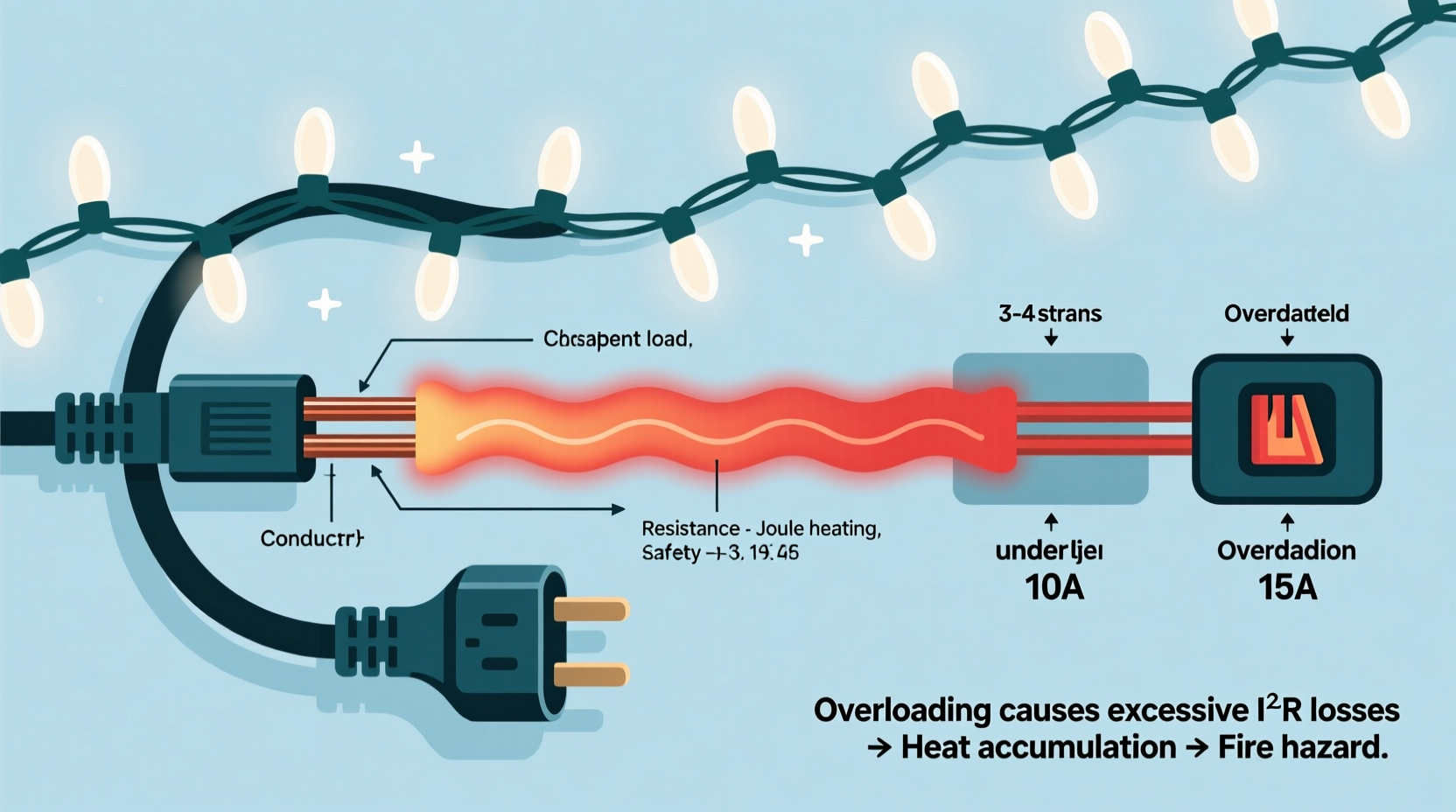
Electricity flows through wires much like water through a pipe. The copper or aluminum conductor inside an extension cord allows electrons to move, delivering power from the outlet to your devices—in this case, Christmas lights. However, no wire is a perfect conductor. All materials resist electron flow to some degree, and this resistance converts electrical energy into heat.
The amount of heat generated depends on two primary factors: current (measured in amperes or amps) and the resistance of the wire. According to Joule’s Law, the heat produced in a conductor is proportional to the square of the current multiplied by the resistance (H = I²R). This means that doubling the current quadruples the heat output—a critical point when daisy-chaining multiple light strands.
Christmas lights, especially older incandescent models, draw more current than their LED counterparts. When several strands are connected end-to-end and powered through one extension cord, the total current demand increases significantly. If the cord isn’t rated to handle that load, resistance causes it to heat up rapidly.
Factors That Contribute to Overheating
Several variables influence whether an extension cord will overheat when used with multiple Christmas light strands. Recognizing these helps in selecting the right equipment and avoiding hazardous setups.
1. Wire Gauge (AWG)
The thickness of the wire inside the cord—measured in American Wire Gauge (AWG)—directly affects its current-carrying capacity. Lower AWG numbers indicate thicker wires capable of handling more current. For example:
- 18 AWG: Suitable for light-duty indoor use; max ~5 amps.
- 16 AWG: Common for medium loads; handles up to 7–10 amps.
- 14 AWG: Recommended for outdoor or high-load applications; supports 12–15 amps.
Using a thin 18 AWG cord for a large outdoor display dramatically increases overheating risk.
2. Total Load vs. Cord Rating
Each strand of Christmas lights has a wattage rating. Multiply the number of strands by their individual wattage to get the total load. For instance, ten 40-watt incandescent strands equal 400 watts. At 120 volts, that draws about 3.3 amps (W ÷ V = A). While this may seem low, longer runs or additional devices quickly push limits.
Cords also have length-based limitations. Longer cords increase resistance simply due to distance. A 100-foot 16 AWG cord might safely carry only 5 amps, whereas the same gauge in a 25-foot version could handle more efficiently.
3. Daisy-Chaining Lights Beyond Manufacturer Limits
Many light strings are designed to be connected end-to-end—but only up to a certain number. Exceeding this limit, known as \"daisy-chaining,\" overloads the first strand’s wiring, which then feeds excess demand into the extension cord. Most manufacturers specify a maximum of three to five strands per circuit for incandescents; LEDs allow more due to lower power draw.
4. Environmental Conditions
Outdoor cords exposed to snow, rain, or direct sunlight face added stress. Moisture can degrade insulation, increasing resistance and leakage currents. Sunlight degrades PVC jackets over time, making them brittle and less effective at containing heat. Even tightly coiled cords trap heat, reducing their ability to dissipate warmth naturally.
“Overloaded extension cords are one of the top contributors to holiday electrical fires. Many people don’t realize they’re exceeding safe limits until it’s too late.” — National Fire Protection Association (NFPA) Safety Bulletin
Step-by-Step Guide to Safe Holiday Lighting Setup
To enjoy bright, beautiful lights without risking overheating or fire, follow this practical sequence:
- Assess Your Total Lighting Load
Calculate the combined wattage of all light strands you plan to connect. Check labels on each set for wattage or amperage. - Determine Required Cord Specifications
Select an extension cord rated for at least 25% more than your calculated load. Use 14 AWG for long outdoor runs or heavy incandescent displays. - Use Ground-Fault Circuit Interrupter (GFCI) Outlets Outdoors
GFCIs cut power instantly if a fault is detected, preventing shocks and reducing fire risks. - Avoid Daisy-Chaining Beyond Limits
Follow manufacturer instructions. If connecting more than allowed, plug additional strands into separate circuits or use a power strip with built-in overload protection. - Uncoil Extension Cords Completely
Never use a cord while still wound on its spool. Coiling traps heat and reduces current capacity by up to 50%. - Inspect Cords Before Use
Look for cracked insulation, bent prongs, or discoloration. Replace damaged cords immediately. - Monitor Temperature During Use
After turning on your display, touch the cord near connectors after 15–30 minutes. If warm but not hot, it's likely operating within safe range. If too hot to hold, disconnect immediately. - Turn Off Lights When Unattended or Sleeping
This minimizes prolonged exposure to potential faults and conserves energy.
Do’s and Don’ts: Extension Cord Use with Christmas Lights
| Do’s | Don’ts |
|---|---|
| Use outdoor-rated extension cords marked “W-A” or “Suitable for Use in Wet Locations.” | Use indoor-only cords outdoors—even temporarily. |
| Choose shorter cords when possible to reduce resistance. | Run extremely long cords (over 100 ft) without upgrading wire gauge. |
| Plug multiple strands into different outlets to distribute the load. | Daisy-chain more than the manufacturer recommends. |
| Use timers to automatically turn off lights overnight. | Leave holiday lights on 24/7 for weeks at a time. |
| Test GFCI outlets monthly by pressing the “Test” button. | Ignore tripped breakers or buzzing sounds from outlets. |
Real-World Example: A Close Call in Suburban Denver
In December 2022, a homeowner in Denver decorated his front yard with over 20 strands of vintage incandescent Christmas lights. Wanting a clean look, he ran everything through a single 50-foot, 18 AWG indoor extension cord tucked along the roofline. By mid-December, neighbors noticed a burning smell near the house.
Upon inspection, the local fire department found the cord’s insulation had melted in two places, exposing live wires. The total load was estimated at 600 watts—nearly double what the cord was rated for. Fortunately, the circuit breaker tripped before a fire started. The homeowner switched to three separate 14 AWG outdoor-rated cords, each serving a smaller section of lights, and installed a timer to limit nightly operation.
This incident underscores how easily convenience can compromise safety. No decorative glow is worth risking structural damage or personal injury.
Expert Recommendations for Modern Lighting Solutions
Technology has evolved, offering safer and more efficient alternatives. Experts increasingly recommend transitioning to LED Christmas lights—not just for energy savings, but for thermal safety.
- LEDs consume up to 80% less power than incandescent bulbs, drastically reducing current draw.
- They emit very little heat, lowering ambient temperature around cords and fixtures.
- Most LED strands allow 40+ to be daisy-chained, thanks to low wattage (often 4–10 watts per strand).
Additionally, consider using smart power strips or Wi-Fi-enabled outlets. These devices monitor real-time energy usage and can send alerts if abnormal loads are detected. Some even shut off automatically when temperatures rise beyond safe thresholds.
Frequently Asked Questions
Is it normal for an extension cord to feel warm?
A slight warmth is expected under load, especially with longer runs or higher-power devices. However, if the cord is too hot to touch comfortably—or if the plug, outlet, or wall plate feels hot—it’s a serious hazard. Unplug immediately and inspect the setup.
Can I use multiple extension cords together?
While technically possible, chaining extension cords increases resistance and failure points. Each connection introduces potential arcing or poor contact. Instead, replace with a single, properly sized cord long enough for the job. If unavoidable, ensure both cords are rated for the total load and never exceed 100 feet combined length without professional guidance.
How many Christmas lights can I safely connect to one outlet?
A standard U.S. household circuit provides 15 amps (1,800 watts at 120V), but continuous loads should not exceed 80% of capacity (1,440 watts). If using 40-watt incandescent strands, that’s about 36 strands max—assuming nothing else is on the circuit. With 6-watt LED strands, you could connect over 240. Always account for other devices sharing the circuit.
Final Checklist: Ensure a Safe Holiday Lighting Display
- ✅ Calculated total wattage and amperage of all connected lights
- ✅ Selected extension cords with proper AWG and outdoor rating
- ✅ Avoided daisy-chaining beyond manufacturer specifications
- ✅ Used uncoiled, fully extended cords
- ✅ Installed GFCI protection for outdoor circuits
- ✅ Set up a timer to limit daily operation
- ✅ Inspected all cords for damage before installation
- ✅ Tested system and monitored temperature during initial use
Stay Bright, Stay Safe
The warmth you feel in an extension cord isn’t just discomfort—it’s physics signaling danger. Every year, thousands of holiday fires stem from overloaded circuits and improper electrical practices. But with informed choices, modern technology, and a few simple precautions, you can create dazzling displays that last the entire season—without compromising safety.
Take a moment now to review your current setup. Upgrade outdated cords, switch to LEDs where possible, and never let convenience override caution. Your home, family, and neighbors will thank you.




 浙公网安备
33010002000092号
浙公网安备
33010002000092号 浙B2-20120091-4
Comments
No comments yet. Why don't you start the discussion?