
Every holiday season, homes across the country come alive with twinkling lights. From rooftop displays to porch railings, decorative lighting adds charm and warmth. But behind the festive glow lies a hidden danger: overheating extension cords. When multiple light strings are connected improperly, the risk of fire increases dramatically. Understanding why this happens—and how to prevent it—is critical for protecting your home and family.
Extension cords are designed to carry a specific amount of electrical current. Exceeding that limit causes resistance in the wire, which generates heat. If not managed properly, that heat can damage insulation, melt components, or ignite nearby materials. The problem is especially common when users daisy-chain light strands without considering wattage, cord ratings, or environmental conditions.
The Science Behind Overheating Extension Cords
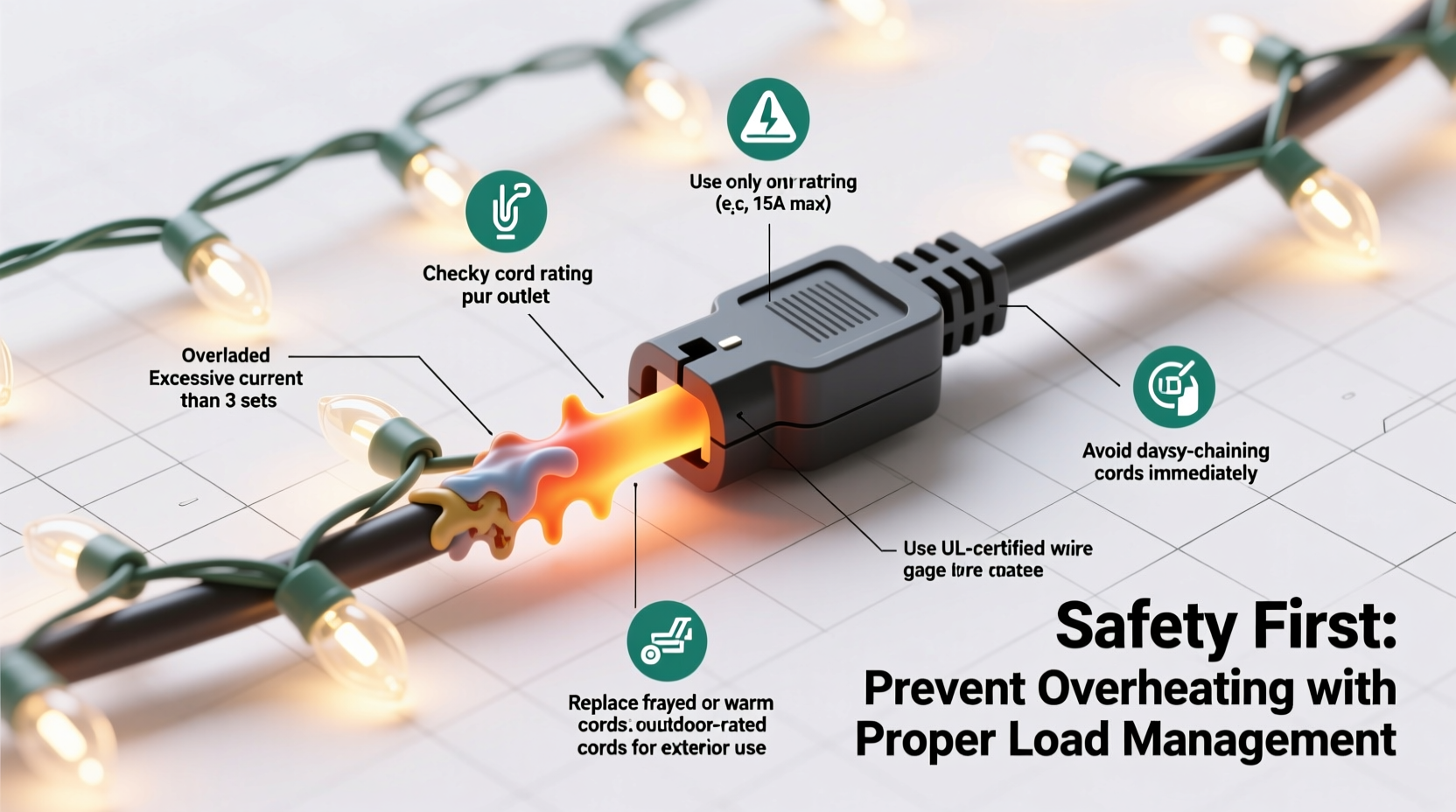
Electricity flows through wires like water through a pipe. The size and material of the wire determine how much current it can safely handle. When too many devices draw power from a single cord, the flow becomes restricted—like forcing too much water through a narrow hose. This restriction creates friction, which manifests as heat.
In technical terms, this is governed by Joule’s Law: Heat produced = Current² × Resistance (H = I²R). As more light strings are added, the total current draw increases exponentially. Even small increases in current can result in significant temperature rises, especially in lower-gauge cords with higher resistance.
Most household extension cords are rated for 13 amps at 120 volts (about 1,560 watts). Standard incandescent mini lights can consume up to 40 watts per string. That means a single cord could theoretically support around 39 strings before hitting capacity. However, real-world factors such as cord length, gauge, ambient temperature, and voltage drop reduce safe limits well below theoretical maximums.
“Overloading an extension cord is one of the most common causes of residential electrical fires during the holidays.” — National Fire Protection Association (NFPA)
Common Causes of Overheating with Light Strings
- Daisy-chaining too many strings: Connecting more than three sets of incandescent lights end-to-end exceeds manufacturer recommendations and increases load beyond safe thresholds.
- Using undersized cords: Lightweight, low-gauge cords (e.g., 18 AWG) cannot handle high loads and heat up quickly under sustained use.
- Poor ventilation: Cords buried under snow, rugs, or mulch trap heat and prevent natural cooling.
- Old or damaged cords: Frayed insulation, cracked connectors, or corroded contacts increase resistance and create hot spots.
- Mixing incompatible types: Combining LED and incandescent strings on the same circuit can lead to uneven loading and unpredictable performance.
Safety Checklist: Preventing Extension Cord Overheating
Follow this actionable checklist to ensure your holiday lighting display remains safe and functional all season long.
- ✅ Use only UL-listed extension cords rated for outdoor use if decorating outside.
- ✅ Match cord gauge to load: Use 16 AWG for light-duty tasks; choose 14 or 12 AWG for longer runs or multiple strings.
- ✅ Limit daisy-chaining: Never connect more than three incandescent light strings together. For LEDs, follow manufacturer guidelines (often up to 40+).
- ✅ Avoid running cords through high-traffic areas where they may be pinched or damaged.
- ✅ Keep cords off the ground and away from moisture, snow, or flammable materials.
- ✅ Unplug lights when leaving home or going to sleep unless using smart timers with safety certifications.
- ✅ Inspect all cords and plugs before use—discard any with exposed wires, brittleness, or discoloration.
- ✅ Use GFCI-protected outlets outdoors to reduce shock and fire risks.
Choosing the Right Extension Cord: A Comparison Guide
Not all extension cords are created equal. Using the wrong type can compromise safety even with moderate loads. Refer to the table below to select the appropriate cord for your needs.
| Cord Gauge (AWG) | Max Recommended Load | Best For | Avoid For |
|---|---|---|---|
| 18 AWG | Under 100 watts / 1 amp | Indoor fairy lights, short-term decor | Outdoor use, multiple strings, long durations |
| 16 AWG | Up to 500 watts / 4 amps | Moderate indoor/outdoor displays (3–5 LED strings) | High-wattage incandescents, permanent setups |
| 14 AWG | Up to 1,000 watts / 8 amps | Larger outdoor displays, longer runs (up to 50 ft) | Light-duty indoor decoration |
| 12 AWG | Up to 1,500 watts / 12.5 amps | Heavy-duty commercial displays, long-distance power | Short-term, minimal-load applications |
Note: Lower AWG numbers indicate thicker wires capable of handling more current. Always err on the side of heavier gauge when in doubt.
Real-World Example: How One Family Prevented a Fire
In December 2022, a homeowner in Ohio set up an elaborate holiday display featuring over 100 light strings across his roofline and trees. He used several 18 AWG extension cords to link clusters of incandescent lights, some daisy-chained five or six deep. After two nights of operation, neighbors reported smelling burning plastic near the front yard.
The homeowner investigated and discovered one cord had melted near the outlet, with visible scorch marks on the plug. He immediately unplugged everything and called an electrician. Upon inspection, the professional found that the combined load exceeded 1,800 watts on a cord rated for just 1,200. Additionally, part of the cord was buried under fallen leaves, trapping heat.
The system was rewired using 14 AWG cords, each serving no more than three light strings. Individual circuits were powered through separate GFCI outlets, and timers were installed to limit runtime. The display remained operational for the rest of the season—with no further issues.
This case illustrates how easily safety margins can be exceeded without deliberate planning. It also shows that proactive intervention and proper materials can resolve risks before disaster strikes.
Step-by-Step Guide: Safely Powering Multiple Light Strings
Follow these steps to install your holiday lights safely and efficiently, minimizing the risk of overheating.
- Calculate total wattage: Add up the wattage of all light strings you plan to connect. Check labels or packaging—don’t guess. For example, 20 strings × 40 watts = 800 watts.
- Select the right cord: Choose an extension cord with a wattage rating above your total load. Include a 20% safety margin. For 800 watts, use a cord rated for at least 960 watts (8 amps).
- Divide the load: Instead of running all strings from one outlet, split them across multiple circuits. Use multiple extension cords connected to different outlets.
- Use power strips wisely: Plug extension cords into UL-listed, surge-protected power strips—but never daisy-chain power strips.
- Test before full deployment: Plug in the setup for at least one hour while monitoring for warmth. Feel the cord every 15 minutes. If it’s warm to the touch, reduce the load.
- Secure and elevate cords: Use insulated hooks or clips to keep cords off the ground and away from walkways. Never nail or staple cords to surfaces.
- Install timers or smart controls: Automate lighting schedules to reduce operating time and allow cords to cool between uses.
- Inspect weekly: During the season, examine all connections for signs of wear, melting, or discoloration.
Frequently Asked Questions
Can I leave holiday lights plugged in all night?
It’s not recommended unless you’re using cords and lights specifically rated for continuous duty and have implemented safety measures like timers, GFCI protection, and regular inspections. Most fire departments advise unplugging decorative lighting when leaving the house or sleeping.
What does “maximum connected load” mean on light packaging?
This refers to the total wattage of light strings that can be safely connected end-to-end. For incandescent lights, it’s typically equivalent to three standard sets. Exceeding this limit risks overheating the first string’s fuse or plug.
Are indoor extension cords ever safe outdoors?
No. Indoor cords lack weather-resistant insulation and are not designed to withstand moisture, UV exposure, or temperature fluctuations. Using them outside increases the risk of short circuits, shocks, and fires. Always use cords labeled “For Outdoor Use.”
Expert Insight: Electrical Safety During Peak Usage
Holiday lighting places unusual demands on home electrical systems. According to the U.S. Consumer Product Safety Commission (CPSC), approximately 7,000 home fires each year are linked to decorative lighting. Many stem from misuse of extension cords.
“People underestimate how fast heat builds in overloaded cords. By the time they smell smoke, it’s often too late. Prevention starts with reading labels and respecting limits.” — James L. Rogers, Certified Electrician and NFPA Safety Instructor
Rogers emphasizes that modern homes may have sufficient outlets, but older models often don’t. In such cases, relying on a few extension cords to power dozens of strings creates dangerous bottlenecks. He recommends investing in temporary outlet solutions or consulting an electrician to add dedicated circuits for seasonal displays.
Conclusion: Stay Festive, Stay Safe
The beauty of holiday lights should never come at the cost of safety. Overheating extension cords are a preventable hazard—one that stems from simple oversights like ignoring wattage limits or using inappropriate equipment. By understanding electrical fundamentals, choosing the right cords, and following best practices, you can enjoy a dazzling display without compromising peace of mind.
Start today: audit your current setup, replace worn cords, calculate your loads, and implement safeguards. Your home, family, and neighbors will thank you. And remember—every spark should be part of the show, never the start of a fire.




 浙公网安备
33010002000092号
浙公网安备
33010002000092号 浙B2-20120091-4
Comments
No comments yet. Why don't you start the discussion?