
Fake snow stains—those chalky, white, irregular patches that appear on vinyl, fiber cement, or painted wood siding after winter—are a widespread but poorly understood phenomenon. Unlike actual snow residue, these stains don’t melt away with spring warmth. They persist, sometimes worsening over months, and are frequently mistaken for mildew, efflorescence, or paint failure. Homeowners often waste time and money applying bleach solutions, pressure washing too aggressively, or repainting prematurely—only to see the stains return. Understanding their true origin is the first step toward effective, lasting removal—and prevention.
What Exactly Are Fake Snow Stains?
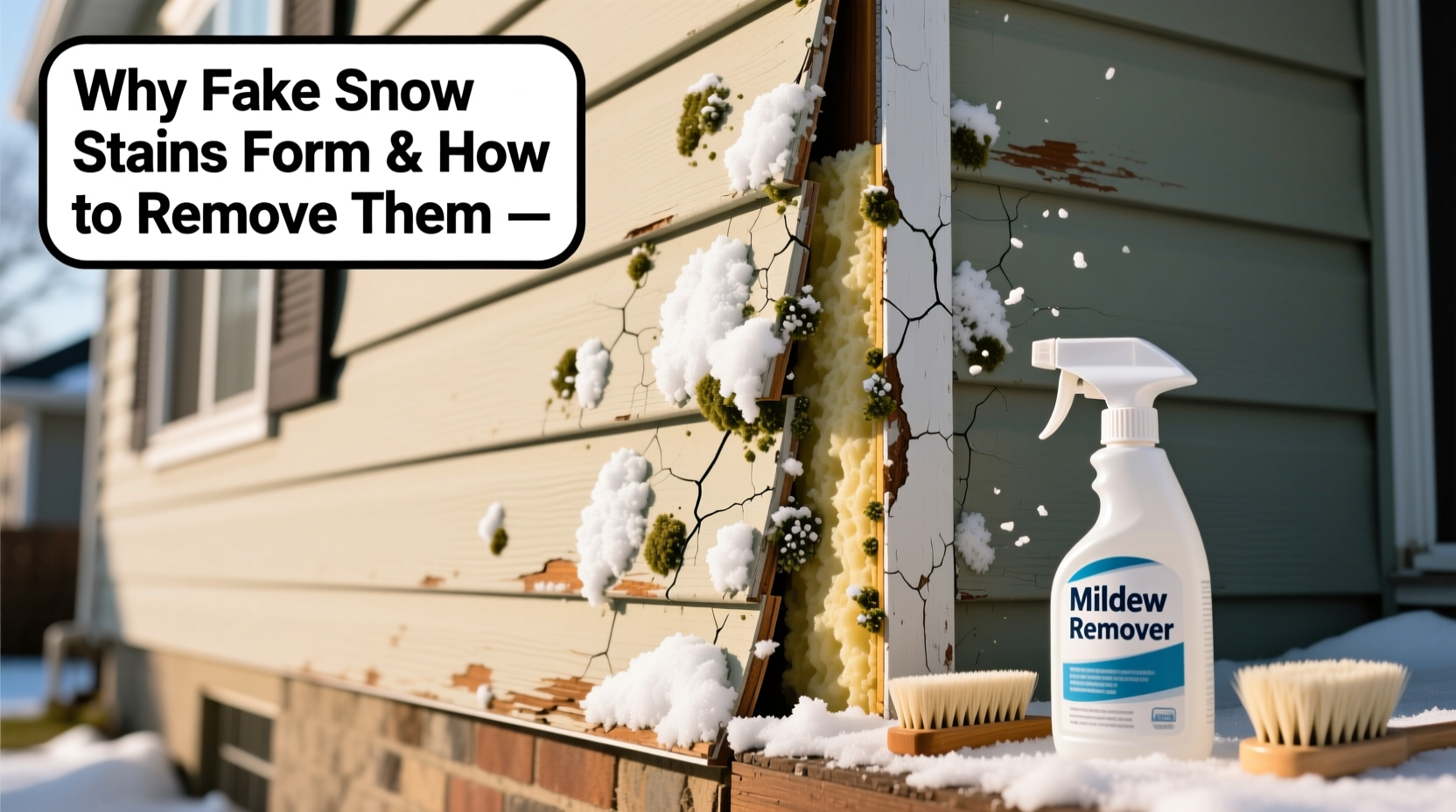
Fake snow stains are not deposits of snowmelt residue. Instead, they are surface-level accumulations of calcium carbonate (CaCO₃) and other alkaline salts leached from concrete-based materials in proximity to the siding. These include: poured concrete foundations, brick pavers, stone veneer, mortar joints, and even concrete walkways installed within 3–5 feet of the home’s perimeter. When rainwater or snowmelt flows over these surfaces, it dissolves soluble salts. As the water travels upward via capillary action—or splashes onto siding during wind-driven rain—the dissolved minerals dry in place, leaving behind a powdery, off-white, sometimes slightly yellowed film that resembles coarse snow dust.
This process is accelerated by freeze-thaw cycles, which increase micro-fracturing in concrete and mortar, exposing more soluble material. It’s also intensified by poor drainage, where water pools near the foundation and repeatedly wicks up the wall base. Crucially, fake snow stains differ from efflorescence (which occurs on masonry itself) because they form *on non-masonry substrates*—a telltale sign that the source is external and migratory.
Why Standard Cleaning Methods Often Fail
Many homeowners reach for chlorine bleach or oxygen bleach cleaners, assuming mold or algae is the culprit. But fake snow stains are mineral-based—not biological. Bleach does nothing to dissolve calcium carbonate and can even worsen the problem: sodium hypochlorite reacts with calcium ions to form insoluble calcium hypochlorite deposits, creating a harder, more tenacious crust. Similarly, high-pressure washing (above 1,200 PSI) may blast away the top layer of stain, but it simultaneously etches vinyl siding, forces water behind panels, and spreads dissolved salts across adjacent areas—setting the stage for re-deposition once moisture returns.
A 2022 field study by the National Association of Home Builders (NAHB) Exterior Durability Task Force found that 68% of homes treated with bleach-only protocols showed full stain recurrence within 90 days—compared to just 12% of homes treated with pH-balanced acid rinses followed by proper drainage correction.
“Fake snow isn’t about dirt—it’s about chemistry in motion. You wouldn’t scrub rust off a car with dish soap. Likewise, treating mineral deposits like organic growth guarantees frustration.” — Dr. Lena Torres, Building Materials Chemist, Oak Ridge National Laboratory
Step-by-Step Removal Protocol (Safe for All Common Siding Types)
Effective removal requires three coordinated phases: neutralization, gentle extraction, and source mitigation. Skipping any step invites rapid recurrence.
- Assess & Isolate the Source: Walk the perimeter. Identify all concrete, brick, or stone elements within 6 feet of stained siding. Note cracks, spalling, or pooling after rain. Mark areas with chalk.
- Rinse with Low-Pressure Water: Use a garden hose with a wide-spray nozzle (no pressure washer). Saturate stained areas for 2 minutes to hydrate the salt crust and prevent acid from reacting too violently.
- Apply pH-Balanced Acid Solution: Mix 1 part white vinegar (5% acetic acid) with 3 parts distilled water. For severe cases, substitute with a commercial masonry cleaner rated pH 2.5–3.5 (e.g., Prosoco Sure Klean Light Duty). Never use muriatic acid—it corrodes vinyl and damages painted wood.
- Dwell & Agitate Gently: Let solution sit for 4–6 minutes (no longer—prolonged exposure weakens vinyl’s UV inhibitors). Use a soft-bristle nylon brush (≤0.005” bristle diameter) in circular motions. Do not scrub vertically or horizontally with force.
- Rinse Thoroughly & Dry: Rinse with low-pressure water until runoff runs clear. Blot excess moisture at the base with microfiber cloths to discourage capillary re-wicking.
Prevention Checklist: Stop Recurrence Before It Starts
Removal is only half the solution. Without addressing root causes, fake snow stains will return—often within one season. Use this actionable checklist to break the cycle:
- ✅ Install a 4-inch-wide gravel or crushed stone buffer strip between all hardscapes and the foundation wall (minimum 6 inches from siding base)
- ✅ Seal exposed concrete and mortar joints annually with a breathable silane-siloxane sealer (e.g., Drylok Siloxane 75)
- ✅ Redirect downspouts at least 5 feet from the foundation using extended leaders or splash blocks
- ✅ Grade soil away from the house at a minimum 5% slope (6 inches drop per 10 feet)
- ✅ Inspect and repair foundation cracks >1/16 inch wide before winter onset
- ✅ Avoid de-icing salts containing calcium chloride or sodium chloride within 10 feet of the home—opt for calcium magnesium acetate (CMA) instead
Comparison: Effective vs. Harmful Approaches
| Method | Effectiveness on Fake Snow | Risk to Siding | Likelihood of Recurrence |
|---|---|---|---|
| Bleach + scrub brush | Poor (no mineral dissolution) | High (fades color, degrades vinyl plasticizers) | Very High (within 30–60 days) |
| High-pressure wash (>1,800 PSI) | Moderate (removes surface layer only) | Severe (causes panel warping, seal failure, water intrusion) | High (within 90 days due to salt redistribution) |
| Vinegar-water rinse + soft brush | High (dissolves CaCO₃ effectively) | Low (non-corrosive, no residue) | Low (if drainage corrected) |
| Commercial acid-based masonry cleaner (pH 2.5–3.5) | Very High (targeted carbonate dissolution) | Medium (requires strict dwell-time control) | Low (with source mitigation) |
| Repainting without cleaning | None (stain migrates through new paint) | High (wastes labor/material; traps moisture) | Certain (within weeks) |
Real-World Case Study: The Maple Street Bungalow
In Portland, Oregon, a 1928 Craftsman bungalow developed thick, crumbly white stains along its lower 24 inches of cedar shingle siding each March. Homeowner Maria R. tried bleach, vinegar, and even hired a pressure-washing service—each time seeing temporary improvement followed by worse staining the next season. A building inspector identified the cause: a newly poured concrete patio, installed flush against the foundation in 2021, with no expansion joint or drainage slope. Rainwater pooled for hours, then wicked upward 18 inches into the siding via capillary action from the damp cedar. The fix involved cutting a 1-inch expansion gap between patio and foundation, installing a French drain behind the gap, sealing the patio surface, and applying the vinegar-acid protocol. Two winters later, zero recurrence—and the cedar regained its natural patina.
FAQ: Your Top Questions Answered
Can fake snow stains damage my siding long-term?
Yes—but indirectly. The stains themselves are superficial. However, the persistent moisture conditions that enable them accelerate wood rot, vinyl embrittlement, and paint delamination. Calcium carbonate deposits also absorb UV radiation more readily than clean siding, increasing thermal stress on polymer-based materials.
Will vinegar harm painted wood or fiber cement siding?
No—when properly diluted (1:3 vinegar-to-water) and rinsed thoroughly, white vinegar poses no risk to acrylic or urethane paints, or fiber cement’s cellulose-cement matrix. It is significantly gentler than commercial acid cleaners and leaves no harmful residues.
How often should I reapply concrete sealer to prevent leaching?
Annually for high-exposure areas (patios, walkways); every 2 years for sheltered foundations. Always reseal after visible wear, chalking, or if water no longer beads on the surface. Use only penetrating, vapor-permeable sealers—never film-forming acrylics, which trap moisture and spall in freeze-thaw climates.
When to Call a Professional
DIY removal works well for stains under 3 feet tall and confined to one wall section. Contact a certified exterior restoration contractor if you observe any of the following: stains extending above the second-floor line; simultaneous staining on windowsills, soffits, or gutters (indicating airborne salt dispersion); blistering or peeling paint beneath the stain; or if the underlying siding feels soft, spongy, or discolored beyond the surface layer. These signs point to deeper moisture intrusion requiring diagnostic moisture mapping and possible substrate repair.
Conclusion: Treat the Cause, Not Just the Symptom
Fake snow stains are less a cosmetic nuisance and more a visible symptom of an unbalanced moisture ecosystem around your home. They reveal where water is misbehaving—pooling, wicking, or leaching where it shouldn’t. Removing them correctly restores appearance, but correcting the hydrology restores longevity. Every sealed joint, every redirected downspout, every graded inch of soil is an investment not just in curb appeal, but in structural resilience. Vinyl siding lasts 30–40 years. Fiber cement, 50+. Wood, a century—if kept dry. Don’t let avoidable mineral migration cut those lifespans short. Start with one wall. Apply the vinegar rinse. Then walk your perimeter with fresh eyes. Notice where water lingers. Fix one grade. Seal one crack. That’s how durable homes are maintained—not in grand renovations, but in quiet, consistent stewardship.




 浙公网安备
33010002000092号
浙公网安备
33010002000092号 浙B2-20120091-4
Comments
No comments yet. Why don't you start the discussion?