
Funko Pops have become more than just plastic figurines—they are cultural artifacts, emotional touchstones, and symbols of identity. With over 100 million units sold worldwide and a global community of dedicated collectors, these stylized vinyl figures represent far more than retail success. Behind every shelf display or carefully curated collection lies a complex web of psychological motivations: nostalgia, fandom, emotional attachment, and even investment behavior. Understanding why fans collect Funko Pops reveals deeper truths about human connection to stories, characters, and the need for tangible expressions of intangible feelings.
The Emotional Anchor of Nostalgia
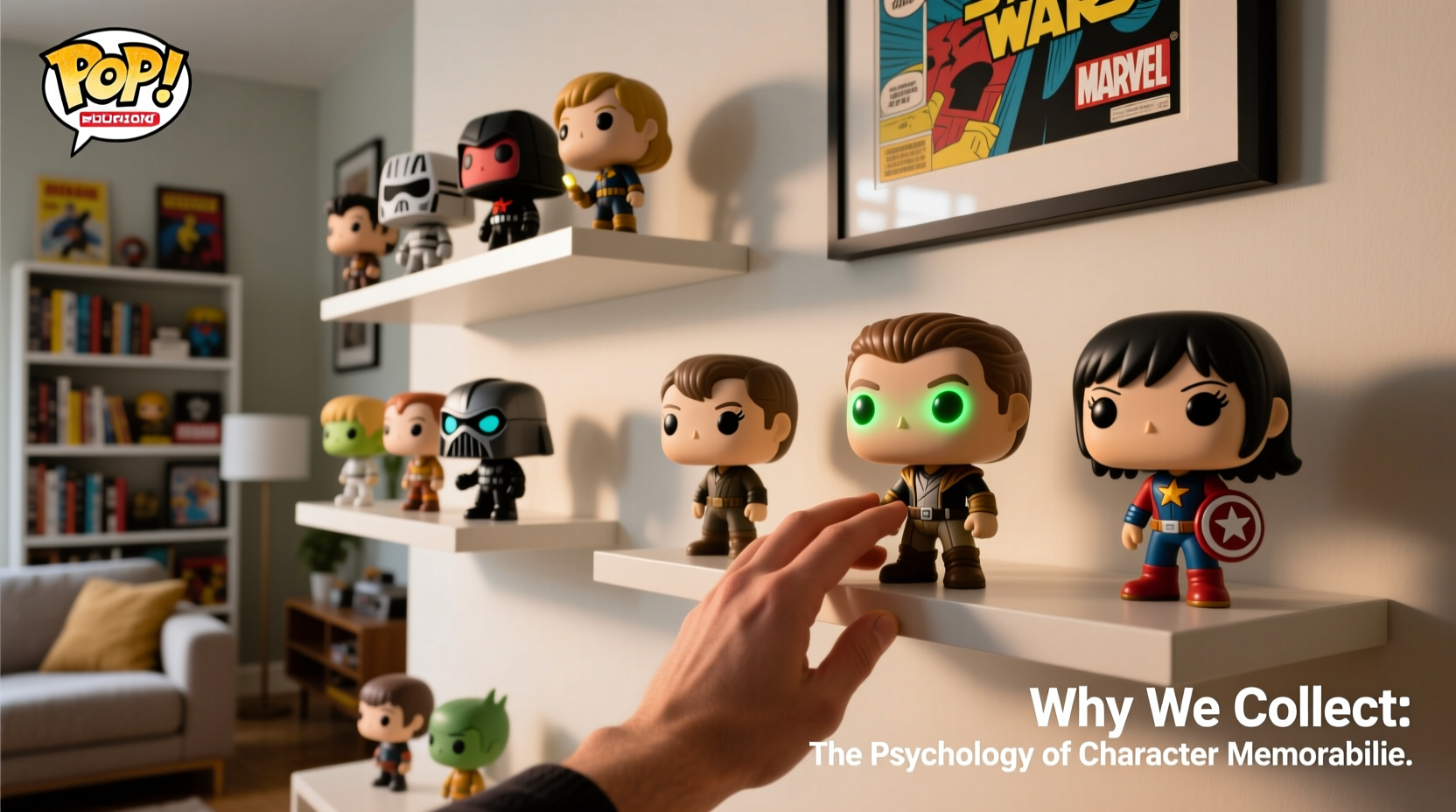
Nostalgia is one of the most powerful drivers in collecting culture. For many fans, a Funko Pop isn’t just a representation of a character—it’s a time capsule. A single figure can evoke memories of childhood Saturday mornings spent watching cartoons, late-night movie marathons with friends, or the comfort of reading comic books during difficult times. The exaggerated head and minimalist design of each Pop amplify its symbolic nature, making it less about realism and more about emotional resonance.
Psychological studies show that nostalgic experiences increase feelings of social connectedness and self-continuity—the sense that who we are today is linked to who we were in the past. When someone places a Harry Potter or Darth Vader Funko Pop on their desk, they aren’t merely displaying fandom; they’re reinforcing a personal narrative. That figure becomes an anchor point between past joy and present identity.
“Nostalgia doesn’t just remind us of the past—it helps us construct a coherent sense of self.” — Dr. Clay Routledge, Psychologist and Author of *The Power of Meaning*
Fandom as Identity and Belonging
In an increasingly fragmented world, fandom offers a rare form of belonging. Collecting Funko Pops allows individuals to visibly align themselves with communities that share their passions. Whether it’s Marvel enthusiasts trading rare variants at conventions or anime fans bonding over limited-edition exclusives, these objects serve as social currency.
The act of collecting becomes a ritual of participation. Displaying a complete set of Stranger Things Pops signals not only ownership but also deep engagement with the series’ lore and timeline. This performative aspect of collecting strengthens group identity and fosters peer recognition. In digital spaces like Reddit’s r/Funko or Facebook collector groups, members exchange photos, hunting tips, and emotional support—transforming solitary hobbies into shared experiences.
Moreover, for introverted or neurodivergent individuals, collections can provide a safe way to express personality without verbal communication. A well-organized shelf becomes a nonverbal autobiography.
Why Fandom Matters in Modern Culture
- Validation: Seeing others appreciate your collection reinforces self-worth.
- Community Access: Rare finds or insider knowledge grant status within niche circles.
- Emotional Safety: Fandom spaces often offer acceptance where mainstream society may not.
The Thrill of the Hunt and Completionism
One of the most compelling aspects of collecting Funko Pops is the pursuit itself. The psychology of “the hunt” taps into primal reward systems in the brain. Scouring online marketplaces, visiting local shops at midnight releases, or traveling to conventions activates dopamine pathways similar to those involved in goal-oriented behaviors.
Completionism—the desire to finish a set or own every variant—fuels long-term engagement. From a psychological standpoint, completing a collection provides a measurable sense of accomplishment. It satisfies our innate preference for order, symmetry, and closure. This drive is especially strong among individuals with methodical personalities or mild obsessive tendencies, though it remains largely adaptive and enjoyable when kept in balance.
Limited editions, chase variants (rare versions produced in lower quantities), and convention exclusives exploit this behavioral loop. The scarcity principle makes certain Pops more desirable, not necessarily because they’re objectively better, but because they’re harder to obtain. Ownership becomes a marker of persistence, luck, and dedication.
| Type of Pop | Rarity Level | Collector Motivation |
|---|---|---|
| Store Exclusives (e.g., Target, Walmart) | Moderate | Accessibility + Brand loyalty |
| Convention Exclusives (e.g., SDCC) | High | Prestige + Community status |
| Chase Variants | Very High | Thrill of discovery + Investment potential |
| General Retail Releases | Low | Accessibility + Nostalgic value |
From Play to Preservation: The Shift in Value Perception
Unlike traditional toys meant for play, most Funko Pops are treated as display items. This shift reflects a broader cultural trend toward preservation over use. Fans often keep figures sealed in original packaging, prioritizing condition and resale value. This behavior mirrors art collecting, where authenticity and provenance matter deeply.
Preservation introduces new rituals: UV-protective cases, climate-controlled rooms, inventory spreadsheets, and insurance policies. These practices elevate the hobby from casual interest to serious curation. Some collectors track production numbers, cross-reference release dates, and analyze secondary market trends like stock traders.
This transformation—from toy to treasure—is supported by real economic data. Certain rare Pops, such as the misprinted Blacklight Deadpool or the Teal Variant of San Diego Comic-Con 2015 Batman, have sold for thousands of dollars. While most remain affordable, the possibility of financial return adds another layer of motivation.
Mini Case Study: The Rise of Maya’s Marvel Wall
Maya, a 32-year-old software engineer from Austin, began collecting Funko Pops after rewatching the entire Marvel Cinematic Universe during lockdown. Initially, she bought a few favorites—Iron Man, Black Widow, and Thor—as decorative pieces for her home office. But soon, she found herself tracking down every MCU-related release, including obscure variants and retired models.
What started as decoration evolved into a structured project. She created a custom wall unit labeled “The Infinity Timeline,” arranging Pops chronologically by film release. Each addition came with research: box accuracy, paint details, and sourcing ethics (avoiding scalpers when possible). Her collection became a conversation starter at virtual meetings and a source of pride in her apartment.
For Maya, the process wasn’t about hoarding—it was about storytelling. “This wall reminds me of resilience,” she said. “I started this during a lonely year. Now, it’s proof that I built something joyful out of isolation.”
Psychological Frameworks Behind Memorabilia Attachment
Several established psychological theories help explain the appeal of character memorabilia:
- Attachment Theory: People form emotional bonds not only with others but with objects that symbolize relationships or experiences. A Luke Skywalker Pop might represent a father-son movie night, becoming a proxy for that bond.
- Self-Concept Clarity: Collections allow individuals to externalize internal values. Choosing to collect only female-led franchises or indie game characters communicates identity choices.
- Behavioral Reinforcement: Each new acquisition delivers a small reward, encouraging repeat behavior. Limited availability turns collecting into an intermittent reinforcement schedule—one of the most addictive patterns in psychology.
- Tangibility of Intangible Joy: Stories and emotions fade; physical objects endure. A Pop gives permanence to fleeting moments of happiness.
These frameworks reveal that collecting is rarely superficial. It’s a sophisticated coping mechanism, a creative outlet, and a cognitive tool for managing memory and meaning.
Checklist: Building a Meaningful Collection
To ensure your Funko Pop journey remains fulfilling and sustainable, consider this checklist:
- ✅ Define your focus: Characters from a specific franchise, era, or theme?
- ✅ Set a budget and stick to it—avoid impulse buys driven by hype.
- ✅ Prioritize emotional connection over resale value unless investing is your goal.
- ✅ Join a community for support, trade opportunities, and inspiration.
- ✅ Rotate displays seasonally to keep the experience fresh.
- ✅ Document your collection with photos or a digital log.
- ✅ Allow room for evolution—your tastes may change, and that’s okay.
FAQ: Common Questions About Funko Pop Collecting
Are Funko Pops a good investment?
While most Pops retain modest value, select rare variants—especially those with manufacturing errors, low production runs, or exclusive distribution—can appreciate significantly. However, treating collecting primarily as an investment carries risk. Market demand fluctuates, and condition is critical. Only a small percentage of Pops become valuable over time.
How do I prevent my Pops from yellowing?
Yellowing occurs due to UV exposure and oxidation of PVC plastic. To prevent it:
- Keep Pops out of direct sunlight.
- Avoid fluorescent lighting for extended periods.
- Use UV-protective display cases.
- Consider anti-yellowing sprays or storage in dark environments.
Is it better to keep Pops in-box or open them?
This depends on intent. For investment purposes, mint-condition sealed boxes hold higher value. For personal enjoyment, removing figures allows better appreciation of sculpt and paint details. Many collectors adopt a hybrid approach—keeping key pieces sealed while opening others for display.
“The objects we choose to surround ourselves with aren’t random. They’re autobiographical fragments shaped by emotion, memory, and meaning.” — Dr. Wendy Wood, Behavioral Scientist, University of Southern California
Conclusion: More Than Plastic—A Mirror of the Self
Funko Pops are deceptively simple. Their oversized heads and minimalist features make them appear cartoonish, even childish. But beneath the surface lies a rich psychological landscape. Collecting these figures is not about amassing plastic—it’s about preserving moments, honoring heroes, and constructing identity through symbolism.
Each Pop tells a story: of first loves sparked by a TV character, of grief soothed by revisiting childhood icons, of friendships forged over shared obsessions. In a world where digital content disappears instantly and attention spans shrink, these tangible tokens offer stability and continuity.




 浙公网安备
33010002000092号
浙公网安备
33010002000092号 浙B2-20120091-4
Comments
No comments yet. Why don't you start the discussion?