
Fish don’t blink. They don’t close their eyes. And yet, if you’ve spent time watching them drift near the bottom of a tank or hover motionless in a reef crevice, you might have wondered: are they asleep? The idea of sleeping with your eyes wide open seems unnatural to humans, but for fish, it’s simply part of their biology. Understanding how fish rest challenges our assumptions about sleep and reveals a fascinating adaptation shaped by millions of years of evolution beneath the waves.
Sleep, as we understand it, involves cycles of unconsciousness, reduced responsiveness, and brain activity changes. But fish lack eyelids and live in an environment where stillness can be dangerous. So how do they rest—and is it even accurate to call it “sleep”? The answer lies in redefining what rest means across species and recognizing that survival often demands subtler forms of recovery.
The Anatomy Behind Open-Eyed Rest
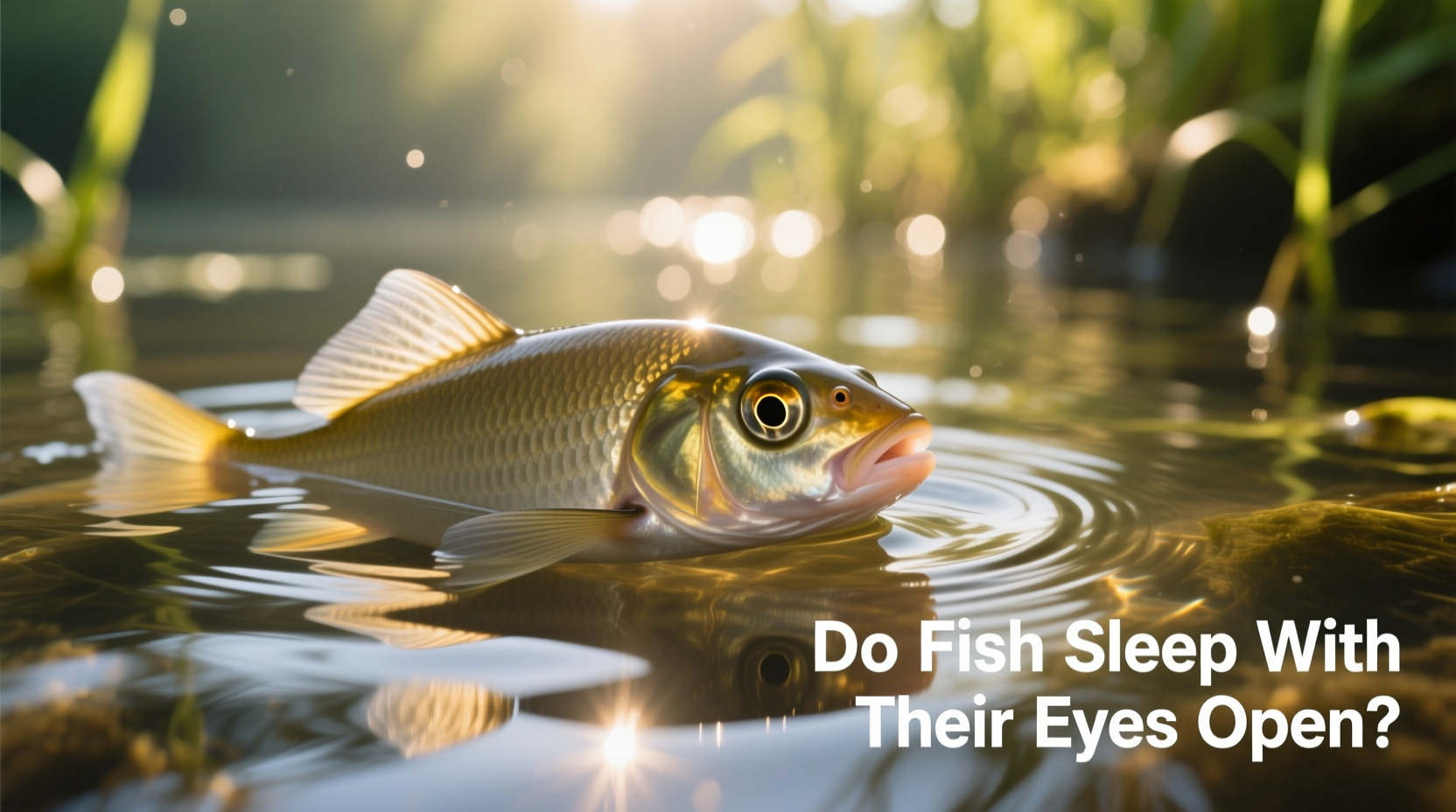
Fish do not possess eyelids. Unlike mammals, birds, or reptiles, most fish species evolved without the need to moisten or protect their eyes using blinking mechanisms. Their eyes are constantly bathed in water, eliminating the risk of drying out. This fundamental anatomical difference explains why fish cannot close their eyes—there’s simply no biological structure to make it happen.
Without eyelids, the visual cue we associate with sleep—closed eyes—is absent. But absence of this signal doesn’t mean absence of rest. In fact, many animals exhibit non-traditional sleep behaviors. Dolphins sleep with one hemisphere of the brain active at a time. Some birds sleep while flying. Fish, too, have developed unique strategies to balance energy conservation with environmental vigilance.
Instead of shutting down completely, fish enter a state of reduced metabolic activity. They remain alert enough to respond to predators or sudden changes but significantly lower their movement and oxygen consumption. This state shares key characteristics with sleep: decreased responsiveness, altered brainwave patterns (in studied species), and predictable daily cycles.
What Does Fish \"Sleep\" Actually Look Like?
Fish rest differs dramatically from human sleep. There’s no REM stage, no dreaming (as far as science currently knows), and no lying down. Instead, fish adopt postures and behaviors that minimize energy use while maintaining stability in water.
- Reduced Movement: Many fish slow their fin movements and hover in place, often near shelter.
- Lowered Metabolism: Oxygen consumption drops during rest periods, indicating energy conservation.
- Decreased Responsiveness: Studies show fish take longer to react to stimuli when in these low-activity states.
- Consistent Timing: Most fish follow circadian rhythms, becoming less active at night or during specific light cycles.
For example, parrotfish secrete a mucus cocoon around themselves before settling in for the night—a protective barrier against parasites and scent-masking from nocturnal predators. Zebrafish, commonly used in sleep research, display clear periods of inactivity that respond to sleep-depriving conditions much like mammals do.
“Even without eyelids or REM cycles, fish exhibit behavioral and physiological markers of sleep. It’s a reminder that rest isn’t defined by human standards.” — Dr. Alex Chen, Neuroethologist, Marine Behavior Lab
Do All Fish Rest the Same Way?
No two fish species rest identically. The diversity of aquatic environments—from fast-flowing rivers to deep ocean trenches—has led to varied adaptations in how fish conserve energy.
| Species | Resting Behavior | Unique Adaptation |
|---|---|---|
| Clownfish | Hides within anemone tentacles | Relies on symbiotic protection; minimal movement overnight |
| Sharks (some species) | Must keep moving to breathe | Use spiracles to pump water over gills while resting on the seabed |
| Bettas | Hover near surface or rest on leaves | Labyrinth organ allows air breathing; can rest in low-oxygen zones |
| Tuna | Swim continuously | Only parts of the brain may rest at a time (unihemispheric sleep-like state) |
| Parrotfish | Settle into crevices or secrete mucus cocoons | Physical and chemical defense during vulnerable period |
This variation underscores that “rest” in fish is context-dependent. For some, it's near-total stillness. For others, it's a shift in neurological activity while swimming. What unites them is the purpose: conserving energy, supporting brain function, and maintaining long-term health.
How Scientists Study Fish Sleep
Since fish can't report subjective experiences, researchers rely on objective measures. Key indicators include:
- Inactivity Duration: Prolonged periods of immobility, especially during predictable times (e.g., nighttime).
- Response Threshold: Delayed reaction to touch, light, or vibrations compared to active phases.
- Rebound Effect: When deprived of rest, fish increase inactive periods afterward—similar to sleep debt in humans.
- Neurological Monitoring: In zebrafish, EEG-like recordings show distinct brainwave shifts during rest phases.
A landmark study at Stanford University demonstrated that zebrafish exposed to caffeine showed delayed onset of rest and increased agitation—effects analogous to those seen in caffeinated humans. This pharmacological similarity strengthens the argument that fish experience a form of sleep, even if it looks nothing like ours.
Common Misconceptions About Fish Rest
Because fish don’t behave like sleeping mammals, several myths persist:
- Myth: If a fish isn’t moving, it’s dead.
Reality: Motionless hovering is often normal resting behavior, especially in nocturnal species. - Myth: Fish don’t need rest because they’re simple creatures.
Reality: Even basic nervous systems require downtime for cellular repair and memory consolidation. - Myth: All fish float when sleeping.
Reality: While some species (like bettas) may rest near the surface, others sink or wedge into rocks.
Understanding these misconceptions helps pet owners provide better care. Mistaking rest for illness can lead to unnecessary stress interventions or medication. Conversely, ignoring signs of chronic fatigue may mask poor water quality or disease.
Mini Case Study: The Overlit Aquarium
A freshwater aquarium owner noticed her goldfish spending increasing time motionless at the tank bottom. Concerned, she consulted a veterinarian. After reviewing water parameters and diet, the vet asked one critical question: “Is the tank lit 24/7?”
The owner admitted she kept the lights on for aesthetic reasons, believing fish weren’t affected. The vet explained that constant light disrupts circadian rhythms, preventing proper rest. Within days of introducing a 12-hour light-dark cycle, the goldfish resumed normal activity patterns and feeding behavior improved.
This case illustrates how human assumptions about animal needs can inadvertently harm them. Just because fish don’t close their eyes doesn’t mean they don’t require darkness to rest.
Supporting Healthy Rest in Captive Fish
Whether you maintain a home aquarium or manage a public exhibit, promoting natural rest cycles is essential for fish well-being. Here’s how to create an environment conducive to healthy downtime.
Step-by-Step Guide to Optimizing Fish Rest
- Establish a Light Schedule: Provide 10–12 hours of light followed by darkness. Avoid abrupt changes—use dimmers if possible.
- Minimize Nighttime Disturbances: Reduce noise, vibrations, and handling after lights out.
- Provide Hiding Spots: Caves, plants, and decorations give fish secure places to settle.
- Maintain Water Quality: Poor oxygen levels or high ammonia stress fish, making rest difficult.
- Observe Behavioral Patterns: Learn what normal rest looks like for each species in your tank.
These steps not only support physical recovery but also reduce chronic stress, which weakens immune function and shortens lifespan.
Checklist: Signs Your Fish Are Resting Normally
- ✅ Reduced movement during dark periods
- ✅ Maintains stable position without floating upside-down
- ✅ Responds slowly—but still responds—to strong stimuli
- ✅ Returns to normal activity when lights come on
- ✅ No rapid gill movement or erratic swimming at rest
If your fish exhibits twitching, floating uncontrollably, or fails to respond entirely, consult a specialist. These may indicate illness, not rest.
Frequently Asked Questions
Can fish drown if they stop swimming?
Not exactly. Fish extract oxygen through gills, not lungs. However, some species like tuna and certain sharks rely on ram ventilation—swimming to push water over their gills. These fish have adapted ways to rest parts of their body or use alternative methods (like spiracles in nurse sharks) to allow brief stationary periods. True “drowning” doesn’t occur, but suffocation from stagnant water can happen in poorly maintained tanks.
Do fish dream?
There’s no evidence that fish experience dreams as humans do. Dreams are linked to REM sleep, which has not been observed in fish. However, some researchers speculate that simpler forms of neural replay—important for learning—may occur during rest, particularly in more intelligent species like cichlids or wrasses.
How long do fish sleep each day?
It varies widely. Most aquarium fish rest for 8–12 hours, typically at night. Nocturnal species like catfish reverse this pattern, becoming active after dark and resting during daylight. Deep-sea fish may have irregular cycles due to constant darkness, relying more on internal clocks than external cues.
Conclusion: Rethinking Rest Beneath the Surface
Fish don’t sleep with their eyes open because they choose to—they do so because evolution designed them for survival in water, where every adaptation serves a purpose. The absence of eyelids, the ability to rest while drifting, and the capacity to remain partially alert reflect a refined balance between vulnerability and recovery.
Recognizing that fish rest—even without closed eyes—transforms how we care for them. It invites respect for the quiet moments when a guppy hovers near a plant or a tang settles into coral. These aren’t signs of illness or boredom. They are expressions of a deeply rooted biological rhythm, as vital as breathing.




 浙公网安备
33010002000092号
浙公网安备
33010002000092号 浙B2-20120091-4
Comments
No comments yet. Why don't you start the discussion?