
In the fast-paced world of competitive gaming, every millisecond counts. Whether it’s a split-second flick shot in *Overwatch*, a frame-perfect parry in *Street Fighter 6*, or a precise flick in *Call of Duty*, players demand absolute control over their inputs. While wireless technology has made incredible strides, professional and serious competitive gamers consistently return to one tool: the wired controller. The reasons are not rooted in nostalgia or resistance to innovation—they stem from measurable performance advantages that directly impact outcomes at the highest levels of play.
Latency, consistency, power stability, and tactile feedback all converge to make wired controllers the preferred choice in esports arenas, tournaments, and practice sessions alike. This article explores the technical and experiential factors behind this preference, offering insights into how something as seemingly simple as a cable can be the difference between victory and defeat.
Lower Input Lag and Reduced Latency
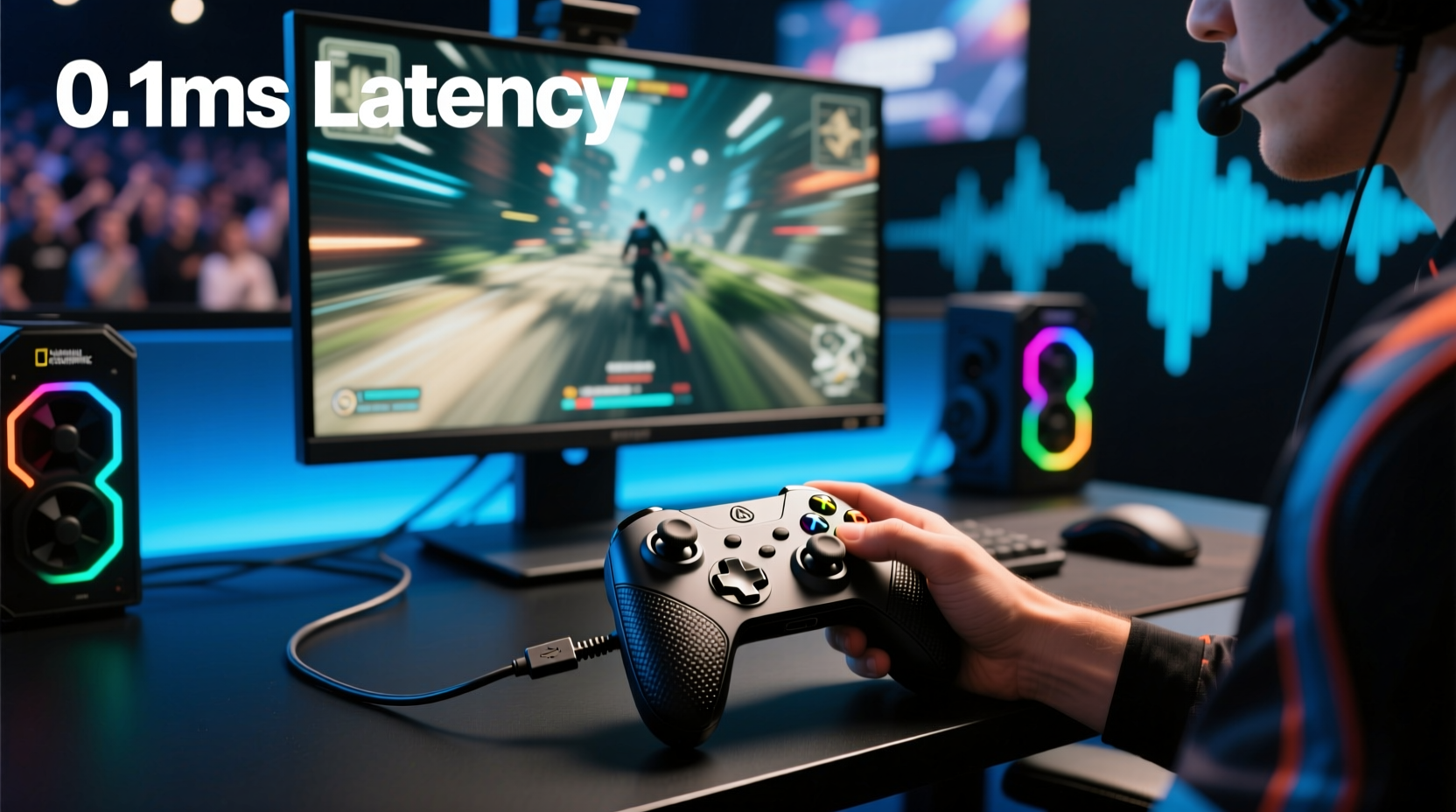
One of the most critical factors in competitive gaming is input lag—the time between pressing a button and seeing the action register on screen. In wireless controllers, even advanced Bluetooth or proprietary 2.4GHz wireless connections introduce a small but significant delay due to signal encoding, transmission, and decoding. While modern wireless tech has reduced this gap, it still exists.
Wired controllers transmit data through a direct USB connection, eliminating wireless handshake protocols. This creates a near-instantaneous communication path between the controller and the console or PC. Studies have shown that wired setups can reduce input latency by 5–10 milliseconds compared to wireless alternatives—seemingly negligible, but in games where actions are measured in frames (e.g., 16.6ms per frame at 60Hz), even a 5ms advantage can mean executing an action one full frame earlier.
Moreover, interference from other wireless devices—Wi-Fi routers, smartphones, headsets—can cause micro-stutters or packet loss in wireless signals. A wired connection bypasses this entirely, ensuring consistent responsiveness regardless of environment.
Consistent Performance Without Signal Interference
Gaming environments, especially during tournaments, are often saturated with wireless signals. Multiple consoles, streaming equipment, mobile phones, and networked peripherals create electromagnetic noise that can degrade wireless performance. Even premium wireless controllers using dedicated dongles aren’t immune to occasional dropouts or jitter under heavy RF load.
A wired controller operates independently of radio frequency conditions. There's no risk of signal drift, sync issues, or sudden disconnections mid-match. For competitive players, predictability is paramount. Knowing that every input will register exactly as intended—without exception—is a psychological and mechanical advantage.
This reliability becomes especially crucial in online multiplayer titles like *Apex Legends* or *Fortnite*, where movement, aiming, and ability usage must be executed flawlessly under pressure. A single missed input due to wireless interference could cost a player the match.
Real-World Example: Tournament Pressure Test
During the 2023 *Super Smash Bros. Ultimate* invitational in Las Vegas, several top-tier players reported intermittent input delays during early rounds. Upon investigation, organizers found that overlapping 2.4GHz bands from nearby booths were interfering with wireless controllers. Players who switched to wired alternatives immediately noticed smoother character response and tighter command execution. One finalist later stated in an interview: “I didn’t realize how much I was compensating until I plugged in. It felt like the game finally caught up to my brain.”
Zero Risk of Battery Failure
Battery life is a constant concern with wireless controllers. Even models boasting 30+ hours of gameplay require monitoring, charging, and periodic replacement. In casual settings, this is manageable. But in high-intensity competition, running out of battery mid-match is catastrophic.
Wired controllers draw power directly from the connected device, eliminating battery dependency altogether. As long as the console or PC is powered, the controller functions. This removes a major point of failure and reduces pre-game anxiety about charge levels.
Additionally, battery degradation over time affects wireless controller performance. Older batteries may deliver inconsistent voltage, leading to fluctuating wireless signal strength or erratic behavior. Wired controllers avoid these issues entirely, maintaining peak functionality across years of use.
“Battery anxiety shouldn’t be part of elite gaming. When you're five minutes into a ranked climb and your controller blinks low, you’re already compromised.” — Marcus Tran, Esports Coach & Former Pro *Halo* Player
Precision and Button Responsiveness
While both wired and wireless controllers use the same internal switch mechanisms, the direct electrical connection of a wired setup ensures more immediate signal transmission. Some players report a perceptible \"tightness\" in response when using wired controllers—buttons feel snappier, triggers engage faster, and analog stick inputs appear more linear.
This isn't just perception. Oscilloscope tests comparing identical controller models (wired vs. wireless mode) show slightly cleaner signal waveforms in wired configurations, with fewer anomalies caused by compression or retransmission errors inherent in wireless protocols.
For genres like fighting games or first-person shooters, where timing windows can be as narrow as one or two frames, this level of precision matters. Competitive *Tekken* players, for example, rely on frame data so exact that a delayed input—even by a fraction of a second—can result in a lost combo or blocked attack.
Comparison Table: Wired vs. Wireless Controllers in Competitive Scenarios
| Factor | Wired Controller | Wireless Controller |
|---|---|---|
| Input Lag | ~1–4ms (direct USB) | ~8–15ms (with potential variability) |
| Signal Stability | Consistent, no interference | Subject to RF congestion |
| Power Source | Device-powered (no battery) | Battery-dependent |
| Maintenance | Minimal (cable care only) | Charging, battery health, syncing |
| Tournament Reliability | Highly trusted, standard choice | Used cautiously, often backup |
| Mobility | Limited by cable length | Full freedom of movement |
As the table illustrates, while wireless controllers win in convenience and mobility, they fall short in areas that matter most in competitive contexts: speed, stability, and dependability.
Community Standards and Professional Norms
It’s not just individual preference—competitive communities have institutionalized the use of wired controllers. Major tournaments such as Evo, DreamHack, and MLG strongly recommend or outright require wired peripherals. Organizers cite fairness, consistency, and ease of troubleshooting as key reasons.
When every player uses the same type of input device, comparisons of skill become more accurate. If some competitors used wireless gear prone to variable latency, it would introduce an uneven playing field—even if unintentionally. Standardizing on wired controllers ensures that human performance, not hardware variance, determines results.
This norm trickles down to amateur leagues and ranked ladders. Many aspiring pros adopt wired setups early to simulate tournament conditions and build muscle memory aligned with professional standards.
Step-by-Step Guide: Optimizing Your Wired Controller Setup
To get the most out of a wired controller in competitive play, follow this optimization process:
- Choose a High-Quality Cable: Use a short (1–2m), braided USB-A to USB-C/B cable with reinforced stress points. Avoid coiled or extension cables that can introduce resistance.
- Connect Directly to the Host Device: Plug into a port on the console or PC, not through a hub or adapter, to minimize latency and power fluctuations.
- Disable Wireless Features: On dual-mode controllers (like the DualSense or Xbox Wireless), turn off Bluetooth or wireless pairing to prevent background processes from consuming resources.
- Update Firmware: Ensure your controller’s firmware is current. Manufacturers often release updates that improve USB communication efficiency.
- Test Input Delay: Use tools like Rinput (PC) or input lag testers on console to verify responsiveness. Compare before and after adjustments.
- Secure the Cable: Tape or clip the cable along your desk or leg to prevent accidental tugs that might disconnect or jerk the controller mid-game.
This routine ensures maximum performance and minimizes avoidable disruptions during intense sessions.
Frequently Asked Questions
Do wired controllers really make a noticeable difference?
Yes, especially in fast-paced games. While casual players may not detect the difference, experienced competitors often report tighter control, faster response, and greater confidence in their inputs. Tools like input lag testers confirm measurable improvements.
Can I use a wireless controller in tournaments?
Some events allow them, but many discourage or prohibit wireless use due to reliability concerns. Always check event rules beforehand. Even if permitted, most top players opt for wired to eliminate risk.
Are there any downsides to using a wired controller competitively?
The primary trade-off is reduced mobility. You’re tethered to your device, which can be restrictive if you like to sit farther from your screen. However, most competitive setups are close-range and ergonomic, minimizing this limitation.
Checklist: Pre-Match Wired Controller Preparation
- ✅ Inspect cable for frays or stiffness
- ✅ Confirm secure connection to console/PC
- ✅ Disable Bluetooth/wireless mode
- ✅ Test all buttons and sticks for responsiveness
- ✅ Secure cable path to avoid tripping or pulling
- ✅ Verify firmware is up to date
- ✅ Calibrate analog sticks if necessary
Running through this checklist before each serious session helps prevent technical issues that could undermine performance.
Conclusion: Precision Over Convenience
The dominance of wired controllers in competitive gaming isn’t about resisting progress—it’s about prioritizing performance where it matters most. In environments where success hinges on flawless execution, players choose tools that offer certainty, speed, and consistency. Wireless technology continues to evolve, and future innovations may close the gap further. But for now, the wired connection remains the gold standard for those who compete to win.
If you're serious about improving your gameplay, consider making the switch to a wired setup. Train with the same reliability professionals rely on. Optimize your gear, refine your inputs, and remove variables beyond your control. The edge you gain might not be flashy, but in competitive gaming, the quiet advantages are often the ones that define champions.




 浙公网安备
33010002000092号
浙公网安备
33010002000092号 浙B2-20120091-4
Comments
No comments yet. Why don't you start the discussion?