
Sometimes, when startled or excited, certain goats suddenly freeze—legs locked, bodies rigid—as if turned to stone for several seconds before slowly relaxing and bounding away as though nothing happened. This peculiar behavior, often mistaken for fainting, is neither theatrical nor supernatural. It’s a real, inherited neuromuscular disorder known as congenital myotonia. While the sight of a goat collapsing mid-hop may seem comical, the science behind it reveals a fascinating interplay of genetics, ion channels, and muscle physiology that affects not only goats but also other species, including humans.
Congenital myotonia, specifically referred to as myotonia congenita in medical literature, disrupts the normal process of muscle relaxation after contraction. In goats, this condition is most commonly associated with the breed known as the Tennessee Myotonic Goat, sometimes called \"fainting goats\" due to their dramatic physical response to stimuli. But despite the nickname, these animals do not lose consciousness. Instead, they experience a temporary inability to relax their muscles, resulting in stiffness or even falling over when startled.
The Biology Behind the Stiffness
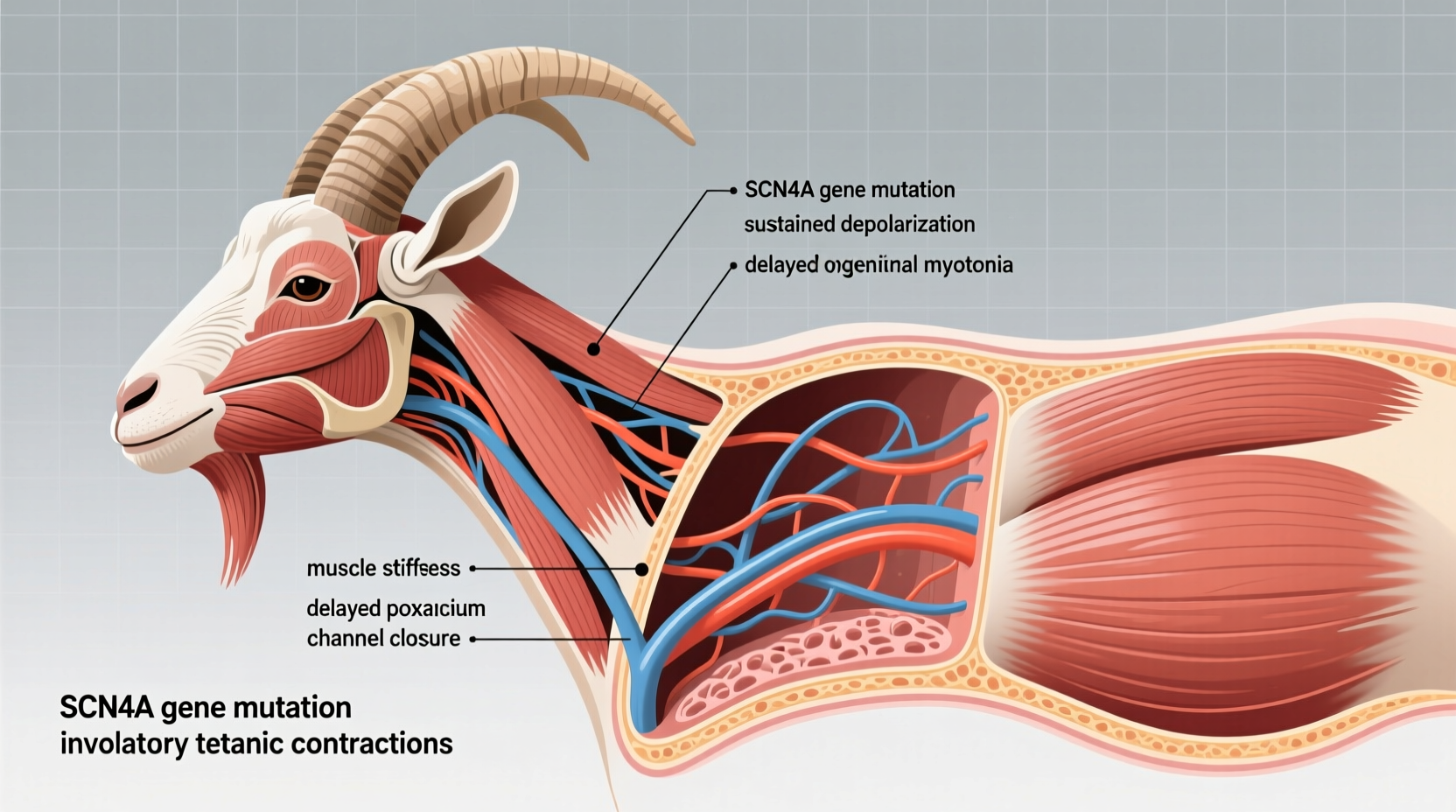
Muscle contraction and relaxation are tightly regulated processes involving electrical signals and ion movement across muscle cell membranes. When a nerve signal reaches a muscle fiber, it triggers the release of calcium ions, which initiate contraction. To relax, the muscle must repolarize its membrane by allowing chloride and potassium ions to flow out, restoring the resting electrical state.
In goats with congenital myotonia, a mutation in the *CLCN1* gene disrupts the function of chloride channels in skeletal muscle membranes. These channels normally help stabilize the electrical potential of muscle cells. When chloride conductance is reduced, the muscle membrane becomes hyperexcitable—meaning it fires repeatedly in response to a single stimulus. This leads to prolonged muscle contractions and delayed relaxation, clinically termed myotonia.
The result? A goat running across a pasture may stiffen instantly when surprised by a loud noise, fall over without losing awareness, and then gradually regain mobility within 10 to 15 seconds. The severity varies between individuals, with some goats showing mild stiffness and others experiencing full-body rigidity.
Genetic Inheritance and Breeding Implications
Congenital myotonia in goats follows an autosomal dominant inheritance pattern. This means that only one copy of the mutated gene (from either parent) is sufficient to produce the trait. Goats that inherit two copies (homozygous) often exhibit more severe symptoms than those with just one (heterozygous).
Breeding programs involving Tennessee Myotonic Goats must consider genetic testing to manage the prevalence and intensity of the condition. While many farmers value these goats for their docile temperament and meat quality, uncontrolled breeding can increase the frequency of extreme myotonia, potentially compromising animal welfare.
A key challenge lies in balancing breed preservation with ethical husbandry. Some breeders selectively mate carriers with unaffected goats to maintain genetic diversity while minimizing symptom severity. Others advocate for transparency in sales, ensuring buyers understand what to expect when purchasing a myotonic goat.
“Understanding the genetics of myotonia allows us to make informed decisions that protect both the integrity of the breed and the well-being of individual animals.” — Dr. Laura Simmons, Veterinary Geneticist, University of Tennessee
Diagnosis and Management in Herds
Veterinarians diagnose congenital myotonia through a combination of clinical observation, electromyography (EMG), and genetic testing. EMG can detect characteristic “dive bomber” sounds—abnormal electrical discharges in resting muscle—confirming the presence of myotonia even in mildly affected animals.
While there is no cure, management strategies focus on reducing triggers and supporting overall health:
- Minimize sudden noises or movements around sensitive goats.
- Provide soft bedding in pens to cushion falls.
- Avoid overcrowding, which increases stress and collision risks.
- Ensure easy access to food and water, especially for goats with frequent episodes.
Nutrition plays a supportive role. Diets rich in magnesium and balanced electrolytes may help stabilize nerve and muscle function, though scientific evidence in goats remains anecdotal. Regular veterinary check-ups are essential to monitor secondary complications such as joint strain or muscle fatigue.
Step-by-Step Guide to Managing a Myotonic Goat Herd
- Identify Affected Individuals: Observe behavior during routine activities and note any stiffness or collapse episodes.
- Confirm Diagnosis: Consult a veterinarian for EMG testing or DNA analysis using hair or blood samples.
- Assess Severity: Classify goats based on frequency and duration of myotonic episodes.
- Modify Environment: Eliminate loud machinery, predator threats, and abrupt handling practices.
- Plan Breeding Strategically: Use genetic testing to avoid mating two affected goats and reduce homozygous offspring.
- Educate New Owners: If selling, provide clear information about the condition and care requirements.
Human Parallels: Myotonia Congenita Across Species
The same *CLCN1* gene mutation responsible for myotonia in goats also causes Thomsen disease and Becker myotonia in humans—two forms of myotonia congenita. Interestingly, the condition manifests similarly: difficulty releasing a grip after shaking hands, trouble rising from a seated position, or stiffness after rest.
Unlike goats, humans with myotonia often find that symptoms improve with repeated activity—a phenomenon known as the \"warm-up effect.\" This has led researchers to study myotonic goats as natural models for human neuromuscular disorders, offering insights into potential therapies targeting ion channel function.
Some experimental treatments in humans, such as mexiletine (a sodium channel blocker), have shown promise in reducing myotonic stiffness. However, use in goats is rare and typically reserved for research settings due to cost and regulatory constraints.
Comparison of Myotonia in Goats vs. Humans
| Feature | Goats (Tennessee Myotonic) | Humans (Thomsen/Becker) |
|---|---|---|
| Gene Involved | CLCN1 | CLCN1 |
| Inheritance Pattern | Autosomal Dominant | Dominant (Thomsen), Recessive (Becker) |
| Onset Age | Early life (weeks old) | Infancy to adolescence |
| Trigger | Sudden movement, surprise | Rest-to-movement transitions |
| Warm-Up Effect | Mild or absent | Pronounced improvement with activity |
| Treatment | Environmental management | Mexiletine, physical therapy |
Mini Case Study: A Farm’s Experience with Myotonic Goats
The Henderson family operates a small farm in rural Kentucky specializing in heritage livestock. Five years ago, they introduced three Tennessee Myotonic goats to their herd, attracted by their calm demeanor and lean meat yield. Initially unaware of the nuances of myotonia, they were alarmed when one goat collapsed after a dog barked nearby.
After consulting a local vet and conducting genetic tests, they learned about the condition and adjusted their management practices. They moved the goats to a quieter paddock, installed rubber mats in high-traffic areas, and trained children to approach them calmly. Over time, the goats adapted well, and the family now educates visitors about the science behind “fainting,” turning curiosity into outreach.
“We used to think something was wrong with them,” says Sarah Henderson. “Now we see it as part of who they are—and honestly, they’re some of the easiest goats we’ve ever raised.”
Frequently Asked Questions
Do myotonic goats feel pain when they stiffen?
No evidence suggests that goats experience pain during myotonic episodes. They remain conscious and typically resume normal activity immediately after the stiffness passes. The primary risk comes from injury due to falling, not the episode itself.
Can congenital myotonia be cured?
There is currently no cure for congenital myotonia, as it is a genetic condition. However, symptoms can be effectively managed through environmental adjustments and careful breeding. Most affected goats live full, healthy lives with proper care.
Are all “fainting goats” the same breed?
Yes, true myotonic goats belong to the Tennessee Myotonic breed, recognized by the American Livestock Breeds Conservancy. While other breeds might show similar behaviors due to fear or neurological issues, the hereditary stiffness linked to *CLCN1* mutations is specific to this lineage.
- ✅ Provide a quiet, predictable environment
- ✅ Install soft flooring near feeding areas
- ✅ Avoid sudden noises or fast movements
- ✅ Monitor for signs of stress or injury
- ✅ Use genetic testing before breeding
- ✅ Educate handlers and visitors about the condition
Conclusion
Understanding why goats get stiff isn’t just about decoding a quirky animal behavior—it’s about appreciating the intricate biology of muscle control and the shared genetic landscape across species. Congenital myotonia offers a window into how single gene mutations can shape physiology, behavior, and even farming practices.
For owners, researchers, and curious minds alike, recognizing the reality behind the “fainting goat” myth fosters compassion, informed decision-making, and better animal care. Whether you're managing a herd, studying neuromuscular diseases, or simply fascinated by nature's oddities, embracing the science behind the stiffness transforms spectacle into knowledge.




 浙公网安备
33010002000092号
浙公网安备
33010002000092号 浙B2-20120091-4
Comments
No comments yet. Why don't you start the discussion?