
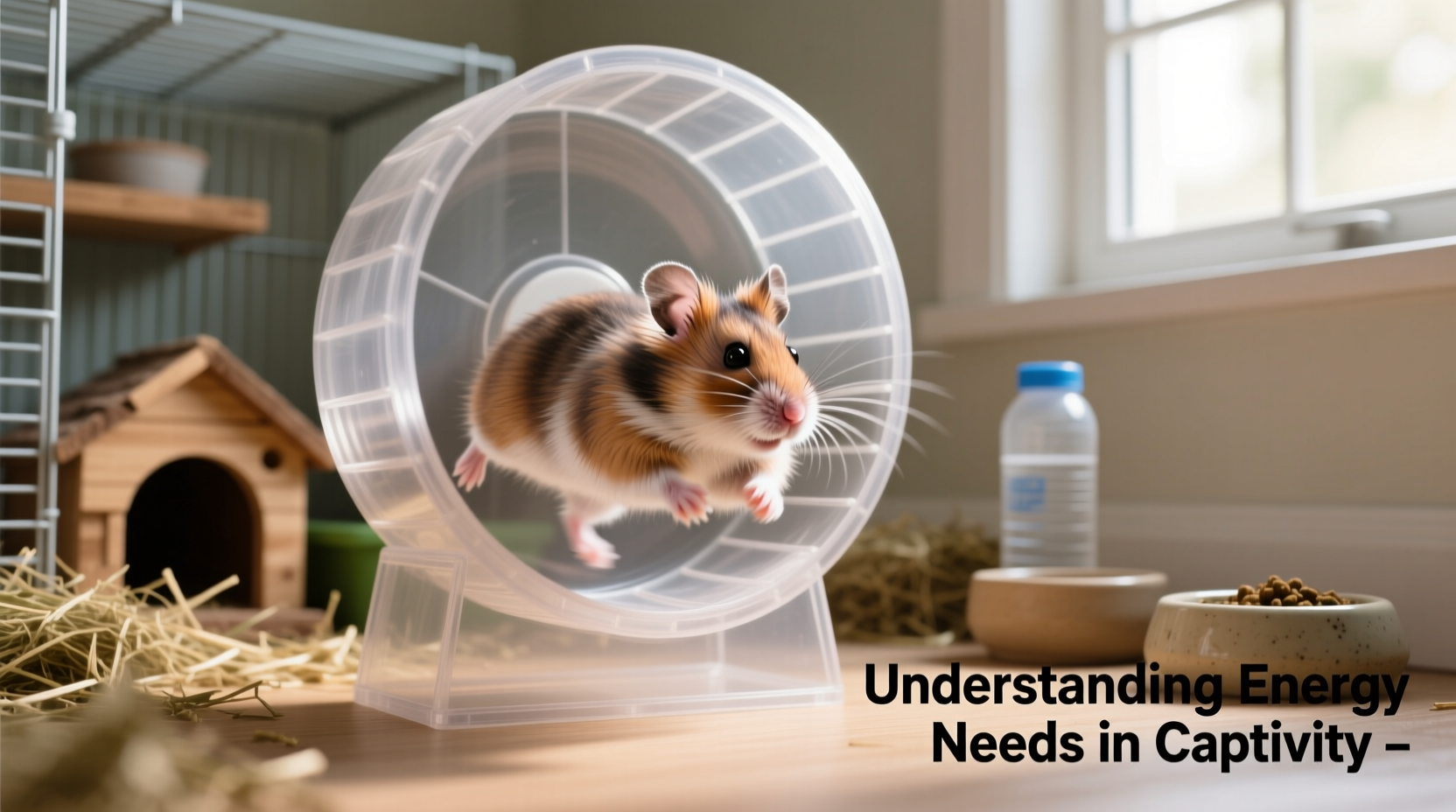
Hamsters are among the most popular small pets, prized for their compact size, quiet demeanor, and endearing habits. One of their most recognizable behaviors is running on a wheel—often for hours at night, sometimes covering distances that would astonish their human caretakers. While it may seem excessive or even obsessive, this activity is deeply rooted in the animal’s biology and natural instincts. Understanding why hamsters run on wheels requires insight into their evolutionary background, metabolic demands, and psychological needs—especially in the context of life in captivity.
In the wild, hamsters are nomadic foragers. They travel long distances each night in search of food, shelter, and mates. Their bodies are built for endurance: lightweight frames, efficient metabolisms, and high-energy requirements. When placed in cages that measure mere square feet, these innate drives don’t disappear—they must be redirected. The exercise wheel becomes not just a toy, but a vital outlet for physical and mental well-being.
The Evolutionary Drive Behind Wheel Running
Hamsters originate from arid regions such as Syria, northern China, and parts of Russia and Turkey. In these environments, resources are sparse and widely scattered. To survive, wild hamsters have evolved to cover significant ground nightly—studies estimate some species travel up to 5–9 kilometers (3–6 miles) in a single night. This movement isn't random; it's driven by survival imperatives: finding seeds, avoiding predators, and marking territory.
When confined to enclosures that are thousands of times smaller than their natural range, hamsters retain the same genetic programming. Their brains still signal the need to move, explore, and forage. Without adequate space, the instinct doesn't vanish—it manifests in repetitive behaviors like bar chewing, digging, or continuous wheel running. This phenomenon is known in ethology as \"redirected behavior\": when an animal cannot perform a natural action in its full context, it substitutes a simplified version.
“Wheel running in hamsters isn’t a sign of stress—it’s often a coping mechanism that allows them to meet their biological needs under artificial conditions.” — Dr. Rebecca Klein, Behavioral Zoologist, University of Edinburgh
Interestingly, research has shown that wheel running is intrinsically rewarding for hamsters. Neurological studies indicate that voluntary wheel use activates dopamine pathways associated with pleasure and motivation. This suggests that, far from being a symptom of distress, running can actually improve a hamster’s emotional state—provided the environment supports safe and effective exercise.
Metabolic Demands and Energy Expenditure
Hamsters have remarkably high metabolic rates relative to their size. A fully grown Syrian hamster, for example, weighs about 120–150 grams but requires approximately 10–12 kcal per day. That’s roughly equivalent to a human needing over 3,000 calories daily based on metabolic scaling. This energy must be burned through constant activity, especially since hamsters do not hibernate in typical household conditions.
Their digestive system is adapted for quick processing of plant-based foods, meaning they extract energy rapidly and must remain active to regulate blood sugar and prevent obesity. In captivity, where food is abundant and movement restricted, the risk of weight gain and related health issues—such as diabetes, particularly in dwarf species—increases significantly.
Exercise wheels help balance this equation. Regular running supports cardiovascular health, muscle tone, and metabolic efficiency. It also plays a role in circadian rhythm regulation. Hamsters are crepuscular, most active at dawn and dusk, and nighttime wheel activity aligns with their internal clock. Disrupting this pattern—by removing the wheel or placing the cage in a noisy area—can lead to sleep disturbances and chronic stress.
Psychological Needs and Enrichment
Beyond physical health, wheel running satisfies deep-seated psychological needs. In behavioral science, animals in restrictive environments often develop stereotypies—repetitive, functionless actions like pacing or circling. These are signs of poor welfare and are commonly seen in caged animals deprived of stimulation.
Hamsters denied access to wheels frequently exhibit increased anxiety, reduced exploration, and heightened aggression. Conversely, those with consistent wheel access show improved cognitive performance in maze tests and lower cortisol levels—a key biomarker of stress.
However, a wheel alone is not sufficient enrichment. A holistic approach includes tunnels, nesting materials, foraging opportunities, and safe spaces to hide. Wheels should be viewed as one component of a dynamic habitat that mimics natural challenges and rewards.
Common Mistakes in Wheel Provision
- Using undersized wheels: Forces hamsters into unnatural postures, potentially causing long-term spinal damage.
- Placing noisy wheels on resonant surfaces: Disturbs both pet and owner, leading to wheel removal at night—which disrupts natural rhythms.
- Choosing poorly designed wheels: Wire rungs can trap limbs, and open rungs increase fall risks.
- Removing wheels due to noise: Address the sound issue instead—opt for silent bearings or rubber-coated models.
Designing a Balanced Exercise Environment
To meet a hamster’s energy needs effectively, owners must go beyond simply adding a wheel. The goal is to create an environment that encourages sustained, healthy activity while minimizing injury and stress.
Step-by-Step Guide to Optimizing Hamster Exercise
- Choose the right wheel: Select a solid, wide-diameter wheel appropriate for your species. Avoid flying saucers for larger breeds due to limited stride length.
- Position it correctly: Place the wheel in a quiet corner of the cage, away from direct airflow and light, to encourage natural nocturnal use.
- Add alternative outlets: Include dig boxes, cardboard mazes, and supervised floor time to diversify movement patterns.
- Monitor usage: Note changes in running frequency—if your hamster suddenly stops using the wheel, it may signal illness or discomfort.
- Rotate enrichment items: Introduce new tunnels or puzzle feeders weekly to maintain mental engagement and prevent habituation.
| Factor | Best Practice | Avoid |
|---|---|---|
| Wheel Type | Solid plastic or metal with smooth surface | Wire mesh or barred wheels |
| Diameter | Syrian: ≥8\", Dwarf: ≥6.5\" | Wheels smaller than 6\" |
| Noise Level | Ball-bearing or silent spin models | Basic plastic wheels with squeaks |
| Cage Placement | Quiet room with natural light cycles | Kitchens or high-traffic areas |
| Additional Enrichment | Tunnels, foraging toys, nesting material | Only providing a wheel and bedding |
Real-World Example: Luna the Syrian Hamster
Luna, a female Syrian hamster adopted from a local rescue, arrived lethargic and overweight. Her previous owner had removed her wheel because it was “too loud at night.” Over several weeks, Luna showed little interest in her surroundings, spent most of her time sleeping, and developed mild fur loss along her back—a sign of stress.
Her new caregiver reintroduced a properly sized, silent-running wheel and gradually added foraging puzzles filled with oats and sunflower seeds. Within two weeks, Luna began using the wheel consistently, averaging 3–4 kilometers per night according to a motion-tracking study conducted by a veterinary behavior student. Her activity levels increased, her coat regained shine, and she started exploring every corner of her upgraded 450-square-inch enclosure.
This case illustrates that wheel running is not merely habitual—it’s therapeutic. When combined with environmental complexity, it restores a sense of agency and purpose in captive animals.
Frequently Asked Questions
Is it normal for my hamster to run for hours every night?
Yes, it is completely normal. Hamsters are naturally inclined to run long distances, and in captivity, the wheel becomes their primary means of fulfilling this drive. As long as the hamster appears healthy, eats normally, and shows no signs of injury, prolonged running is not a cause for concern.
Can hamsters run themselves to death?
There is no scientific evidence that hamsters will run to the point of fatal exhaustion under normal conditions. They self-regulate their activity and rest when fatigued. However, poor wheel design (e.g., slanted surfaces, rough textures) can lead to injuries or chronic stress, which may indirectly affect longevity.
Should I turn off the wheel at night to let my hamster rest?
No. Doing so interferes with their natural circadian rhythm. Hamsters are nocturnal, and running at night is part of their biological routine. If noise is an issue, invest in a quieter wheel rather than restricting access.
Actionable Checklist for Hamster Owners
- ✔️ Confirm your wheel has a solid running surface and appropriate diameter.
- ✔️ Ensure the wheel spins smoothly without wobbling or squeaking.
- ✔️ Provide at least one additional form of physical enrichment (tunnels, climbing structures).
- ✔️ Offer foraging opportunities daily (scatter food or use puzzle feeders).
- ✔️ Observe your hamster’s gait and posture during wheel use weekly.
- ✔️ Maintain a consistent light-dark cycle to support natural activity patterns.
- ✔️ Clean the wheel monthly with mild soap and water to prevent bacterial buildup.
Conclusion: Honoring Natural Instincts in Captivity
The sight of a hamster sprinting on a wheel is more than a quirky pet habit—it’s a window into the complex interplay between evolution, metabolism, and psychology. In confinement, these small mammals rely on us to bridge the gap between their ancestral needs and modern living conditions. The wheel is not a luxury; it’s a lifeline that helps them maintain physical health, emotional balance, and behavioral authenticity.
By understanding why hamsters run—and meeting those needs thoughtfully—we do more than prevent disease or boredom. We honor the essence of what it means to be a hamster. Whether you’re a first-time owner or a seasoned caregiver, take a moment to evaluate your pet’s exercise setup. Is the wheel safe? Is movement varied? Is their world stimulating enough to satisfy a creature built for miles of nightly travel?




 浙公网安备
33010002000092号
浙公网安备
33010002000092号 浙B2-20120091-4
Comments
No comments yet. Why don't you start the discussion?