
For millions of people around the world, a soft whisper, the crinkle of paper, or the rhythmic tapping of fingernails can trigger an unmistakable sensation: a gentle wave of tingling that begins at the scalp and cascades down the spine. This phenomenon—Autonomous Sensory Meridian Response, or ASMR—is more than just internet novelty. It’s a neurological experience with measurable effects on mood, stress levels, and even sleep quality. But what exactly causes these pleasurable sensations? And why do so many people report profound relaxation from seemingly mundane auditory and visual stimuli?
The answer lies not in mysticism, but in neuroscience. Researchers are beginning to uncover the brain mechanisms that underlie ASMR, revealing a complex interplay between sensory processing, emotional regulation, and social bonding. From dopamine release to default mode network activation, the brain's response to ASMR is both intricate and deeply personal.
The Neurological Anatomy of an ASMR Experience
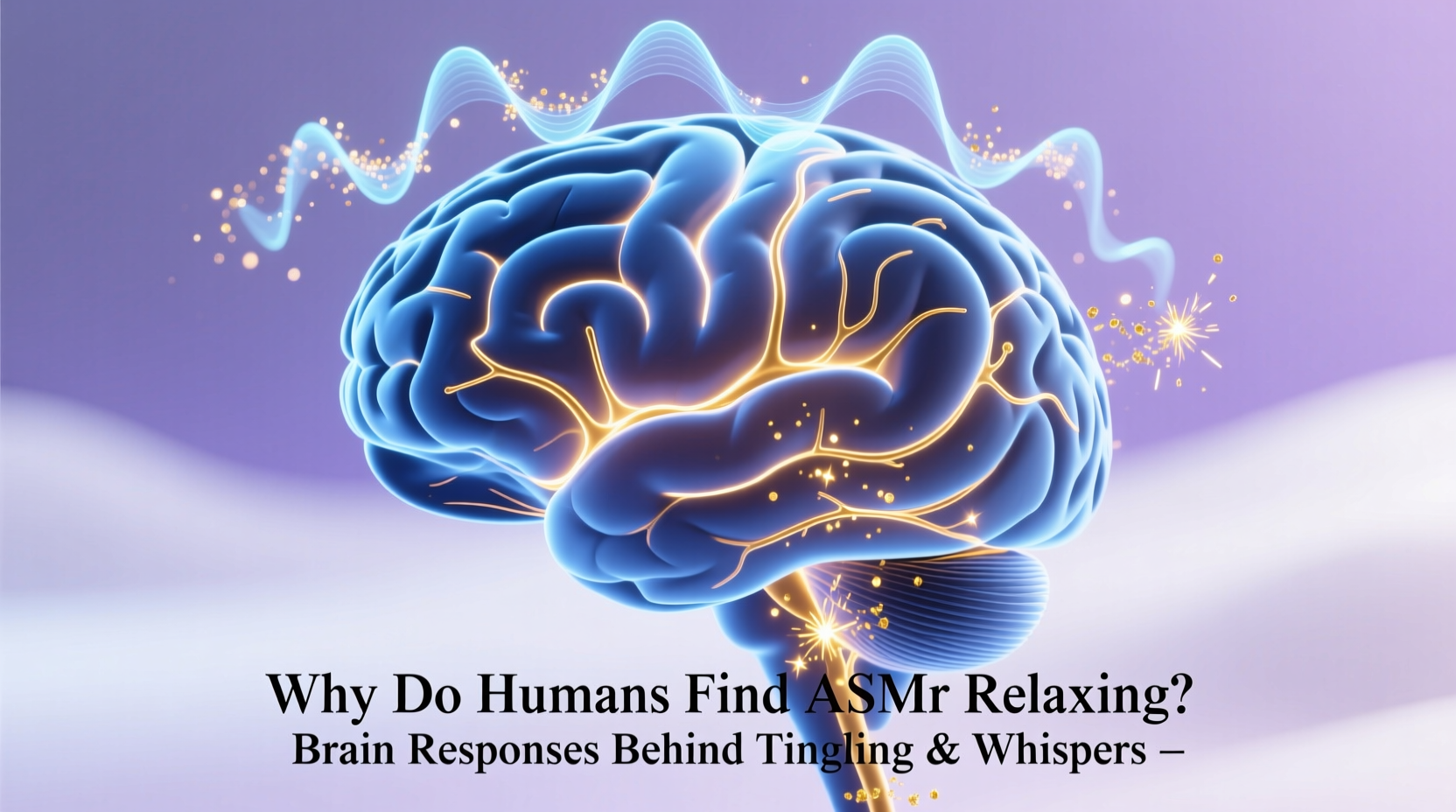
When someone watches an ASMR video featuring slow hand movements, hushed speech, or methodical sounds like page-turning or brushing, their brain undergoes distinct changes. Functional MRI studies have shown increased activity in regions associated with emotion, empathy, and self-awareness during ASMR exposure.
One key area involved is the medial prefrontal cortex (mPFC), which plays a role in social cognition and emotional regulation. This region lights up during experiences involving trust, intimacy, and caregiving behaviors—exactly the kinds of scenarios often mimicked in ASMR content, such as simulated medical exams, haircuts, or one-on-one attention.
Another critical player is the default mode network (DMN), a collection of interconnected brain regions active when the mind is at rest and not focused on the outside world. The DMN is linked to introspection, daydreaming, and memory consolidation. In individuals who experience ASMR, this network shows heightened connectivity during tingles, suggesting a state of relaxed introspection akin to meditation or light hypnagogia—the transitional phase between wakefulness and sleep.
“ASMR appears to tap into neural pathways typically activated during nurturing interpersonal interactions. It’s as if the brain interprets these stimuli as acts of care.” — Dr. Giulia Poerio, Cognitive Psychologist, University of Sheffield
This may explain why certain triggers—like personal attention, gentle tone of voice, or meticulous actions—are so effective. They subconsciously signal safety and connection, prompting the brain to shift into a low-arousal, high-comfort state.
Neurochemical Responses: Dopamine, Serotonin, and Oxytocin
Beyond structural brain activity, ASMR also influences neurochemistry. Several studies using self-report data and physiological markers suggest increases in neurotransmitters tied to reward, mood, and social bonding.
- Dopamine: Often called the \"reward chemical,\" dopamine surges are associated with pleasure and motivation. Some fMRI research indicates dopaminergic activity during ASMR episodes, particularly in those who actively seek out tingles for mood enhancement.
- Serotonin: Linked to feelings of well-being and emotional stability, serotonin levels may rise during ASMR sessions, contributing to reduced anxiety and improved sleep onset.
- Oxytocin: Known as the \"bonding hormone,\" oxytocin is released during physical touch, eye contact, and affectionate communication. While direct measurement is limited, the social mimicry in ASMR—such as whispered affirmations or attentive gestures—may stimulate similar pathways.
These combined neurochemical shifts help explain why many users turn to ASMR not just for entertainment, but as a tool for managing stress, insomnia, depression, and loneliness.
Common ASMR Triggers and Their Psychological Roots
Not all ASMR content works equally for everyone. Individual sensitivity varies widely based on personal history, sensory preferences, and even childhood associations. However, certain triggers consistently rank among the most effective—and each has a plausible psychological basis.
| Trigger Type | Example | Potential Psychological Mechanism |
|---|---|---|
| Whispering / Soft-Spoken Voice | A calm voice explaining a task quietly | Mimics intimate, one-on-one communication; signals non-threat and closeness |
| Repetitive Movements | Finger tapping, folding clothes, brushing surfaces | Induces flow-like focus; reduces cognitive load through predictability |
| Personal Attention | Simulated haircut, ear exam, or massage | Activates caregiving schema; evokes memories of being nurtured |
| Crinkling / Scratching Sounds | Plastic bags, paper rustling, foam cutting | High-frequency textures stimulate auditory cortex; may relate to primal material exploration |
| Methodical Tasks | Organizing items, writing slowly, assembling objects | Encourages vicarious engagement; promotes mental stillness through order |
Interestingly, many of these triggers resemble behaviors observed in early developmental stages—such as watching a parent fold laundry or hearing lullabies. This could mean that ASMR resonates because it reactivates comforting sensory memories from infancy or childhood, long before language dominated our internal experience.
Step-by-Step Guide to Enhancing Your ASMR Experience
If you're new to ASMR or want to deepen your ability to experience its benefits, consider following this evidence-informed approach:
- Set the Environment: Choose a quiet, dimly lit room where you won’t be interrupted. Minimize distractions by turning off notifications.
- Use Headphones: Stereo or binaural audio is essential for spatial realism. Over-ear headphones provide the best immersion.
- Select Appropriate Content: Start with popular trigger categories (e.g., whispering, tapping) and note which ones elicit subtle tingles or calm.
- Focus Mindfully: Don’t force the sensation. Instead, allow your attention to rest gently on the sounds and visuals, similar to mindfulness meditation.
- Track Your Response: Keep a brief journal noting which videos worked, time of day, mood beforehand, and duration of relaxation afterward.
- Experiment Gradually: Once familiar, explore niche triggers like roleplays, nature sounds, or multilingual content to expand your sensitivity.
Consistency matters. Regular exposure—even without immediate tingles—can increase responsiveness over time, much like training any other perceptual skill.
Real-World Impact: A Mini Case Study
Sarah, a 34-year-old software developer from Portland, struggled with chronic insomnia for nearly a decade. Medication caused grogginess; cognitive behavioral therapy helped only marginally. Then she stumbled upon an ASMR video titled “Pharmacy Roleplay – Quiet Medicine Pickup” while searching for white noise alternatives.
“It wasn’t the first ASMR I’d tried,” she recalls, “but something about the deliberate pace, the soft shuffling of bottles, and the whispered instructions made my body relax in a way I hadn’t felt since childhood.” Within two weeks of nightly use, her average time to fall asleep dropped from 75 minutes to under 30.
She now uses ASMR not only for sleep but also during midday breaks to reset after intense coding sessions. “It’s like hitting a mental pause button. My thoughts slow down, my shoulders drop—I can actually feel my nervous system recalibrating.”
While anecdotal, Sarah’s experience reflects broader trends seen in surveys: over 80% of regular ASMR users report improved sleep, and nearly 70% say it helps manage anxiety.
Debunking Myths and Addressing Skepticism
Despite growing popularity, ASMR remains misunderstood. Critics sometimes dismiss it as placebo or pseudoscience, especially due to the subjective nature of tingles. Others raise concerns about sexualization, given that some creators blur boundaries between soothing content and sensual performance.
However, peer-reviewed research supports ASMR as a legitimate perceptual phenomenon. A 2018 study published in *PeerJ* found that participants who experienced ASMR showed significantly lower heart rates and higher electrodermal activity during triggering videos—objective signs of parasympathetic activation and emotional arousal.
To distinguish therapeutic ASMR from exploitative content, experts recommend focusing on intentionality. Genuine ASMR emphasizes comfort, detail-oriented tasks, and emotional safety—not stimulation or provocation.
FAQ: Common Questions About ASMR and the Brain
Can everyone experience ASMR?
No. Research suggests only about 50–70% of people report experiencing ASMR tingles. Non-responders aren't necessarily less sensitive—they may simply process auditory or social cues differently. However, many still benefit from the calming aspects of ASMR audio even without physical sensations.
Is ASMR scientifically proven to reduce stress?
Yes, within limits. Multiple studies confirm reductions in heart rate and subjective stress ratings during ASMR sessions. While larger clinical trials are needed, current evidence supports its use as a complementary relaxation technique, particularly for mild anxiety and sleep onset issues.
Are there risks associated with ASMR?
Generally, no. ASMR is safe for most people. However, individuals with misophonia (intense aversion to specific sounds) should avoid certain triggers like chewing or lip-smacking. Additionally, excessive reliance on ASMR for sleep may lead to dependency if used as the sole wind-down strategy.
Checklist: Building a Healthy ASMR Routine
- ✅ Use ASMR primarily for relaxation or sleep preparation—not as background noise during work
- ✅ Limit sessions to 10–45 minutes depending on purpose (shorter for focus, longer for sleep)
- ✅ Prioritize reputable creators who emphasize calm, respectful interaction
- ✅ Combine ASMR with other healthy habits: dim lighting, screen curfew, consistent bedtime
- ✅ Discontinue use if any content makes you feel uncomfortable or overly stimulated
Conclusion: Tuning Into the Quiet Power of the Mind
ASMR is more than a digital trend—it’s a window into how deeply attuned our brains are to subtle cues of safety, attention, and care. Whether triggered by a whisper, a brushstroke, or the quiet rhythm of someone organizing pens, these moments activate ancient neural circuits designed to recognize nurturing presence.
As science continues to decode the brain responses behind tingles and whispers, one truth remains clear: in a world of constant noise and urgency, ASMR offers a rare invitation to slow down, breathe, and feel seen—even by a stranger on a screen.




 浙公网安备
33010002000092号
浙公网安备
33010002000092号 浙B2-20120091-4
Comments
No comments yet. Why don't you start the discussion?