
For millions of people around the world, the soft whispering, rhythmic tapping, or gentle page-turning in an ASMR video is more than just background noise — it’s a gateway to deep relaxation, focus, and even sleep. Autonomous Sensory Meridian Response (ASMR) has evolved from a niche internet phenomenon into a widely recognized tool for stress relief and mental wellness. But what exactly happens in the brain when someone watches an ASMR video? Why do certain sounds and visual cues trigger tingling sensations and calmness in some individuals but not others? The answers lie at the intersection of neuroscience, psychology, and sensory processing.
The Neuroscience of ASMR: What Happens in the Brain?
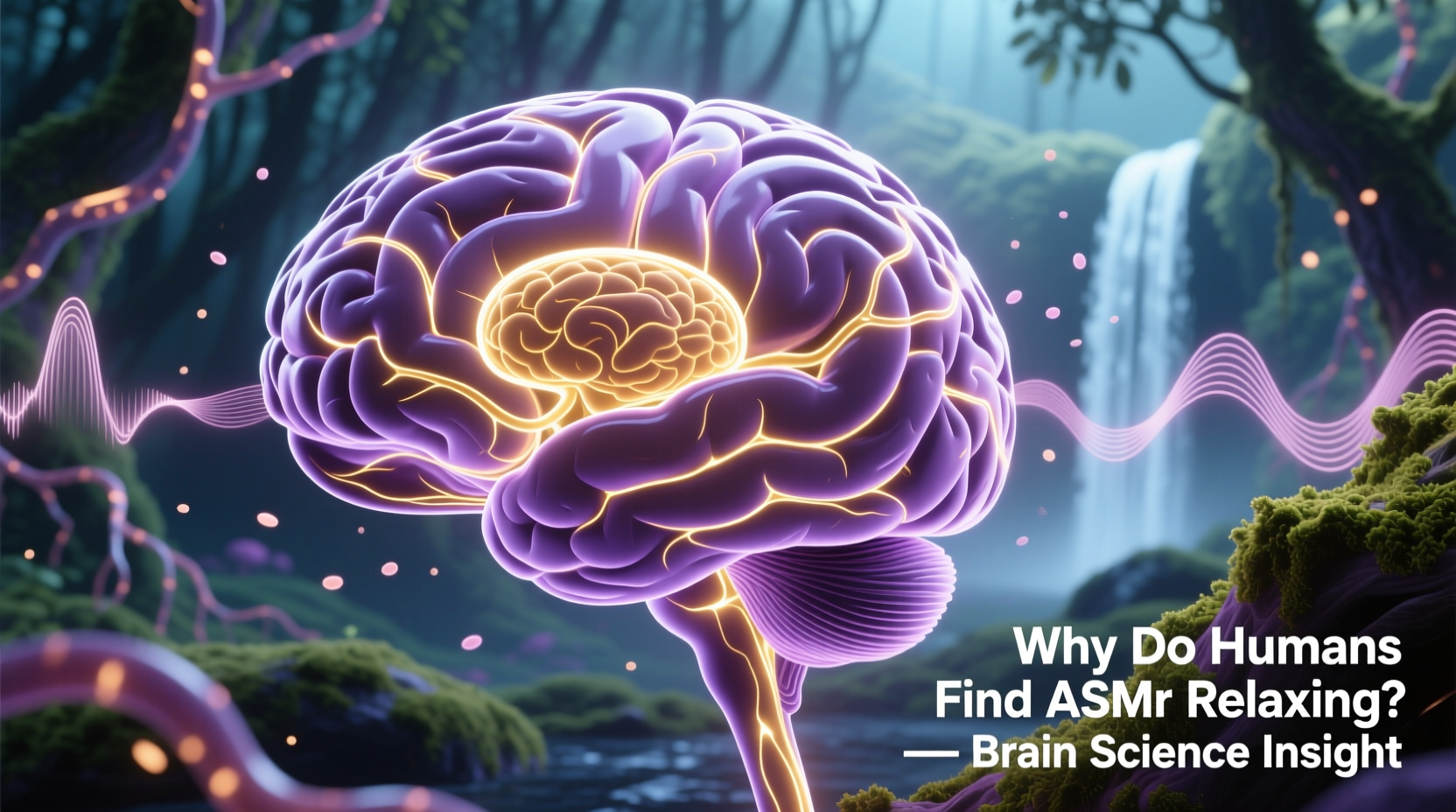
When someone experiences ASMR, they often describe a static-like tingling sensation that begins in the scalp and moves down the spine. This sensation is typically triggered by specific auditory or visual stimuli — such as someone speaking softly, crinkling paper, or brushing a microphone. Functional MRI studies have begun to uncover the neural mechanisms behind this response.
Research conducted at the University of Winnipeg and later expanded by scientists at Dartmouth College shows that during ASMR, there is increased activity in brain regions associated with emotion regulation, empathy, and social bonding — particularly the medial prefrontal cortex (mPFC). This area plays a key role in self-referential thought and emotional processing. Simultaneously, areas involved in the default mode network (DMN), which activates during rest and introspection, show synchronized patterns similar to those seen during mindfulness or light meditation.
Another critical finding is the deactivation of the amygdala — the brain’s fear and threat detection center. When this region quiets down, the body’s stress response diminishes, leading to lower heart rate and cortisol levels. In one 2018 study published in Scientific Reports, participants who experienced ASMR showed a significant drop in heart rate — averaging 3.5 beats per minute — after watching a 14-minute ASMR video. This physiological shift mirrors the effects of deep breathing exercises or guided relaxation techniques.
“ASMR appears to engage the same reward and attention networks activated during positive social interactions, like receiving a kind word or a comforting touch.” — Dr. Giulia Poerio, Cognitive Neuroscientist, University of Essex
Sensory Triggers and Personal Susceptibility
Not everyone experiences ASMR, and individual sensitivity varies widely. Studies estimate that between 20% and 70% of people report feeling tingles or relaxation from ASMR content, depending on how the question is framed. This variability suggests a combination of genetic predisposition, early life experiences, and sensory processing differences.
Common ASMR triggers fall into two broad categories:
- Auditory triggers: Whispering, tapping, scratching, crinkling, page turning, soft speaking, and binaural audio (which simulates 3D sound using two microphones).
- Visual triggers: Slow hand movements, focused tasks (like folding towels), personal attention scenarios (e.g., virtual haircuts or makeup application), and repetitive motions.
What unites these stimuli is their predictability, intimacy, and low arousal. Unlike loud or sudden sounds that activate the sympathetic nervous system (preparing the body for action), ASMR triggers are gentle and non-threatening. They mimic the kinds of close, attentive interactions humans evolved to associate with safety — such as a parent soothing a child or a friend listening intently.
The Role of Mirror Neurons and Social Connection
One compelling theory explaining ASMR’s calming effect involves mirror neurons — brain cells that fire both when we perform an action and when we observe someone else doing it. These neurons are believed to underlie empathy, imitation, and social learning. In ASMR videos, especially those involving personal attention (like a simulated doctor’s visit or private tutoring), viewers may subconsciously simulate the experience as if it were happening to them.
This simulation can evoke feelings of being cared for, even in the absence of physical presence. For individuals experiencing loneliness, anxiety, or social isolation, ASMR may serve as a form of “digital grooming” — a term coined by researchers to describe how virtual interactions can fulfill basic psychological needs for connection and reassurance.
Moreover, many ASMR creators adopt nurturing personas — speaking slowly, maintaining eye contact with the camera, and using inclusive language (“Let me take care of you tonight”). These behaviors activate the brain’s affiliative system, which governs attachment and trust. Oxytocin, sometimes called the “bonding hormone,” may be released during these experiences, further enhancing feelings of calm and well-being.
ASMR and Mental Health: A Therapeutic Tool?
While ASMR is not a clinical treatment, growing evidence suggests it can support mental health management. Multiple surveys indicate that people use ASMR primarily to reduce stress (83%), improve sleep (69%), and alleviate symptoms of depression and anxiety (34%). Some therapists have begun incorporating ASMR-like techniques into mindfulness-based interventions, particularly for clients who struggle with traditional meditation.
A 2021 study from the University of Sheffield found that regular ASMR users reported higher levels of mindfulness and lower levels of rumination — the repetitive, negative thinking common in depression. Participants described ASMR as helping them “get out of their heads” and redirect attention away from intrusive thoughts.
However, caution is warranted. Not all ASMR content is beneficial. Overuse can lead to dependency, where individuals feel unable to relax without stimulation. Additionally, some creators blur boundaries between therapeutic roleplay and inappropriate intimacy, which can confuse or distress viewers. Experts recommend mindful consumption — treating ASMR as one tool among many for self-regulation.
| Benefit | Potential Mechanism | Evidence Level |
|---|---|---|
| Stress Reduction | Reduced amygdala activity, lowered heart rate | Moderate (fMRI & physiological studies) |
| Sleep Improvement | Activation of parasympathetic nervous system | Self-report surveys, anecdotal |
| Anxiety Relief | Increased connectivity in default mode network | Preliminary (neuroimaging) |
| Mood Enhancement | Dopamine and oxytocin release (theorized) | Limited (indirect) |
How to Maximize Your ASMR Experience: A Step-by-Step Guide
To get the most out of ASMR, especially if you're new to it or haven't felt strong effects before, follow this structured approach:
- Choose the right environment: Find a quiet space free from distractions. Dim the lights and minimize screen glare.
- Use stereo or binaural headphones: Spatial audio is crucial for triggering the full sensory experience.
- Select compatible triggers: Experiment with different types — whispering, tapping, roleplays — to identify what resonates with you.
- Set an intention: Approach the session with openness rather than expectation. Let relaxation emerge naturally.
- Limit duration: Start with 10–15 minute sessions to avoid overstimulation or habituation.
- Pair with other practices: Combine ASMR with deep breathing or progressive muscle relaxation for enhanced effect.
Real Example: Sarah’s Journey to Better Sleep
Sarah, a 34-year-old graphic designer from Portland, struggled with insomnia for years. Medication caused grogginess; meditation felt frustrating. After a friend recommended ASMR, she tried a 20-minute “bedtime routine” video featuring soft-spoken instructions and gentle hair-brushing sounds. To her surprise, she fell asleep halfway through. Over the next few weeks, she experimented with different creators and sounds, eventually settling on slow, methodical triggers like pencil sketching and book flipping. She now uses ASMR three to four times a week and reports falling asleep 30 minutes faster on average. “It’s not magic,” she says, “but it gives my brain something gentle to focus on instead of racing thoughts.”
Do’s and Don’ts of ASMR Consumption
| Do | Don’t |
|---|---|
| Experiment with different triggers | Force the tingles — relaxation matters more than sensation |
| Use headphones for immersive sound | Watch in noisy environments where audio clarity is lost |
| Combine ASMR with good sleep hygiene | Replace professional mental health care with ASMR alone |
| Support ethical creators who respect boundaries | Engage with content that feels uncomfortable or exploitative |
| Take breaks to prevent desensitization | Use ASMR excessively as an escape from reality |
Frequently Asked Questions
Can anyone learn to experience ASMR?
While some people are naturally more sensitive, others can develop responsiveness over time. Starting with highly rated, classic triggers (like whispering or tapping) and practicing mindful listening may help increase receptivity. However, not everyone will experience the characteristic “tingles,” and that’s normal — relaxation benefits can still occur without them.
Is ASMR the same as frisson or musical chills?
No. Frisson is a brief, intense sensation often triggered by emotionally powerful music and linked to dopamine release in the brain’s reward pathway. ASMR tends to be slower, longer-lasting, and more diffuse, associated with calmness rather than excitement. Both involve pleasurable bodily sensations, but they arise from different neural circuits and emotional contexts.
Are there any risks to watching ASMR videos?
For most people, ASMR is safe. However, excessive use may lead to dependency or reduced ability to self-soothe without external stimuli. A small number of individuals report headaches or discomfort from certain frequencies. If ASMR causes irritation or anxiety, it’s best to discontinue use and explore alternative relaxation methods.
Final Thoughts: Harnessing the Power of Gentle Attention
The popularity of ASMR reflects a deeper human need — the craving for calm, connection, and care in an overstimulated world. From a neurological standpoint, ASMR works because it taps into ancient pathways designed to respond to kindness, safety, and attention. Whether through a whispered word or the rhythmic tap of fingers on wood, these videos offer a digital approximation of the comfort once provided by a lullaby or a reassuring hand on the shoulder.
As research continues to unravel the brain science behind ASMR, one thing is clear: its value extends beyond fleeting tingles. It represents a modern adaptation of age-old soothing behaviors — repackaged for the digital age, yet rooted in timeless biology.




 浙公网安备
33010002000092号
浙公网安备
33010002000092号 浙B2-20120091-4
Comments
No comments yet. Why don't you start the discussion?